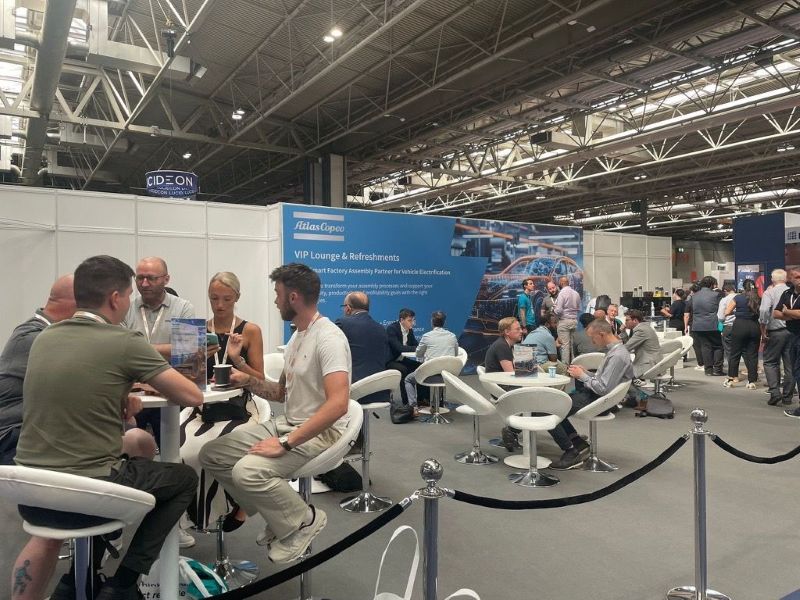
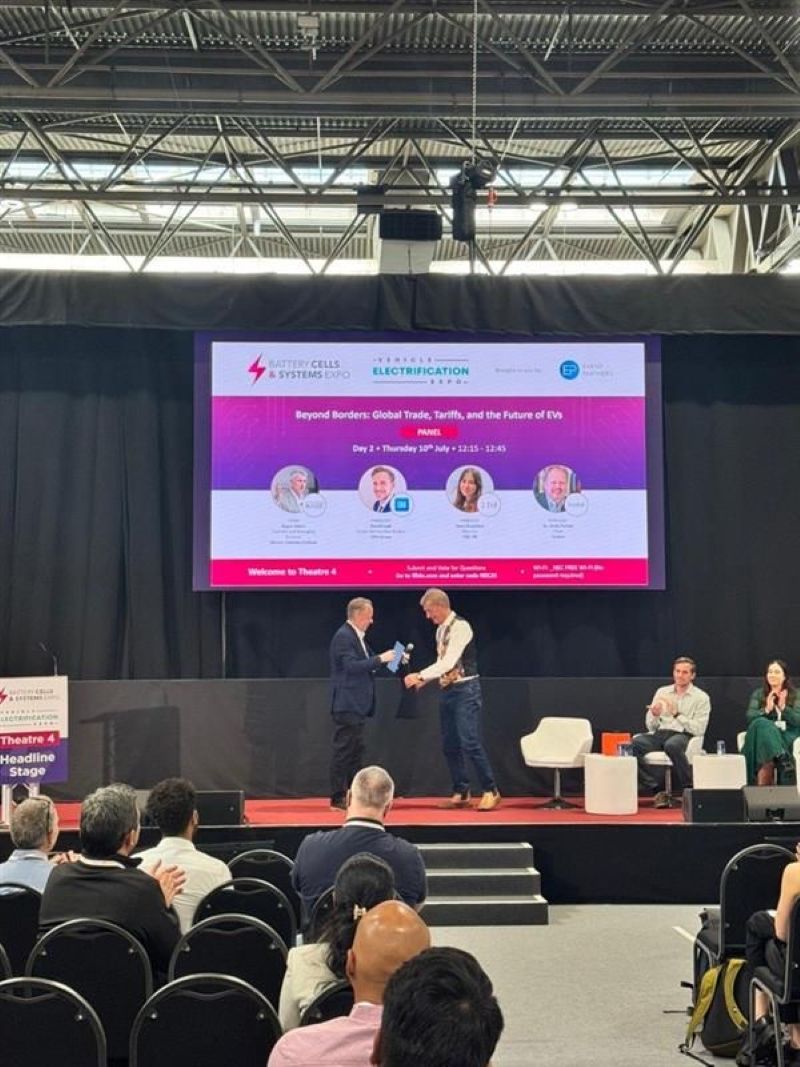
At the Battery Cells & Systems Expo 2025, held at Birmingham’s National Exhibition Centre on July 9 to and July 10, 2025, over 300 exhibitors and thought leaders came together to accelerate one of the most mission-critical conversations for the UK’s automotive future: how to build a globally competitive, innovation-led, and self-sufficient electric vehicle (EV) ecosystem.
Frost & Sullivan’s presence at the event was grounded in two key purposes: tracking high-impact megatrends and surfacing growth opportunities that are reshaping the automotive industry across the EV value chain. From regulatory shifts to workforce transformation and battery localization trends, the event delivered a sobering yet energizing message: the UK has the chance to lead in battery innovation, but the window is narrow, and clarity is urgent.
Want perspectives from growth experts?
Frost & Sullivan’s latest analysis, Global Electric Car Industry Growth Opportunities, 2025, dives into the best practices, strategic imperatives, key megatrends, and more impacting the global EV sphere.
So, what are the growth leaders getting right and what strategic imperatives can your organization act on to win in a changing EV landscape?

Growth Opportunity 1: Regulations as Catalysts for Innovation
As regulatory pressure increases, companies too often treat mandates as burdens instead of enablers. But a key message echoed at the expo — particularly in a session involving Stellantis and the Advanced Propulsion Centre — was clear: treat regulation like a sat-nav, not a speed bump.
In fact, many OEMs and suppliers are turning regulation into a competitive differentiator. And with the UK’s upcoming regulatory shifts supporting rather than hindering growth, this wasn’t hard to see why:
- EV Rules of Origin: From 2027, battery packs will be composed of at least 70% UK/European Union (EU) components to avoid a 10% tariff under the UK-EU Trade and Cooperation Agreement.
- Battery Passport Mandate: All large batteries sold will carry a digital passport from 2027, documenting carbon footprint, supply origin, and recyclability.
- Opportunity in Complexity: Between the EU’s Battery Regulation, UK zero-emission vehicles (ZEV) mandates, and carbon border tariffs, regulatory fragmentation is a real risk, urging players to prioritize alignment.
Strategic Imperative
Proactive OEMs are leveraging compliance frameworks to influence product design, supply chain reconfiguration, and sustainability narratives. These companies are treating upcoming mandates as blueprints for innovation, not just paperwork.
Is your growth strategy aligned with 2027 regulatory inflection points?
Growth Opportunity 2: Powering the Workforce for EV’s Progression
The UK’s electrification push faces a significant hurdle: a vacuum of EV-ready talent. According to the Show Guide and data from the Faraday Institution:
- Nearly 48% of UK automotive employers are already struggling to find EV-specific talent.
- By 2040, the UK will require 270,000 electrification-related jobs, including 90,000 brand-new roles.
- The UK currently has only one operational gigafactory (in Sunderland), creating urgent need for both national and local talent strategies.
Event panels highlighted smart approaches to close the gap:
- Cross-sector Reskilling: For instance, chocolate and food-paste expertise can be redeployed for slurry mixing in battery cells.
- Localized Labor Strategies: Gigafactories can recruit from nearby communities, unlike engineering roles which can draw talent nationally.
- International Talent Pipelines: UK and other regions of the West have a lot to learn from China’s playbook, rather than compete head-to-head. Recruiting Chinese engineers with multilingual skills, for example, mirrors the model Chinese firms used decades ago to accelerate their own automotive rise.
Strategic Imperative:
Companies to Action may build multi-tiered, cross-functional talent programs anchored in local partnerships, ‘near-neighbor’ industry mapping, and international exchange. It’s as much about hiring as about architecting future-proof skill ecosystems.
Is your organization overcoming internal challenges by tapping unconventional talent sources and planning for skills of 2030, not just 2025?
Growth Opportunity 3: Exploring Recycling and Its Potential for Billions in Revenue
Battery recycling is making its mark as a vehicle for sustained growth. With new passport mandates and environmental, social and governance (ESG) scrutiny, battery circularity is now a strategic growth engine:
- With proper passport infrastructure, 25% of Europe’s battery metal needs could be met through recycling by 2030.
- Frost & Sullivan’s expertise highlights that this will create new value chains across reverse logistics, data analytics, and secondary material processing: domains the UK could dominate with the right alignment.
Strategic Imperative:
Treating recycling and second-life battery applications as value chain differentiators, not cost centers. Companies who invest early in traceability and reuse will have a first-mover advantage in a fiercely contested circular economy.
Are you capturing the value chain from your battery assets—or letting competitors define the rules of the second-life economy?
Best Practices and Companies to Action: What Growth Leaders Are Doing Differently
The Battery Cells & Systems Expo gave visibility to how specific companies are turning strategy into execution:
- Stellantis is treating regulatory shifts as competitive moves by proactively reshaping supplier and design frameworks.
- University College Birmingham, through the Battery Manufacturing Skills Pathway (B-MSP), is leading grassroots community upskilling in the Midlands — a model for regional workforce development.
- EVera Recruitment and Volta Foundation are creating dedicated EV talent networks across Europe, enabling real-time job placement and demand forecasting.
Strategic Imperative:
Don’t just observe first-movers, benchmark and borrow from them. Growth leaders spotting early signals and applying best practices before they become standards.
Are you internalizing the best practices from fast-movers shaping new norms across policy, skills, and sustainability?
Your Next Steps: Partner with Frost & Sullivan for Growth in a High-stakes EV Future
Frost & Sullivan’s position is clear: the UK has a short but significant window to cement itself as a hub for EV battery innovation and production.
But action must be fast, precise, and insight-led. And that’s where we come in.
We help you:
- Map emerging growth opportunities across the EV value chain
- Identify the right strategic imperatives for fast, focused transformation
- Leverage our Growth Generator and Competitive Benchmarking Engine (Frost RadarTM) to accelerate time-to-market
- Gain overall ecosystem and transformation insights
Let’s build your EV growth strategy together. Engage with our experts in an exclusive Growth Pipeline Dialog.