As healthcare organizations navigate an increasingly complex and data-intensive environment, payers are under immense pressure to streamline operations, modernize legacy systems, and reduce the administrative burdens that have long hindered agility. Companies that can combine innovation with measurable operational improvement are setting a new benchmark for the industry.
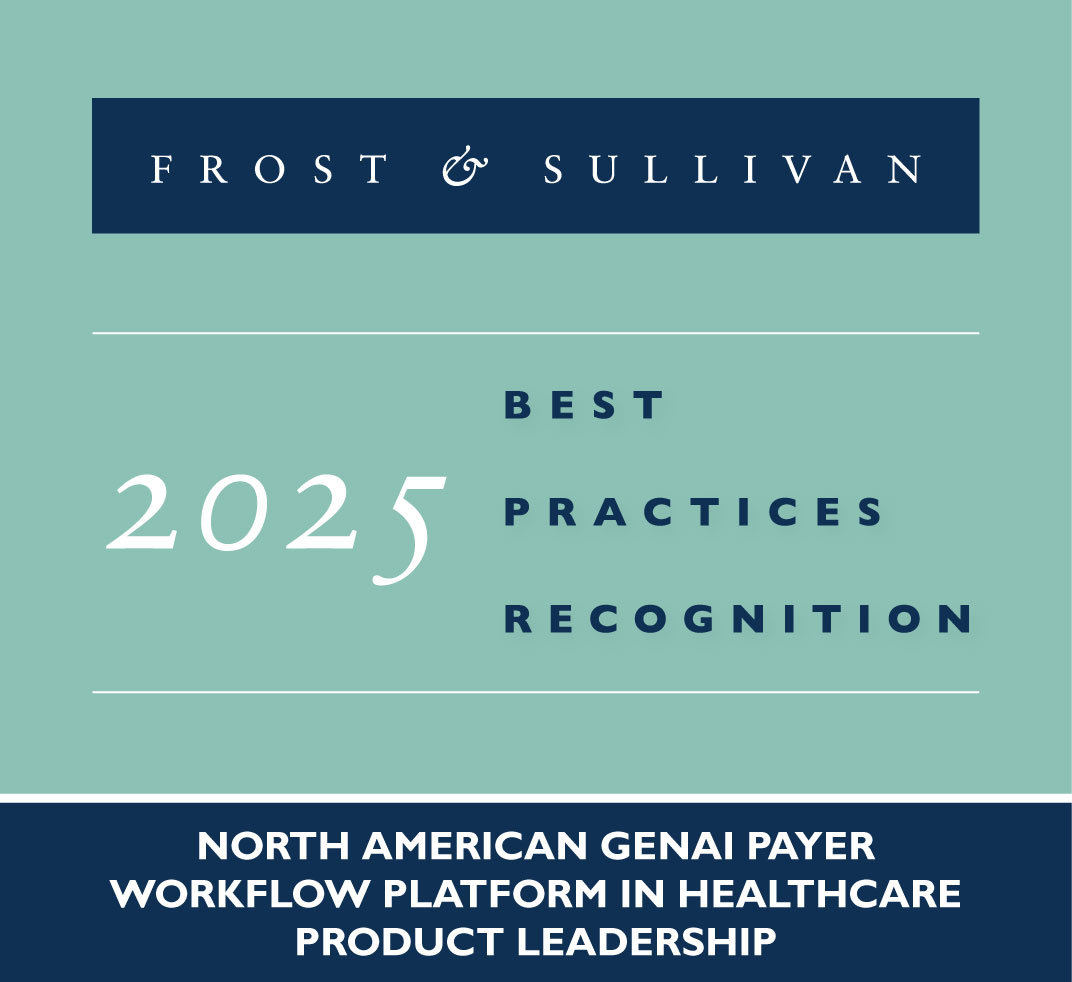
This year, Frost & Sullivan is proud to recognize Optum with the 2025 North American GenAI Payer Workflow Platform in Healthcare Product Leadership Recognition for its excellence in data-driven innovation, operational modernization, and customer value creation.
 Why Optum Earned the 2025 Product Leadership Recognition
Each year, Frost & Sullivan’s Product Leadership Recognition honors companies that excel in developing and delivering solutions with strong technological merit and commercial potential. The evaluation is based on two key dimensions: strategy effectiveness and strategy execution.
Optum stood out for its ability to align innovation with payer market needs—executing a forward-looking strategy that helps improve efficiency, enhance transparency, and drive measurable outcomes across the healthcare ecosystem.
Its GenAI Payer Workflow Platform is a prime example of this success. Designed to integrate complex workflows and automate decision-making, the platform empowers payers to reduce administrative burden, improve payment accuracy, and modernize outdated infrastructure through intelligent automation and real-time analytics.
Modernizing Legacy Systems Through AI and Data-Driven Innovation
Legacy systems continue to be one of the greatest challenges in payer operations, often leading to inefficiencies and communication silos. Optum addresses this by embedding AI capabilities throughout the payer workflow, ensuring seamless data flow and process integration.
Optum is enabling payers to transition to a real-time working model. By moving operations from traditional batched processes to real-time data capture and integration, utilizing AI and analytical capabilities, Optum is improving the decision-making capabilities of the payer. A prime example of this is the company’s innovative approach to payment integrity through the concept of “payment precision”—achieving payment accuracy at the point of claim submission. This proactive model helps eliminate and ensures costly after-the-fact corrections and financial sustainability for both payers and providers.
Through its Optum Insight division, the company leverages machine learning, automation, and analytics to strengthen key operational areas such as risk adjustment and value-based care programs. These technologies not only accelerate decisions but also allow health plans to focus on strategic initiatives like network optimization and population health improvement.
Ecosystem Experience
Optum with its breadth of solutions is enabling payers to transition from bolt-on or point solutions to an ecosystem experience, it is helping plug-in the installed point solution into the Optum platform so that payers can have a more harmonized view of the entire value-chain.
This integrated solution enhances visibility into the payer workflow, enabling identification of process bottlenecks and conversion into cost-saving opportunities. The comprehensive end-to-end experience facilitates an upstream shift in the value chain to strengthen accuracy and integrity within the provider workflow.
Where Rubber Meets the Road: Use Cases
Optum is enhancing payer workflows across multiple dimensions, focusing on critical processes such as payment integrity, risk adjustment, and value-based care enablement. These three processes help form the foundation of payer operations and offer opportunities for cost savings.
The advances in the payment integrity space include the already mentioned concept of “payment precision”. In addition to moving the workflow to the left, the payment precision ecosystem has a provider education solution designed to proactively determine the educational content that should be served to improve provider behavior. Another avenue for improvement is the Digitalization Hub, which helps digitalize all the payer documents to address miscommunication and misrepresentation issues while speeding up the care delivery process.
GenAI boosts efficiency in risk adjustment by streamlining chart reviews, enhancing coding accuracy, and automating manual tasks like member validation. It also uses AI models to flag clinical indications or potential conditions for clinicians to review, helping close gaps during patient visits.
Optum uses GenAI for value-based care by streamlining payer workflows, lowering overall costs, aligning providers with VBC goals, and enhancing member and patient engagement through AI.
These use cases show how Optum plans to embed GenAI across payer workflows for cost savings and better care delivery.
Reducing Administrative Burden and Enabling Smarter Decisions
Administrative complexity has long been a barrier to progress in healthcare operations. Optum AI-enabled platform streamlines workflows across departments—helps reduce redundancies, minimize manual interventions, and improve adjudication accuracy.
By simplifying payer processes through automation and real-time intelligence, Optum is helping clients move from reactive management to proactive strategy. This shift not only improves operational efficiency but also enhances collaboration between payers and providers, leading to faster, more transparent outcomes.
Innovating Internally to Address Market Needs
Optum is also placing a strong emphasis on utilizing GenAI internally to accelerate product development and improve product life cycle management. The company has deployed tools to help streamline the product development process from gathering user requirements to writing codes, automating testing and developing user interface and product story.
Optum uses its data, market reach, and clinical expertise to fine-tune LLMs, speeding up time to market and embedding industry knowledge in its offerings.
By integrating GenAI-based solutions into its workflows, Optum accelerates product innovation more rapidly to meet customer needs.
Commitment to Responsible AI Governance
In an era of growing AI adoption, trust and accountability are essential. Optum has demonstrated industry leadership by implementing a robust AI governance framework led by a Chief AI Officer and supported by a dedicated compliance team.
This human-in-the-loop approach ensures that every AI decision remains transparent, traceable, and compliant—building confidence across stakeholders and reinforcing responsible innovation.
Setting the Standard for Product Leadership in Healthcare
Optum recognition with Frost & Sullivan’s 2025 North American GenAI Payer Workflow Platform in Healthcare Product Leadership Award underscores its pivotal role in advancing operational excellence through AI. The company’s relentless focus on efficiency, modernization, and measurable outcomes positions it as a catalyst for transformation in the payer ecosystem.
By combining deep domain expertise with cutting-edge technology, Optum is redefining what’s possible for payer organizations—proving that innovation and impact can go hand in hand.