Download Frost & Sullivan’s Transformational Growth Leadership Discussion with Tom Deitrich, CEO at Itron
As the global energy ecosystem accelerates toward decarbonization, decentralization, and digitalization, Itron is redefining how utilities modernize the electric grid. Transitioning from a hardware provider to an outcomes-based IoT solutions leader, Itron is enabling utilities to improve reliability, resilience, and consumer engagement through data-driven intelligence.
In this exclusive Transformational Growth Leadership (TGL) conversation, Tom Deitrich, CEO of Itron, sits down with Farah Saeed, Industry Director, Energy & Environment at Frost & Sullivan, about how Itron is addressing aging infrastructure, environmental volatility, and rising consumer expectations through software-centric, distributed intelligence solutions.
“There is so much power in the data that’s out there. There is no limit except our imagination.”
— Tom Deitrich, CEO, Itron
Understanding the Transformative Megatrends Shaping Grid Intelligence
Farah Saeed: Thank you for joining us today. What do you see as the three most transformative megatrends shaping grid intelligence, and how do they align with Itron’s broader focus?
Tom Dietrich: There are really three sets of problems creating these trends.
- Infrastructure: We have aging infrastructure that is more vulnerable to cybersecurity issues. This infrastructure is changing to integrate more renewables into the grid. Load growth from data centers and manufacturing reshoring is also straining grid infrastructure.
- Environmental Issues: Environmental issues, in the form of floods, drought, and severe weather events, place pressure on field assets.
- Increasing Consumer Expectations: People’s tolerance for the lights not turning on and power outages are diminishing.
These three problems align with three corresponding solutions:
- Data: How can we put all the information we have to work? Ten years ago, utilities had access to a certain amount of data. They did meter reading every day for 30 days and sent the bill. That was the business model. Now, you have 32 gigabytes of data being generated daily from five million smart meters at a single IOU (Investor-owned Utility). We need to put the data to work.
- Agility of Assets: The business model of amortizing assets over 10 or 20 years no longer works. It has to happen much quicker than that, and the asset in the field must be used in multiple ways.
- Platform Integration: The grid system can no longer operate in silos. You need energy assets in the field that work and integrate well together.
Leveraging Artificial Intelligence (AI) for Grid Optimization
Farah Saeed: Has the narrative around grid intelligence evolved with the growing influence of AI?
Tom Dietrich: Yes and no. Every publication today talks about the rise of AI and the “AI bubble.” But within the utility community, among those working in the field every day, the core narrative hasn’t changed much. AI has created some uncertainty and volatility of projections now that you have a 500 MW data center in your “backyard,” but these conversations were already happening.
Farah Saeed: Do you have a framework or priority list for AI use cases that will deliver the most value for utilities and your business?
Tom Dietrich: We don’t really set any limitations on ideas. Over the past five years, our focus with grid edge intelligence has been on building a platform that functions like a Swiss Army knife. Now, we’re looking at what to implement – is it a corkscrew, a file, and so on?
Our top three priorities are:
- Resiliency and Reliability: We believe this area is underserved. With 285 million of Itron’s intelligent endpoints in the field, we can make the greatest impact here.
- Distributed Energy Resources (DER): DERs introduce volatility and complexity at the low-voltage grid edge, threatening reliability. Utilities need real-time visibility and control to manage these assets effectively.
- Consumer Engagement: Utilities need customers to opt into demand response programs to help shift loads, such as EV (electric vehicle) charging, to manage peak demand and grid stability. This requires trust and incentive-based engagement.
Strengthening Reliability Through Strategic Partnerships and AI
Farah Saeed: Speaking of resiliency and reliability, Itron recently completed an agreement to acquire Urbint, a company focused on incident prediction and prevention. How does the acquisition align with your priorities around resiliency and reliability?
Tom Dietrich: I believe Urbint is a great fit for Itron. This is an area where we have naturally evolved because the data from our endpoints have been used for restoring power outages. We will work well together.
Urbint has these main offerings:
- Emergency Preparedness:If you have a hurricane, you must make sure you are able to recruit all the field workers you need, position the crew properly, use the weather forecast data to make necessary adjustments to work orders, and manage those crews to assemble the team as effectively and efficiently as possible. You also need to make sure the crew is paid and treated properly to be as responsive to the emergency as possible.
- Worker Safety:Making sure the worker is safe when they are trying to put the system back together following a hurricane or during a routine scheduled maintenance work order. There is going to be a shortage of the workforce due to retirement significant “brain drain.” Can we use software tools to bridge this potential gap? A review of where the assets are deployed and how they need to be managed can all be cataloged in software.
- Damage Prevention: Using the power of AI, you can identify high-risk excavations and powers interventions to stop incidents that damage assets, threaten reliability, and endanger the safety of workers.
Farah Saeed: Several major T&D (Transmission and Distribution) companies have recently partnered with AI-focused companies. For example, the MOU between Hitachi Energy and OpenAI. Itron also announced a partnership with NVIDIA earlier this year. Given AI’s growing importance, will this influence how you approach future partnerships or acquisitions?
Tom Dietrich: There are two aspects to this. First, utilities have already been adopting technologies from our eco-partners, such as ADMS (Advanced Distribution Management System) from Schneider Electric and GE Vernova. Our goal is to enhance interoperability to solve utility challenges and ensure that systems work better together.
We also made a strategic announcement with NVIDIA, focused on combining their AI expertise with our deep experience at the grid edge. Through the NVIDIA AI platform, we can perform training and inference in a utility context, creating more powerful and integrated solutions for our customers.
Farah Saeed: Utilities are often cautious and have lengthy processes when adopting new technologies. Are you working on anything specific to help expedite their decision-making process?
Tom Dietrich: We focus on providing solutions that address real challenges and deliver long-term value. Our goal is to demonstrate the value proposition and the application in action. For utilities, the key is maintaining stable rates in line with regulatory requirements and avoiding any increase in customer bills. We want to ensure that every solution truly creates value for our customers.
Breaking Down Barriers to Distributed Intelligence (DI)
Farah Saeed: Itron has a strong base of around 285 million intelligent endpoints. What are the biggest challenges in implementing DI across these endpoints?
Tom Dietrich: The nature of DI doesn’t fit neatly into a traditional utility work structure. Utilities are typically organized in silos, with separate teams managing distribution, transmission, generation, AI, or customer care. DI, which runs on AMI (Advanced Metering Infrastructure) infrastructure and distribution systems, solves customer problems that often span across four or more departments. So, while utilities operate in silos, DI delivers solutions that cut across them.
This creates change management issues in terms of figuring out how to cross those silos, and this takes time. This is something our early adopters speak to and are demonstrating is possible. For example, at our customer-focused conference, Itron Inspire, they are showing, “Here is how you do it, and these are the benefits.”
You need to make sure that the regulator sees value in the solution and that the utility can clearly demonstrate and communicate the benefits in terms of return on capital. I know what a wire looks like; I know what a pole looks like, but what does DI actually look like? So, how do you demonstrate that value? That’s the biggest barrier to entry.
Finally, it’s important to get the basics right. You are not going to take a quantum physics class as a freshman; you need to know the basics first, such as meter-to-cash or whatever problem you need to solve first, and then we will start layering the DI applications on top of that. Our systems are designed to do that. It generally takes three years to deploy the system, making sure it is stable and operating. After 12 months, you start to think of the next course, and DI revenues come after that. It is natural progression.
Future-Proofing Utilities Through Modular, Agile Infrastructure: The Tech Imperative
Farah Saeed: How do you strike a balance between being a technologically progressive company and supporting customers that are still focused on basic modernization initiatives? You have been aggressive in promoting the outcome-based business model, which continues to show strong growth and profitability.
Tom Dietrich: The platform must work seamlessly and be designed in a modular way to future-proof applications. You need foundational capabilities that can be layered and expanded over time as customer needs evolve. That’s why modular design is so important.
Utilities also need confidence that when they deploy an asset, it will deliver sound returns aligned with regulatory expectations. We have to live up to that commitment to ensure progress continues smoothly. This is where the concept of agile infrastructure becomes fundamental; it allows us to adapt and scale as customer goals advance.
Expanding Itron’s Growth Through Purposeful Innovation
Farah Saeed: What are your long-term growth aspirations for the next five years? Are you looking at geographic expansion or further product diversification?
Tom Dietrich: I see us adding more solution-based applications within our platform and expanding into areas like restoration and recovery activities. We already have a solid global presence and will continue to invest where we see strong economic returns. Today, we operate in more than 100 countries, and our focus will remain on staying relevant through continuous innovation and technology leadership.
People, Progress, and Policy for Competitive Advantage
Farah Saeed: What is your biggest competitive advantage?
Tom Dietrich: It is by far our people, our customers, and our customer relationships. Our people do valuable work for our customers, and their ability to communicate in their native language and demonstrate our technology effectively is vital to our success. Itron’s internal culture plays a major role in how we are perceived in the industry.
Farah Saeed: What excites you the most about the future, and what are your greatest concerns, either for Itron or the industry?
Tom Dietrich: It is the rate of exponential technology change. This both excites me and worries me in terms of keeping pace. This is what keeps me up at night and always has been: How do we continue to push the envelope? Are we innovating enough?
Farah Saeed: Do you have any comments regarding the current regulatory environment?
Tom Dietrich: Regulators are facing tough challenges. The cost of utility infrastructure continues to rise, while there is pressure to keep rates affordable for residents. Although data center construction contributes to rate increases in some regions, the broader issue lies in aging infrastructure that is becoming less reliable. Regulators are asking hard questions and pushing for accountability, and they deserve respect for that. Rate cases aimed at improving reliability are being approved more quickly when the return on investment is well articulated.
Farah Saeed: How attuned are regulators to the impact of severe weather events on aging grid infrastructure?
Tom Dietrich: I think there is a lot of evidence in certain states, highlighting the impact of severe weather conditions on grid performance.
Preparing Tomorrow’s Energy Leaders: Technology, Vision, and Leadership
Farah Saeed: If you could leave the industry and your broader audience with one key message, either about Itron, leadership, or your vision for energy transition, what would that be?
Tom Dietrich: There is so much more we can do; there is so much power with the data that is out there. There is no limit except our imagination. I am extraordinarily optimistic about what the future will bring. I am not a technology doomsday believer. Let’s put technology and data to work in a responsible way and solve a lot of problems.
Closing Reflection
As utilities confront the dual pressures of decarbonization and reliability, Itron’s transformation from a hardware manufacturer to an outcomes-based IoT solutions provider exemplifies the essence of Transformational Growth Leadership, bridging innovation, execution, and impact.
Tom Deitrich’s optimism defines Itron’s vision for the future:
“There is so much more we can do; there is so much power with the data that is out there. There is no limit except our imagination.”
By harnessing data, AI, and distributed intelligence, Itron is empowering utilities to build a smarter, safer, and more sustainable grid, proving that technology and human ingenuity together can modernize the foundation of global energy.
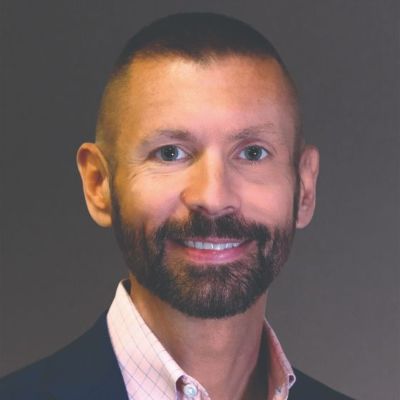
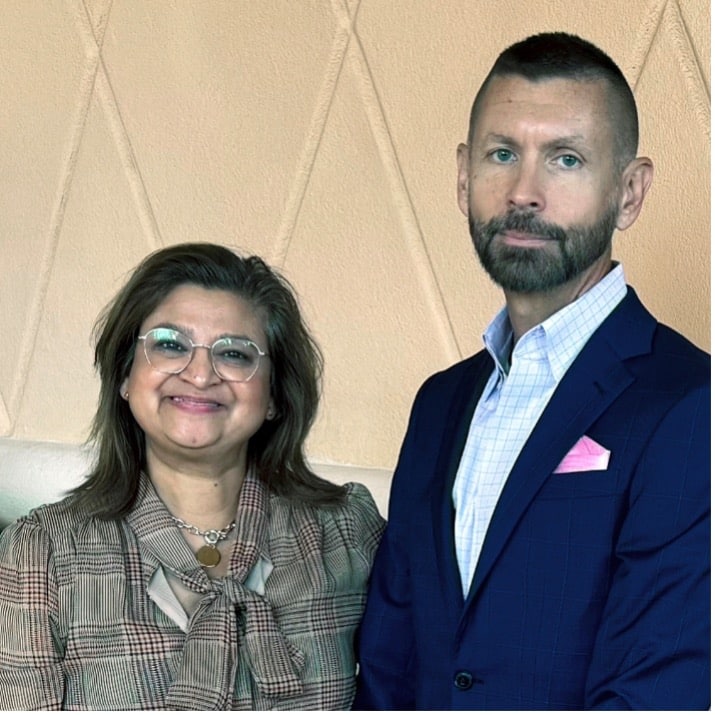
Tom Deitrich
CEO of Itron
Tom Deitrich is the President and CEO of Itron, leading the company’s transformation from a hardware manufacturer to a provider of outcomes-based industrial IoT solutions. With over 25 years of global experience at Freescale Semiconductor, Flextronics, Sony Ericsson, and GE, he brings deep expertise in R&D, operations, and product strategy. At Itron, he drives innovation at the grid edge to help utilities and cities build resilient, reliable, and more efficient infrastructure. He is a member of the GridWise Alliance Grid Infrastructure Advisory Council.
Farah Saeed is Industry Director in the Growth Advisory Energy and Environment practice at Frost & Sullivan, where she has spent over two decades helping global organizations navigate the transition toward digital, decarbonized, and resilient energy systems. She specializes in grid modernization, electrification, and demand-side management, offering strategic insights that shape policy and innovation. Farah also serves on the Executive Board of Women in Cleantech and Sustainability (WCS), advocating for greater leadership diversity in the clean energy sector.
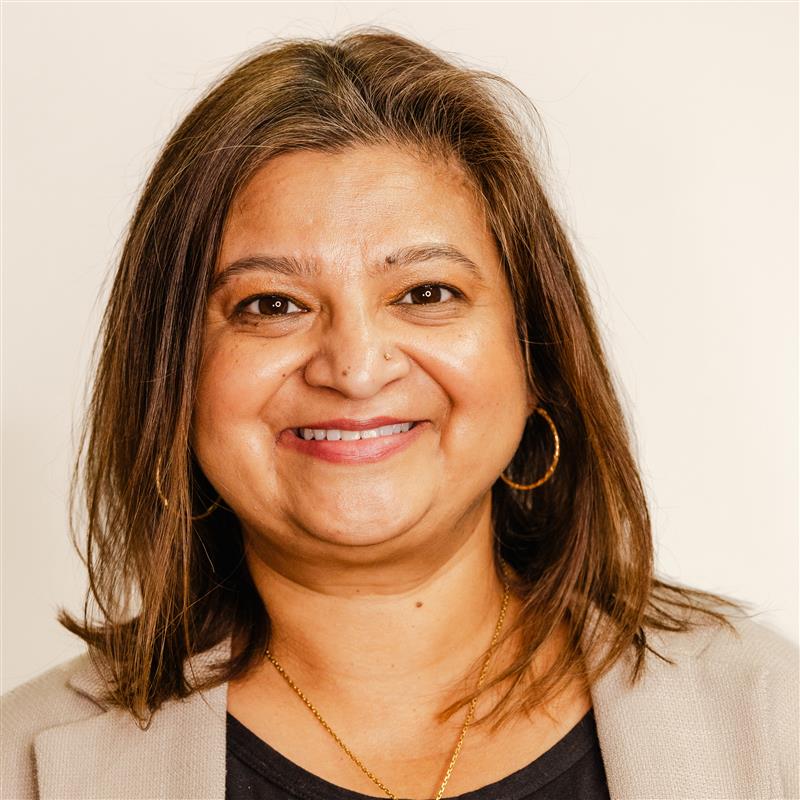
Farah Saeed
Industry Director, Energy & Environment at Frost & Sullivan
How will you equip your organization to thrive amid industry transformation?
From maximizing data utility and enabling agile assets to driving seamless platform integration, Itron’s evolution from a hardware provider to an outcome-based IoT leader reflects a broader shift toward purposeful innovation and strategic partnerships that are shaping the future of the grid.
Frost & Sullivan’s Transformational Growth Leadership (TGL) program equips organizations to lead through this transformation by bridging innovation, strategy, and execution for sustained growth.
Next steps on your growth journey:
✔️ Subscribe to our Energy & Environment Growth Opportunity Newsletter.
✔️ Join the Growth Council — an exclusive community of innovators.
✔️ Share your transformation story with a global audience.
✔️ Engage with our sustainability experts to explore new opportunities, technologies, and megatrends shaping the grid of the future.
Appendix
To know more about lucrative growth opportunities, emerging megatrends, companies to action, and best practices in Sustainability and Circular Economy, view Frost & Sullivan’s detailed portfolio of analysis on the subject:
📌 Enhancing Grid Resilience: Emerging Technologies for Modern and Reliable Power Systems
📌 Top 10 Growth Opportunities in the Global Industrial and Irrigation Water Management Markets, 2025
📌 Top 10 Strategic Imperatives in the Global Power and Energy Industry, 2025
📌 Latin American Waste Recycling and Circular Economy Markets Outlook 2025
📌 Latin American Water and Wastewater Outlook, 2025