Download Frost & Sullivan’s Transformational Growth Leadership Discussion with Peter Londa, President and CEO of Tantalus Systems
As global energy systems accelerate toward electrification, resilience, and affordability, utilities face mounting pressure to modernize their distribution grids. Tantalus Systems is quietly driving this transformation by capturing data from every point in the network, from substations to smart meters, and converting it into actionable intelligence. This empowers utilities to improve efficiency, and build a resilient, future-ready grid.
In this exclusive Transformational Growth Leadership (TGL) conversation, Peter Londa, President and CEO of Tantalus Systems, and Jonathan Robinson, Associate Partner & Global Practice Area Leader, Energy at Frost & Sullivan, discuss regulatory megatrends, data-driven strategies, workforce challenges, and what the utility of 2035 could look like in a data-driven world.
“Our mission is to help electric utilities modernize the distribution grid, from automating substations to accessing intelligent devices behind the meter. Ultimately, it’s about transforming today’s infrastructure into an intelligent, predictive system driven by data.”
— Peter Londa, President and CEO, Tantalus Systems
Modernizing Distribution Grid Through Policy, Partnership, and Progress
Jonathan Robinson: Peter, are the current regulatory frameworks and funding mechanisms aligned with the kind of innovation needed to achieve the goals of the energy transition?
Peter Londa: We’re seeing more regulatory activity than ever before, particularly across the United States. Over the past several years, we’ve witnessed federal and state programs and funding to support modernization.
At Tantalus, we focus most closely on the distribution grid, and that’s where we see real progress. A standout example is Connecticut, where regulators created the Innovative Energy Solutions (IES) program. It’s part of the state’s broader goal to build an equitable, modern grid. The framework allows investor-owned utilities to evaluate and test innovative technologies, verify their performance, and if they meet cost and reliability benchmarks, fast-track them for regulatory approval.
This type of process gives utilities confidence to innovate while ensuring ratepayers benefit from the improvements. It also creates a healthy environment for companies like Tantalus to work closely with utilities on real-world deployments.
Jonathan Robinson: Could that type of model be replicated elsewhere?
Peter Londa: Yes, and we’re already seeing that happen. Several states are following similar paths. The value of a program like Connecticut’s is that it allows utilities to experiment safely, to pilot, measure, and adjust before scaling.
That kind of flexibility not only helps utilities discover what works but also what doesn’t. Failing fast has value because it prevents wasted investments and helps everyone move more quickly to the right solutions. It’s beneficial both to the utilities and to technology vendors like us that are trying to innovate at the pace the energy transition demands.
We also see increasing collaboration among public power and cooperative utilities, including regional joint action agencies that pool resources and share learning. It’s a very positive trend. All this activity signals that modernization isn’t being left to chance. It’s being structured, measured, and incentivized.
Empowering the Utility of the Future with Data and Intelligence
Jonathan Robinson: You’ve led significant work on the “Utility of the Future.” What key attributes will define the most successful utilities by 2035?
Peter Londa: First, it’s important to understand how diverse the U.S. market is. There are more than 2,700 distribution utilities, ranging from those with millions of meters to small systems with fewer than 10,000.
We survey a broad range of them every year, and the results are very telling. In our most recent survey, conducted this year, the vast majority, nearly all respondents, said that modernizing the distribution grid is a top strategic priority.
But here’s the gap: only about 3% of those utilities feel they are adequately prepared to do it. That difference between aspiration and readiness is striking.
When we dug deeper, the common thread was data. Utilities overwhelmingly said that having a single, unified view of grid data, both what they already collect and what will come from new devices, is absolutely essential. Eighty-seven percent identified that as critical. But only a small fraction has the systems or processes to achieve it.
That’s where we see the next wave of transformation. The utilities that will lead by 2035 are the ones that treat data as a strategic asset. They’ll know how to capture it, normalize it, and analyze it across devices and systems, whether that data comes from a smart meter, a substation sensor, or a distributed energy resource.
Jonathan Robinson: That’s a big gap, just 3% saying they’re ready.
Peter Londa: It is. And it underscores how much opportunity there is. Think about it. Every other industry today is data-driven, from finance to healthcare. Utilities are catching up, but historically they’ve been slower to adopt digital systems. Some are still using manual meter reads or drive-by systems that capture one data point per month.
The world they operate in now demands real-time visibility. As the number of distributed resources such as solar panels, heat pumps, EV chargers, home batteries, continues to grow, utilities need to monitor and manage power flow dynamically. That’s the shift we’re helping them make, from monthly billing data to continuous, actionable intelligence.
Building Flexible, Affordable, and Resilient Grids for a Low-carbon Future
Jonathan Robinson: Utilities must decarbonize while maintaining resilience and keeping energy affordable. How can Tantalus’s technology support those objectives?
Peter Londa: We look at this through four dimensions: decarbonization, resilience, affordability, and flexibility. None can stand alone; they’re interdependent.
For example, as renewables increase, we gain clean energy but lose the natural inertia that stabilizes the grid. That makes systems more vulnerable to volatility. We’ve seen this play out in regions affected by severe weather, where loss of flexibility has led to outages or high costs.
At the same time, electrification adds pressure at the edge of the grid. When I charge my own electric vehicle, I double the power being delivered to my home. That’s great progress in sustainability terms, but it stresses the transformer, the meter socket, and the power lines that serve me. Multiply that across a neighbourhood, and it’s easy to see the impact.
To manage this, we developed a grid modernization platform that connects devices, communications, and analytics. It’s a holistic approach. It gathers data from intelligent sensors across the distribution system, transmits it securely, manages it efficiently, and runs analytics on top, including machine learning, to detect patterns and predict issues before they cause failures.
The key is automation and insight. Utilities can extend transformer life, identify overloaded feeders, and prioritize capital spending. They can make informed decisions that protect both the customer and the system.
Jonathan Robinson: And that helps with affordability as well.
Peter Londa: Exactly. By reducing failures, unplanned outages, and emergency repairs, utilities lower costs. That’s how modernization ties directly to affordability.
The technology doesn’t have to be vendor specific. It can collect data from any compatible device, regardless of manufacturer. The more interoperable the systems are, the easier it is for utilities to see the full picture and act accordingly.
Harnessing Data Interoperability for Operational and Financial Excellence
Jonathan Robinson: You mentioned interoperability several times. How does it affect the economics of modernization?
Peter Londa: It’s critical. Utilities use equipment and systems from multiple suppliers, often built at different times and to different standards. That creates silos of data. To manage the grid effectively, all that information has to flow together.
When data is interoperable, utilities can see exactly where to invest. They can identify high-risk transformers, aging circuits, or areas with voltage fluctuations before those issues turn into outages.
We look at things like power quality parameters such as voltage, current, sags, swells, harmonics, waveform captures, covering about 17 different parameters in total. That level of visibility allows us to pinpoint where assets are stressed, where maintenance is needed, and how to avoid unnecessary costs.
Every time a device fails unexpectedly, it’s expensive. A utility has to send a crew, often at night, and replace the asset at a higher cost. By predicting failures before they happen, we can help utilities reduce those reactive expenses and improve service reliability.
That’s how data interoperability translates into both operational and financial benefits
From Reactive to Predictive Operations: Transforming Utilities’ Decision-making Through Data
Jonathan Robinson: How are utilities using all this data to change how they make decisions day-to-day?
Peter Londa: The shift is dramatic. Instead of operating on periodic data or manual reads, utilities now have streams of real-time information.
With that, they can move from reactive to predictive operations. If voltage sags are increasing on a feeder, or harmonics are showing unusual patterns, analytics can flag that before a failure occurs. The utility can take proactive action before customers are impacted.
It’s the difference between guessing and knowing. And it’s changing how utilities prioritize their budgets. They can focus investment on the assets that deliver the highest reliability improvement.
At the same time, this visibility helps with broader goals such as resilience and flexibility. As distributed resources grow, the ability to see both sides of the meter, utility and consumer, becomes essential for balancing load and maintaining stability.
Bridging the Workforce Gap with Automation, Intelligence, and Culture
Jonathan Robinson: Workforce challenges remain a big issue. Can technology help offset the shortage of experienced engineers, and maybe attract new talent?
Peter Londa: Yes. Automation is part of it, but there’s also a cultural shift underway. Utilities are cautious by nature because they exist to deliver reliable service, and that means risk avoidance. But the sector is going through a generational change. Many engineers who maintained the grid for decades are retiring, and it’s becoming harder to attract replacements.
Technology helps in two ways. First, by automating routine operations, it lets existing teams focus on higher-level problem-solving. Second, and maybe more importantly, it makes the industry more appealing to younger engineers.
When we talk about data analytics, AI, and machine learning in the context of sustainability and infrastructure resilience, it resonates with the next generation. They want to work on meaningful, forward-looking challenges.
We’ve seen this at Tantalus ourselves. As we expand our focus on data-driven intelligence, we’ve become a destination for talent who want to make a difference in clean energy and digital transformation. The same can happen for utilities.
Translating Data Intelligence into Measurable ROI
Jonathan Robinson: How does all this intelligence translate into measurable economic outcomes for utilities?
Peter Londa: Through precision and prevention. Every data point we collect has value because it reduces uncertainty. If a utility can predict which transformer is likely to fail next month, it can schedule a replacement during regular hours instead of paying overtime for an emergency repair at night. That alone creates a measurable ROI.
The same applies to system upgrades. When you know exactly where the problems are, you can target spending instead of spreading it thinly across the network. That leads to fewer outages, longer asset life, and better reliability for customers.
That is the new economics of modernization, using intelligence to turn resilience into financial performance.
Vision 2035: Building the Intelligent, Predictive Grid
Jonathan Robinson: Looking ahead, what’s your vision for utilities in 2035 and beyond?
Peter Londa: By 2035, the grid will be intelligent and predictive. It won’t be replaced but will be modernized from within. Existing infrastructure will become smarter through data and analytics.
Utilities will be able to anticipate problems, optimize maintenance, and integrate distributed energy resources seamlessly. As consumer behavior continues to evolve, with electric vehicles, home storage, and connected appliances, the ability to understand and manage data in real time will be the defining capability.
Our focus at Tantalus is on helping utilities capture that data and use it effectively. The companies that do this well will be the ones that define the next era of energy leadership.
Closing Reflection
As the energy landscape transforms, Tantalus Systems is helping utilities bridge the gap between ambition and readiness. By making grid data accessible, interoperable, and actionable, the company is turning infrastructure into intelligence.
Under Peter Londa’s leadership, Tantalus continues to prove that modernization is not just about new equipment; it is about empowering utilities with insights that improve resilience, reduce costs, and extend the life of critical assets.
The grid of the future will not just deliver power. It will deliver knowledge that strengthens communities, protects investments, and builds the foundation for a sustainable energy future.

About Peter Londa
President and CEO of Tantalus Systems
Peter Londa, President & CEO of Tantalus Systems since 2014, is a seasoned smart grid executive with over 20 years of leadership experience. He also serves as a director on the company’s board. Prior to Tantalus, Pete was Independent Chair of the Board at World Energy Solutions (NASDAQ: XWES), where he led its successful sale to EnerNOC (NASDAQ: ENOC). He previously served as CEO of BPL Global, a smart grid technology provider with global operations, and oversaw its acquisition by Danaher Corporation (NYSE: DHR). Peter’s career spans leadership roles in technology and investment banking at firms including The Chart Group, Thoughtworks, and SG Cowen. He holds a JD, MBA in Finance and Corporate Law, and a BA in Economics from Emory University.
Jonathan Robinson is the Associate Partner and Global Practice Area Leader for Energy at Frost & Sullivan, with over 20 years of experience guiding global organizations through the transition to sustainable, digital, and resilient energy systems. A seasoned research and consulting professional, he delivers strategic insights that drive transformational growth across the energy sector. Jonathan has provided consulting and market intelligence to OEMs, solution providers, utilities, private equity firms, government agencies, and SMEs worldwide. His expertise spans conventional and renewable power, energy storage, emerging energy business models, and industrial technology innovation. He also supports business development through executive presentations, industry conferences, and client strategy sessions.
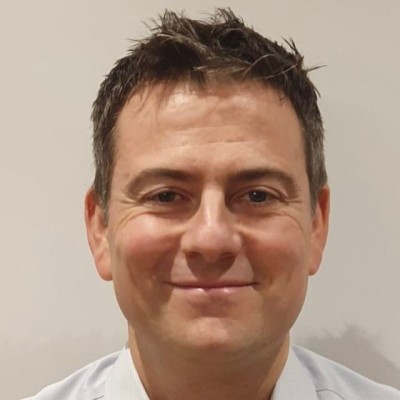
About Jonathan Robinson
Associate Partner & Global Practice Area Leader, Energy at Frost & Sullivan
How will you equip your organization to thrive amid industry transformation?
From strengthening grid performance to enabling predictive intelligence, Tantalus Systems’ transformation into a grid modernization platform highlights its commitment to empowering utilities for a resilient and future-ready energy landscape.
Frost & Sullivan’s Transformational Growth Leadership (TGL) program equips organizations to lead through this transformation by bridging innovation, strategy, and execution for sustained growth.
Next steps on your growth journey:
✔️ Subscribe to our Energy & Environment Growth Opportunity Newsletter.
✔️ Join the Growth Council — an exclusive community of innovators.
✔️ Share your transformation story with a global audience.
✔️ Engage with our sustainability experts to explore new opportunities, technologies, and megatrends shaping the grid of the future.
Annexure: Driving Grid Modernization Through Data-driven Innovation
Tantalus Systems’ vision for modernizing the distribution grid mirrors the global shift toward smarter, more resilient energy systems. To support leaders navigating this transformation, Frost & Sullivan offers key insights into intelligent grid infrastructure, data-driven operations, and adaptive energy systems.
- Grid Interactive Building Solutions Market, Global, 2026–2035
- Enhancing Grid Resilience: Emerging Technologies for Modern and Reliable Power Systems
- Smart Electricity Metering Industry, Global, 2024–2032
- Frost Radar™: Digital Platforms for Customer Care and Engagement in Energy Utilities, 2025
- Top 10 Strategic Imperatives in the Global Power and Energy Industry, 2025
Each of these analyses complements the themes of this TGL, including grid modernization, data-driven intelligence, and operational resilience, and provides a strategic roadmap for organizations shaping the next generation of electric utilities.




