A conversation with Howard Heppelmann, CEO and James Zhang, CPO, OpsMate AI — led by Sebastian Trolli, Head of Research, Industrial Automation & Software, Frost & Sullivan.
Download Frost & Sullivan’s Transformational Growth Leadership Interview with Howard Heppelmann, CEO and James Zhang, CPO, OpsMate AI.
As manufacturers confront unprecedented workforce shortages, increasing operational complexity, and rising pressure to improve productivity, a new class of technology is emerging to reshape how factories operate. OpsMate AI, founded in 2024 by industry veterans Howard Heppelmann and James Zhang, is part of a new wave of AI-native companies focused on transforming how frontline teams interact with data, solve problems, and execute decisions on the factory floor.
In a conversation led by Sebastian Trolli, Head of Research for Industrial Automation & Software at Frost & Sullivan, that took place at HighByte’s DataOps Day 2025 in Boston, Massachusetts, Howard and James shared the story behind OpsMate AI, the accelerating impact of agentic AI on modern manufacturing, and the transformative potential of a hybrid workforce combining human expertise with digital assistants.
Origins of OpsMate AI
Sebastian Trolli: Let’s begin by telling the world: what is OpsMate AI, and what inspired you to build it?
Howard Heppelmann: We founded OpsMate in the summer of 2024. James and I had been working together at PTC, where I led the Industrial IoT (Internet of Things) business focused on manufacturing and James was VP of strategy. Going back almost three years, we saw the breakthrough potential of what was then generative AI and is now agentic AI. We knew it would completely transform how people interacted with data and knowledge inside factories.
Frankly, we got so excited about the opportunity that we both decided to leave and start OpsMate AI. The name itself is intentional — your “AI partner” or “mate” in manufacturing. Our intent is to bring these new technologies directly into the factory to help address many of the challenges the industry faces today.
James Zhang: Exactly. We believe there is a huge opportunity to run factories better. But legacy platforms reached their limit. When generative AI and agentic AI appeared, it became obvious that the industry needed a new platform — an AI-native agent platform purpose-built for the factory. That’s exactly what we’re building.
“Imagine entering a factory and simply having a conversation with your data. That’s the potential we see. This technology lets people ask what’s happening, why it’s happening, and what they should do next — all in natural language.”
— Howard Heppelmann, CEO, OpsMate AI
The Workforce Crisis: A New Age of Manufacturing Challenges
Sebastian Trolli: Workforce shortages and rising operational complexity are reshaping manufacturing. From your perspective, how can AI help close the skills gap while improving productivity on the factory floor?
Howard Heppelmann: Today, the entire world — especially Western Europe and the United States — understands there’s a workforce crisis limiting productivity. The most experienced people have left or are about to retire, and it’s difficult to find the next generation of skilled workers.
Alongside the century-old challenge of increasing productivity, reducing costs, improving safety, and improving quality, manufacturers now face a major headwind: the skills gap.
This technology directly addresses that gap. It breaks down the know-how needed to build and deploy applications and puts it in the hands of the users. And it introduces a natural language interface to the factory’s data. Whether through voice, phone, or a web URL, people can simply talk to their data.
Imagine a future where you enter the factory and instead of opening 100 different applications, you have a conversation with what’s happening. That’s the opportunity we see.
Even more importantly, this technology enables teams to stand up digital assistants that boost human productivity and take on tasks humans simply aren’t well suited for. If you hand me ten 50-page documents and tell me to summarize them by the end of the day, it’s not happening. But digital agents can.
James Zhang: Factories are complex and dynamic environments. Ultimately, the speed and quality of decisions determine performance. Traditional technology stops at turning data into insight. We go further — we combine data, insights, knowledge, and reasoning so factories can make better decisions and take faster actions. That’s how we free teams from tedious, manual work and move toward what we call the hybrid workforce.
Opportunities Ahead: Driving Growth by Solving Real Problems
Sebastian Trolli: You’ve both mentioned opportunities. What are your aspirational growth goals, and what opportunities in the market will help you get there?
Howard Heppelmann: James and I have been selling to manufacturing our entire careers. If you look at factories globally, and measure what’s scheduled versus what’s actually produced, factories operate at about 40–60% efficiency. That’s consistent everywhere.
The opportunity to improve this is enormous.
If we can help customers solve that problem, OpsMate AI’s growth will take care of itself. So, we focus on discrete and batch manufacturing companies facing the workforce crisis. We give frontline teams instant situational awareness — the ability to ask:
- What’s happening?
- Why is it happening?
- What should we do about it?
And sometimes, we even dispatch digital workers to take care of tasks automatically.
Most plans fall apart the first hour they hit the factory. Helping frontline teams get immediate, context-rich insights and recommended actions — that’s the key.
Then agentic technology can take it further: certain tasks are simply better suited for digital agents. If we solve this problem, the impact on the industry will be monumental.
James Zhang: Productivity has been flat for a decade. CEOs tell us their biggest challenge is skilled labor shortages. Turning knowledge and data into action is not “nice to have” — it’s the only way to address labor shortages at scale. The hybrid workforce is the only way forward.
Howard Heppelmann: And while this is a global headwind, it’s particularly acute here in the U.S. Everyone is talking about American dynamism and re-industrialization. But that’s difficult to achieve when the sector is already constrained. Skilled technical resources — engineers, technicians, quality specialists — are extremely hard to find and develop. The best way to address that is to equip the people who are already there with better tools and remove tasks they don’t want to do and aren’t naturally good at.
Building the OpsMate AI Brand
Sebastian Trolli: OpsMate is a new company in a highly competitive space. What are your aspirations for the brand?
Howard Heppelmann: From a brand perspective, we talk about giving customers the ability to take everything they know about their operations — data, information, and knowledge — and transfer it into a factory brain. That factory brain powers a digital workforce.
We see our brand as the platform that enables the hybrid workforce of the future, coordinating processes across the factory at digital speed and empowering the existing workforce to be the best they can be.
James Zhang: From a technology standpoint, every CEO we speak with wants to do something with generative AI and agentic AI. We want them to think of OpsMate AI whenever they decide to bring this technology into their factories. We democratize the power of AI on the shop floor.
“The hybrid workforce isn’t about replacing people — it’s about amplifying them. When digital agents handle repetitive analysis and coordination, humans can focus on the high-value decisions that truly move operations forward.”
— James Zhang, CPO, OpsMate AI
A Message to the Industry: Move Faster
Sebastian Trolli: Final question: What message do you want to send to the manufacturing community?
Howard Heppelmann: My message is simple: however fast you think you’re going, it’s not fast enough. The industrial space has the slowest clock speed of any industry. Companies need to be careful and responsible with AI — but many are moving far too slowly. I worry they will lose competitive advantage by not leaning in sooner.
AI adoption is unusual because it began with consumers, not enterprises. Everyone uses ChatGPT or similar tools. Companies are lagging behind their own people.
We run OpsMate as a hybrid workforce internally. People sometimes ask how many employees we have. I always ask: do you want me to count just the human employees or the digital employees too? We use AI in everything we do, and we are dramatically more productive because of it.
James Zhang: In 20 years of working with factories, I’ve never seen a lack of desire for innovation on the front lines of operations. Never. With agentic AI, we see the strongest pull from frontline teams themselves. This technology empowers frontline teams to innovate — which is completely different from traditional adoption patterns.
Howard Heppelmann: One of the biggest challenges in manufacturing technology is scaling. Factories are unique — almost like snowflakes. Problems differ week to week, line to line. Historically, it has been nearly impossible for software companies to address all these scenarios.
With agentic AI, we put tools directly into the hands of the most remote frontline workers. Once you do that, innovation can come from anywhere, every day. That’s how you break out of pilot purgatory.
Closing Reflection
OpsMate AI is leading the next major shift in manufacturing: the rise of the hybrid workforce. By enabling natural-language interaction with factory data and deploying digital agents at scale, the company is helping frontline teams work smarter, faster, and more effectively.
This isn’t incremental change; it’s a new operating model where humans and AI collaborate seamlessly. As Howard and James note, the technology is ready, the need is urgent, and speed matters. The manufacturers that act quickly, empower their people, and adopt AI-native tools will define the future of industrial performance.
About Howard Heppelmann
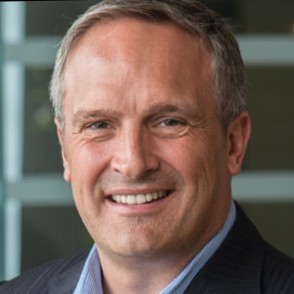
Howard Heppelmann is the Co-founder and CEO of OpsMate AI, an AI-native platform designed to modernize manufacturing operations. Prior to launching OpsMate, he led PTC’s Manufacturing and Industrial IoT business, where his leadership contributed to the company being recognized twice by Microsoft as the Manufacturing and IoT Partner of the Year (2021 and 2023).
With more than 25 years of experience driving digital transformation across global factories, Howard co-founded OpsMate AI to empower frontline teams with real-time, contextual, operational intelligence. His vision is to help manufacturers move from siloed systems to a unified, agent-driven “Factory Brain” that accelerates decision-making and enables the hybrid human–AI workforce of the future.
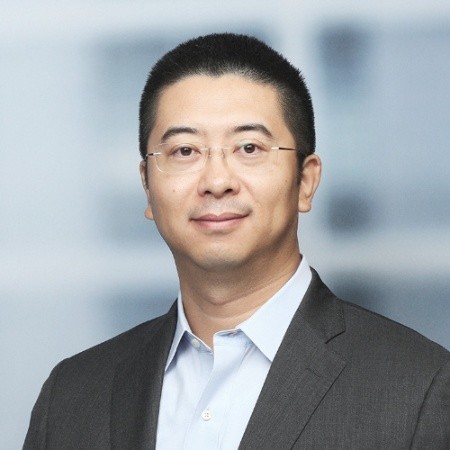
James Zhang is the Co-founder and Chief Product Officer of OpsMate AI. Trained as a mechanical engineer, James has spent his entire career building and delivering enterprise software that empowers frontline teams and helps factories operate more efficiently. Before founding OpsMate AI, he held product leadership roles at PTC, Fujitsu, and SAP, where he focused on transforming manufacturing operations through technology.
About James Zhang

About Sebastian Trolli
Sebastián Trolli is Research Manager and Global Head of Research for Industrial Automation and Software at Frost & Sullivan. With over 20 years of experience spanning industrial automation, industrial software, digital industries, and manufacturing, he brings deep expertise in leveraging emerging technologies, market trends, and business models to drive industrial growth. He has been recognized as a Top 50 Thought Leader in Manufacturing and Industry 4.0, often speaks at industry events, webinars, and podcasts, and is a Senior Member of the International Society of Automation (ISA). His domain expertise spans the entire industrial value chain—from design and engineering through process control, operations, services, and enterprise integration. His career includes 13 years with Honeywell (Process Solutions and Connected Industrial divisions) and leadership roles at Clariant, Akzo Nobel, and Precision Valves Corp, focusing on advancing industrial transformation through strategic insights and innovation.
Join the Movement: Building the Future of Continuous Transformation
At Frost & Sullivan, we celebrate leaders redefining the boundaries of industrial progress. If your organization is pioneering new ways to connect people, technology, and processes, we invite you to share your story through our Transformational Growth Leadership series.
Next steps on your growth journey:
- Subscribe to our Growth Opportunity Newsletter for insights on industrial innovation
- Join the Growth Council — a global community of transformation champions
- Share your transformation journey with a global audience
- Engage with our experts to explore new growth opportunities in manufacturing
Annexure: The Future of AI-native and Hybrid Workforce Manufacturing
To dive deeper into the evolution of AI-native platforms, digital assistants, and the rise of the hybrid factory workforce, explore Frost & Sullivan’s latest research and strategic insights:
- Industrial Hybrid AI Market, Global, 2024–2029
- Frost Radar™: Electronic Computer-Aided Design, 2025
- Industrial Inspection Robotics, Global, 2024–2029
- Industrial Services Market, Global, 2025–2029
- Technological Advances in Edge AI Transforming Industry 4.0
- Growth Opportunities in the Industrial AI Market