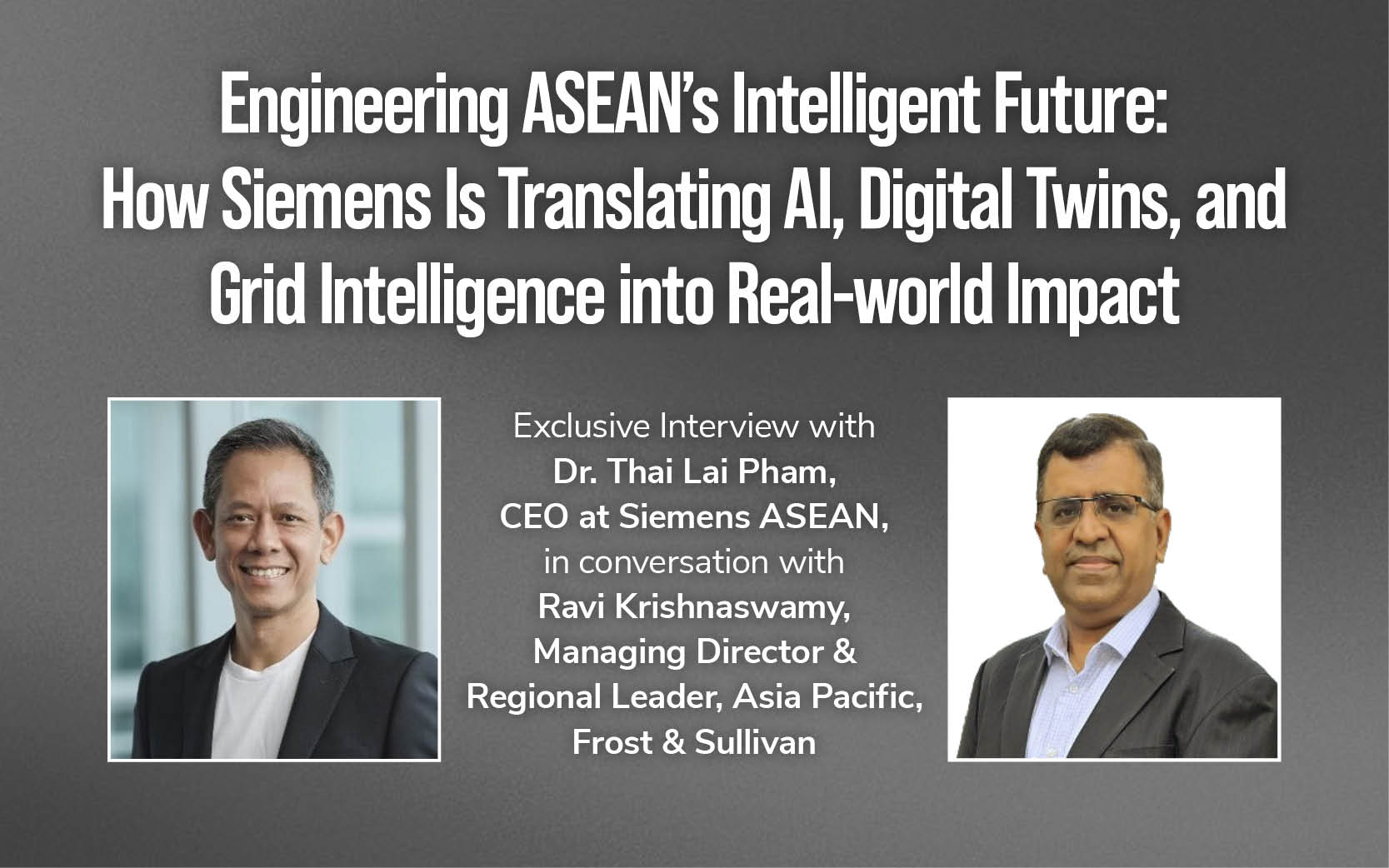
Dr. Thai Lai Pham, Chief Executive Officer, Siemens ASEAN, in conversation with Ravi Krishnaswamy, Managing Director & Regional Leader, Asia Pacific
Download Frost & Sullivan’s Transformational Growth Leadership Interview with Dr. Thai Lai Pham, CEO, Siemens ASEAN.
As Southeast Asia enters a decisive decade of industrial expansion, digital acceleration, and energy transition, Siemens is repositioning itself not just as an infrastructure provider, but as an architect of intelligent, sustainable systems. In this Transformational Growth Leadership (TGL) dialogue, Dr. Thai Lai Pham shares how Siemens is helping ASEAN manufacturers, utilities, and digital infrastructure operators move faster, operate smarter, and grow more sustainably by fusing the physical and digital worlds.
In conversation with Ravi Krishnaswamy, the discussion spans artificial intelligence, digital twins, data centers, grid modernization, workforce transformation, and Environmental, Social, and Governance (ESG), revealing how Siemens is grounding cutting-edge technology in measurable business outcomes.
AI as a Defining Industrial Inflection Point
Ravi Krishnaswamy: Thai, Siemens has been especially visible in recent months, particularly around AI and digitalization. From your vantage point, what are the most important transformational trends shaping ASEAN industries today?
Dr. Thai Lai Pham: If I reflect on the past two to three years, artificial intelligence stands out very clearly. We have seen many technology waves in the past: automation, digitization, even early data analytics but AI is fundamentally different. I genuinely believe it is a once-in-a-century technology shift.
A useful analogy is electrification. There was a time before electrification, where work was largely manual, and a time after, where entirely new industries and productivity levels emerged. AI will follow a similar trajectory. It is not just another tool; it is a foundational capability that will reshape how societies function and how industries operate.
What’s particularly interesting today is the convergence between consumer and industrial domains. Events like CES, which used to focus almost entirely on consumer electronics, now feature industrial companies at the center of the conversation. That tells us something important: digital intelligence is no longer confined to devices; it is entering factories, grids, buildings, and infrastructure at scale.
ASEAN is very much part of this story. The region is industrializing, urbanizing, and digitizing simultaneously, which makes the impact of AI even more profound.
“Artificial intelligence is not just another technology wave, it is a foundational shift, comparable to electrification. In ASEAN, where industrialization, urbanization, and digitalization are happening simultaneously, AI has the power to redefine productivity, resilience, and long-term competitiveness.”
— Dr. Thai Lai Pham, CEO, Siemens ASEAN
From Consumer AI to Industrial-grade Intelligence
Ravi Krishnaswamy: Many AI breakthroughs are consumer focused. How does Siemens differentiate its strategy in industrial AI?
Dr. Thai Lai Pham: That distinction is critical. Consumer AI systems are impressive, but they are often designed to tolerate a degree of inaccuracy. In industry, that margin simply doesn’t exist.
If an AI system in a factory hallucinates or produces unreliable outputs, the consequences can be severe – production downtime, safety risks, or even catastrophic failures. For most industrial applications, 70 or 80 percent accuracy is not acceptable.
This is where Siemens has a natural advantage. We bring together three elements: decades of deep domain knowledge, long-standing customer relationships across industries, and access to high-quality industrial data. Our ambition is to build AI models that are purpose-built for industrial environments; models that are explainable, reliable, and safe.
We are investing heavily in talent, combining AI specialists with engineers who understand real-world industrial processes. That fusion is what enables us to move from impressive demos to trusted, deployable solutions.
Digital Twins: Designing the Future Before It Exists
Ravi Krishnaswamy: Digital twins have become central to Siemens’ narrative. What tangible benefits are customers seeing today?
Dr. Thai Lai Pham: Digital twin technology is one of the most powerful enablers of industrial transformation. It allows companies to create a virtual representation of physical assets—products, factories, buildings, even entire energy systems before anything is built or modified.
Historically, companies built first and optimized later. That approach is slow, expensive, and risky. Today, with digital twins, you can simulate everything upfront: production flows, energy consumption, thermal behavior, logistics, and even human interactions.
The impact is dramatic. We routinely see time-to-market reductions of 30 to 40 percent, with comparable cost savings. Just as importantly, companies gain confidence, they can experiment virtually without disrupting real operations.
A striking example is VinFast. Using advanced product lifecycle management and simulation tools, they designed and built a full automotive factory in roughly 21 months. In a traditional automotive context, that timeline would have been almost unthinkable. Digital twins made it possible.
What’s equally important is that the digital twin doesn’t stop at commissioning. It evolves alongside the physical asset, continuously learning from real operational data and enabling ongoing optimization.
Greenfield and Brownfield Transformation
Ravi Krishnaswamy: Is this transformation mainly relevant for new facilities, or can existing operations benefit as well?
Dr. Thai Lai Pham: Both and that’s one of the strengths of this approach.
For greenfield projects, digital twins can be embedded from day one, shaping design, construction, and operations. For brownfield environments, the value can be even greater. You can simulate changes virtually, test different scenarios, and implement improvements without interrupting ongoing operations.
We have applied these principles beyond manufacturing. In buildings, for example, we’ve used digital twins and AI-driven energy simulations to retrofit facilities that are nearly 20 years old. In one case, energy consumption was reduced by up to 30 percent, without major structural changes.
This approach scales across campuses, hospitals, transportation hubs, and smart cities, making it highly relevant for ASEAN’s diverse infrastructure landscape.
Data Centers: Intelligence Under Pressure
Ravi Krishnaswamy: Data centers are growing rapidly across the region. Where do you see the biggest challenges and opportunities?
Dr. Thai Lai Pham: Energy consumption and water usage are the two most pressing challenges. Data centers are essential for AI, cloud services, and digital economies, but they place enormous strain on power and cooling systems.
With digital twins, we can simulate airflow, heat distribution, and cooling dynamics across an entire facility. Instead of applying uniform cooling everywhere, operators can target hotspots precisely, significantly improving efficiency.
This matters because generation capacity is not infinite. Even utilities face constraints on how quickly they can add new power. As demand rises, efficiency becomes the most immediate lever for sustainability and resilience.
Grid Intelligence and Electrification
Ravi Krishnaswamy: How does grid modernization fit into Siemens’ broader strategy, especially with electrification and renewables accelerating?
Dr. Thai Lai Pham: Electrification, renewable integration, and data center growth all converge at the grid. A modern grid must handle distributed generation – solar, wind, hydro – while balancing fluctuating supply and rising demand.
This requires intelligence. Simulation, predictive analytics, and AI enable grid operators to forecast generation based on climate data, manage variability, and reduce transmission losses.
In ASEAN, this challenge is amplified. Many grids are aging and fragile, especially in large countries like Indonesia and Vietnam. Modernization not only improves reliability but also reduces energy losses, allowing existing generation capacity to be used more effectively.
We also see growing momentum toward regional grid interconnections. While geopolitics can slow progress, the economic rationale is strong. ASEAN’s long-term competitiveness depends on cross-border energy collaboration.
“True transformation happens when digital intelligence is embedded into real-world systems. By combining digital twins, AI, and deep industrial expertise, we help our customers design, operate, and sustain infrastructure that delivers measurable impact, not just innovation headlines.”
— Dr. Thai Lai Pham, CEO, Siemens ASEAN
Siemens’ Vision for ASEAN
Ravi Krishnaswamy: Looking ahead five years, how do you envision Siemens’ role in ASEAN?
Dr. Thai Lai Pham: Our vision is centered on combining the physical and digital worlds in a way that delivers real, everyday impact. Siemens has always had a strong foundation in hardware, infrastructure, and engineering. What we are doing now is amplifying that foundation with software, AI, and data.
Many people may not realize it, but Siemens technology touches their lives every day, from electricity and transport to buildings and manufacturing. Our ambition is to deepen that impact while making systems more sustainable, efficient, and resilient.
We want customers to see Siemens as their most trusted technology partner: a company with deep industrial expertise, a long-term perspective, and the ability to co-create solutions for complex challenges.
Culture, Talent, and a Growth Mindset
Ravi Krishnaswamy: How does Siemens’ culture support this transformation?
Dr. Thai Lai Pham: Siemens has always taken a long-term, technology-driven view. Innovation is deeply embedded in our culture, but just as important is our growth mindset.
In an era of rapid disruption, continuous learning is essential. We place strong emphasis on developing problem-solving skills, creativity, and empathy—qualities that differentiate humans from machines.
Talent development is also a core part of our ESG commitment. We partner with universities across the region, offering free access to Siemens software so students can learn with real industrial tools. Internships, reskilling programs, and workforce transformation initiatives ensure that growth is inclusive and sustainable.
A Message to the Industry
Why Execution Defines Leadership in the Age of Intelligence
As ASEAN navigates the convergence of AI, electrification, and sustainability, Siemens’ approach is grounded in execution rather than hype. By combining industrial heritage with digital innovation, the company is demonstrating that transformation does not happen through isolated technologies, but through integrated systems that deliver measurable value.
Under Dr. Thai Lai Pham’s leadership, Siemens ASEAN is positioning itself not just to participate in the region’s growth but to shape it, ensuring that intelligence, resilience, and sustainability advance together.
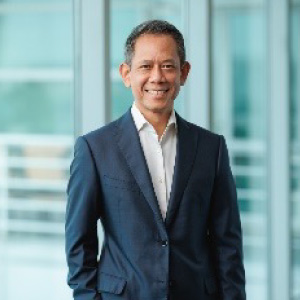
Dr Thai Lai Pham is President & CEO of Siemens in ASEAN and Siemens Vietnam, leading the company’s industrial core businesses across Digital Industries and Smart Infrastructure. Since assuming leadership in Vietnam in 2012, he has driven significant business expansion, from power generation and industrial automation to digitalized grids, smart factories, and intelligent mobility solutions—positioning Siemens as a key infrastructure partner and one of the most successful multinational companies in the country.
He also serves as Head of Smart Infrastructure ASEAN, focusing on digitally connecting energy systems, buildings, and industries to improve efficiency and sustainability. Dr Pham has held senior roles across R&D, strategy, product development, and sales within Siemens globally, spanning telecommunications, healthcare, energy, and building technologies. He is an Advisory Council Member of the Singaporean-German Chamber of Industry and Commerce and serves on the Industry Advisory Committee at the Singapore Institute of Technology.
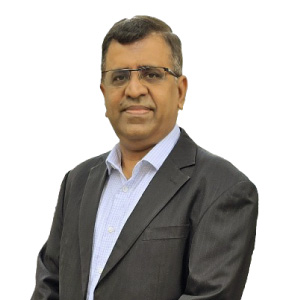
Ravi Krishnaswamy is the Managing Director for Asia Pacific at Frost & Sullivan, based in Singapore. He leads strategic initiatives across the region, focusing on strengthening client partnerships and delivering transformative growth strategies in a complex and fast-evolving Asia Pacific market. With over 25 years of industry experience, Ravi has worked across power utilities, energy transition, smart urban infrastructure, climate change and sustainability, industrial automation, semiconductors, and smart manufacturing.
Over the past two decades, Ravi has advised a wide range of clients including utilities, technology firms, infrastructure developers, government agencies, OEMs, financial institutions, and R&D organizations. A frequent keynote speaker and session chair at regional and global industry conferences, he is regularly quoted by leading business media such as CNBC, Bloomberg, and Channel News Asia. Ravi holds a degree in Mechanical Engineering from the National Institute of Technology (India) and a Post Graduate Diploma in Strategic Management from the Chartered Management Institute, UK.
About Ravi Krishnaswamy
Join the Conversation: Shaping ASEAN’s Intelligent Future
At Frost & Sullivan, we engage with leaders who are translating AI, digital twins, and grid intelligence into real-world industrial impact. Through our Transformational Growth Leadership (TGL) platform, we spotlight organizations that are redefining how industries design, operate, and grow sustainably.
Connect with us to:
- Subscribe to our Growth Opportunity Newsletter
- Join the Growth Council— an exclusive community for innovators
- Share your transformation journey with a global audience
- Engage with our experts to identify new growth opportunities and strategic pathways
Appendix
To gain deeper insight into how AI, digital twins, industrial autonomy, and edge intelligence are reshaping modern manufacturing and infrastructure, explore the following Frost & Sullivan thought leadership analyses aligned with this Transformational Growth Leadership dialogue:
- Growth Opportunities in the Industrial AI Market
- Data Center Operator Profiles, Colocation, Global 2026
- Data Center Infrastructure Investment, Global, 2024–2035
- Industrial Services Market, Global, 2025–2029
- Technological Advances in Edge AI Transforming Industry 4.0
- Grid Interactive Building Solutions Market, Global, 2026–2035
Together, these analyses deliver actionable intelligence for manufacturers, infrastructure operators, technology providers, and industrial AI leaders seeking to improve productivity, resilience, and sustainability at scale.