When we think about the future of mobility, our minds typically drift to Silicon Valley, Berlin, or Tokyo. But the real story and concrete opportunities are unfolding across overlooked regions like the Middle East and Africa.
As global mobility players embrace electrification, connectivity, and new mobility models, one automotive powerhouse is making bold bets in this overlooked region. Stellantis isn’t just building cars for emerging markets but is fundamentally rethinking how mobility works for two billion people with vastly different needs, resources, and aspirations.
In this exclusive conversation, Samir Cherfan, Chief Operating Officer of Stellantis Middle East & Africa, joins Fatima-Zahra Essakhi from Frost & Sullivan to discuss how his company is tackling affordability, infrastructure gaps, and the expectations of a rapidly urbanizing population. Their discussion also explored how Stellantis is driving sustainable transformation that could reshape the automotive industry in the Middle East and Africa region.
Affordability, Sustainability, and Connectivity – Mobility Megatrends in Focus
Fatima-Zahra Essakhi: Samir, the Middle East and Africa are among the most diverse and dynamic regions in the world. What transformations do you expect to see in the regions’ automotive industry over the next three to five years?
Samir Cherfan: This region is incredibly diverse. You’re talking about regions where the per capita gross domestic product (GDP) ranges from $2,000 to $70,000. The African continent alone will be experiencing massive demographic growth and urbanization unlike anything the developed world has ever seen.
When we talk about mobility here, we’re not just talking about luxury vehicles or tech-loaded sedans. We’re talking about something far more fundamental: making mobility accessible, sustainable, and connected for billions of people.
There are three megatrends shaping the next few years:
- Affordability: Mobility must be accessible to all. The vast majority cannot afford expensive vehicles, so the industry must provide practical and cost-effective transportation solutions that meet differing needs and resources.
- Sustainability: Electrification and clean mobility are no longer optional, they’re mandatory. From micro-mobility to passenger cars, sustainability is driving change.
- Connectivity: For the new generation, connectivity isn’t a luxury feature, it’s a given. Whether they’re at home, at work, or on the road, they live in a connected world.
These three forces will shape the transformation of mobility in this region. Neglect even one, and you lose relevance with billions of customers.
Best Practices in Software-defined Vehicles
Fatima-Zahra Essakhi: Let’s talk about software-defined vehicles (SDVs). This shift is reshaping how cars are developed, updated, and monetized. How does this transformation play out in your region?
Samir Cherfan: A software-defined vehicle (SDV) isn’t just “a car with more tech.” It’s built around centralized intelligence, continuous over-the-air updates, and digital ecosystems that evolve every single day.
At Stellantis, we’ve developed three major technological breakthroughs that work together:
- STLA Brain: Our proprietary software platform that orchestrates AI integration and enables seamless over-the-air updates. Think of it as the nervous system of the vehicle.
- Smart Cockpit: An intelligent, continuously upgradable interface that handles navigation, entertainment, and productivity using voice, touch, or gesture commands.
- Autonomous Driving Systems (ADS): Advanced safety features and Level-3 hands-free capabilities that redefine what’s possible on roads today.
Together, these technologies are fundamentally redefining how people interact with their cars. Yes, full autonomy will take time.
But connectivity and intelligence? That’s here now. Having your car update itself, improve its features, and anticipate your needs will simply be the new normal.
WATCH THE FULL VIDEO:
Engineering Without Borders Across Africa and the Middle East
Fatima-Zahra Essakhi: You’ve mentioned that Stellantis has strong technical capabilities in this region. Are software and R&D also being developed locally, or is that still concentrated in Europe?
Samir Cherfan: We’re developing it here. All of it. We have around 15,000 people across the Middle East and Africa, including roughly 5,000 engineers between Stellantis and our trusted partner ecosystem. We’re fully capable of building vehicles, validating platforms, and developing next-generation technologies right here.
This is no longer a region defined by manufacturing alone. It’s a center of engineering ingenuity and innovation. The shift in mindset is essential—recognizing that technology and advanced problem solving are homegrown here, not just imported from outside our region.
“We make electric cars, or any technology that reduces CO₂ emissions, not because it’s trendy, but to make a better world for our kids.”
— Samir Cherfan, COO, Stellantis Middle East and Africa
Vehicle Electrification as a Strategic Imperative
Fatima-Zahra Essakhi: Electrification is still in early stages here, with infrastructure and affordability as major barriers. What’s your outlook, and how is Stellantis accelerating the transition?
Samir Cherfan: Every time I discuss electrification, I start with why we do it? Because that changes everything. We make electric cars or invest in any technology that reduces CO₂ [carbon dioxide] emissions not because it’s trendy. We do it because we believe we’re responsible for the world we leave behind.
Stellantis already offers electric versions across our entire model line, but our commitment goes far deeper. We’re pioneering sustainability and circular economy models that most competitors aren’t even thinking about:
- Battery Recycling Excellence: Our battery program recycles up to 99% of materials, prioritizing resource recovery and reuse over extraction.
- Affordable EV Programs: We are bringing electrification within reach for everyday consumers, not just Chief Executive Officers (CEOs).
Sustainability and affordability must go hand in hand. Today, if you include running costs, electric mobility is already cost-competitive in many regions. The real challenge now is charging infrastructure, which is why hybrid and range-extender technologies remain important as transitional solutions.
Combating Rising Competition with Regional Manufacturing
Fatima-Zahra Essakhi: Chinese original equipment manufacturers (OEMs) are expanding aggressively across Europe and the Middle East. How are you viewing their entry, and what’s Stellantis’ playbook in response?
Samir Cherfan: Competition never really stops—it just changes faces. Fifteen years ago, everyone was worried about Japanese brands reshaping the game. Then came the Korean wave. Now it’s the Chinese, and frankly, tomorrow it might be the Indians.
Competition isn’t a threat to fear. It’s an invitation to innovate faster. What matters is how we adapt. At Stellantis Middle East and Africa, our strategy is clear:
- Today, 30% of our cars sold in the region are produced locally.
- Within three years, we will increase that to 90% and we will do it at Chinese cost levels.
- We’ve already achieved this in Morocco, where local production is 28% cheaper than western sourcing. Turkey is following, and we’re expanding in Algeria, Egypt, and other countries as well.
But here’s what sets us apart: we’re not just assembling vehicles. We’re building fully integrated local ecosystems. Right now, Stellantis is five times more industrially integrated than any other player in this region. We’re transforming the countries where we operate—creating real value, generating employment, and building enduring partnerships with governments.
Attending to the mobility for all is part of our reasons to exist. It’s part of our DNA.
— Samir Cherfan, COO, Stellantis Middle East and Africa
Mobility for All: Innovative Business Models in Micro-mobility
Fatima-Zahra Essakhi: Another emerging area is micro-mobility—e-scooters, small EVs, and urban mobility solutions. Stellantis has been active here too. How do you see micro-mobility evolving in this region, and what role is Stellantis playing?
Samir Cherfan: In the next 50 years, the world will have 1 billion fewer wealthy people and 3 billion more low-income people. Africa alone will reach 3.7 billion inhabitants: that’s 40% of the world’s total population.
The demand for affordable transportation, especially vehicles under $12,000, will explode. And here’s the critical insight: the micro-mobility segment will be seven times larger than today’s traditional automotive industry in Africa.
That’s why Stellantis created solutions like the Citroën AMI and Opel Rocks-e—compact, affordable, urban-ready vehicles addressing real needs. We also developed TRACE, a revolutionary utility vehicle designed around inclusion and entrepreneurship.
TRACE carries 500 kilograms and 3 cubic meters of cargo at an incredibly low price point, enabling small business owners, and entrepreneurs who need a reliable, affordable tool to generate income and build livelihoods.
In Morocco, TRACE is offered through microcredit financing, as little as 50 dirhams per day (around $5) on a lease-to-own basis. Even people without formal education or bank accounts can access this vehicle, start earning, and become owners within 48 months.
We partner with financial institutions to facilitate these financing solutions. Each TRACE package includes health and product warranties tailored to customers who need affordable, reliable tools to work and build livelihoods.
Scaling Global Solutions from the Region
Fatima-Zahra Essakhi: Is TRACE designed specifically for Africa, or do you plan to scale it globally?
Samir Cherfan: It’s absolutely scalable. TRACE was designed with global competitiveness in mind. When we benchmarked it, we studied every existing solution worldwide, ensuring that its specifications and price make it viable in any market.
We can produce it anywhere in the world. The goal is not just to build vehicles but to create mobility solutions that serve people’s real needs across all continents.
Growth Opportunities on the Road Ahead
Fatima-Zahra Essakhi: As we close, if you had to name one defining opportunity and one defining challenge for the automotive industry in the Middle East and Africa over the next decade, what would they be?
Samir Cherfan: They’re actually two sides of the same coin: demographic transformation.
Africa’s population will grow to 3.7 billion people, and the challenge, and opportunity, is how to provide them with mobility that creates value and supports economic development. As a mobility provider, Stellantis has a vital role to play in addressing this transformation responsibly and sustainably.
As the global automotive industry undergoes its greatest transformation in a century, Stellantis Middle East and Africa stands at the intersection of innovation, inclusion, and impact.
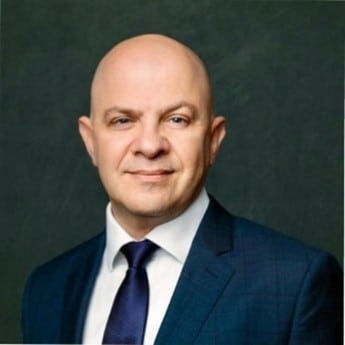
About Samir Cherfan
Samir Cherfan is COO of Stellantis Middle East and Africa, leading strategy and operations across 14 brands in 130+ markets. With 28 years in the automotive industry spanning engineering, manufacturing, and sales, he joined Stellantis in 2021. A Polytech Paris graduate, Samir is a three-time Forbes Global Meets Local awardee and is passionate about innovation and operational excellence.
Fatima-Zahra Essakhi is a Senior Consultant with Frost & Sullivan‘s Strategic Advisory Mobility practice area. She advises automotive and mobility industry clients across Europe, Middle East, and Africa (EMEA) on innovation, growth strategy, and industry transformation. With over eight years of experience spanning engineering, strategic advisory, and market research, she brings deep expertise to complex mobility challenges.

About Fatima-Zahra Essakhi
Join the Movement: Transforming the Future of Mobility
At Frost & Sullivan, we spotlight visionary leaders driving transformation. If your organization is redefining the future of mobility, we want to spotlight your story through our Transformational Growth Leadership series.
📩 Connect with us to:
- Subscribe to our Growth Opportunity Newsletter
- Join the Growth Council — an exclusive community for innovators
- Share your transformation journey with a global audience
- Engage with our growth experts to explore new growth opportunities
Appendix: Pioneering Sustainable Mobility through Local Innovation
Explore Frost & Sullivan insights on how regional innovation, electrification, and inclusive design align with Stellantis Middle East and Africa’s mission—advancing affordable, connected, and sustainable mobility through software-defined vehicles, circular economy models, and local ecosystems that empower communities and drive equitable growth across emerging regions.