Ford’s move is better understood as a portfolio rebalancing and pragmatic recalibration, rather than an “anti-EV” pivot.
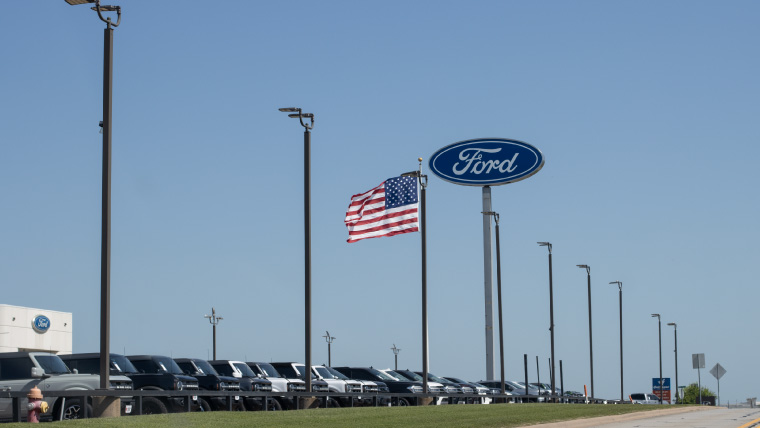
On December 15, 2025, Ford announced a major reset of its electric vehicle (EV) strategy. The company signaled a pullback from certain large, battery electric programs while shifting emphasis toward hybrids, extended-range electric vehicles (EREVs), and smaller, more affordable EVs. These changes spanning product plans and manufacturing footprint are expected to cost Ford nearly $19.5 billion.
At first glance, the announcement appears to mark a retreat from electrification, driven by slowing EV demand in the US. Sales momentum weakened sharply following the expiration of the $7,500 federal consumer tax credit at the end of September, alongside recent policy changes that eased regulatory pressure on automakers to accelerate EV adoption. Together, these factors underlined the challenges facing the automakers’ EV business over the short-term.
However, Ford’s move is better understood as a portfolio rebalancing rather than an “anti-EV” pivot. The company is redirecting capital and capacity toward areas where customer demand, profitability, and operational realities align more clearly today. These include high-volume trucks and vans, the Ford Pro commercial business, hybrids and EREVs that better match real-world use cases, a new, smaller vehicle Universal EV Platform focused on affordability, and a growing energy storage business aimed at monetizing underutilized battery capacity and meeting rising grid and AI/ datacenter demand. In effect, therefore, Ford is redefining what the “bridge” to electrification looks like in North America while keeping longer-term EV options open.
What Ford Actually Changed Beneath the Headlines
At the product level, the most visible shift is Ford’s decision to step away from its current battery electric F-150 Lightning program. The company has also canceled the next-generation all-electric T3 pickup. Instead, Ford plans to introduce extended-range electric trucks, where a gas engine acts as a generator to support the battery.
A similar adjustment is happening in Ford’s commercial vehicle lineup. Electric commercial vans are being deprioritized in the near term, even as commercial vehicles remain central to Ford’s strategy. At the same time, Ford is concentrating its pure EV development on smaller, more affordable models built on its Universal EV Platform, designed to bring costs down over time. Ford describes such strategic moves as being customer-driven, targeting hybrids, EREVs, and EVs to account for roughly 50% of global volume by 2030, up from current levels of around 17%.
These product decisions are closely tied to changes in Ford’s manufacturing footprint. Facilities initially planned as EV-only plants are being reconfigured for greater flexibility. BlueOval City in Tennessee, envisioned as a dedicated EV hub, will now support production of “Built Ford Tough” pickups. The Ohio Assembly plant is being repositioned as a hub for gasoline and hybrid commercial vans starting in 2029. On the battery side, Ford is restructuring ownership: the Kentucky plants will operate independently under Ford, while SK On will fully own and manage the Tennessee battery facility. In Michigan, battery operations will focus more on smaller cells and residential energy storage.
One of the most notable additions is Ford’s entry into battery energy storage systems (BESS). The company plans to build up to 20 GWh of annual storage capacity by 2027, backed by a roughly $2 billion investment. This business targets grid support and datacenter demand, creating a new revenue stream independent of vehicle sales.
Why This Shift Is Happening Now
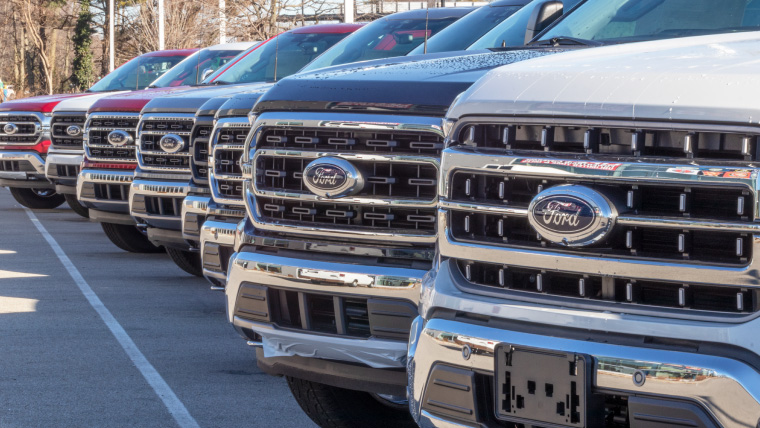
The timing of Ford’s reset reflects several converging pressures. The most immediate trigger was a sudden policy and pricing shock in the US battery electric vehicle (BEV) market. The expiration of the federal tax credit in late September led to a sharp drop in EV share. NADA, for instance, reported a rapid drop in EV market share from roughly 11% in September to about 6% in October 2025, highlighting how sensitive mainstream buyers remain to price incentives.
This downturn exposed the “missing middle” of the US EV market. While early adopters are already on board, the next wave of buyers is more cost-conscious and heavily dependent on reliable charging and stable incentives. For these consumers, uncertainty around policy, infrastructure, and resale value weighs heavily. The IEA’s 2025 outlook similarly notes that US EV growth is unusually sensitive to demand-side policy and standards uncertainty.
The challenge is even more pronounced in trucks and vans. These vehicles operate under demanding conditions that are very different from their passenger vehicle counterparts. Here, towing, hauling, long-distance travel, and high daily utilization highlight the limitations of battery-only systems. Under load, range drops quickly, charging takes time, and operational disruptions carry real economic costs.
EREVs offer a practical workaround, a “utility insurance policy” as it were. They provide the smooth driving experience of an EV while retaining a backup energy source when charging is unavailable or inconvenient. In this sense, EREVs are less about ideology and more about usability. Ford’s strategy to protect its core franchises, i.e., F-Series and Ford Pro, reflects a decision to meet customers where they are, rather than asking them to adapt faster than the system allows.
From Big Ambitions to Sharper Focus
Looking back over the past five years helps explain how Ford arrived at this moment. Between 2020 and 2022, the company made bold and highly visible bets on electrification. The Mustang Mach-E and F-150 Lightning helped reestablish Ford as a serious EV player, while the creation of Ford Pro strengthened its commercial business, with Ford making it a major profit engine. The restructuring around Model e, Ford Blue, and Ford Pro signaled a strong commitment to an electric future.
By 2023 and 2024, however, the challenges of scaling EVs became increasingly evident. Rising input costs, uneven charging reliability, and intensifying price competition affected the entire industry. Profitability suffered, particularly within Ford’s EV unit (the Model e division), emphasizing the need for capital discipline and returns. Simultaneously, consumer enthusiasm also cooled. In 2025, Ford began framing its “sharpen Ford+” strategy in more pragmatic terms. The company acknowledged that the business case for some large EVs had “eroded” due to shifting demand, costs, and regulations.
Capital is now being redirected toward trucks, vans, Ford Pro, hybrids, and the new energy storage business, while maintaining a low-cost EV platform for smaller vehicles. Even the skunkworks effort now emphasizes affordability and timing over rapid scale at any cost. The company continues to plan a more affordable midsize EV pickup, targeted at around $30,000 and expected in 2027. The message here is that Ford is not exiting EVs, but that it is narrowing its focus to areas where it makes the most sense today.
How This Repositions Ford Competitively
Ford’s revised approach results in a more coherent position relative to its customer base. For retail truck customers, the emphasis is on capability, reliability, and predictability in refueling or recharging, with EREVs reinforcing that value proposition. For commercial fleets, hybrids and EREVs offer emissions reductions while preserving uptime and total cost of ownership and avoiding disruptions to operations or the need for major infrastructure investments. For price conscious mass market consumers, Ford is betting that a simpler, lower-cost Universal EV platform can eventually unlock broader adoption.
Manufacturing flexibility is central to this strategy. By repurposing plants rather than leaving them underutilized, Ford reduces financial risk and preserves optionality. For instance, reassigning facilities in Tennessee and Ohio toward trucks, vans, and hybrids lowers the risk of stranded assets.
Battery manufacturing is also becoming more versatile. By keeping a pathway open for future EVs while extracting near-term value through BESS, Ford is positioning itself less as a car company in retreat and more as an industrial energy player. The move into stationary storage repurposes “lost” battery capacity into a grid utility revenue stream, delinking it from volatile consumer auto cycles. This opportunity has often been underestimated. Stationary storage demand in the US is rising rapidly and benefits from scale, manufacturing discipline, and service networks – areas where Ford already has strengths.
This two-track approach of de-risking “empty plants” and monetizing battery capacity allows Ford to keep building experience and scale even if EV demand grows unevenly.
The dissolution of the BlueOval SK joint venture further reinforces this flexibility. SK On gains freedom to serve multiple OEMs with its US capacity, while Ford gains full control over its Kentucky footprint. This allows Ford to focus on BESS or EREV modules without being constrained by a partner focused primarily on high-nickel BEV cells.
The planned evolution of the F-150 Lightning into an extended-range hybrid illustrates both opportunity and complexity. If executed well, it can preserve the truck’s brand equity and EV driving experience while addressing range and uptime concerns. The challenge will be managing cost and complexity so the solution feels like an upgrade rather than a compromise, a net-simplifier for customers, rather than a “worst of both worlds.”
How Competitors Are Responding
Ford is not alone in reassessing its EV trajectory. GM has also pulled back from certain initiatives, including ending BrightDrop production at CAMI and reallocating the facility toward other EV production priorities. Portfolio discipline and focusing on electrification where demand and returns are clearer is becoming a common theme.
Volkswagen’s Scout brand offers another signal. Its plans include an optional Harvestor gasoline-powered range extender to recharge the battery and extend range, reinforcing the idea that EREVs are emerging as a mainstream bridge and “trust accelerator” for trucks and SUVs in North America.
Toyota’s long-standing bet on hybrids now looks increasingly validated. Strong hybrid demand has allowed Toyota to manage supply constraints while underscoring hybrids remain the “mass adoption” electrified product in many markets. Ford’s pivot implicitly acknowledges that hybrids and EREVs are likely to carry much of the electrification load in the US through the late 2020s.
Hyundai and Kia are also positioning themselves to remain flexible. Hyundai’s intends to ramp up its US output with flexibility across hybrids/EVs. Similar to Ford’s pivot, this flexibility will allow Hyundai/Kia to maintain an “option-rich” approach and avoid stranded EV-only assets in an uncertain policy environment.
Nissan, by contrast, faces greater pressure. Limited scale and ongoing restructuring make it harder to support “flexible, capital-efficient electrification.” In a world that rewards flexibility, smaller or less capitalized players may struggle. Ford’s move, therefore, may widen the gap between OEMs that can finance two-speed portfolios and those forced into binary choices.
Tesla and Rivian sit somewhat apart. Tesla may benefit from reduced competition in certain EV segments, but its long-term story increasingly depends on software, autonomy, and adjacent businesses like energy storage and charging, rather than vehicle volumes alone. Tesla’s filings highlight strong growth in energy storage – which might have appealed to Ford – and continued Supercharger expansion. Rivian faces a mixed outlook: a Ford retreat from full-electric trucks could mean less “noise competition,” but, alongside this, it confronts weaker US policy and consumer tailwind. Early production of its R2 SUV has shifted to its existing Illinois plant due to construction delays at its Georgia plant. This reflects the broader challenge of scaling premium EVs in a tougher funding environment.
The Global Context and Why It Matters
Globally, the outlook remains mixed rather than uniformly negative. According to the IEA, worldwide EV sales are still expected to exceed 20 million units in 2025, driven largely by China. The US, however, remains highly policy sensitive.
In Europe, policymakers are showing greater flexibility, with German Chancellor Friedrich Merz advocating for a softening of the rigid “all-electric by 2035” stance, while exhibiting greater openness to allowing limited sales of plug-in hybrids or range extenders beyond earlier deadlines. This brings European policy closer to the pragmatic direction Ford is now taking.
Ultimately, the larger competitive issue is not whether EV adoption slows temporarily in the US, but whether domestic manufacturers continue to build long-term capabilities. Competitive pressure is shifting toward software-defined vehicles (SDV) capabilities, customer experience, and cost curve mastery—areas where Chinese players and Tesla continue to advance rapidly. Accordingly, US automakers will need to drive improvements through sustained learning on battery integration, power electronics, SDV platforms, and manufacturing efficiency. The risk here is that if these learning cycles stall during a slowdown, catching up later when the market reaccelerates will become harder.
Ford’s approach, therefore, attempts to strike a balance: slowing where economics do not work today, without abandoning the skills and systems needed for the future.
Charging Constraints and the Role of Energy Storage
Another important backdrop is the growing strain on the US electricity system. Federal support for charging infrastructure has slowed, delaying network expansion and reliability improvements. At the same time, electricity demand from data centers driven by AI and cloud computing is rising rapidly and could exceed 10% of US electricity demand by the end of the decade.
This intensifies competition for grid capacity. In this context, Ford’s move into energy storage looks increasingly strategic. Storage is one of the fastest ways to add grid flexibility through peak shaving, backup power, and stability services. Even if EV charging growth slows, storage demand is likely to remain strong. By participating in this segment, Ford reduces reliance on any single electrification pathway and positions itself as a broader energy and infrastructure player.
Possible Scenarios for the US Auto Industry Through 2030
One likely scenario is an “EREV bridge” scenario that mirrors current trends. Here, hybrids and EREVs account for most electrified growth while BEV adoption rises more gradually. In this case, manufacturers with strong truck portfolios, high-utility electrified trucks/vans, flexible plants, and software capabilities will be best positioned. Ford aligns with these trends through its established brand, Pro, plant loading and hedge on storage capabilities.
A second scenario involves a policy-driven rebound, with a mid-cycle market re-acceleration. If incentives return, charging investment could pick up, and emissions standards could tighten again. Should that happen, EV adoption would accelerate and EREVs would become a temporary bridge. In this scenario, Ford will need to ensure its Universal EV Platform is ready and fully competitive.
A third scenario involves faster global cost and software advances, particularly from China. Even if US adoption slows, competitive pressure could intensify. In such an environment, the priority will be to ensure that a short-term product pivot does not erode long-term capabilities.
Key Takeaways
Ford’s reset highlights several practical lessons. Electrification works best when tailored by segment; trucks and vans require different solutions than small cars. Manufacturing utilization is strategic; empty plants destroy optionality, while flexible footprints preserve it. Electrification is a system challenge involving vehicles, infrastructure, energy, and policy, not a single product choice. If charging/grid/policy wobble, storage and hybrids can keep the system learning. And, most importantly, long-term competitiveness depends on continuing to learn and improve in SDV, battery integration, and manufacturing, even during periods of slower growth.
A few key indicators will help reveal whether Ford’s strategy is working. The performance and margins of Ford Pro will show whether the core business is strengthening. Demand for extended-range trucks compared with hybrids will indicate whether customers see value in the bridge strategy. Progress on the Universal EV Platform will reveal whether affordability goals are realistic. Growth in battery storage orders and deliveries will show whether that business can stand on its own. Finally, trends in US charging deployment and policy will shape the pace of broader electrification.
Taken together, Ford’s December 2025 reset looks less like a retreat and more like a recalibration. It reflects a more pragmatic view of how electrification is unfolding in the US – uneven, shaped by real-world constraints but still moving forward. The outcome will depend not on ambition alone, but on execution, flexibility, and the ability to keep learning while the system evolves.