This blog is based on our analysis, “Growth Opportunities for Robotics in the Food and Beverage Industry”, authored by Frost & Sullivan’s growth expert and analyst, Heena Juneja and Soniya Shrivas from the TechVision, Information and Communication Technology team.
Robotics Is Reshaping F&B at Scale
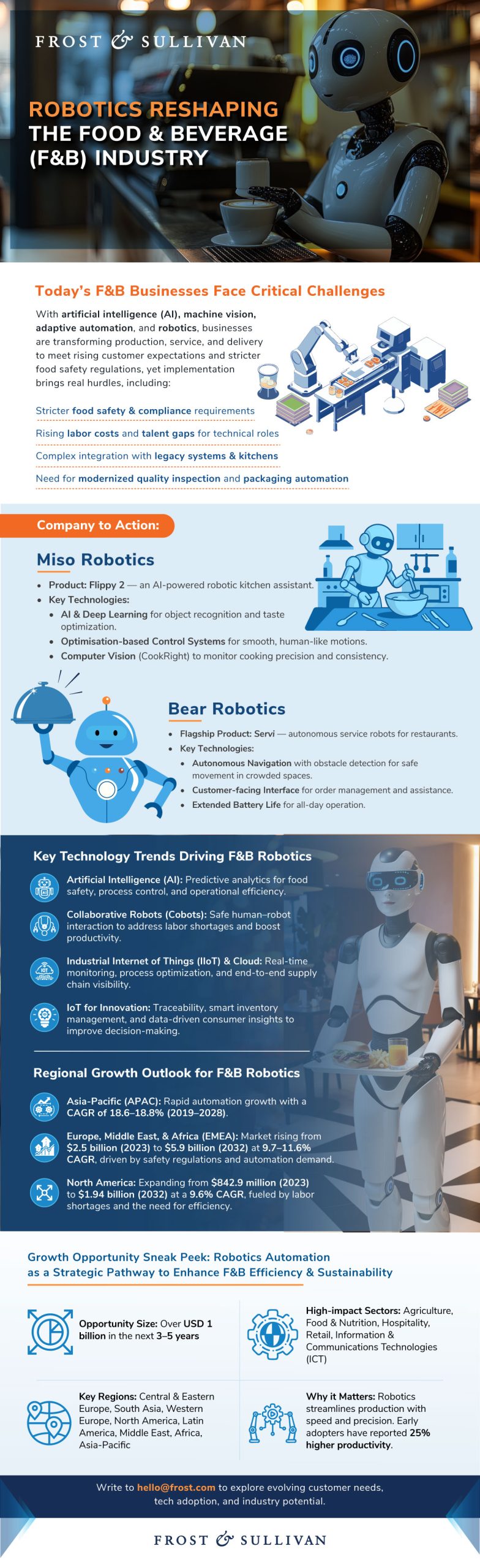
From production lines to restaurant service and last-mile delivery, robotics is redefining operational precision, safety, and sustainability. With AI-integrated automation, collaborative robots (cobots), and machine vision, companies are cutting costs, reducing contamination risks, and creating faster, contactless dining experiences.
Key Growth Drivers Include:
- Demand for Automation: Food and beverage (F&B) manufacturers are automating packaging, palletizing, and quality checks to increase processing productivity and consistency.
- Labor Shortages and Costs: Rising wages and a shortage of skilled labor make robots an attractive solution for intensive, repetitive tasks.
- Technological Advancements: Artificial intelligence (AI), the Industrial Internet of Things (IIoT), and advanced sensors allow robots to perform complex tasks with high precision and maintain strict food safety standards.
- Surge in Demand for Processed Foods: Growing consumer appetite for packaged food is increasing the need for automated production lines that deliver quality and efficiency at scale.
How prepared is your organization to adapt its operations for robotics-driven efficiency and safety?
Download the full Growth Opportunity or Contact [email protected] to explore actionable strategies.
Strategic Imperatives Driving Robotics Adoption
Forces are shaping F&B robotics transformation:
- Innovative Business Models: Robotics enables consistent quality and faster service while cutting labor costs. Miso Robotics’ Flippy 2 automates burger flipping, while Picnic’s pizza robots streamline preparation and reduce waste.
- Internal Challenges: Complex regulations and mass production demand rigorous quality control; robotics automates repetitive, time-consuming processes to maintain compliance and competitiveness.
- Competitive Intensity: Startups are scaling precision and personalization through robotics. Traditional F&B players must innovate or risk market erosion.
Which of these forces will most impact your F&B value chain and how can you leverage them for competitive advantage?
Download the complimentary sample or Speak with our experts at [email protected] to align your strategy with these industry shifts.
Technology Trends Powering the Next Era of Automation
Core technologies are accelerating robotics innovation in F&B:
- Artificial Intelligence (AI): Predictive analytics for safety, quality control, and process optimization.
- Collaborative Robots (Cobots): Human-safe robots solving labor shortages and increasing throughput.
- Industrial Internet of Things (IIoT) & Cloud: Real-time monitoring, compliance tracking, and supply chain visibility.
- IoT for Innovation: Smart inventory, traceability, and consumer insights for better decision-making.
Is your business integrating these technologies fast enough to remain competitive?
|
Robotics Transforming F&B Efficiency, Safety, and Sustainability Efficiency: McDonald’s robotic ordering systems and Bear Robotics’ Servi handle repetitive tasks, speed up service, and reduce operational bottlenecks. Safety: Advanced sensors and automated production lines minimize contamination risks and ensure food safety. Sustainability: Solutions like Blendid’s contactless smoothie booths and Café X’s robotic baristas use precise portioning and real-time demand tracking to cut ingredient waste and optimize energy use. Workplace Safety: Collaborative robots (cobots) take over hazardous or physically demanding tasks, allowing humans to focus on higher-value activities. |
|
Companies to Action
These innovators are setting the pace for robotics in the F&B industry — automating high-volume tasks, improving food safety, and enabling new service models such as dark kitchens and contactless delivery. Identifying the right technology partners will be critical for businesses looking to scale automation while balancing safety, cost, and customer experience.
- Pudu Robotics
- Flagship Product: PuduBot — adaptable delivery robots for restaurants, hospitality, and healthcare.
- Core Technologies:
AI-driven Navigation: Real-time mapping and route optimization for dynamic indoor environments.
• Customizable Platforms: Configurable payloads and service modes for different use cases (food delivery, hotel service, hospital supply runs).
• Collision Avoidance: Safety-first operation in high-traffic areas. - Impact: Pudu Robotics enables scalable, contactless delivery models. Restaurants, hotels, and hospitals deploy PuduBot to improve hygiene, streamline service, and adapt to new consumer expectations for low-touch interactions.
- Starship Technologies
- Flagship Focus: Autonomous delivery robots for food, groceries, and packages.
- Core Technologies:
Navigation: 99% autonomy using advanced sensors and AI for safe movement in complex urban and campus environments.
• Communication: Real-time tracking and user notifications to enhance transparency and customer experience.
• Battery Efficiency: Wireless charging capabilities enabling longer operational hours and faster turnaround. - Market Impact: Starship Technologies is redefining contactless last-mile delivery. Its scalable robotic fleets help retailers and F&B brands lower delivery costs, improve hygiene, and meet rising demand for convenience while reducing environmental impact.
Which of these innovators could accelerate your automation roadmap or create strategic partnerships for your business?
Download the sample or contact [email protected] to explore collaboration and adoption strategies.
Capturing the Next Wave of Growth
Robotics has moved from experimental to essential in the food and beverage (F&B) industry. Integrating artificial intelligence (AI), Internet of Things (IoT), and collaborative robots is now critical to improving productivity, ensuring food safety, and meeting strict regulatory and sustainability demands.
Is your business equipped to identify the right automation opportunities and scale them effectively?
To explore customized growth opportunities, technology strategies, and best practices for robotics adoption in the food and beverage industry, schedule a Growth Pipeline Dialogue.
Alternatively, you can write to us at [email protected] to discuss tailored automation roadmaps for your business.