This blog is based on the detailed analysis, “Frost Radar™: Neuromodulation Devices for Neuropsychiatric Disorders, 2025,” conducted by Frost & Sullivan’s growth experts, Neerj Jadhav and Ashish Kaul, from TechVision Medical Device & Imaging team.
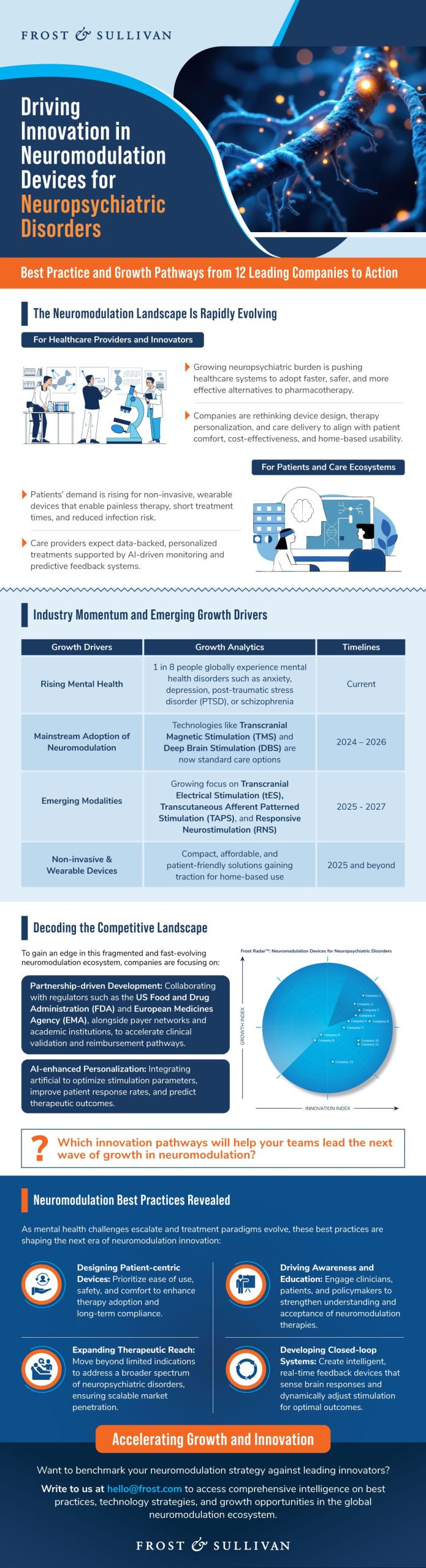
The neuromodulation landscape is entering a transformative phase as healthcare systems face an unprecedented rise in neuropsychiatric conditions such as anxiety, depression, and post-traumatic stress disorder (PTSD). Limitations of pharmacotherapy—ranging from side effects to non-responsiveness—are accelerating the demand for safer, technology-driven solutions that deliver precision, efficacy, and long-term adaptability.
To stay competitive, device manufacturers and innovators are strengthening their focus across multiple fronts:
- Non-invasive Therapies: Compact, wearable solutions offering painless, home-based treatments are becoming the preferred alternative to invasive implants.
- AI-driven Personalization: Intelligent stimulation algorithms optimize parameters and predict patient outcomes in real time, improving therapy precision.
- Closed-loop Neuromodulation: Devices that sense and respond to brain activity dynamically are redefining treatment continuity and effectiveness.
- Partnership Ecosystems: Collaborations with the US Food and Drug Administration (FDA), European Medicines Agency (EMA), payers, and academic researchers are crucial for standardization and reimbursement.
- Clinical Data as a Differentiator: Building strong evidence on efficacy, safety, and adaptability drives market confidence and accelerates adoption.
- Awareness and Accessibility: Expanding focus from niche conditions to broader neuropsychiatric and neurodevelopmental disorders ensures wider patient reach.
Which innovation pathways will help your teams lead the next wave of neuromodulation growth in 2025 and beyond?
Frost & Sullivan’s Frost Radar™: Neuromodulation Devices for Neuropsychiatric Disorders, 2025 highlights:
|
|
Mapping the Future of Neuromodulation Devices: Growth Drivers, Innovation Pathways, and Competitive Insights
Click here to explore how 12 leading innovators are redefining the future of neuropsychiatric care through next-generation neuromodulation technologies. Or connect with us at [email protected].
Emerging Growth Opportunities in Neuromodulation Devices
- Non-invasive Therapies: Explore alternatives to implantable devices to eliminate infection risks and enable safer, more comfortable treatment options. Innovators like BrainsWay are leading efforts to commercialize non-invasive neuromodulation and raise awareness among clinicians and patients.
- At-home Treatment Solutions: As demand for convenience grows, companies must prioritize portable, technician-free neuromodulation devices that bring therapy directly to the patient’s home.
- AI-driven Treatment Personalization: Develop intelligent algorithms that provide actionable insights, optimize stimulation parameters, and enhance therapeutic efficacy while maintaining clinician and patient trust.
How will your organization capture these fast-emerging growth opportunities in the evolving neuromodulation landscape?
Your Frost Radar™ intelligence is one click away — access the sample analysis here
Next Steps on Your Neuromodulation Journey
Healthcare innovators and device manufacturers must move beyond isolated treatment approaches toward intelligent, connected, and patient-centric neuromodulation ecosystems that deliver real-time data, adaptive stimulation, and accessible therapy models.
As mental health demands rise and regulatory priorities shift, companies must rethink how they differentiate their solutions. How will your organization position itself to lead this transformation in neuropsychiatric care?
This is where Frost & Sullivan’s competitive benchmarking framework brings clarity—helping industry leaders uncover what drives innovation, scalability, and patient trust in the fast-evolving neuromodulation devices landscape.
Get in touch with our Medical Device & Imaging experts to explore customized opportunities, technology strategies, and best practices tailored to your growth goals.
Alternatively, you can write to us at [email protected]