Download Frost & Sullivan’s Transformational Growth Leadership Discussion with Dr. Denis Phares, Chief Executive Officer, Dragonfly Energy
Powering Energy Independence: How Dragonfly Energy Is Driving the Next Era of Sustainable Electrification
Dr. Denis Phares, Chief Executive Officer, Dragonfly Energy, in conversation with Krishna Srinivasan, Global Managing Partner, Frost & Sullivan
As the world accelerates toward electrification, sustainability, and energy resilience, Dragonfly Energy is leading a quiet revolution in how batteries are designed, produced, and deployed. In this exclusive Transformational Growth Leadership (TGL) conversation, Dr. Denis Phares, CEO of Dragonfly Energy, sits down with Krishna Srinivasan, Global Managing Partner at Frost & Sullivan, to discuss the company’s bold vision; how technology, manufacturing innovation, and smart economics are driving a new era of energy independence.
True progress begins when we can build what we need at home, efficiently, responsibly, and competitively. The goal is to make clean energy not just the right choice for the planet, but the smart choice for business.
— Dr. Denis Phares, CEO, Dragonfly Energy
The Economics of Electrification
Why making clean energy cost-effective is the real key to transformation.
Krishna Srinivasan: Denis, great to reconnect. Dragonfly Energy has been at the center of some major developments in energy storage. Let’s start there, what are the biggest trends you see shaping electrification right now?
Denis Phares: Thanks, Krishna. Electrification has been a driving force for years, but the real shift now is economic. For a long time, the conversation centered on sustainability, which remains important, but large-scale transformation only happens when the economics work. The real progress comes when renewable energy and storage become more cost-effective than traditional power sources.
At Dragonfly Energy, our focus has been on making electrification not just a responsible choice, but an economically inevitable one. Through battery manufacturing innovation, we’re driving down costs, optimizing processes, and ensuring that clean energy stands on its own without relying on subsidies or idealism. Once it becomes the more profitable path, the transition is unstoppable.
Reshoring and Supply Chain Resilience
How manufacturing independence is shaping the next phase of the energy revolution.
Krishna Srinivasan: That makes sense, and it ties directly to something you have emphasized often: supply chain independence. Everyone’s talking about onshoring. How is that shaping your strategy?
Denis Phares: It’s a major focus. Today, most of the world’s lithium cell production is still concentrated in Asia, particularly China. For our 26650 LFP [lithium iron phosphate] cells, that’s currently where true scale exists. But long term, our vision is clear — to manufacture those cells domestically, here in North America.
We’ve built Dragonfly Energy to thrive without relying on tariffs or incentives. Our aerosol-based dry electrode process eliminates toxic solvents, simplifies production, and drives down costs. That’s how we’ll produce batteries domestically and competitively, while reducing dependence on fragile global supply chains.
Krishna Srinivasan: So, the goal is not just energy independence, but manufacturing independence.
Denis Phares: Exactly. The real measure of independence lies in our capacity to manufacture critical technology domestically, achieving efficiency and cost competitiveness that endure over time.
Sustainability That Pays for Itself
Making climate-conscious decisions economically sustainable.
Krishna Srinivasan: I have always believed that sustainability is truly sustainable only if it can also be profitable. Do you agree with that premise and if so, how is Dragonfly addressing this?
Denis Phares: Absolutely. For a long time, sustainability was treated as a trade-off, with higher costs and lower margins, but it doesn’t have to be that way.
Our focus has always been on efficiency and innovation. When you reduce material waste, streamline production, and localize supply chains, you don’t just improve your environmental profile, you improve your economics. In our view, there shouldn’t be a premium for doing the right thing — the best solutions should also be the most cost-effective.
That’s the foundation of what we’re building at Dragonfly Energy. When clean energy technology becomes the most cost-effective solution, adoption follows naturally.
The Solid-state Revolution
Redefining safety, longevity, and scalability in energy storage.
Krishna Srinivasan: Let’s talk about solid-state; it’s often called the “holy grail” of batteries. But Dragonfly’s take on it is quite different from what we usually hear.
Denis Phares: That’s right. Many companies are pursuing solid-state technology for electric vehicles, prioritizing higher energy density and extended driving range. We’re focused on a different challenge — deep-cycle storage for solar, grid, and residential applications.
Our goal isn’t to make batteries that drive vehicles farther; it’s to make batteries that last longer, cost less, and operate safely in any environment.
We’re developing a ceramic-heavy composite solid electrolyte that contains no flammable liquid, and we apply our dry electrode process to it. The result is a stable, long-life, nonflammable battery ideally suited for home and grid-scale storage.
Krishna Srinivasan: So, it’s not just about chemistry, it’s about design for purpose.
Denis Phares: Exactly. We’re designing batteries for real-world applications, where safety, longevity, and scalability matter most.
Market-driven Growth: De-Risking the Path to Domestic Cell Production
How Dragonfly is expanding markets and developing onshore cell manufacturing in tandem to create a more resilient, scalable business.
Krishna Srinivasan: Let’s pivot to growth. You have said something that really stood out to me—you can’t build a cell factory before you build the market. Can you explain that?
Denis Phares: Absolutely. It’s much more difficult to commit to large-scale production until you’ve established clear, sustainable demand.
For us, that began with RVs and marine applications, where our Battle Born brand has redefined energy storage for off-grid use. And then expanding into heavy-duty trucking, where our batteries are helping fleets reduce idling and lower diesel consumption in meaningful ways.
Concurrently, we’ve grown into industrial segments such as oil and gas, rail, municipalities, and more — all of which build on the same core technology and system integration expertise. This strategy not only drives near-term revenue but gives us a significant advantage in de-risking the expansion to cell manufacturing, where we can serve as our own customer while partnering with others to achieve even greater scale.
We’re actively advancing toward onshore cell production as market conditions allow, applying everything we’ve learned to make domestic manufacturing both efficient and globally competitive.
Strategic Partnerships and Ecosystem Growth
How collaboration across the value chain drives innovation and impact.
Krishna Srinivasan: That brings us to partnerships. I know you have had some exciting developments recently—the Stryten Energy licensing deal, for instance. Tell me about that and how partnerships fit into the big picture.
Denis Phares: Partnerships are a key part of our strategy. The Stryten Energy agreement was an important milestone, a brand licensing deal that allows them to enter the lithium space quickly under the Battle Born name while expanding our reach into new markets.
It reflects the trust we have built through consistent product performance, service, and technical credibility. Beyond that, we are working with companies like Aqua Metals on closed-loop recycling, Ioneer on domestic lithium supply, and PACCAR on fleet electrification and idle-reduction solutions.
We view this ecosystem as a collaborative network of suppliers, customers, and technology partners all aligned toward advancing domestic energy storage. Strategic collaboration accelerates innovation and strengthens the broader U.S. manufacturing base.
Much of that collaboration is happening right here in Nevada, where the Nevada Tech Hub program and the Nevada Battery Coalition are bringing together industry leaders to build a complete, end-to-end energy storage ecosystem from raw materials to finished products.
From Battle Born to Dragonfly: A Brand Built on Expertise
Turning consumer trust into industry-wide credibility.
Krishna Srinivasan: The Battle Born brand has a loyal following. How do you see the Dragonfly name evolving as you move further into industrial and grid-scale markets?
Denis Phares: The Battle Born brand established our reputation for reliability and quality at the consumer level. Those products introduced people to what dependable lithium power could look like in real-world use.
As Dragonfly Energy expands into industrial and grid-scale markets, that reputation is evolving from trusted products to deep technical expertise. We are not simply assembling battery packs; we are engineering complete energy storage systems, developing advanced chemistries, and building the underlying technologies that enable them.
Our Dragonfly IntelLigence technology platform is a perfect example. It enables batteries to communicate, self-optimize, and perform more efficiently, built on years of data and experience supporting hundreds of thousands of Battle Born products in the field.
AI and the Future of Smart Energy
How data and machine learning are unlocking new insights in energy storage.
Krishna Srinivasan: That’s a perfect segue to talk about AI. It’s ubiquitous right now, but the key is to apply AI in practical ways. How does AI fit into your roadmap?
Denis Phares: We are using AI and machine learning in our research and development to better understand cell chemistry and battery performance. This work helps us analyze data to predict degradation patterns, optimize charge cycles, and gain a deeper understanding of how materials behave over time.
At the same time, we are becoming increasingly data driven through our Dragonfly IntelLigence technology, which allows our batteries to communicate and share performance information from the field. As we combine those lab insights with real-world operating data, AI will help us uncover new patterns, refine our models, and continue improving reliability, longevity, and efficiency across our products.
Krishna Srinivasan: So, we are really talking about intelligent energy systems—batteries that understand themselves and their environment.
Denis Phares: Yes. The integration of intelligence across both R&D and field performance creates a continuous feedback loop that drives innovation. AI is advancing quickly, and it continues to open new opportunities for how we design, manufacture, and manage energy systems in the future.
Competing in a Noisy Market
Focusing on performance and execution to build credibility in a crowded field.
Krishna Srinivasan: The battery space is crowded and noisy. How do you cut through the hype?
Denis Phares: It is true, there is a lot of noise in this space. Many companies lead with promises; we lead with results.
We have built a growing, revenue-generating business while continuing to innovate at a high level. That balance between commercial discipline and technological advancement is what differentiates us.
Our focus is not on hype, it is on execution, proving value through real-world outcomes and delivering technology that performs as claimed.
Leadership, Learning, and the Public Company Journey
What it takes to grow from a startup to a listed technology leader.
Krishna Srinivasan: Let’s get personal for a moment. You have taken Dragonfly from a startup to a public company. What’s that journey been like for you?
Denis Phares: It has been a transformative experience. Coming from academia, leading a public company required an entirely new skill set. Taking the company public during a challenging post-COVID SPAC environment tested us in important ways, and it ultimately made us stronger. It taught us resilience, discipline, and focus.
For me personally, leadership has become a journey of continuous learning. It is about staying curious, staying committed, and surrounding yourself with talented people who share your vision. That has been the most rewarding part of the process.
Vision 2030: Local Manufacturing, Global Impact
Scaling for a future where clean energy is the default choice.
Krishna Srinivasan: Fast forward to 2030, what’s your vision for Dragonfly Energy?
Denis Phares: By 2030, I envision a world where localized battery manufacturing has become the standard, not the exception. We expect to be producing advanced solid-state batteries domestically while collaborating with partners around the world to expand access to reliable energy storage.
The rapid growth of data centers, AI infrastructure, and electrified transportation will continue to drive demand for safe, scalable, and efficient storage solutions. Our goal is for Dragonfly Energy to be the company that makes energy independence achievable and economically sustainable on a global scale.
Krishna Srinivasan: So, the tipping point isn’t coming, it’s already here.
Denis Phares: It is, and the immediate challenge is standing up the domestic manufacturing capacity and supply networks needed to meet demand. The companies that execute on that will define the next era of energy storage.
A Message to the Industry
Why building strong businesses is the foundation for lasting innovation.
Krishna Srinivasan: As we wrap up, if you had to leave one message with the industry, what would it be?
Denis Phares: The foundation of lasting innovation is building real, sustainable businesses. Too often, great technologies fail to scale because they are not supported by sound business models.
At Dragonfly Energy, we focused early on generating revenue, earning trust, and creating a stable platform for growth. That commercial foundation has allowed us to invest in R&D and continue advancing the technology. Strong business fundamentals are what ultimately make innovation endure.
Closing Reflection
As the global energy landscape evolves, Dragonfly Energy stands at the crossroads of innovation and execution, proving that advanced technology and sustainable growth can advance together. Under Dr. Denis Phares’ leadership, the company’s blend of solid-state science, AI-driven intelligence, and domestic manufacturing excellence embodies the true spirit of Transformational Growth, a future where technology powers both progress and possibility.

About Dr. Denis Phares
Dr. Denis Phares is the Chief Executive Officer and Founder of Dragonfly Energy Holdings Corp. (Nasdaq: DFLI), a leader in advanced lithium-ion and solid-state battery technology. A former tenured professor of Aerospace and Mechanical Engineering at the University of Southern California, he has spent more than three decades advancing energy systems, nanotechnology, and manufacturing innovation.
Under his leadership, Dragonfly Energy has developed proprietary dry electrode manufacturing processes and advanced battery technologies that are redefining energy storage and onshore production in the United States. The company’s flagship brand, Battle Born Batteries®, has become a benchmark for reliability and performance in deep-cycle applications.
Phares holds a B.S. in Physics from Villanova University, an M.S. and Ph.D. in Environmental Engineering Science from the California Institute of Technology, and an MBA from the University of Nevada, Reno. He continues to champion data-driven innovation and scalable domestic manufacturing as key pillars for the future of clean energy.
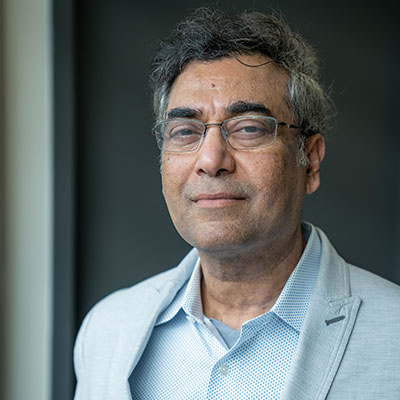
A management consultant with more than 30 years of experience in his field, Krishna serves as the Global Managing Partner at Frost & Sullivan. Commanding an impressive professional history, Krishna laid the educational foundations of his career at Bangalore University in India, majoring in mechanical engineering. He then went on to secure a role with Data Patterns, Inc, working on various aspects of software development and product marketing. Seeking further professional development, Krishna joined Frost & Sullivan in the early 1990s as a Senior Industry Analyst. As a result of his consistent performance, he earned promotion to Head of Worldwide Research, Industrial Technologies. Appointed Global President of Frost & Sullivan in 2007, his tenure with the company has been defined by steady growth and diversification of the firm’s products and services.
About Krishna Srinivasan
Join the Movement: Driving Sustainable Energy Growth
Frost & Sullivan invites industry leaders to join the journey toward a cleaner, smarter, and more resilient energy future.
📩 Connect with us to:
✔️ Subscribe to our Growth Opportunity Newsletter
✔️ Join the Growth Council — an exclusive community for innovators
✔️ Share your transformation journey with a global audience
✔️ Engage with our growth experts to explore new growth opportunities
Appendix: Enabling Growth through Energy Storage Transformation
For readers who want to explore further, Frost & Sullivan recommends:
📌 Growth Opportunities in Stationary Batteries Industry, Global, 2025–2035
📌 Safety Innovations in Lithium-ion Battery Technology: Growth Opportunities, 2025–2030
📌 Frost Radar™: Lithium-Ion Battery Materials, 2025
📌 Carbon Neutrality Strategies—Battery Electric Vehicles’ Carbon Footprint
📌 Electric Vehicle Battery Value Chain, Global, 2025–2031