This blog is based on the analysis titled, Growth Opportunities in Microbiome Technologies in Consumer Wellness, 2026–2030, authored by Frost & Sullivan’s growth expert, Vandana Iyer, and lead analyst Priyanka Jain from the TechVision—Health & Wellness team.
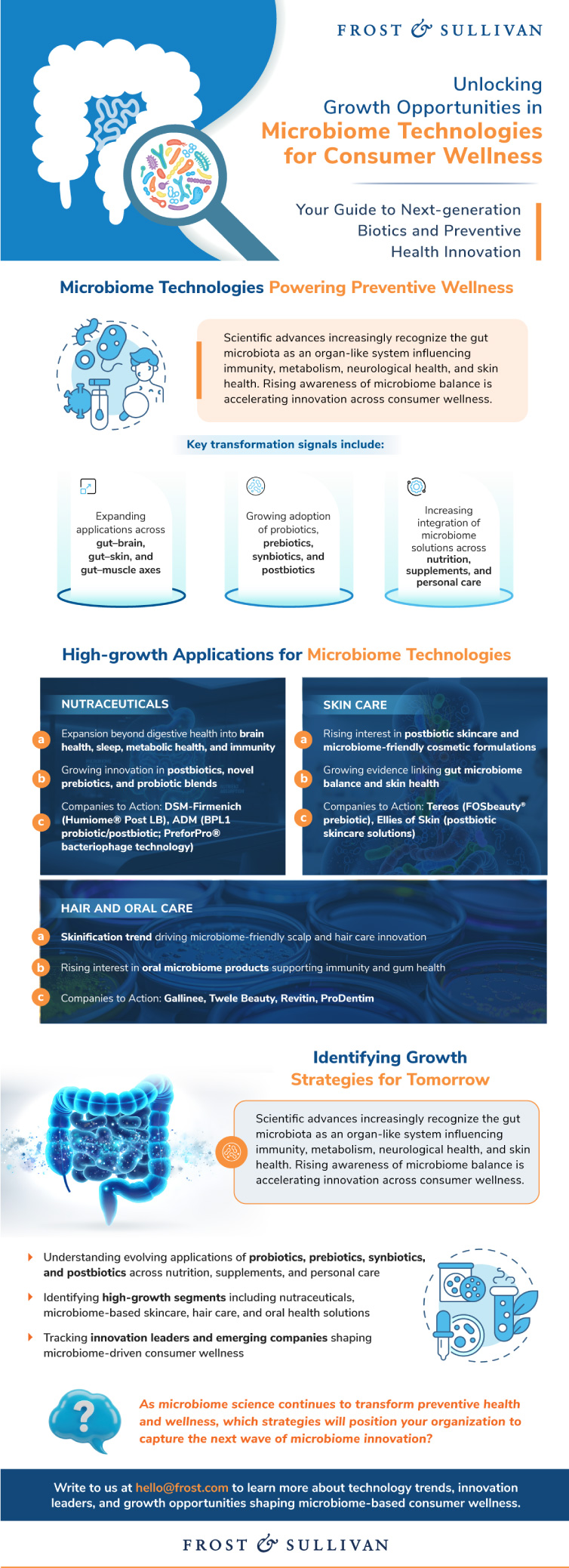
Microbiome technologies are transforming the consumer wellness industry by advancing scientific understanding of how microbial ecosystems influence human health. The microbiome sector has become a core component of the self-care movement, encouraging proactive health behaviors and preventative approaches to well-being. The gut microbiota is now widely recognized as an organ-like system that influences overall health and several medical conditions, making continued advancements in microbiome science critical to improving long-term well-being. Growing awareness of gut health is accelerating the adoption of microbiome technologies, particularly those addressing the gut–brain, gut–skin, and gut–muscle axes.
Microbiome Technologies: Unlock the Next Wave of Consumer Wellness Innovation
Access:
• Emerging microbiome innovations transforming nutrition, personal care, and wellness products
• Key industry trends shaping the adoption of probiotics, prebiotics, synbiotics, and postbiotics
• Strategic growth opportunities accelerating microbiome-based consumer wellness through 2030
Do you have the strategic frameworks to identify where microbiome technologies will create the greatest competitive advantage across consumer wellness?
The Impact of the Top 3 Strategic Imperatives on the Microbiome-based Consumer Wellness Industry
- Competitive Intensity: Microbiome technologies present significant opportunities in the consumer wellness sector. Companies are adopting diverse business models and competitive strategies to strengthen their positioning as the industry evolves.
- Industry Convergence: The integration of artificial intelligence (AI) and machine learning (ML) with microbiome technologies enables the development of more precise biotics, optimized formulations, and higher-performance wellness products.
- Innovative Business Models: Rising consumer awareness of biotics is accelerating demand for microbiome-based wellness products. Companies are refining go-to-market strategies and expanding portfolios to capture emerging opportunities.
Is your consumer wellness strategy aligned with microbiome technologies shaping the future of proactive health management?
Growth Drivers Accelerating Microbiome Technologies in Consumer Wellness
- Increasing Consumer Awareness: Advancing Preventive Health and Gut Wellness
Growing awareness of balanced gut health is driving demand for microbiome-based wellness solutions. As the distinction between medical treatment and wellness narrows, microbiome-targeted products are increasingly used to support prevention and long-term health management. - Technological Innovations: Enabling Advanced Biotics and Formulation Optimization
Technologies such as AI and omics support the identification of effective probiotic strains and optimization of fermentation and formulation conditions. These advancements help maintain probiotic stability and improve product performance. - Expanding Scientific Knowledge: Strengthening the Microbiome–health Connection
Research highlighting the microbiome’s role in regulating physiological systems and linking microbial dysbiosis to conditions such as diabetes, obesity, sleep disorders, and mood disturbances is accelerating interest in microbiome-driven wellness solutions.
|
Key Trends in Microbiome-based Consumer Wellness • Functional nutrition driving adoption: Nutraceutical and food & beverage companies are accelerating the integration of microbiome technologies to support gut health and preventive wellness. • Next-generation biotics gaining momentum: Postbiotics and next-generation probiotics are expanding application potential, supported by innovative delivery technologies that preserve probiotic efficacy. • Expanding personal care applications: The “skinification” trend is extending microbiome science into skincare, hair care, and oral health products. |
| Download the sample analysis to explore emerging innovation trends and growth opportunities in microbiome-based consumer wellness. |
Growth Challenges Affecting Microbiome Technology Commercialization
- Limited Clinical Validation: Increasing Pressure for Evidence-based Claims
Many microbiome wellness products lack long-term clinical trials to substantiate health benefits, while placebo effects can complicate efficacy measurement. - Product Stability and Shelf Life: Maintaining Probiotic Viability
Probiotics and other microbiome-active ingredients are sensitive to environmental factors such as temperature, pH, and moisture, creating formulation challenges during processing, storage, and delivery. - Regulatory Uncertainty: Lack of Harmonized Standards
Limited regulatory harmonization across agencies such as the United States Food and Drug Administration (FDA) and the European Food Safety Authority (EFSA) creates compliance complexity and potential consumer skepticism.
Is your organization prepared to capture emerging opportunities in microbiome-driven consumer wellness innovation?
Companies to Action: Advancing Microbiome Innovation Across Consumer Wellness
Microbiome technologies are expanding across consumer wellness segments, including nutraceuticals, personal care, hair care, and oral health. Companies are leveraging biotics innovation and targeted formulations to develop next-generation products that support microbial balance and overall well-being.
This highlights the following innovators shaping the microbiome-based consumer wellness ecosystem:
- DSM Firmenich and ADM – Nutraceutical innovation
DSM Firmenich expanded its microbiome portfolio with Humiome® Post LB following the acquisition of Adare Biome. ADM is advancing microbiome solutions with BPL1® probiotic and postbiotic products and bacteriophage technologies such as PreforPro®. - Tereos and Ellies of Skin – Microbiome-based skincare
Tereos introduced FOSbeauty®, a prebiotic ingredient that supports the skin microbiota. Ellies of Skin developed probiotic-based skincare products designed to maintain balanced skin flora. - Gallinee and Twele Beauty – Microbiome-friendly hair care
Gallinee offers prebiotic scalp care products designed to support beneficial bacteria, while Twele Beauty’s inulin-based shampoo promotes healthier hair and scalp ecosystems. - Revitin and ProDentim – Oral microbiome solutions
Revitin developed a prebiotic toothpaste supporting oral microbiome balance. ProDentim offers probiotic chewable tablets formulated to support gum health and beneficial oral bacteria.
Growth Opportunity: Microbiome Solutions Advancing Women and Infant Health
Microbiome technologies are expanding opportunities in women’s and infant health by supporting microbial balance during key life stages such as reproductive health, pregnancy, and early childhood development. Probiotics help maintain a healthy vaginal microbiome and may reduce the risk of conditions such as vulvovaginal candidiasis and bacterial vaginosis, while innovations in infant nutrition are enabling targeted microbiome support during early development.
Key Opportunity Signals:
- Women’s health applications: Probiotics support vaginal microbiome balance and may improve metabolic parameters and menstrual irregularities in women with polycystic ovary syndrome (PCOS).
- Infant microbiome development: Microbiome-based ingredients such as human milk oligosaccharides (HMOs), synbiotics, and targeted probiotic strains are expanding opportunities in infant nutrition and baby formulas.
- Early-life health benefits: Probiotics support immune function, digestion, and cognitive development during infancy.
- Growing research momentum: Increasing scientific evidence links microbiome health to broader physiological systems through the neuro-immune-endocrine axis.
- Untapped industry potential: Low market penetration, particularly in emerging economies, highlights strong opportunities for innovation and scale.
Frequently Asked Questions About Microbiome Technologies in Consumer Wellness
Businesses and consumers are increasingly exploring microbiome technologies and biotics-based solutions. The following questions address common topics related to microbiome innovation and its role in consumer wellness.Bottom of Form
What are probiotics, prebiotics, synbiotics, and postbiotics?
Probiotics are live microorganisms that support beneficial bacteria in the body. Prebiotics are compounds that nourish these beneficial microbes. Synbiotics combine probiotics and prebiotics to enhance microbial balance, while postbiotics are bioactive compounds produced by beneficial microbes. Together, these biotics form the foundation of many microbiome-based wellness products.
How does the gut microbiome influence overall health?
The gut microbiome influences multiple physiological systems through interactions with the immune, metabolic, and nervous systems. Research links microbiome balance to digestion, immunity, metabolism, skin health, and mental well-being through pathways such as the gut–brain and gut–skin axes.
Where are microbiome technologies being adopted?
Microbiome technologies are expanding across several consumer sectors, including nutraceutical supplements, functional foods and beverages, skincare, hair care, and oral health products. Companies are developing microbiome-based formulations to support gut health, immunity, skin balance, and overall wellness.
What are the emerging growth areas for microbiome technologies?
Key growth areas include personalized nutrition, microbiome-based skincare, women’s health solutions, infant nutrition, and next-generation biotics such as postbiotics and synbiotics. Increasing consumer awareness of preventive health and advances in microbiome research are driving innovation across these segments.
Ready to Lead the Transformation?
- Book a Growth Strategy Session: Align your growth roadmap with Frost & Sullivan’s visionary Growth Pipeline™ Dialog.
- Engage with Growth Experts: Co-design AI-enabled, data-driven operating models that scale industry-specific and commercial impact.
- Share Your Transformation Story: Position your organization as a transformation leader through Frost & Sullivan’s Transformational Growth Leadership platform.
- Join the Growth Council: Collaborate with industry leaders shaping the future of your ecosystem.
- Nominate for the Best Practices Recognition: Be recognized for excellence in growth strategy, execution, and customer impact.
- Demonstrate Industry Positioning on the Frost Radar™: Benchmark your growth performance and innovation strength against industry competitors.
- Activate Brand & Demand Growth: Accelerate awareness, engagement, and revenue growth through integrated brand and demand generation strategies.