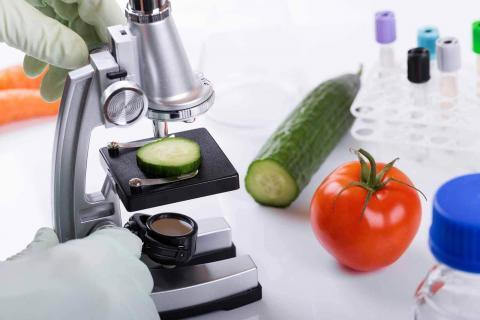
As food safety risks grow more complex, laboratories are under increasing pressure to deliver faster, more reliable results. qPCR is helping organisations reduce testing risk, accelerate decision-making, and strengthen operational resilience
By Dr. Zoheb Hassan, Principal Consultant, Healthcare & Life Sciences, Frost & Sullivan
Food safety incidents have always carried significant consequences, but recent outbreaks demonstrate just how quickly contamination events can escalate into major operational, financial, and reputational crises.
The CDC estimates 48 million people get sick from a foodborne illness every year. Of those, 128,000 are hospitalised and 3,000 die.[1]
In 2024, an outbreak of E. coli O157:H7 linked to onions served on McDonald’s Quarter Pounder burgers resulted in more than 100 illnesses across 14 states, 34 hospitalisations, and one death. The investigation ultimately traced the source to slivered onions supplied through the food service supply chain, leading to recalls and significant disruption across multiple organisations.[2]
Similarly, in 2025, a multistate Listeria monocytogenes outbreak linked to ready-to-eat foods produced by Fresh & Ready Foods resulted in 10 hospitalisations and a large-scale recall of sandwiches, snack items, and other prepared foods distributed through hospitals, airports, convenience stores, and food service channels. The outbreak investigation was ultimately linked to environmental contamination identified through microbial testing and genomic analysis.[3]
These events highlight an important reality: food safety testing is no longer simply a compliance requirement. It is a critical component of supply chain resilience, brand protection, and business continuity.
For laboratories supporting food manufacturers, retailers, and regulators, the ability to identify contamination rapidly and confidently can have significant downstream implications for product release decisions, recall management, and public health outcomes.
Why Speed Matters: The Cost of Waiting for Results
Traditional culture-based pathogen testing remains an important component of food microbiology. However, many workflows require multiple enrichment, incubation, and confirmation steps, often extending testing timelines over several days.
For food producers, every additional day spent waiting for results may mean inventory remains in quarantine, distribution schedules are delayed, and working capital is tied up in unreleased product.
When contamination is present, delayed detection can allow affected products to move further into the supply chain before intervention occurs.
This is one reason why qPCR adoption has accelerated across many food testing laboratories. By detecting pathogens and/or Spoilage organisms with high sensitivity, qPCR can significantly shorten the time required to obtain actionable results compared with conventional approaches. For example, typical culture testing can take 3-5 days from time to result, where as qPCR can deliver results in hours.
The value is not simply faster testing but faster decision-making.
How qPCR Helps Reduce Testing Risk
While speed is often the most visible benefit, laboratories are increasingly adopting qPCR because of its potential to reduce several forms of testing risk simultaneously.
Earlier Detection of Potential Contamination
In high-profile outbreaks such as the McDonald’s E. coli investigation or the Fresh & Ready Foods Listeria outbreak, identifying contamination quickly is essential to limiting downstream exposure and accelerating corrective actions.
By delivering results more rapidly, qPCR can help laboratories and food producers identify potential issues earlier in the production and distribution process.
Reduced Risk of Repeat Testing
Repeat testing remains a hidden productivity challenge for many laboratories.
When results are ambiguous, contamination events occur during testing, or additional confirmation is required, laboratories can lose valuable capacity through rework.
Standardised qPCR workflows help reduce variability across operators and sites, improving reproducibility and increasing confidence in first-pass results.
Improved Confidence in Release Decisions
For food manufacturers, testing is ultimately a business decision tool.
A production lot worth millions may remain on hold until pathogen testing is complete. Faster, highly sensitive detection methods enable organisations to make release decisions sooner while maintaining confidence in product safety.
As laboratories increasingly measure success through first-pass yield, turnaround time, and operational efficiency, qPCR is becoming an important contributor to overall business performance and not just analytical performance.
So why hasn’t qPCR completely displaced culture method as the gold standard in food safety testing?
Viability Detection Remains a Challenge
The primary reason is that culture methods confirm the presence of viable organisms whilst qPCR detects DNA. In some situations, DNA may remain detectable even after microorganisms have been killed through sanitation processes, thermal treatment, or environmental stress.
For a food manufacturer, the distinction matters. The critical question is often not whether pathogen/spoilage organism DNA exists, but whether live organisms capable of causing illness remain present. This distinction has made regulators and manufacturers cautious about relying exclusively on molecular detection methods. As a result, many laboratories continue to restrict use of qPCR as a rapid screening tool while relying on culture-based methods for confirmation.
Complex Food Matrices Can Impact Performance
Food is an exceptionally challenging testing environment.
Products such as chocolate, spices, dairy products, leafy greens, pet food, and processed meats contain compounds that can interfere with molecular testing workflows.
These PCR inhibitors may affect amplification efficiency and increase the complexity of assay development and validation.
As food categories continue to diversify, laboratories require robust methods capable of delivering reliable performance across increasingly complex sample types.
Enrichment Requirements Reduce the Speed Advantage
It is assumed qPCR eliminates enrichment steps entirely.
In reality, pathogen or spoilage testing often still requires enrichment to ensure target organisms are present at detectable levels.
For pathogens such as Salmonella and Listeria, enrichment remains a critical part of many validated workflows.
While qPCR significantly accelerates downstream analysis, the enrichment step can still account for much of the overall testing timeline.
This limits the full speed advantage that molecular testing might otherwise provide.
Regulatory and Validation Requirements
Food safety is a highly regulated industry.
Before laboratories adopt new methods, they must demonstrate equivalency with established reference methods through extensive validation studies.
Many manufacturers remain cautious about modifying testing protocols that have been accepted by regulators and customers for years.
Consequently, even when qPCR offers operational advantages, implementation timelines can be lengthy.
Cost and Workflow Complexity
Although qPCR can reduce labour requirements and accelerate decision-making, implementation requires investment in: Instrumentation, Laboratory infrastructure, Assay validation, Staff training, Quality systems.
For smaller laboratories, the economic justification may not always be straightforward.
The challenge is often less about assay performance and more about integrating molecular testing effectively into existing workflows.
What This Means for Commercial, Product, and Business Leaders
The growing adoption of qPCR reflects a broader shift in customer priorities.
Historically, laboratories often evaluated technologies based on analytical metrics such as sensitivity, specificity, and detection limits. While these remain important, purchasing decisions are increasingly influenced by business outcomes:
- How much risk can be removed from the testing process?
- How much re-testing can be avoided?
- How much faster can products be released?
- How much downtime or disruption can be prevented?
- How can laboratories do more with constrained staffing resources?
For commercial teams, this means conversations should increasingly focus on operational and economic value rather than technical specifications alone.
For product management and R&D teams, innovation opportunities increasingly lie in workflow simplification, automation, and integration and not solely in assay performance.
For marketing and business leaders, the opportunity is to position qPCR as an enabler of business resilience and risk reduction, rather than just simply being a productivity enabler.
Closing Thoughts
Recent E. coli and Listeria outbreaks have reinforced the enormous cost of food safety failures, for consumers, manufacturers, retailers, and testing laboratories alike.
As food safety organisations continue to face increasing testing demands and higher expectations for speed and accuracy, qPCR is emerging as a powerful tool for reducing testing risk, accelerating decision-making, and improving operational performance.
However, the future of food safety testing, at least in the near term, is unlikely to be a simple choice between qPCR and culture. More likely, it will involve increasingly integrated workflows that combine the speed of molecular detection with the biological certainty of culture-based confirmation.
The companies that best understand and communicate the value of qPCR impact on business outcomes, whilst helping laboratories bridge the gap between molecular and culture workflows, will be best positioned to capture value and shape the next chapter of food safety testing.
This article is part of our three-part series on the evolving food safety testing landscape:
- Part 1: Food Safety Testing Under Pressure: What It Means for Companies Serving the Market
- Part 3: Food Safety Testing at a Turning Point: Meeting Rising Expectations with Smarter Solutions