Executive Summary
India’s green hydrogen ecosystem is moving beyond policy announcements as production incentives, electrolyzer manufacturing, and early project deployment support commercial execution. Demand creation, project bankability, domestic manufacturing, and project execution are emerging as the key factors influencing how green hydrogen projects progress across the value chain. For developers, manufacturers, investors, and industrial users, these factors will influence how quickly commercially viable projects move from planning to implementation. This blog highlights the key insights from Frost & Sullivan’s webinar on the factors influencing commercial adoption of green hydrogen in India.
India’s National Green Hydrogen Mission has positioned the country among the world’s most ambitious hydrogen economies. Supported by production incentives, manufacturing programs, and a target of producing 5 million metric tons of green hydrogen annually by 2030, the focus is now shifting from policy to commercial execution.
These themes formed the core of Frost & Sullivan’s recent webinar, Green Hydrogen in India: From Policy Ambition to Commercial Reality. Our industry experts explored how demand creation, project bankability, electrolyzer manufacturing, and early commercial projects will influence the next phase of green hydrogen adoption in India.
The session brought together the following Growth Experts:

Sekhar Ramani
Principal Consultant, Energy & Environment, MEASA, Frost & Sullivan
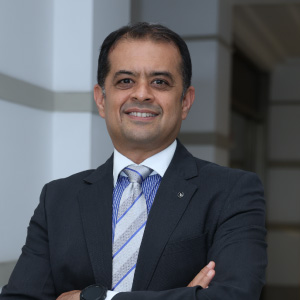
Amol Kotwal
Vice President, Energy & Environment, Frost & Sullivan
Braj Nandan Singh
General Manager, Hydrogen (North India), Waaree Group

Shaji John
Senior Vice President, Sales & Business Development and Global Head, EPC & Project Development, Ohmium

Anil Srikar Pavuluri
Director, Business Development (India & APAC), Elcogen
During the webinar, the panelists focused on what’s driving projects from paper to production. Here are the key highlights:
India’s Green Hydrogen Buildout Is Taking Shape
India has built roughly 8,000 tons of green hydrogen capacity against its 5 million ton target by 2030, less than 1% of the goal. The panel acknowledged that capacity remains limited today, while highlighting the production allocations, manufacturing incentives, and offtake agreements that are already in place.
Where things stand today:
- Production and manufacturing capacity have been allocated: Nineteen companies have secured allocations under the SIGHT (Strategic Interventions for Green Hydrogen Transition) scheme, covering 8.6 lakh tons of green hydrogen production. Incentives have also been awarded for 3,000 MW of electrolyzer manufacturing capacity.
- Green ammonia contracts have been signed: SECI (Solar Energy Corporation of India) has awarded contracts for 6.7 lakh tons of green ammonia for fertilizer applications at ₹50–65 per kg, below the global benchmark of around US$110.
- Demand already exists in key industries: Refineries, fertilizer producers, and methanol manufacturers already use hydrogen in their operations. Replacing grey hydrogen with green hydrogen allows adoption to begin with existing demand rather than creating new applications.
Supply Incentives Are in Place, Demand Mandates Are Still Missing
India has introduced several measures to support green hydrogen production. However, much of the webinar focused on how demand will develop alongside this supply.
Key takeaways:
- Existing hydrogen users are the first market: Refineries and fertilizer producers already consume grey hydrogen, making them the first sectors where green hydrogen can replace existing demand. However, there is no requirement for these industries to procure a defined share of green hydrogen.
- Refinery demand remains below projections: Government estimates projected around 200 KTPA (thousand tons per annum) of demand from refineries, while current demand is about 30 KTPA.
- Long-term offtake remains important: Production incentives are already in place, but developers also need committed buyers. Renewable Purchase Obligations (RPOs) were discussed as one example of how demand could be created.
Offtake, Capital, and Execution: What Makes Green Hydrogen Projects Bankable
Green hydrogen projects require more than production capacity. The discussion highlighted three factors that determine whether projects move forward: committed buyers, access to capital, and the ability to execute integrated renewable energy, hydrogen, and ammonia projects.
What determines bankability:
- Project costs extend well beyond the electrolyzer: A renewable energy, hydrogen, and ammonia project can cost around ₹13–14 crore per MW, making total project investment significantly higher than the electrolyzer alone.
- Projects need committed buyers: Long-term offtake remains essential before developers can secure financing and move projects forward.
- Different business models are emerging: Export contracts, SECI-aggregated domestic sales, captive projects, and manufacturing were identified as the primary routes to commercialization.
- Captive projects already have demand built in: A steel producer generating hydrogen for its own operations uses the hydrogen on-site, avoiding the need to secure an external buyer.
Electrolyzer Manufacturing Expands Local Capabilities
Electrolyzer manufacturing was another area of focus, particularly how much of the supply chain can already be sourced locally and what still depends on imports. The panel also discussed policy measures that could encourage wider adoption of domestically manufactured equipment.
Where localization stands today:
- PEM electrolyzers are already largely localized: Ohmium has localized around 90% of its supply chain in India, with precious metals remaining the primary imported raw material.
- L&T is localizing alkaline electrolyzer technology: Its partnership with McPhy of France was highlighted as one example of expanding domestic manufacturing capability.
- Most solid oxide components can be sourced locally: Around 80–90% of stack costs, including bipolar plates, assemblies, and modules, can be manufactured in India, while cell production remains the primary imported component.
- DCR offers a useful policy model: India’s Domestic Content Requirement (DCR) for solar modules was cited as an example, where incentives are linked to the purchase of locally manufactured equipment rather than manufacturing alone.
Projects and Partnerships Signal Early Commercial Progress
The webinar concluded with examples of pilot projects, export partnerships, and manufacturing announcements that reflect how green hydrogen projects are progressing in India.
Key developments highlighted by the panel:
- The hydrogen train pilot has reported lower hydrogen consumption than expected: Fuel consumption is running at around 0.6–0.7 kg per kilometre, compared with the anticipated 1 kg, with commercial operations expected after the current trial phase.
- Export partnerships are taking shape: IHI has partnered with ACME to supply hydrogen derivatives to Japan, with additional collaborations under discussion.
- Electrolyzer manufacturing announcements continue: Samsung and Reliance have both announced electrolyzer manufacturing capacity in India.
Expert’s Corner
“Everyone is talking about green hydrogen, but the real challenge now is execution. The industry still needs clarity on demand, economics, infrastructure, and who is actually going to build scalable businesses in this ecosystem.”
Sekhar Ramani,
Principal Consultant, Energy & Environment (MEASA)
Frost & Sullivan
Future Outlook
As commercial projects move beyond the demonstration stage, the industry’s focus is expected to expand from hydrogen production to the infrastructure needed for large-scale deployment. Investment is increasingly extending beyond electrolyzers to renewable power integration, storage, transportation, and ammonia export facilities, reflecting how commercial hydrogen value chains are evolving globally.
For India, the next phase is likely to be shaped by the performance of early commercial projects. Their ability to demonstrate competitive production costs, reliable operations, and sustained customer demand is expected to influence future investment, industrial adoption, and the pace of capacity expansion.
Don’t stop here! The webinar also explores the commercial decisions shaping Green Hydrogen in India:
- How will demand creation influence the commercial adoption of green hydrogen across India’s industrial sectors?
- What will determine whether green hydrogen projects move from announcements to execution?
- How can India strengthen domestic electrolyzer manufacturing while building a globally competitive supply chain?
To access the free on-demand recording of this Growth Webinar, click here.
Ready to Lead the Transformation?
- Book a Growth Strategy Session: Align your growth roadmap with Frost & Sullivan’s visionary Growth Pipeline™ Dialog.
- Engage with Growth Experts: Co-design AI-enabled, data-driven operating models that scale industry-specific and commercial impact.
- Share Your Transformation Story: Position your organization as a transformation leader through Frost & Sullivan’s Transformational Growth Leadership platform.
- Join the Growth Council: Collaborate with industry leaders shaping the future of your ecosystem.
- Nominate for the Best Practices Recognition: Be recognized for excellence in growth strategy, execution, and customer impact.
- Demonstrate Industry Positioning on the Frost Radar™: Benchmark your growth performance and innovation strength against industry competitors.
- Accelerate Brand & Demand Growth: Accelerate awareness, engagement, and revenue growth through integrated brand and demand generation strategies.