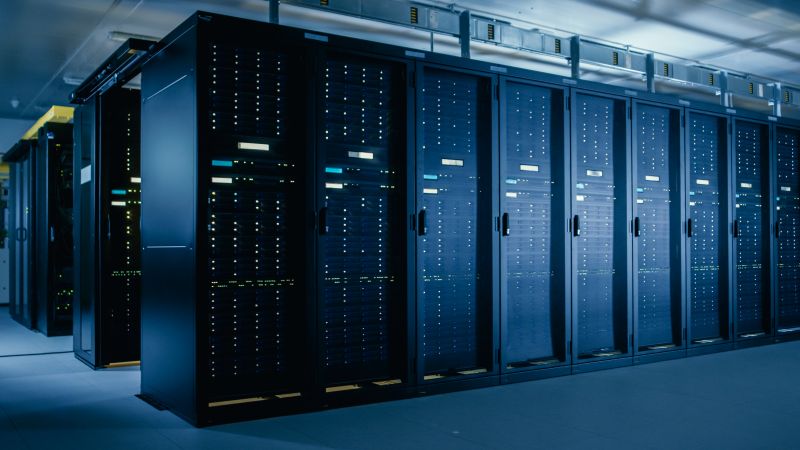
Data center infrastructure is evolving beyond server housing to power a hyper-connected, AI-driven digital world. AI workloads, cloud expansion, and edge computing are driving operators to rethink power, cooling, and operational efficiency at scale.
As a result, innovations like AI-powered predictive cooling, quantum energy optimization, and immersion liquid cooling technology are enabling ultra-high-density AI compute while reducing energy costs and environmental impact.
Frost & Sullivan outlined 10 opportunities impacting growth in data center infrastructure.
This blog highlights the top five growth opportunities transforming data center infrastructure, shaping the future of sustainable digital facilities.
🎧 Listen to our latest Podcast episode on Data center infrastructure
Top 5 Growth Opportunities in Data Center Infrastructure
- AI-powered Predictive Cooling for Data Centers based on Server Load Forecasting
AI-driven cooling is revolutionizing data center operations by slashing energy waste, improving server reliability, and driving sustainability. As global demand for cloud services surges, this innovation sets new benchmarks for efficiency. To stay competitive and profitable, companies are prioritizing:
- AI-driven Energy Efficiency Gains: Cutting energy consumption by up to 30% through proactive cooling adjustments based on server load forecasts.
- Enhanced Server Reliability and Uptime: Improving uptime by 5–10% by minimizing thermal stress and preventing overheating.
- Scalability Across Global Data Centre Networks: Rolling out predictive cooling across diverse data center environments to standardize energy-efficient practices worldwide.
Is your organization implementing best practices to scale AI-powered cooling consistently across data centers?
Strategic Imperative: Disruptive Technologies
The integration of AI-driven microgrid controllers with renewable energy and battery storage is transforming datacenter power systems into autonomous, adaptive, and resilient networks. These imperative complements AI-powered predictive cooling by:
- Optimizing energy use dynamically by forecasting server loads in real time.
- Supporting the global shift towards greener and more resilient infrastructure.
- Reducing reliance on traditional grids and improving system uptime.
Companies to Action
- Google: Pioneering AI-driven cooling optimization to cut energy use and improve sustainability.
- Facebook: Utilizing predictive analytics for proactive cooling and resource allocation.
- Amazon: Integrating AI-powered cooling and energy management across AWS data centers to reduce environmental impact.
- Quantum Computing for Energy Optimization
Quantum computing is solving complex optimization challenges at speeds unimaginable for classical systems. This leap forward unlocks dramatic gains in efficiency, cost savings, and sustainability. To capture these advantages, companies are prioritizing:
- Quantum Computing-driven Energy Optimization: Unlocking up to 30% energy savings by optimizing power consumption, distribution, and storage.
- Acceleration of Sustainable Data Centre Operations: Using quantum algorithms to optimize renewable energy integration and real-time load balancing.
- Expansion Through Quantum-enhanced Energy Solutions: Creating new revenue streams for providers specializing in quantum hardware and software for energy optimization.
Do you have the right tools and technologies to optimize power consumption and storage?
Strategic Imperative: Disruptive Technologies
The deployment of quantum energy management systems is redefining energy efficiency in data centers. This shift creates a multiple competitive advantage by:
- Solving complex power distribution and storage problems.
- Driving significant reductions in energy consumption and operational costs.
- Accelerating scalability and reliability of global data center operations.
Companies to Action
- IBM Quantum: Leading the development of quantum computing applications specifically tailored for energy management.
- Google Quantum AI: Advancing quantum algorithms aimed at optimizing data center operations to reduce energy consumption and enhance operational performance.
- Rigetti Computing: Focusing on creating quantum computing solutions that enhance energy efficiency across various industries.
- Immersion Liquid Cooling Technology
The rise of AI workloads and high-performance computing is driving the adoption of immersion liquid cooling technology with nano-fluidic heat exchangers. This technology is reshaping data center design by delivering massive energy savings. So, to deliver sustainable data center operations, companies are emphasizing:
- Ultra-high-Density AI Compute Enablement: Increasing compute capacity by up to 3x compared to traditional air cooling.
- Energy Efficiency and Cost Reduction: Reducing energy consumption by up to 40-50% compared to conventional cooling methods, leading to substantial operational cost savings.
- Scalability and Modular Deployment: Enabling rapid expansion of compute capacity in response to fluctuating AI workload demands.
What growth strategies are you adopting to future-proof data center design for rising AI and HPC workloads?
Strategic Imperative: Disruptive Technologies
The adoption of immersion liquid cooling technology is critical for overcoming traditional thermal limits and meeting the escalating global demand for energy-efficient data centers. This strategic shift intensifies competitive pressure across the tech ecosystem by:
- Enabling the stable deployment of ultra-high-density AI compute clusters.
- Driving massive operational savings through significant energy consumption reduction.
- Aligning infrastructure with ESG goals to capture demand for sustainable, carbon-neutral compute capacity.
Companies to Action
- Cooler Master: Advancing the adoption of liquid cooling systems designed to support ultra-high-density AI compute clusters.
- Asperitas: Specializing in sustainable immersion cooling technology to achieve significant energy savings and environmental benefits.
- Submer: Pioneering nano-fluidic cooling systems to optimize heat exchange and reduce power usage effectiveness.
- Data Center Power Grid Symbiosis with Smart Cities
The integration of data centers with smart city power grids is creating a bidirectional energy relationship that transforms data centers from mere consumers into critical grid assets. This dynamic synergy unlocks substantial value and competitive positioning by facilitating:
- Grid Stability and Ancillary Services Provision: Providing ancillary services that improve grid reliability by up to 15% and establish the data center as a virtual power plant (VPP).
- Optimized Energy Pricing and Cost Savings: Enabling data centers to dynamically respond to real-time pricing signals and shifting loads to reduce operational energy expenses.
- Enhanced Sustainability and Carbon Footprint Reduction: Increasing the utilization of renewable energy sources and reducing reliance on fossil fuels through demand response and energy storage integration.
Are you partnering with the right providers to transform your data center into a grid-supporting VPP?
Strategic Imperative: Industry Convergence
Collaboration between power utilities and cloud providers is enabling AI-optimized grid management systems tailored for data center energy demands. This convergence accelerates progress by:
- Balancing supply and demand dynamically across distributed data centers.
- Predicting and mitigating grid disruptions to ensure uninterrupted performance.
- Embedding data centers within smart city ecosystems to reduce carbon footprint and support scalable growth.
Companies to Action
- Siemens: Developing advanced smart grid integration for data centers into urban energy ecosystems.
- Enel X: Providing comprehensive energy management services tailored for data centers.
- Engie: Offering integrated energy solutions that combine renewable energy, smart grid technologies, and data center power management.
- AI-driven Hyper-Scale Data Centers
The exponential rise of AI workloads is fundamentally reshaping the data center landscape, demanding a radical overhaul of traditional power and operational models to support facilities that exceed hundreds of megawatts. This shift presents a massive growth opportunity driven by:
- Redefinition of Power Infrastructure: Specializing in high-efficiency power delivery systems and advanced cooling technologies to reduce operational costs by up to 30%.
- Integration of AI for Operational Efficiency: Leveraging AI to optimize energy usage, workload distribution, and predictive maintenance for significant gains in profitability and sustainability.
- Expansion of Renewable Energy Partnerships: Accelerating partnerships with renewable energy providers to meet sustainability goals and regulatory requirements.
How prepared is your organization to redesign power infrastructure for hyper-scale AI data centres exceeding hundreds of megawatts?
Strategic Imperative: Transformative Megatrends
AI workloads are driving the demand for hyper-scale data centers worldwide. This shift compels transformation by:
- Integrating renewable sources, advanced storage, and smart grids to meet data center demand.
- Applying AI for real-time power management and efficient workload distribution.
- Designing sustainable, resilient city infrastructure to support energy-intensive facilities.
Companies to Action
- Intel: Leading innovation in AI-optimized processors and silicon solutions tailored for hyper-scale data centers.
- NVIDIA: Providing cutting-edge AI hardware accelerators and graphics processing units (GPUs) that power the expansion of hyper-scale data centers.
- Alibaba Cloud: Focusing on integrating renewable energy and smart energy management to support sustainable growth.
Are You Ready to Power the Future with High-density, Intelligent Infrastructure?
The digital ecosystem is outpacing traditional data center models at breakneck speed. The companies that win will be the ones that prioritize sustainability, density, and intelligence, not the ones that simply add servers and power. Now is the time to invest in immersion liquid cooling technology, quantum-driven energy optimization, AI-first operations, and smart-grid integration to build resilient, ultra-efficient facilities capable of powering the global AI revolution. – So, how is your organization preparing to capitalize on these growth opportunities?
Frequently Asked Questions (FAQs)
What is data centre infrastructure?
Data centre infrastructure refers to the physical and digital systems that support the operation of a data center, including power supply, cooling, networking, servers, storage, security, and management software that ensure reliable, scalable, and energy-efficient computing.
What are the five core elements of data center infrastructure?
The five core elements of data center infrastructure are power systems, cooling systems, IT hardware (servers and storage), networking infrastructure, and monitoring and management software.
What infrastructure is needed for a data center?
A data center requires reliable power and backup systems, efficient cooling, servers and storage hardware, high-speed networking, physical and cybersecurity controls, and data center management software to operate securely and continuously.
Download the full analysis – Top Growth Opportunities in Data center Infrastructure – and begin your transformation journey.
Connect with us for an exclusive workshop on Data center Infrastructure to explore customized growth strategies, real-world best practices, and new opportunities specific to your organization’s goals.