Preface
Cell therapy, arguably the most disruptive frontier in modern biopharmaceuticals, is now seeing its industrial-scale manufacturing and commercial rollout gather unstoppable momentum. Driven by sustained advances in stem-cell and immune-cell mechanistic research, process development, and clinical validation—and under an increasingly mature global regulatory framework—the first wave of innovative products has now gained marketing approval, signaling that the field has established a full—spectrum industrial paradigm spanning discovery, manufacturing, and registration.
Nowhere is this inflection more pronounced than in China. There, the alignment of policy incentives, capital commitment, and unmet clinical need has produced a watershed moment: the commercial debut of the nation’s inaugural stem cell therapeutics. This breakthrough has, in turn, catalyzed vertical integration across the sector’s upstream and downstream operations. Enterprises possessing proprietary platform technologies and end-to-end operational command are consequently emerging as the principal architects of an industry now pivoting toward standardization and scalable delivery.
Heading I: Macro Perspectives: The Landscape of Cell Therapy Development
Subheading 1 — Amimestrocel: Pioneering Commercialization Under Dual-Track Regulation
The approval of Amimestrocel (Amimestrocel Injection), a landmark achievement in China’s cell therapy industry, reflects not happenstance but the inevitable convergence of deep technical expertise, sustained capital commitment, forward-looking policy frameworks, and unmet clinical demand. In doing so, it offers definitive proof that stem cell therapeutics can traverse the full path from bench to bedside within China’s regulatory and market environment.
As early as 2013, Amimestrocel became one of the first stem cell therapies to file an Investigational New Drug application under the pharmaceutical pathway, embarking on clinical development when the regulatory landscape remained largely uncharted. By 2020, its Phase II trial had yielded encouraging efficacy signals, providing initial clinical validation of the product’s therapeutic value. The Phase III study was completed in 2024, demonstrating that Amimestrocel achieved a favorable efficacy and tolerability profile in steroid-refractory acute gastrointestinal graft-versus-host disease, with the primary endpoint of Day 28 overall response rate reaching 63.0%. This breakthrough rests on more than a decade of relentless technical innovation—most notably, the development of advanced manufacturing platforms harnessing the immunomodulatory properties of mesenchymal stem cells (MSCs), exemplified by scalable 3D microcarrier-based culture systems that have effectively overcome the longstanding bottlenecks of conventional production in throughput, cost-efficiency, and quality assurance.
More critically, the top-level policy designs rolled out during China’s 13th and 14th Five-Year Plans—explicitly promoting the bioeconomy and innovative drug development—have furnished increasingly lucid regulatory scaffolding for stem cell therapeutics across clinical investigation, marketing authorization, and GMP oversight. Riding this policy tailwind, Amimestrocel secured the nation’s inaugural Stem Cell Drug Manufacturing License in 2024 and, via priority review, gained conditional marketing approval in January 2025 for steroid-refractory acute graft-versus-host disease — an indication with significant unmet medical need and no viable therapeutic alternatives.
On the market front, Amimestrocel has demonstrated robust industrial execution, achieving dual breakthroughs in reimbursement and pricing: the drug was included in the government-guided “Beijing Universal Health Insurance” specialty drug formulary in 2025, entitling enrolled patients to reimbursement of up to 65%. This marks the first time that a provincial inclusive insurance scheme has formally endorsed the clinical value of stem cell therapy, establishing a replicable precedent for broader reimbursement coverage. Of greater strategic significance is its disruptive pricing: domestic treatment costs approximately RMB 19,800 per dose, merely 1/70th of Ryoncil, its U.S. counterpart priced at roughly RMB 1.39 million per dose.
This pricing differential is far from a mere market concession. Its fundamental underpinning lies in a domestically secured, end-to-end supply chain that remains largely self-sufficient and insulated from external volatility. This resilience is achieved through three strategic pillars: (1) upstream substitution of critical raw and ancillary materials with locally sourced alternatives; (2) midstream cost reduction of over 60% via scaled, automated 3D microcarrier-based bioprocessing; and (3) downstream closed-loop governance across manufacturing, quality control, and cold-chain logistics, which eliminates the premium costs and supply risks inherent in relying on overseas CDMOs. This integrated industrial capability enables substantial pricing leverage and market penetration elasticity without compromising sustainable margins.
Approval of the nation’s first stem cell drug marks more than a closed-loop pipeline spanning IND filing, clinical validation, GMP manufacturing, and regulatory clearance—it signals China’s entry into the commercial era of fully integrated R&D, production, and marketing. For the industry, it sets a definitive, replicable benchmark.
Heading 2 – Therapeutic Modalities: Overview of Stem Cell and Immune Cell Therapies
Sub-heading 1: Stem Cells
Stem cells are characterized by their capacity for self-renewal and multipotent differentiation. Stem cell technology has found extensive application in clinical research and trials; notably, hematopoietic stem cell transplantation has long served as a cornerstone therapy for patients with hematologic malignancies. Beyond this, the discovery of induced pluripotent stem cells (iPSCs) in 2006—demonstrated to restore retinal and vascular integrity in murine models—has carved out a distinct niche for these cells in the cell replacement therapy market. The mechanisms underlying stem cell-based therapies are multifaceted, centering on the triad of homing, differentiation, and immunomodulation:
- Stem cells replace damaged cells and tissues through lineage-specific differentiation;
- Stem cells leverage robust immunomodulatory capacity to orchestrate cytokine networks and dampen excessive immune responses;
- Paracrine-based stem cell therapy harnesses secreted proteins, enzymes, and factors to attenuate inflammation, drive cellular proliferation, and exert immunomodulatory, angiogenic, and anti-apoptotic effects;
- Through direct cell-cell contact, stem cells modulate immune function and foster tissue repair; alternatively, they shuttle mitochondria to injured cells via tunneling nanotubes.
It is precisely this multi-target, systems-level mode of action that enables stem cell therapy to intervene across a broad spectrum of diseases—spanning neurological, cardiovascular, musculoskeletal, cerebrovascular, and autoimmune disorders. Its cardinal advantage lies in targeting disease at its root, shifting therapeutic strategy from conventional external intervention to harnessing the body’s intrinsic regenerative and regulatory capacity. Autologous iPSCs exemplify this paradigm: their extensive ex vivo proliferative capacity and pluripotency enable scalable generation of patient-matched functional cell populations, circumventing immunological barriers inherent to allogeneic approaches. This opens a durable, potentially curative one-time treatment option for chronic, degenerative, and tissue-destructive conditions that have long lacked effective therapies.
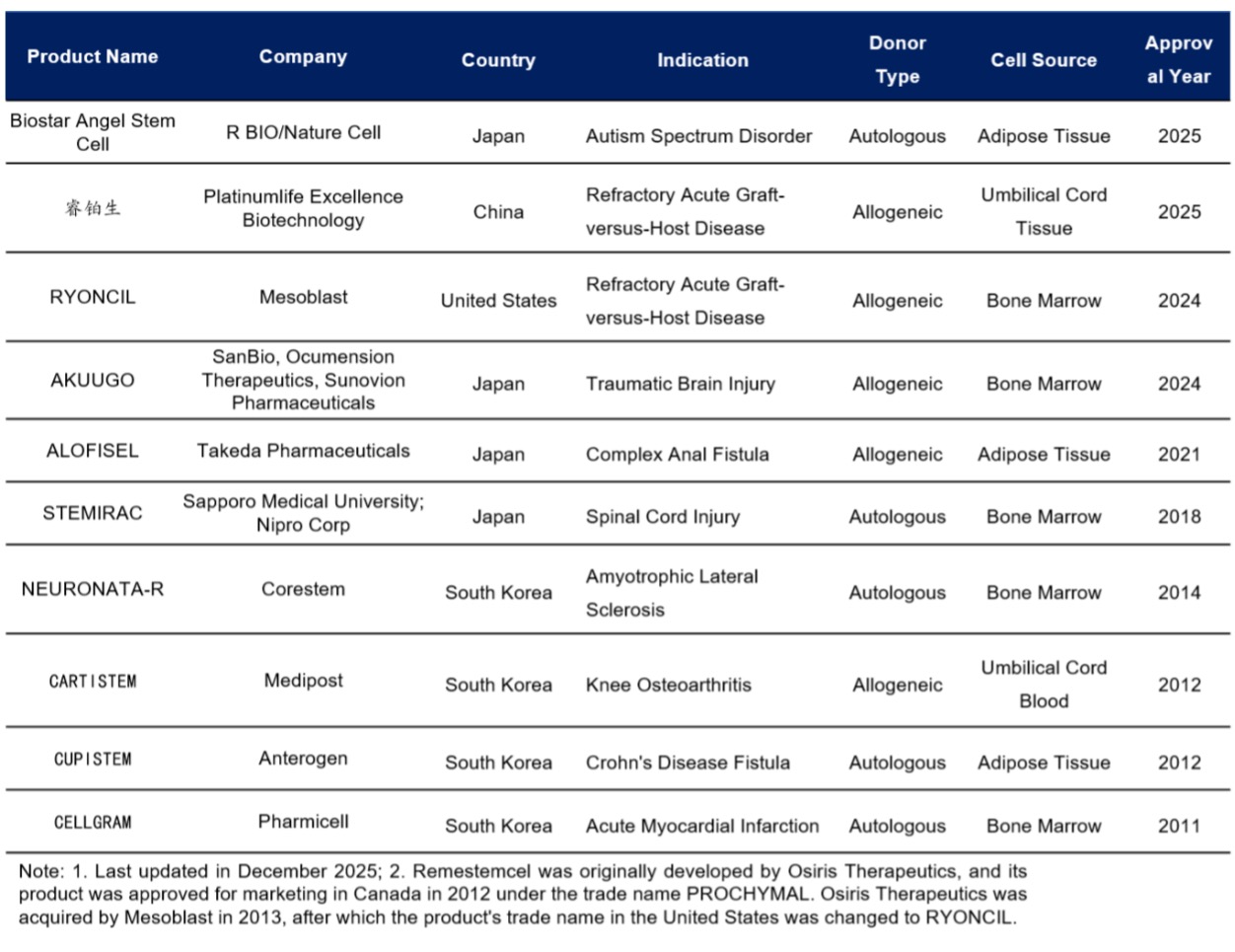
Stem cell therapy has made substantial headway toward commercialization. By end-2025, South Korea and Japan have leveraged distinct regulatory pathways to approve stem cell therapeutics for divergent indications: Korea for ALS, knee osteoarthritis, Crohn’s fistula, and acute myocardial infarction; Japan for autism spectrum disorder, traumatic brain injury, complex perianal fistula, and spinal cord injury. In 2024, the United States granted its first-ever approval for RYONCIL, a bone marrow-derived mesenchymal stromal cell therapy for pediatric steroid-refractory acute graft-versus-host disease. China followed suit shortly thereafter with the approval of Amimestrocel, an allogeneic umbilical cord-derived stem cell product for the same indication. These milestones signal not only that the major global markets have now established a full regulatory pathway for stem-cell therapeutics, but also that China’s capabilities in developing and registering world-class stem-cell drugs have moved into lockstep with the international frontier.
Figure: Global Approved Stem Cell Products
Source: FDA, EMA, NMPA, PMDA, MFDS, Frost & Sullivan Analysis.
Sub-heading 2: Immune Cells
The core mechanism of immune cell therapy lies in genetically engineering and expanding immune cells to confer or enhance their ability to specifically recognize and eliminate target cells. Two principal technical routes have emerged: ex vivo approaches, where cells are isolated, modified, expanded, and reinfused—exemplified by CAR-T, TIL, and NK cell therapies—and in vivo approaches, which deploy delivery systems to genetically reprogram immune cells directly within the patient, such as in vivo CAR-T. This therapeutic modality holds considerable promise across a broad spectrum of indications, including malignancies, autoimmune disorders, and infectious diseases.
The standout advantages of immune cell therapy lie in its high target specificity, durable efficacy, and customizable design. Unlike conventional radiotherapy, chemotherapy, and targeted agents, cell therapy can breach immunosuppressive microenvironments to achieve precise “living drug” delivery. Moreover, certain engineered immune cells—such as memory T cells—can persist long-term in vivo, establishing sustained immune surveillance and protection.
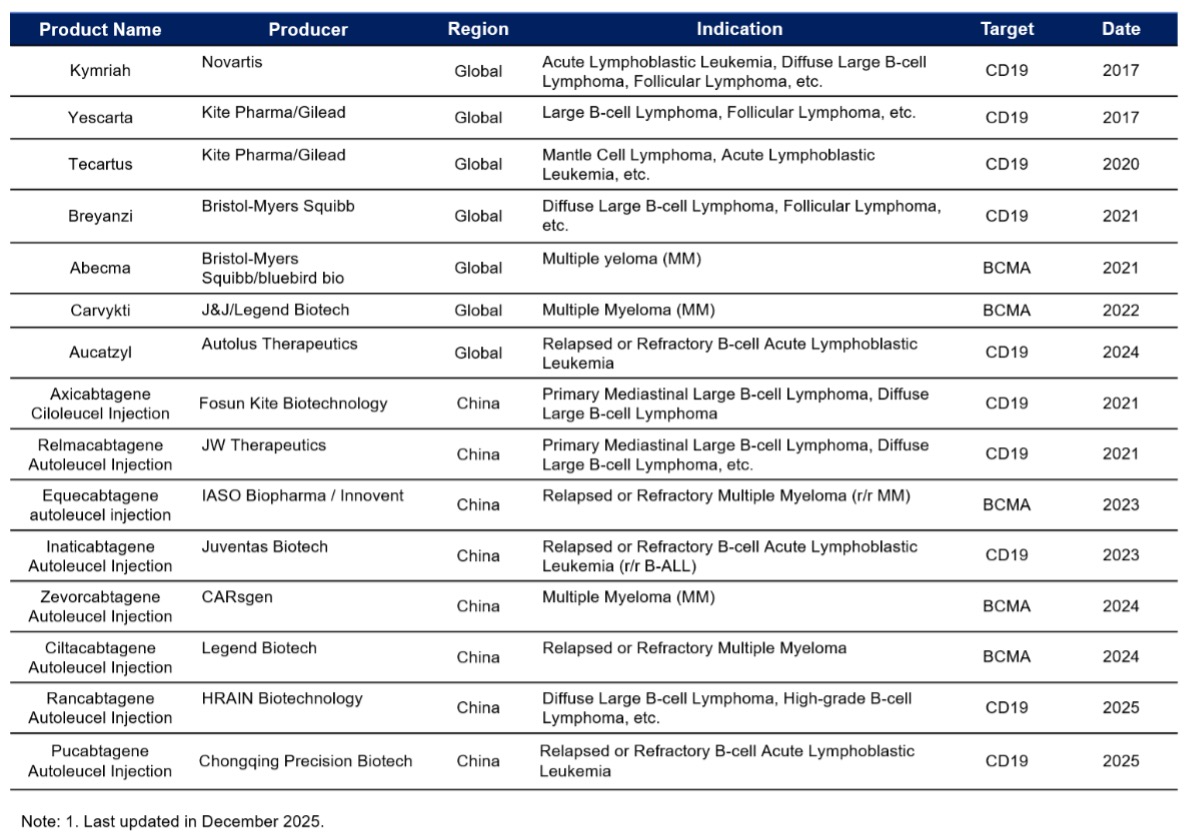
Immune Cell Therapy, Exemplified by CAR-T, Charts a Commercial Path of “Target-Driven Precision and Rapid Iteration”. Since the 2017 debut of the first global CD19-targeted CAR-T product, therapies directed at CD19 and BCMA have fundamentally reshaped treatment standards in hematologic malignancies. Of greater strategic significance is the emergence of the Chinese market: following the 2021 approval of the first domestic CAR-T, more than eight products have reached market within four years, spanning both CD19 and BCMA targets. This dual achievement underscores, on one hand, China’s full command of end-to-end industrialization—from process development and GMP manufacturing to quality control; on the other, the accelerating pace of approvals (New cell-therapy products are still reaching the market in 2025.) reflects systemic advances in indigenous R&D efficiency and clinical translation. Collectively, these developments signal China’s transition from technology adoption to de novo innovation and rapid productization in this field.
Figure: Globally Approved CAR-T Cell Therapy Products
Source: FDA, EMA, NMPA, Frost & Sullivan Analysis
Sub-heading 3: Industry Development Stage: Accelerating the Translation from Bench to Bedside
With R&D momentum showing no signs of abating, stem-cell and immune-cell therapies are rapidly breaching the confines of their currently approved indications and pushing into an ever-broader disease landscape.
The regulatory green lights for stem cell therapies in China and the US, alongside the expanding roster of approved CAR-T products, together constitute compelling evidence that the field has systematically transitioned from basic science and early-phase exploration to a fully integrated industrial paradigm. This now-encompassing framework spans target discovery, process development, rigorous clinical validation, globally aligned regulatory submissions, and scalable commercial manufacturing—earning endorsement from major agencies including FDA, NMPA, PMDA, and EMA.
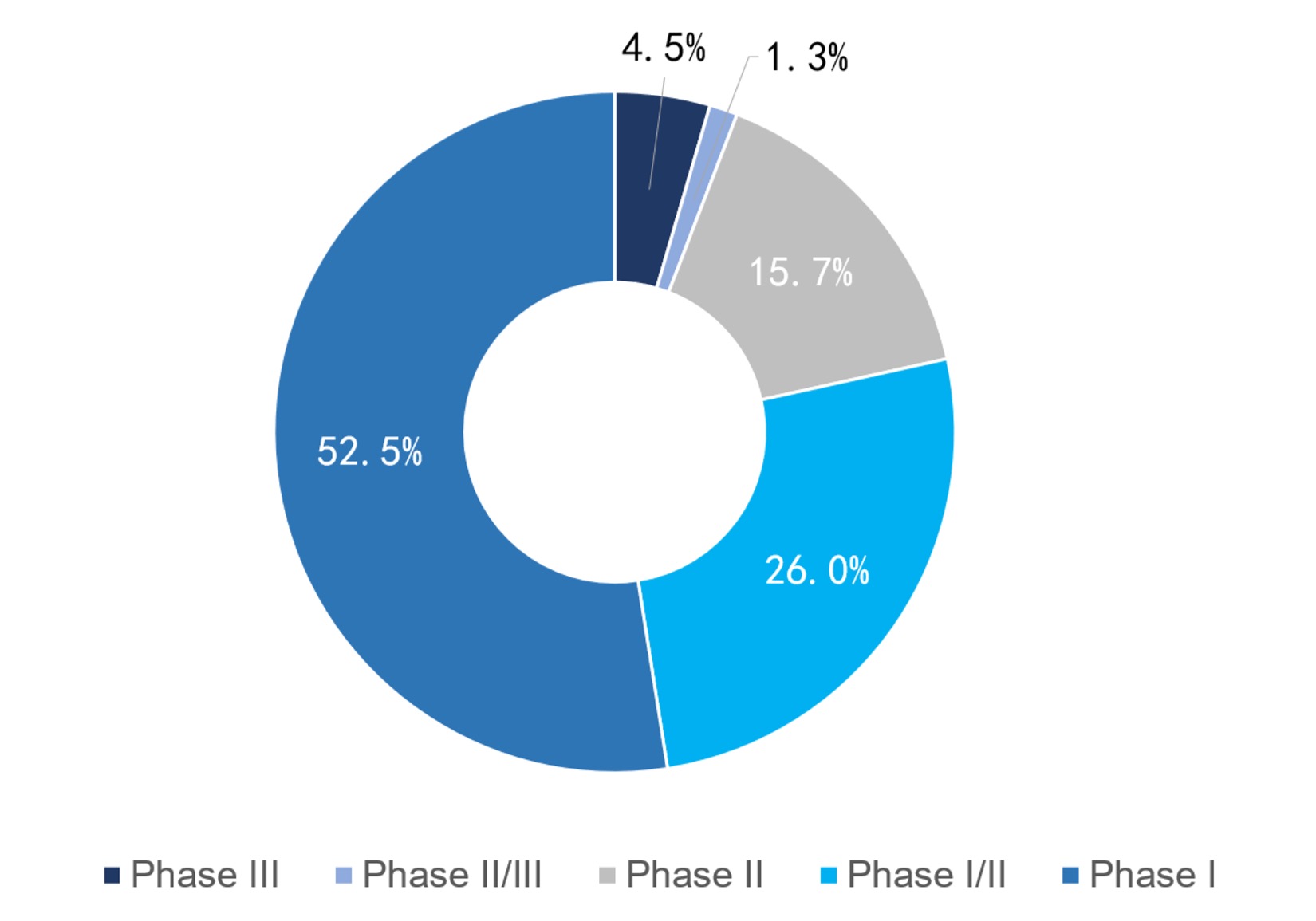
The global cell therapy pipeline encompasses over 1,000 clinical-stage programs. By phase distribution, Phase I trials account for 52.5% of the total—reflecting a field still in active technological iteration and proof-of-concept validation, with numerous innovations transitioning from bench to bedside. Meanwhile, more than 5% of programs have advanced to Phase III or Phase II/III, positioning them for potential regulatory approval in the near term.
Figure: Global Cell Therapy R&D Pipeline – Split by Clinical Phase
Note: 1. Last updated December 2025.
Source: Clinicaltrials, Frost & Sullivan Analysis
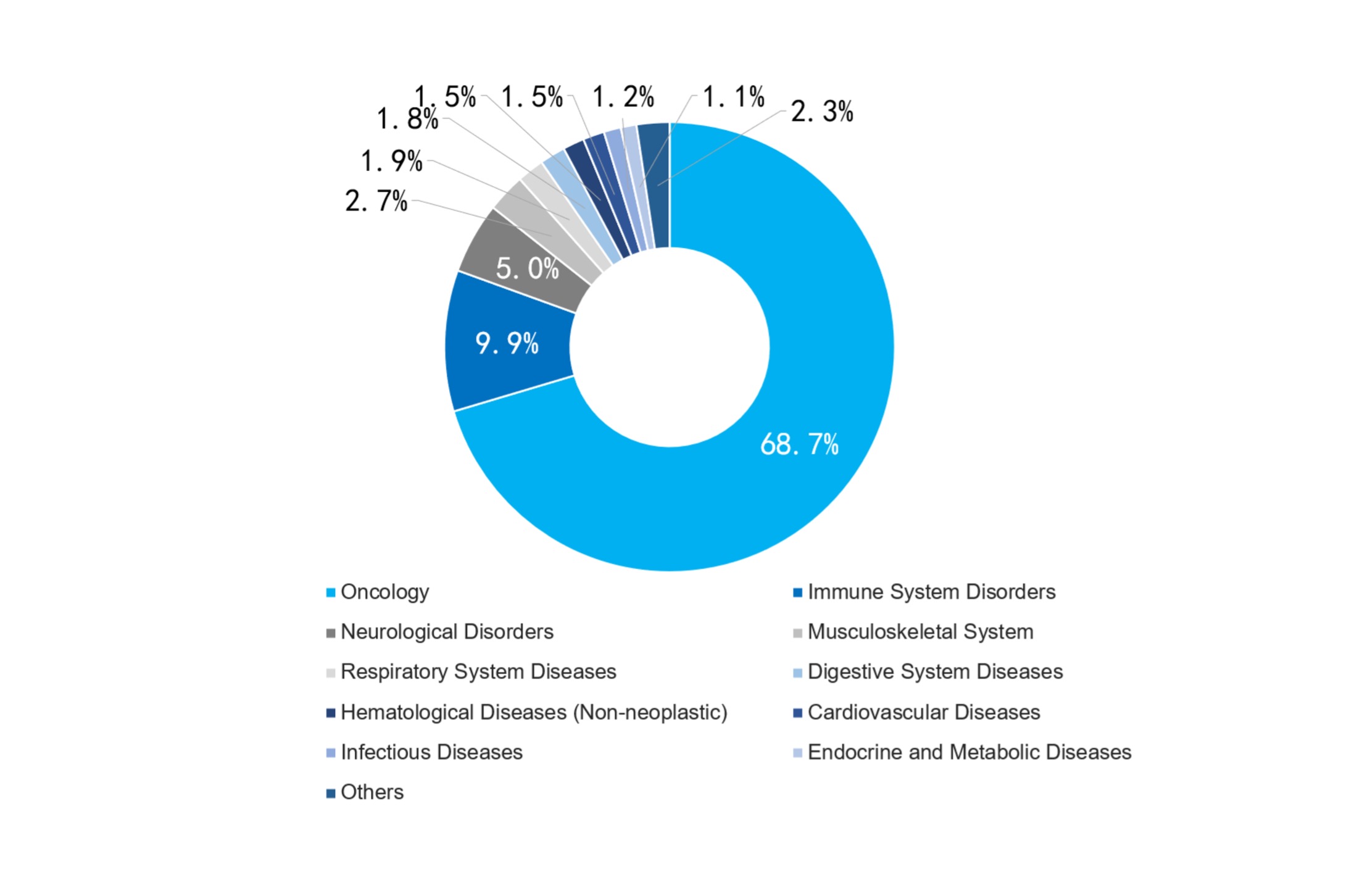
Figure: Global Cell Therapy R&D Pipeline – Split by Indication Breakdown
Note: 1. Last updated in December 2025; 2. Pipeline candidates spanning multiple therapeutic areas are cross-listed under relevant disease categories.
Source: Clinicaltrials, Frost & Sullivan Analysis
An analysis of the current indication pipeline reveals that R&D focus in cell therapy is shifting from traditional hematological malignancies toward broader therapeutic arenas, including solid tumors and autoimmune disorders. Pipelines are now zeroing in on major, still-unmet clinical needs where traditional therapies offer limited benefit and disease burden is heavy—think autoimmune disorders such as systemic lupus erythematosus, respiratory diseases like COPD and idiopathic pulmonary fibrosis, and a range of neurological conditions. A shared hallmark of these disorders is their complex pathogenesis, typically rooted in immune dysregulation, chronic inflammation, and irreversible tissue damage or defective repair and regeneration. Current therapies largely confine themselves to symptomatic relief or single-target inhibition, leaving the underlying disease trajectory fundamentally unchanged. Cell therapy—encompassing stem cell and immune cell platforms—offers a fundamentally different therapeutic paradigm: leveraging living-cell properties to deliver multi-target, systems-level immunomodulation, cytotoxicity, anti-inflammatory effects, antifibrotic activity, neurotrophic support, and structural tissue repair, thereby addressing root causes rather than downstream manifestations.
As global regulatory-science frameworks continue to mature and the first wave of products clears stringent review to validate a viable path to market, deepening cell therapy penetration across these core indications signals more than a coming shift in therapeutic paradigms—it marks the accelerated maturation of a high-value ecosystem driven by solving real clinical problems.
Heading 3: Policy, Regulatory Landscape, and Industrial Ecosystem of China’s Cell Therapy Sector
After a period of laissez-faire expansion, China’s cell-therapy sector—since roughly 2015—has entered a scientifically driven, value-oriented era shaped by an increasingly clear and robust national regulatory framework, accomplishing a thorough industry cleansing and comprehensive upgrade.
Sub-heading 1 — Evolution of China’s Cell Therapy Regulatory Landscape China’s oversight of cell therapy has undergone a four-stage trajectory from permissive experimentation to structured innovation. Prior to 2015, cell therapy operated in a loosely regulated environment where it was simultaneously pursued as both a medical technology and a pharmaceutical product, allowing the field to develop freely but also giving rise to inconsistent and often non-standard clinical applications. The 2015–2016 period brought stringent recalibration, with the Measures for the Administration of Clinical Research on Stem Cells (Trial) and targeted inspections halting unapproved Category III medical technologies in their tracks. A pivot toward guided standardization followed in 2017, when the Technical Guidelines for Research and Evaluation of Cell Therapy Products formally classified these products as drugs and instituted a research filing system. Since 2020, the sector has moved into a clearly regulated era: under a de-facto dual-track oversight framework, product development has accelerated, while the policy architecture—backed by the 14th Five-Year National Plan and local industry initiatives—has been continuously refined. The result is a coherent trajectory that began with permissive exploration, shifted to stringent consolidation, and now balances institutional guidance with innovation-driven incentives.
Sub-heading 2 — Core Regulatory Policies
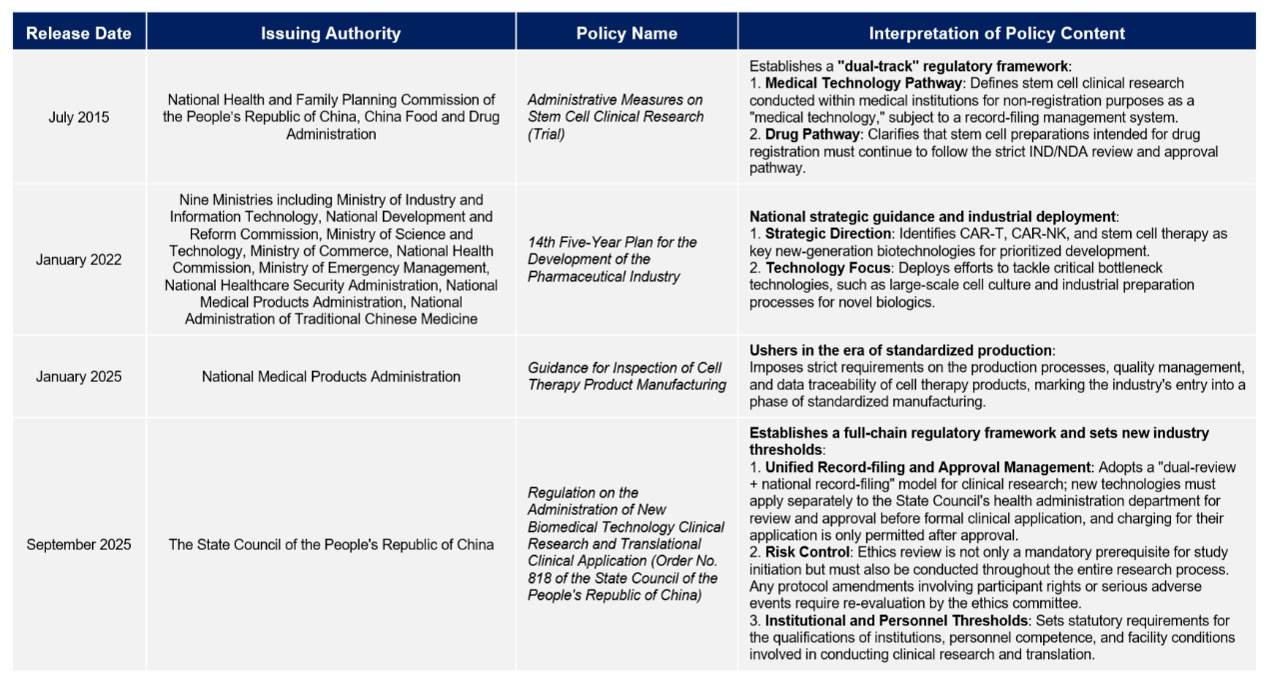
A cascade of milestone policy releases signals China’s cell therapy sector has crossed the threshold from exploratory regulation to standardized, quality-driven governance.
Figure: Core Policies and Policy Implications for Cell Therapy
Source: Frost & Sullivan Analysis
The Regulation on the Administration of New Biomedical Technology Clinical Research and Translational Clinical Application (Order No. 818 of the State Council of the People’s Republic of China) establishes a comprehensive, end-to-end regulatory framework for cell therapy, centering on three pillars: clinical trial notification, translational approval pathways, and institutional qualification. By delineating a clear “notification-research-licensing” trajectory while imposing stringent credentialing requirements, the policy raises the bar for market entry even as it fosters compliant innovation. For academia and industry, the guidelines offer a defined translational route but demand robust preclinical validation and strict ethical adherence—driving up compliance costs in tandem with regulatory clarity. The emphasis on end-to-end compliance, in turn, catalyzes demand for specialized CRO, GMP manufacturing, and third-party testing services. For healthcare institutions, the policy now channels clinical research accreditation toward top-tier tertiary hospitals only. For patients and trial participants alike, the policy not only safeguards the rights and welfare of subjects but also creates an institutional foundation that will enable future patients to access safe and effective advanced therapies at an earlier stage.
These policies establish end-to-end, system-level standards spanning strategic direction, manufacturing quality control, and clinical translation—catalyzing professional consolidation and standardization across the sector. In doing so, they carve out a well-defined path for companies with genuine technical depth, robust quality systems, and operational compliance, propelling the industry from early-stage experimentation toward a new phase of high-quality, sustainable growth.
Sub-heading 3: Regional Policy Tailwinds
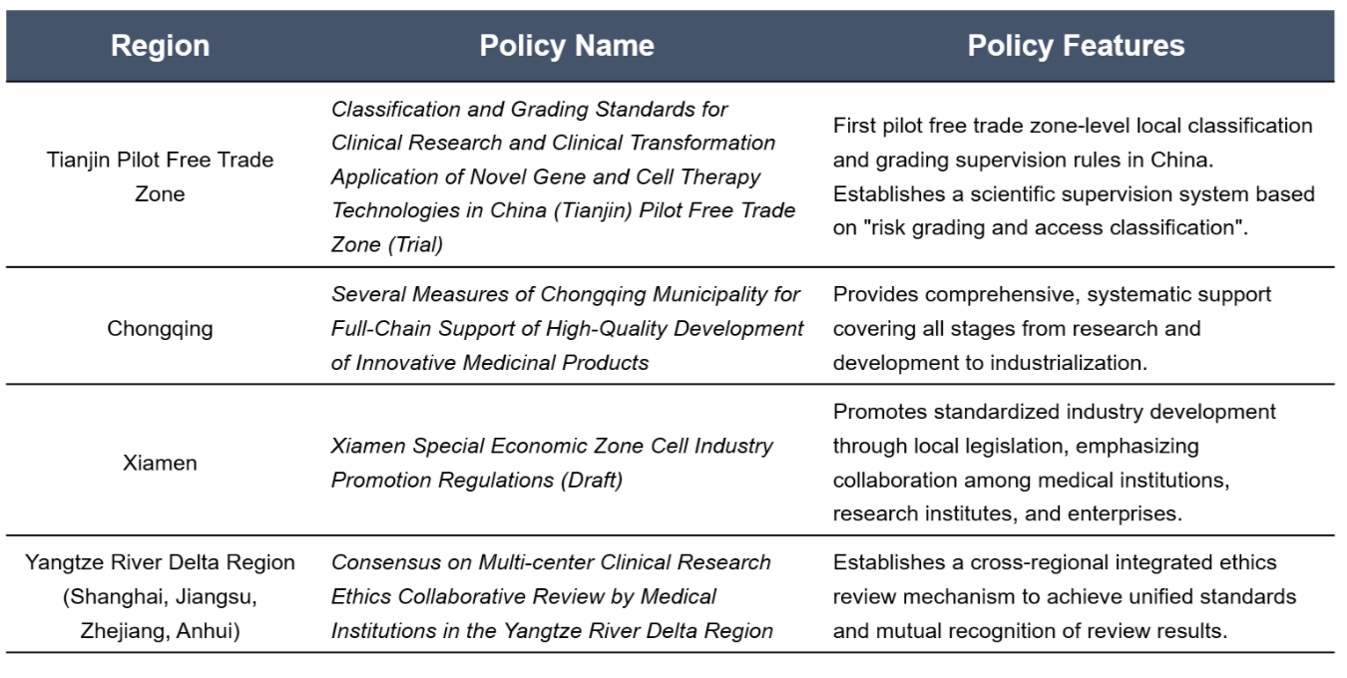
Across China, provinces and municipalities are rolling out tailored, granular local policies that are fast becoming critical accelerators in moving cell therapies from bench to bedside.
Institutional Innovation and Pilot-First Approaches: Against the backdrop of rapid industry expansion, regional governments are leveraging differentiated policy mandates and functional positioning to carve out optimal pathways for R&D and clinical translation. Following the State Council’s Circular No. 818—which explicitly endorsed the clinical translation of novel biomedical technologies—Across the country, local governments have answered the national call with a relay of tailor-made policies, creating a region-by-region momentum that propels the cell and gene therapy sector forward. Amid the current wave of policy tailwinds, the moves by Tianjin, Chongqing, Xiamen and the three provinces plus one municipality of the Yangtze River Delta—Shanghai, Jiangsu, Zhejiang and Anhui—have been particularly eye-catching.
Figure: Representative Local Supportive Policies
Source: Frost & Sullivan Analysis
Amid this latest wave of policy positioning, the Tianjin Free Trade Zone took the lead in November 2025 by releasing the Standards and Specifications for the Classification and Grading of Clinical Research and Clinical Translation Application of Gene and Cell Therapy Technologies (Trial), a document widely viewed as both groundbreaking and emblematic of the field’s regulatory evolution. As one of the first industry-practice codes initiated by a local government after the release of the Order No. 818 document, the measure breaks new ground by instituting a science-based oversight system that couples “risk stratification with graded market entry.” Assigning technologies to high-, moderate-, or low-risk tiers, it creates a differentiated and dynamically adjustable regulatory framework—fortifying safety baselines for high-risk interventions while carving out an accelerated pathway for well-established modalities. Dubbed the “Tianjin Model,” this approach not only injects momentum into the city’s own cell-therapy sector but also offers a ready-to-replicate template for the nation, showcasing how sub-national authorities can translate central policy into institutional innovation that drives the industry forward.
Legislative Empowerment at the Local Level: Regions such as Hunan, Sichuan, and Chongqing have initiated local legislation to spearhead the establishment of cell therapy R&D systems, laying the groundwork for building a comprehensive industrial ecosystem for cell therapy. Through such local legislation, the cell therapy industry gains clearer rights and responsibilities, along with stabilized expectations. This not only preliminarily establishes an R&D framework but, more importantly, provides institutional safeguards and an innovative environment for constructing a fully integrated industrial ecosystem.
Heading 4 – Cell Therapy Value Chain Dissected: End-to-End Integration Maturing
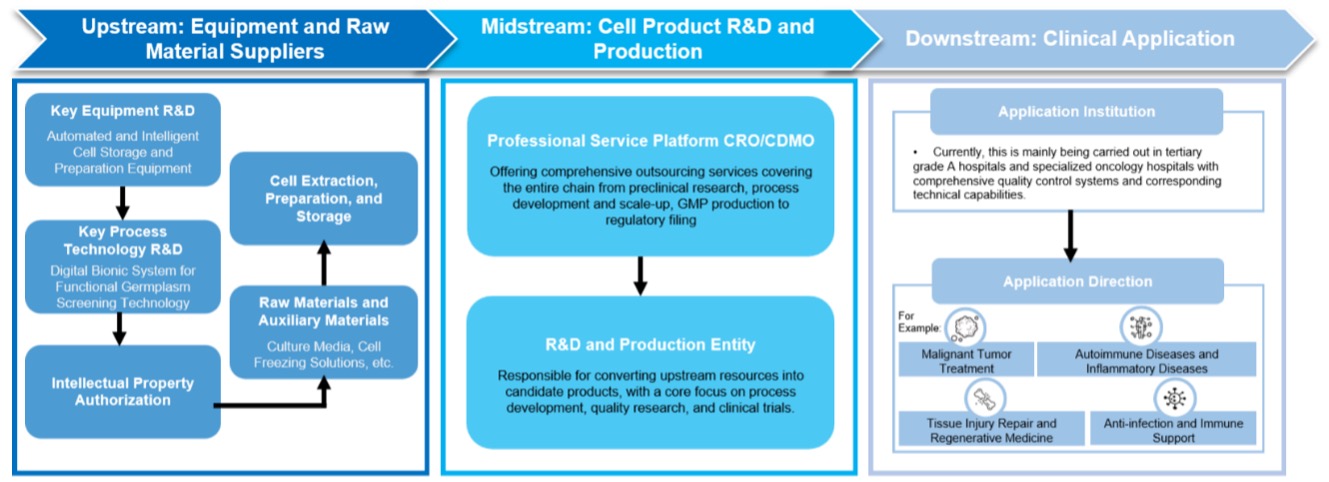
The cell-therapy value chain has matured into a fully integrated, midstream-accelerated ecosystem: upstream remains anchored by imported core equipment and high-value consumables, making supply-chain security and domestic substitution the bedrock of industrial autonomy; midstream R&D and manufacturing companies now serve as the sector’s primary engine, with surging IND approvals, expanding clinical trials and robust capital markets underscoring their innovation vitality; downstream application is concentrated in high-caliber medical institutions whose clinical expertise and practice standards constitute the critical interface for product value realization.
In this emerging landscape, industrial value is rapidly converging on platform companies that command proprietary core technologies and can deliver services at scale. By offering end-to-end solutions, these players are reshaping the industrial ecosystem and driving the field toward a standardized, scalable, and commercially sustainable phase.
Figure: China’s Cell Therapy Industry Chain
Source: Frost & Sullivan Analysis
Challenges in the Industrial Chain:
- Drug Submission:In the drug submission process, cells, as “living” therapeutic entities, exhibit a complex, non-linear relationship between manufacturing process parameters and critical quality attributes (CQAs) of the final product. This engenders a pronounced “black-box” effect during process development and scale-up, obliging sponsors to submit exceptionally comprehensive chemistry, manufacturing, and controls (CMC) data to demonstrate process robustness and batch-to-batch consistency. Concurrently, agencies apply a stringent risk–benefit paradigm to these frontier therapies, demanding markedly higher evidentiary thresholds than for conventional drugs: safety must be substantiated with detailed assessments of tumorigenicity, immunogenicity, and unintended differentiation, while efficacy requires the development and validation of in-vitro potency assays that are clinically linked to relevant therapeutic endpoints.
- Process Standardization and Scalable Quality Control: Variability in donor sources and processing methods leads to batch-to-batch heterogeneity in product potency and phenotype. Furthermore, the production process for cellular products involves multiple steps such as cell culture, activation, transduction, purification, and enrichment, all of which pose challenges for achieving process standardization and scalable quality control.
- Stringent Quality Control Requirements: Rigorous Quality Control—encompassing Sterile Manipulation, Purity Assurance, and Product-Safety Testing—exerts a profound impact on the therapeutic efficacy of the final cell-based medicinal product. The level of stringency required far surpasses that of conventional pharmaceuticals, as a “living-cell drug” can only deliver its intended clinical benefit and ensure safety when the entire production chain is exquisitely controlled. This spans from the sterile handling of starting materials, through the rigorous maintenance of purity during culture, to comprehensive final-product safety assays—including sterility, mycoplasma, endotoxin, and aberrant immunogenicity testing. Even minute deviations at any stage of this process may compromise product efficacy or pose significant clinical risks.
Heading V: Micro Perspective: The Integrated Industrial Chain Layout of Sino Biotech
Sino Biotech is a high-tech enterprise focused on the field of cell therapy. It has established sixteen cell-resource centers nationwide, creating an end-to-end chain that runs from cryopreserved cell banks to drug discovery, process development, and GMP manufacturing. It is propelling this pipeline through leveraging two core drivers: an integrated CDMO platform and a commercial cell-therapy network. Its end-to-end business model simultaneously supports the clinical translation of cell-based medical technologies and the full R&D-to-market pathway for cell therapy drugs.
Sub-heading 1: Analysis of the Full Industrial Chain Business Modules
- Functional Stem-Cell Source Selection and Supporting Workflows
The company has erected its core barrier through a strategic footprint: a functional-cell-source screening platform that integrates multiparametric sorting, high-throughput data analytics, and in-vitro/in-vivo functional validation. By prospectively selecting and refining stem cells at the source for defined therapeutic potential, the platform secures a starting population of superior quality, markedly enhancing the efficiency and robustness of downstream process development. More critically, it embeds therapeutic precision and clinical-translatability at the very origin of the product, laying a solid foundation for value realization across the entire cell-therapy value chain.
- Core Raw & Auxiliary Materials for Biological Cells
Sino Biotech’s self-developed suite of pivotal cell-processing reagents, characterized by chemically defined formulations and consistently superior performance, markedly enhances cellular yield, functionality and safety, empowering clients to manufacture cell-based therapeutics in a stable, efficient and cost-controlled manner.
Proprietary NK-cell expansion kit overcomes the limitations of traditional serum-containing formulations by employing a chemically defined, serum-free and feeder-free medium. Precise tuning of cytokine ratios boosts in-vitro NK-cell activation and expansion by more than 40 % compared with commercial counterparts, while eliminating function-altering batch-to-batch variation and maintaining stable cytotoxic activity above 95 %.
Proprietary NK cryopreservation medium routinely achieves a post-thaw viability exceeding 90%, while effectively preserving the functional integrity of surface receptors such as CD56 and NKG2D, under either −80 °C standard freezing or liquid-nitrogen deep-cryogenic storage conditions. Post-thaw cytotoxic activity remains above 90 %, eliminating the long-standing dilemma of domestic products that “survive but underperform” and imported ones that “perform well yet cost dearly and come with an unstable supply chain.”
Proprietary hematopoietic stem-cell cryopreservation medium whose refined formulation and streamlined workflow markedly enhance post-thaw recovery and functional viability while substantially improving both clinical safety and operational convenience. This hematopoietic stem-cell cryopreservation medium employs a pharmaceutical-grade, animal-origin-free, and low-toxicity formulation that supports high-density freezing and consistently achieves post-thaw recovery rates above 90%, while effectively preserving the proliferative capacity and biological properties of the reanimated stem cells.
- Cell Processing Technology
- Ultra-High Purity Immune Cell Preparation
Sino Biotech’s in-house-developed NK-cell culture and cryopreservation platform yields, within a short time window, highly pure and vigorously expanding NK cells (>95 % population purity, >5,000-fold expansion). Post-thaw viability consistently exceeds 90 %, well above industry benchmarks, representing a first-in-class breakthrough in NK-cell banking technology. Unlike conventional protocols that expand NK cells with irradiated, apoptotic K562 feeder layers, Sino Biotech achieves activation and massive expansion using a fully defined cocktail of recombinant growth factors. This feeder-free strategy delivers markedly higher NK-cell purity and fold expansion, while retaining near-quantitative cytotoxicity against tumor targets in vitro—translating into potent, clinically scalable cellular therapy. Two invention patents have been granted to date: A culture medium composition and method specifically tailored for NK-cell expansion (Patent No. ZL 202211004571.3); A cryopreservation protocol designed to maintain NK-cell viability and functionality (Patent No. ZL 202211318311.3).
- iPSCs Generation Technology
Sino Biotech has established a clinically compliant, end-to-end workflow for generating peripheral-blood- and fibroblast-derived iPSCs. By replacing conventional viral vectors with a non-integrating LNP-plus-mRNA reprogramming platform, the company significantly boosts both efficiency and safety, while implementing multi-dimensional quality metrics that span donor screening through final cryopreservation.
- Stem Cell Exosome Isolation and Purification
Sino Biotech has moved into exosome manufacturing and translational application, developing a high-efficiency isolation and purification protocol that meets exosome identification criteria as verified by electron microscopy, particle-size profiling, and concentration assays. A patent application entitled “Method for Enriching Exosomes and Conjugate Used Therein” has been filed and is currently under substantive examination. iPSCs-derived exosomes orchestrate a multimodal repair program—quelling neuroinflammation, driving angiogenesis, curbing apoptosis, and amplifying endogenous neurogenesis—thereby robustly restoring neurological function while circumventing the hazards associated with live-cell implantation.
- Quality Management
Sino Biotech’s drug-grade QC standards, married to AI-driven process governance, forging an industry-leading position that secures unrivaled product quality. A pace-setter in drafting industry standards, the company has instituted a rigorous quality-control architecture and specification set that spans the entire cell life cycle—from proliferative capacity and immunomodulation to tumorigenicity assays. Its highly immunomodulatory umbilical-cord-derived mesenchymal stem-cell product has passed three consecutive lot-release quality audits by the National Institutes for Food and Drug Control, signifying that its quality system meets the highest benchmarks for both safety and efficacy. By integrating a self-developed intelligent control platform that incorporates a LIMS system, unmanned AGV operations, and full-process GPS traceability, Sino Biotech has established a complete data loop and full quality traceability spanning cell preparation to cryostorage. Embedding the “quality by design” ethos into every step, the company ensures batch-to-batch consistency, clinical-translational safety, and scalable stability of its cell products.
- CDMO Platform
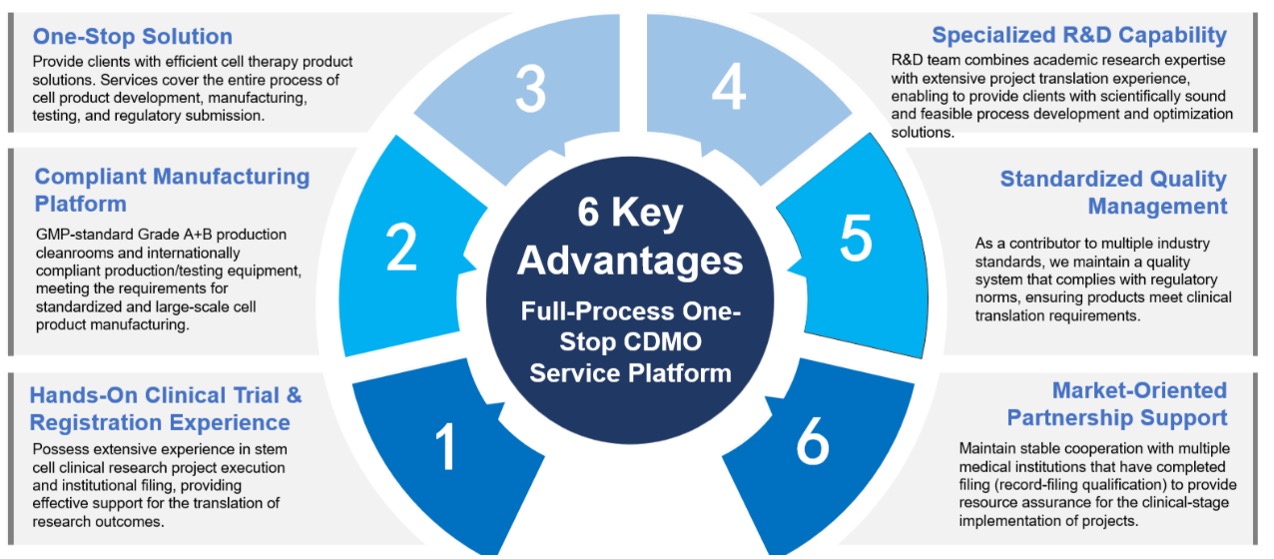
Sino Biotech’s CDMO platform underpins a one-stop service system for the full life-cycle development of cell therapy products, built on six core pillars of technical excellence. Anchored by dedicated R&D and GMP-compliant manufacturing infrastructure, the platform delivers an end-to-end, integrated solution—from early-stage process development and clinical production to final regulatory submission—underpinned by a standardized quality system, proven regulatory track record, and an extensive market-oriented collaboration network.
Figure: Advantages of the Sino Biotech CDMO Platform
Source: Company Information, Frost & Sullivan Analysis
- Proprietary R&D Pipeline
Centering on major unmet clinical needs, Sino Biotech has crafted a pipeline portfolio with systematic precision. Its stem-cell therapeutics are being advanced for a spectrum of indications that spans knee osteoarthritis, renal injury, COPD, pulmonary fibrosis, GVHD, neurologic disorders, and systemic lupus erythematosus, while its immune-cell programs are converging on the formidable frontier of solid tumors—together propelling, from technical, pipeline, and clinical-value perspectives, the systematic maturation of its cell-therapy platform.
Idiopathic pulmonary fibrosis is a chronic, progressive interstitial lung disease of unknown etiology, clinically characterized by persistent dyspnea and an irreversible decline in lung function. With high case-fatality and disability rates, the disorder affects approximately 35.1 per 100,000 individuals worldwide; its incidence is likewise climbing, reaching about 11.2 per 100,000 annually, and the resulting disease burden is becoming increasingly severe. The core unmet clinical need in idiopathic pulmonary fibrosis lies in the fact that current agents only modestly slow lung-function decline: they neither reverse established fibrosis nor meaningfully alleviate patients’ heavy symptom burden. Hence, there is an urgent call for novel therapies capable—at the mechanistic level—of exerting anti-fibrotic, immunomodulatory, and tissue-reparative effects.
The Sino Biotech-initiated program employing umbilical cord-derived mesenchymal stem cells for idiopathic pulmonary fibrosis exemplifies a cutting-edge response to this unmet medical need. Leveraging the pleiotropic properties of UC-MSCs, the therapy is designed to modulate dysregulated immune responses, suppress fibroblast activation, and restore the alveolar microenvironment, thereby intervening in the pathogenesis of the disease. The program has now advanced to the clinical phase (Clinical Trial Notification No. 2025LP01967; Registration No. CTR20254455).
To enhance therapeutic efficacy, the company employs a rigorously validated donor-selection protocol to isolate cell batches with superior differentiation potential and immunomodulatory capacity, followed by further refinement based on quantitative profiling of secreted cytokines. Studies show that human umbilical-cord mesenchymal stem cells attenuate bleomycin-induced pulmonary fibrosis in mice by secreting HGF and activating the PI3K–AKT–mTOR signaling axis; additionally, the anti-inflammatory cytokine IL-10 dampens inflammatory responses and lessens fibrotic remodeling. Consequently, HGF and IL-10 have been selected as screening biomarkers for lung fibrosis. Finally, two cell-level pulmonary fibrosis models—TGF-β1-driven epithelial-to-mesenchymal transition of bronchial epithelial cells and bleomycin-induced epithelial injury—were used to re-validate the most potent stem-cell batch functionally; this batch now serves as the master cell seed for subsequent in-vivo efficacy studies and clinical translation.
Data show that, after enrichment and co-culture with TGF-β1-induced bronchial epithelial cells, selected stem cells significantly up-regulate MMP-7 and CDH1, down-regulate COL1A1 and vimentin, and suppress the migration of cells that have undergone mesenchymal transition, indicating an inhibitory effect of the stem cells on collagen deposition and the epithelial-to-mesenchymal transition process. When stem cells are co-cultured with bleomycin-injured bronchial epithelial cells, epithelial apoptosis is suppressed—clear in-vitro evidence of the anti-fibrotic potential of stem cells.
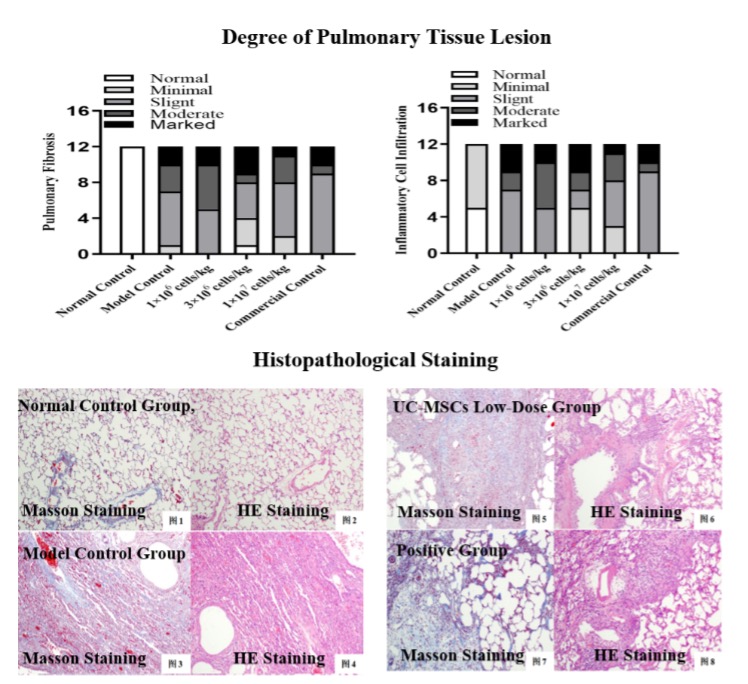
Moreover, an animal model of pulmonary fibrosis was established by airway nebulization of bleomycin in rats. Results showed that all tested doses of mesenchymal stem cells (low: 1×10⁶ cells/kg; medium: 3×10⁶ cells/kg; high: 1×10⁷ cells/kg) significantly improved lung function, survival rate, and histopathological severity, with a clear dose-response relationship. Through comprehensive in vivo and in vitro pharmacodynamic assessments, the therapeutic efficacy of the stem-cell product derived from screened donor sources has been fully validated.
Figure: Pharmacodynamic Findings at the Preclinical In-Vivo Stage
Source: Company provided
Furthermore, Sino Biotech has filed Investigational New Drug applications for three pipelines: umbilical-cord mesenchymal stem cells for systemic lupus erythematosus and graft-versus-host disease, and infrapatellar fat-derived stem cells for knee osteoarthritis. Systemic lupus erythematosus is a multi-organ autoimmune disorder of intricate complexity, while graft-versus-host disease represents a life-threatening complication following allogeneic hematopoietic stem-cell transplantation, driven by an alloreactive onslaught of donor immune cells against host tissues. UC-MSCs home to inflamed lesions, release bioactive mediators and systemically re-program hyper-activated immune cells while driving tissue repair, thereby targeting the root pathogenesis of both indications. Knee osteoarthritis is a prevalent, chronic degenerative joint disorder characterized by progressive articular cartilage loss, marginal osteophyte formation, and a variable degree of synovial inflammation. Human infrapatellar fat pad-derived stem cells outperform umbilical-cord, bone-marrow and subcutaneous adipose MSCs in chondrogenic capacity; via intercellular crosstalk they also modulate the local injury microenvironment and immune-inflammatory response, offering high translational potential for knee osteoarthritis therapy.
Conclusion
Cell therapy has graduated from bench-scale exploration to a new era of simultaneous industrialization and commercialization; propelled by converging technical breakthroughs, clarified regulatory pathways, and validated clinical value, it is now positioned as a cornerstone of biopharmaceutical innovation capable of addressing major unmet medical needs. Leveraging a fully integrated, end-to-end value chain—from rigorously screened cell sources and self-controlled raw materials, through ultra-pure cell manufacturing, to full-spectrum CDMO services—Sino Biotech has established a platform that combines deep technological expertise with powerful industrial synergies. It serves as a core enabler that will shepherd China’s cell-therapy sector from pluralistic discovery to large-scale commercial application.