Download Frost & Sullivan’s Transformational Growth Leadership Interview with Sivakumar Lakshmanan, CEO, DeepHow.
As global manufacturing accelerates toward digital maturity, a silent crisis is unfolding on the shop floor. While automation, robotics, and AI are transforming operations, human expertise remains at risk of disappearing. Every day, experienced operators retire, processes evolve, and decades of tacit know-how fade without being captured. The result is a widening skills gap that threatens productivity, quality, and resilience across industries.
At this critical juncture, DeepHow, an AI-powered operational knowledge management platform, is redefining how manufacturers preserve and scale their most valuable operational knowledge. In this exclusive Transformational Growth Leadership (TGL) conversation, Sivakumar Lakshmanan, CEO of DeepHow, sits down with Sebastián Trolli during Operations Calling 2025 to explore how digitized expertise and human-centered AI are reshaping the future of industrial work.
“Operational knowledge isn’t a PDF or a SharePoint file — it’s the know-how living between people. Capture it, digitize it, and the possibilities for training, troubleshooting, and standard work become limitless.”
— Sivakumar Lakshmanan, CEO, DeepHow
The Challenge: Know-how Lives in People, Not Repositories
Sebastián Trolli: Siva, tell us what you mean by “operational knowledge.” Where does it live today and why is that a problem?
Sivakumar Lakshmanan: Operational knowledge — or “know-how” — is the practical, often tacit understanding of how to do a task: assembly, changeover, safety procedures, even how to use legacy software.
In many organizations that knowledge is fragmented: SOPs [standard operating procedures] on a wall, a PowerPoint buried in SharePoint, a 10-minute video, or worse — simply inside experienced workers’ heads. That worked when people stayed 30+ years at one company. Today, with shorter tenures, rapid change, and new sites opening globally, that tribal knowledge walks out the door. The result: long onboarding times, inconsistent quality, higher downtime, and risk when experts retire or leave.
The Solution: An Operational Knowledge Warehouse
Sebastián Trolli: That’s a powerful observation. How does DeepHow tackle this challenge and turn that invisible knowledge into something actionable?
Sivakumar Lakshmanan: DeepHow builds what I call an operational knowledge warehouse — a centralized, searchable, structured place where know-how lives in a format machines and people can use. Once you capture that knowledge in a digitized form, AI can translate, serve it up in bite-size moments, and power training, troubleshooting, and standard work. For example, trainers can jumpstart a new factory by delivering translated, context-aware guidance to new hires — dramatically reducing time to proficiency.
Real Value: Invisible AI That Empowers Workers
Sebastián Trolli: You mentioned AI. How does DeepHow apply AI in production, and what makes your approach different from typical “AI-first” solutions?
Sivakumar Lakshmanan: The true win for AI in manufacturing is invisibility — it should just solve problems without fanfare. DeepHow uses AI to analyze captured procedures, surface the precise step an operator needs at the moment of work, translate content, and adapt instructions to local conditions. It’s not about branding something “an AI product;” it’s about making frontline work easier, safer, and faster. We already have 100+ customers using this approach, which proves the model works at scale.
Closing the Skills Gap and Making Factory Work Attractive
Sebastián Trolli: You often talk about the link between technology and workforce engagement. How does capturing know-how influence recruitment and retention in manufacturing?
Sivakumar Lakshmanan: Manufacturing faces two linked problems: a skills gap and a willingness-to-work gap. People expect modern, app-like experiences in their daily lives — at work they shouldn’t have to tolerate ugly, clunky interfaces or opaque processes. When new hires feel empowered and can become productive quickly, manufacturing becomes a career people seek out, not avoid. That’s part of why we focus on intuitive workflows and microlearning: short, actionable content that matches how people learn today.
Competitive Differentiation: A Genuine, Evidence-first Market Approach
Sebastián Trolli: There’s a lot of hype in AI today. How does DeepHow differentiate itself in such a crowded market?
Sivakumar Lakshmanan: We position DeepHow as a genuine partner. There’s a lot of hype in tech — lots of companies call themselves “AI” or “agent” platforms. We tell customers the truth: start with your pressing SQDC problems (Safety, Quality, Delivery, Cost/engagement), then work back from use cases. If DeepHow fits, great — if not, we’ll say so. That approach means we don’t chase logos for vanity; we want successful customers, because real success drives sustainable growth.
Growth Drivers: Reshoring, Demographics, and Human UX Trends
Sebastián Trolli: What broader market or societal trends are fueling demand for DeepHow’s solutions?
Sivakumar Lakshmanan: Several secular trends are accelerating demand: demographic shifts and retirement of experienced workers, geopolitical moves to reshore manufacturing (which also means reshoring know-how), and a broader change in how people expect to interact with software. People learn in short bursts now — 30-second clips, quick lookups — and factory tools must reflect that. DeepHow sits at the intersection of these forces: capturing know-how, making it bite-sized and discoverable, and enabling rapid scaling of expertise across sites and languages.
“We want to be seen as a genuine company — one that tells customers the truth. If a solution works, it works; if it doesn’t, we’ll say so. Success isn’t about collecting logos; it’s about creating successful customers who drive real growth.”
– Sivakumar Lakshmanan, CEO, DeepHow
Advice to Manufacturers: Move Fast with Transformational Tech
Sebastián Trolli: If you could tell manufacturers one strategic action to take today, what would it be?
Sivakumar Lakshmanan: Don’t treat fast-evolving tech the same way you treated slower paradigms. The old “crawl, walk, run” cadence — slow, federated rollouts — often fails when technology moves quickly. If there’s conviction that technology will transform an operation, move decisively: pilot fast, iterate, showcase successes, and scale. Slow rollouts create islands of tooling and inconsistent adoption; fast, focused rollouts create reproducible models others will emulate. Expect some failures — learn from them quickly — then use wins to build momentum.
Closing Reflection
DeepHow’s mission is both simple and transformative: to make the invisible visible. By capturing the untapped know-how of frontline experts and turning it into AI-powered intelligence, DeepHow is helping manufacturers accelerate productivity, safeguard expertise, and reimagine factory work for the next generation.
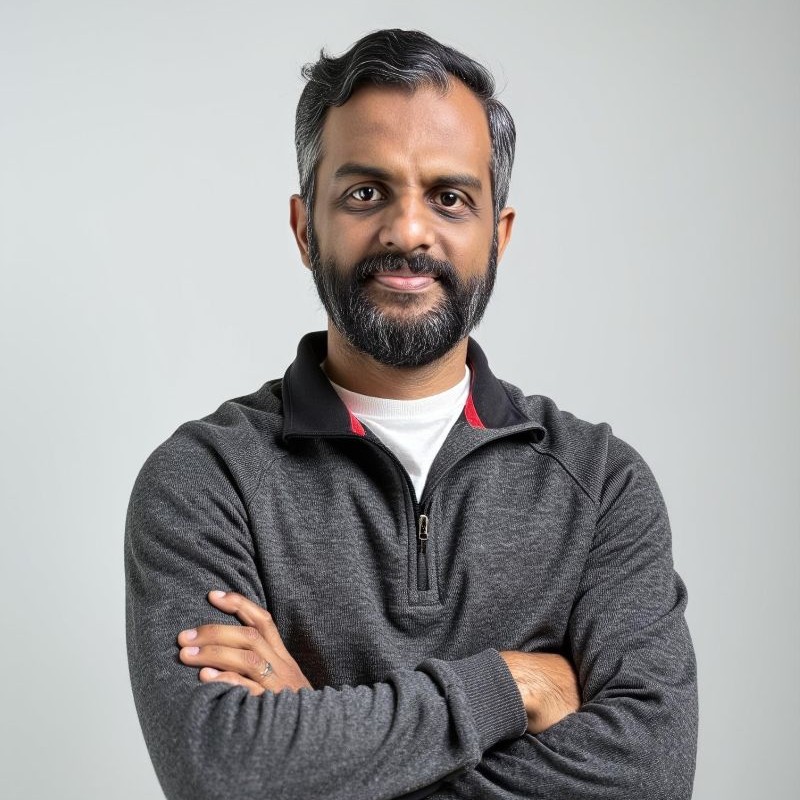
About Sivakumar Lakshmanan
Sivakumar Lakshmanan is the CEO and Co-founder of DeepHow, the industry’s first AI-powered operational knowledge management platform. Before founding DeepHow, Siva served as CEO of Antuit.ai, a leading AI and analytics company and later as General Manager at Zebra. He brings extensive experience in applying AI across manufacturing, supply chain, and industrial operations, driving digital transformation and workforce empowerment in global enterprises.
Sebastián Trolli is the Research Manager and Global Head of Research for Industrial Automation and Software at Frost & Sullivan. With over 20 years of experience spanning industrial automation, industrial software, digital industries, and manufacturing, he brings deep expertise in leveraging emerging technologies, market trends, and business models to drive industrial growth. He has been recognized as a Top 50 Thought Leader in Manufacturing and Industry 4.0 and often speaks at industry events, webinars, and podcasts.
As a Senior Member of the International Society of Automation (ISA), he earns deep technical credibility across process and discrete industries. His career includes 13 years with Honeywell (Process Solutions and Connected Industrial divisions) and leadership roles at Clariant, Akzo Nobel, and Precision Valves Corp, focusing on advancing industrial transformation through strategic insights and innovation.

About Sebastian Trolli
Join the Movement: Empowering the Future of Human-centered Manufacturing
At Frost & Sullivan, we celebrate leaders transforming how people, technology, and knowledge intersect on the factory floor. If your organization is pioneering new ways to capture expertise, scale learning, and empower the industrial workforce, we invite you to share your story through our Transformational Growth Leadership series.
📩 Next steps on your growth journey:
✔️ Subscribe to our Growth Opportunity Newsletter for insights on digital workforce transformation and industrial innovation
✔️ Join the Growth Council — a global network of leaders shaping the future of smart, human-centric manufacturing
✔️ Share your transformation story and inspire others driving AI-enabled operational excellence
✔️ Engage with our industry experts to explore emerging growth opportunities in manufacturing intelligence and automation
Annexure: The Future of Human-AI Collaboration in Manufacturing
For a deeper understanding of how AI-driven knowledge capture, digital training ecosystems, and workforce intelligence platforms are redefining industrial operations, explore Frost & Sullivan’s latest analyses aligned with DeepHow’s vision:
📌 Technological Advances in Edge AI Transforming Industry 4.0
📌 Industrial Services Market, Global, 2025–2029
📌 Growth Opportunities in the Industrial AI Market
📌 Industrial Metaverse Potential in the Global NDT Industry
📌 Industrial Roboverse Growth Opportunities in the F&B and Pharmaceutical Industries