Natan Linder, Co-founder & CEO, Tulip, in conversation with Sebastian Trolli, Head of Research for Industrial Automation & Software, Frost & Sullivan
Download Frost & Sullivan’s Transformational Growth Leadership Interview with Natan Linder, Co-founder & CEO, Tulip.
Manufacturing is entering a defining era where enduring industrial leadership and excellence depends on relentless transformation rather than isolated digital initiatives. At the forefront of this shift is Tulip, a company redefining frontline operations through composable AI, human-centric design, and a relentless focus on innovation.
In this exclusive Transformational Growth Leadership (TGL) conversation, Natan Linder, CEO and Co-founder of Tulip, engages in a discussion with Sebastian Trolli of Frost & Sullivan at Operations Calling 2025 in Somerville, Massachusetts. Together, they explore how the spirit of creativity and community can inspire a new generation of operations, where technology evolves alongside people and processes. The conversation highlights how innovations like OpsMoto and AI Composer are empowering manufacturers with unprecedented visibility, agility, and data-powered intelligence.
From Music to Manufacturing: The Spirit Behind Operations Calling
Sebastian Trolli: Natan, first off, congratulations on an incredible event. Operations Calling has such a unique energy — it feels like a festival for makers. How did the idea come about?
Natan Linder: Thank you, Sebastian. The name has a story. In Boston, there’s a famous music festival called Boston Calling that brings people together through creativity, collaboration, and community. We wanted to create that same spirit for manufacturing and operations, a place where builders, innovators, and thinkers come together to push boundaries.
But the word “Calling” also means something more profound. It’s not just an invitation to attend — it’s a call to action. A call to change the industry, to rethink how operations work. That’s the mission behind the name.
“The phrase digital transformation has lost its meaning. In 2025, everything is already digital. What truly matters now is continuous transformation, a mindset rooted in ongoing, adaptive change. That’s how resilient, competitive operations are built.”
– Natan Linder, Co-founder & CEO, Tulip
Continuous Transformation Outpaces Digital Transformation
Sebastian Trolli: In your keynote, you made a bold statement: “Digital transformation is dead.” You argued that the future is about continuous transformation. What did you mean by that?
Natan Linder: The phrase digital transformation has lost its meaning. It’s been used for decades, from the early days of PCs and spreadsheets to the cloud and mobile era. But in 2025, everything is already digital. The term has become redundant.
What truly matters now is continuous transformation, a mindset rooted in the same principles as continuous improvement from lean manufacturing. Technology evolves constantly, so transformation can’t be a one-time project; it’s an ongoing, adaptive journey.
At Tulip, we see this every day on the shop floor. Our customers don’t “go digital” once, but they evolve continuously. That’s how resilient, competitive operations are built.
Composable AI and the Augmented Lean Revolution
Sebastian Trolli: Your team unveiled several exciting advancements here — from the MCP (Model Context Protocol) to OpsMoto and AI Composer. You also said AI is “fundamentally composable.” What does that mean for manufacturers?
Natan Linder: Great question. AI in manufacturing isn’t new. We’ve had machine vision, predictive maintenance, and regression models for years. But what’s changed is how we can deploy AI at scale.
We’re entering an era of composable AI, where tools are flexible, modular, and can adapt to context. Manufacturing environments are full of context, new products, changing lines, new machines, constant data flow.
If you give domain experts, the people on the shop floor, tools to build, refine, and adapt these systems themselves, that’s where the power lies. That’s where composability meets human-centric design.
And that’s the core of Tulip’s philosophy: augmenting human intelligence, not replacing it. We call this approach Augmented Lean, combining the timeless principles of lean with the tools of today.
Growth Strategies: OpsMoto and the Power of Visibility
Sebastian Trolli: Let’s talk about OpsMoto, one of your major announcements. How does it change the way manufacturers see their operations?
Natan Linder: Visibility is everything. Many organizations still run multi-site operations, thousands of stations across dozens of plants, without truly knowing what’s happening in real time.
OpsMoto brings observability to manufacturing. It aggregates data across sites, so leaders can see where performance excels, where processes lag, and where quality gaps emerge.
But it’s more than dashboards, it’s actionable insight. It allows teams to compare performance, uncover root causes, and create a foundation for objective, data-driven improvement. That’s how we move from being blind to being augmented where every decision is informed by real-world data.
Navigating Growth Challenges: From Human-centric Design to Global Scale
Sebastian Trolli: Shifting gears — Tulip has grown into a truly global company. What are your big aspirational goals looking ahead?
Natan Linder: Our mission is simple but ambitious, and that is to help operations transform continuously, everywhere. Manufacturing is the backbone of our economy. It gives us food, mobility, healthcare, and everything we rely on.
Tulip has had to grow globally because our customers are global, from the U.S. to Europe to Asia. We operate in places like Munich, Budapest, Singapore, and Japan to stay close to where the work happens.
The challenge now is helping manufacturers overcome workforce shortages, productivity gaps, and skills erosion. By giving frontline workers better tools, we empower them to transform their operations from within. That’s how we achieve both growth and resilience together.
“We only succeed when our customers succeed. Our platform is designed so that we earn the right to grow by improving their operations by making every process smarter, faster, and safer.”
– Natan Linder, Co-founder & CEO, Tulip
Leadership and the Philosophy of Growth
Sebastian Trolli: What’s your North Star as a leader and what drives Tulip’s long-term vision?
Natan Linder: Growth isn’t about marketing campaigns or buzzwords; it’s about changing an industry. Real growth happens when you solve problems people care about, and when customers choose you repeatedly because you add measurable value.
At Tulip, we only succeed when our customers succeed. Our platform is designed so that we earn the right to grow by improving their operations by making every process smarter, faster, and safer.
Transformation isn’t an endpoint; it’s an ongoing journey. That’s why our North Star is simple: empower every manufacturer to continuously transform.
A Message to the Industry: Think Composable, Start Now
Sebastian Trolli: Finally, if you could leave one message for the manufacturing community, what would it be?
Natan Linder: Don’t wait. Transformation doesn’t start with perfection; it starts with action.
And as you start, be thoughtful about the architecture you choose. Composable architecture gives you flexibility, agility, and resilience. Legacy systems, monolithic, rigid architecture don’t serve the dynamic nature of operations today.
Think composable. Start now. The future of manufacturing depends on it.
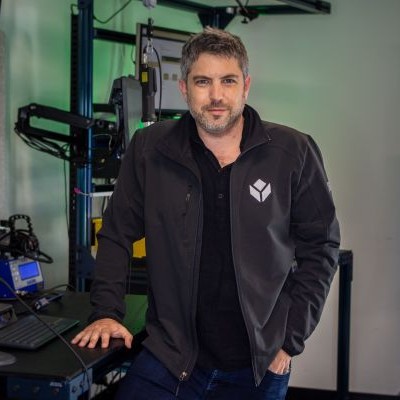
About Natan Linder
Natan Linder is Co-founder and CEO of manufacturing technology company, Tulip, and Co-founder and chairman of Formlabs, the pioneer and industry leader in professional desktop 3D printing. Drawing from over 15 years of experience and accomplished careers at companies like Samsung, Sun Microsystems, and Rethink Robotics, Linder holds a depth of expertise in computer science, product design, and entrepreneurship.
Prior to starting Tulip and Formlabs, Linder was Co-founder and General Manager of Samsung Electronics’ R&D Center in Israel, spearheading the group’s innovation efforts in mobile and shipping multiple products to the global market. He’s served as an entrepreneur-in-residence at Jerusalem Venture Partners, a leading Israeli venture capital firm. Linder holds a PhD from MIT Media Lab’s Fluid Interfaces Group and an S.M. in Media Arts and Sciences from MIT.
Sebastián Trolli is the Research Manager and Global Head of Research for Industrial Automation and Software at Frost & Sullivan. With over 20 years of experience spanning industrial automation, industrial software, digital industries, and manufacturing, he brings deep expertise in leveraging emerging technologies, market trends, and business models to drive industrial growth. He has been recognized as a Top 50 Thought Leader in Manufacturing and Industry 4.0, often speaks at industry events, webinars, and podcasts, and is a Senior Member of the International Society of Automation (ISA). His domain expertise spans the entire industrial value chain—from design and engineering through process control, operations, services, and enterprise integration. His career includes 13 years with Honeywell (Process Solutions and Connected Industrial divisions) and leadership roles at Clariant, Akzo Nobel, and Precision Valves Corp, focusing on advancing industrial transformation through strategic insights and innovation.

About Sebastian Trolli
Join the Movement: Building the Future of Continuous Transformation
At Frost & Sullivan, we celebrate leaders redefining the boundaries of industrial progress. If your organization is pioneering new ways to connect people, technology, and processes, we invite you to share your story through our Transformational Growth Leadership series.
Next steps on your growth journey:
- Subscribe to our Growth Opportunity Newsletter for insights on industrial innovation
- Join the Growth Council — a global community of transformation champions
- Share your transformation journey with a global audience
- Engage with our experts to explore new growth opportunities in manufacturing
Annexure: The Future of Continuous and Composable Manufacturing
For a deeper understanding of how composable architecture, human-centric design, and AI-driven operations are shaping the next industrial era, explore Frost & Sullivan’s latest thought leadership analyses: