Frost & Sullivan expert views, with insights from Kenny Yeo, Director, Information & Communication Technologies (ICT) Practice at Frost & Sullivan and Matthias Chin, Founder of CloudsineAI
Artificial Intelligence (AI) and Generative AI (Gen AI) are no longer experimental—they are now strategic priorities for enterprises worldwide.
In a recent CloudsineAI survey, analysed by Frost & Sullivan, found that 93% of Southeast Asian business and technology leaders agree AI/ML is important for business (Figure 1).
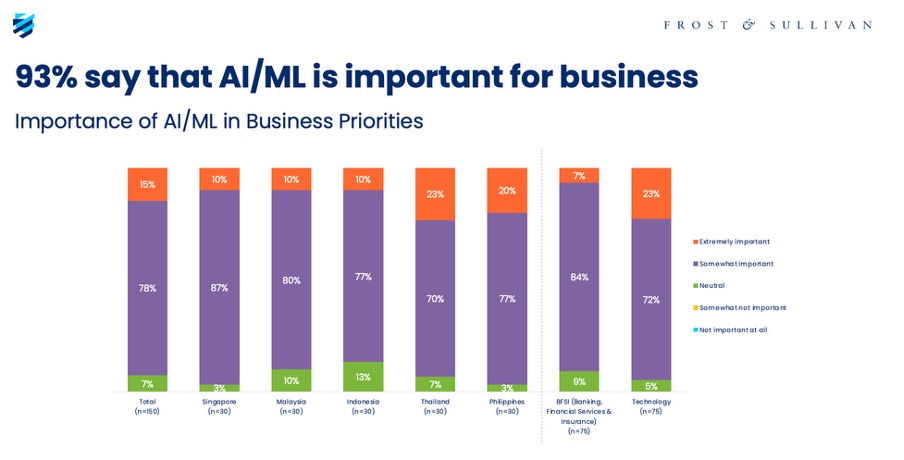
Figure 1: Importance of AI/ML in business priorities. Source CloudsineAI, Frost & Sullivan analysis. 150 CIO respondents from Southeast Asia from medium and large organizations. April 2025
This overwhelming consensus underscores a fundamental truth: AI is now a business-critical transformation driver.
AI as a Business Priority
Frost & Sullivan analysis highlights three key business drivers for AI adoption:
- Improving customer experience
- Enhancing talent management and employee experience
- Boosting creativity and innovation
These drivers reflect how enterprises increasingly view AI as essential to competitiveness, customer loyalty, and workforce innovation.
Matthias Chin, Founder of CloudsineAI and an AI and cybersecurity expert, observes:
“AI is no longer optional. Organisations are deploying it at speed, but without strong safeguards and clear ROI, the risks can outweigh the rewards.”
Gen AI Adoption Is Accelerating
The CloudsineAI survey shows that half of organisations have already deployed Gen AI tools (Figure 2).
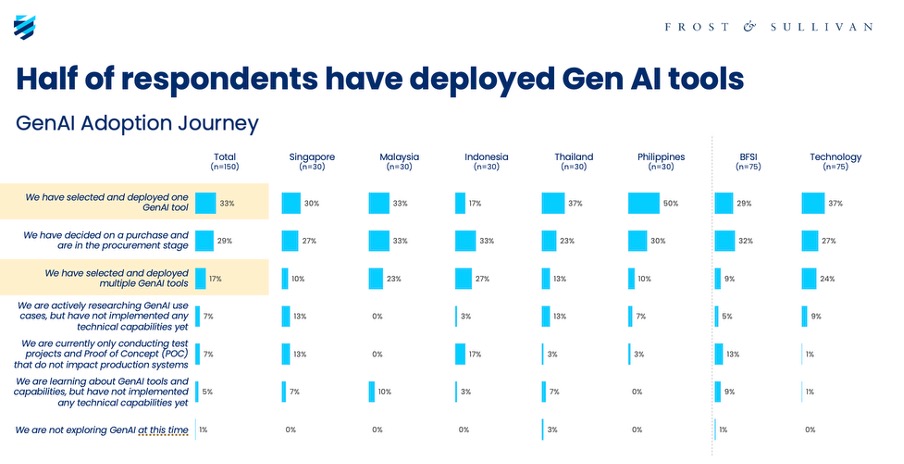
Figure 2: Gen AI adoption journey
Deployment areas include:
- Code Assistants – to accelerate software development
- Business Functions – such as marketing, sales, and customer operations
- Workforce Enablement – embedding AI into daily productivity tools
As Chin notes:
“Enterprises are moving rapidly from experimentation to deployment. Gen AI is no longer confined to IT; it is becoming embedded across all business functions.”
One of the Core Challenge: Securing AI Transformation
While adoption is advancing quickly, the greatest barrier to sustainable AI at scale is data privacy, security, and governance.
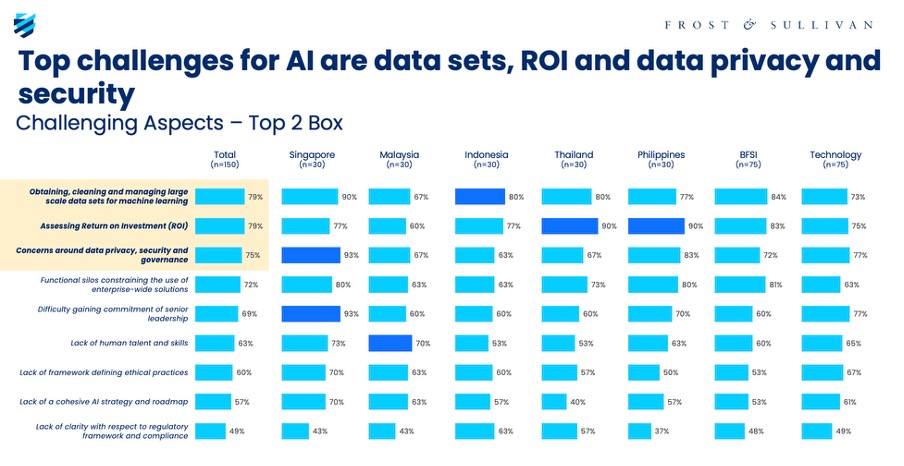
Figure 3: Challenging aspects as you implement AI initiatives
The survey identified three primary challenges:
- Data Privacy, Security, and Governance – ensuring responsible use, protecting sensitive information, and meeting regulatory demands
- Data Complexity – preparing, managing, and scaling datasets
- ROI Measurement – proving business value and outcomes
Among these, security and governance stands out as a critical concern. Without robust safeguards, organisations risk data leakage, regulatory penalties, reputational damage, and even systemic business disruption.
Why Securing AI Is Vital
The survey confirms that 83% of respondents view securing Gen AI as vital (Figure 5).
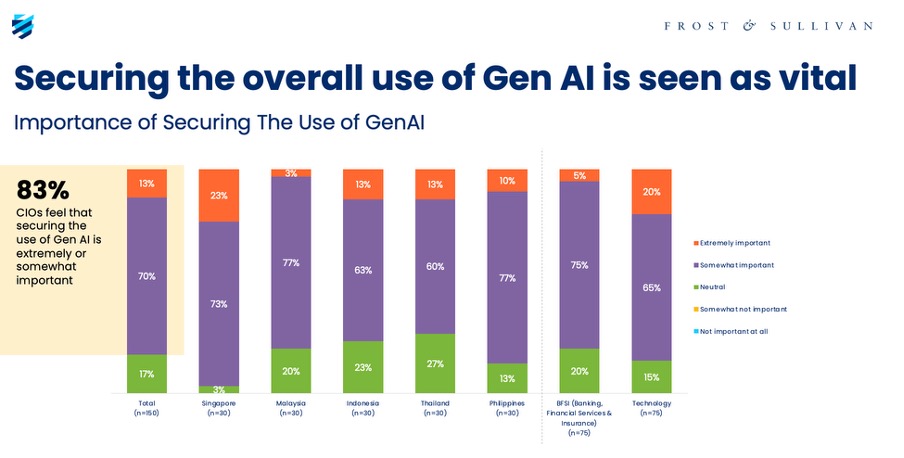
Figure 4: Importance of securing the use of GenAI
Frost & Sullivan analysis, supported by Chin’s expertise, points to four essential practices:
- Governance Frameworks – aligning with emerging standards such as ISO 27001, NIST AI Risk Management Framework and Singapore CSA Guidelines on Securing AI Systems
- Guardrails and Firewalls – building contextual controls to defend against threats like model poisoning, data leakage, and prompt injection
- Sector-Specific Approaches – private and sovereign AI deployments for regulated industries such as banking, healthcare, and government
- Shared Accountability – clarifying roles across boards, CISOs, data teams, and AI developers to embed responsibility end-to-end
Chin stresses:
“Security and governance must evolve in lockstep with AI adoption. Without strong safeguards, the value organisations hope to achieve can quickly turn into risk.”
The Road Ahead
Frost & Sullivan anticipates that the adoption of AI will continue to accelerate. Accordingly, enterprises should take proactive measures now by:
- Treating AI as a board-level business priority
- Scaling adoption with responsible governance and guardrails
- Building robust frameworks for data privacy, security, and accountability
The conclusion is clear: AI is both a competitive necessity and a security imperative. Organisations that secure their AI transformation will be best positioned to lead the next era of digital innovation.
Explore the Full Frost & Sullivan Series on AI Transformation
This article marks Phase 3 of Frost & Sullivan’s ongoing series on AI Transformation, focusing on securing adoption through data privacy, governance, and multi-layered defense. Earlier phases examined why AI is a business imperative and how organisations can unlock ROI while navigating adoption complexity.
- Phase 1: AI Transformation: A Business Imperative
- Phase 1 Follow-up: Continuing the Journey: Unlocking ROI
- Phase 2: Adopting AI: Moving Beyond the Hype to Practical Implementation
- Phase 2: Navigating AI Transformation: From Business Value to Technical Readiness
- Phase 2: From POC to Scalable AI: Building the Foundations for Transformation
Phase 3: Securing AI Transformation continues this journey—spotlighting why privacy, security, and governance must now take center stage as enterprises move from experimentation to scale.
Whether you’re refining your first AI use case or scaling deployment across the enterprise, Frost & Sullivan provides actionable insights and strategic guidance. Connect with us to learn how we can support your AI transformation journey.