Several automakers are now launching affordable cars in Europe and the US to boost market share, focusing on electric vehicles (EVs) and smaller, lower-cost ICE models.
A confluence of macroeconomic pressures, competitive disruption, and a widening electric vehicle (EV) price gap is compelling automakers worldwide to fundamentally reassess their product and pricing strategies.
Price Wars and Affordability Gaps
Chinese OEMs have been systematically introducing competitively priced vehicles, including EVs, into European and emerging markets. This has been placing intense downward pressure on incumbent automakers. Brands such as BYD, MG (SAIC Motor), and Leapmotor are offering feature-rich EVs at price points long considered unviable by European manufacturers. These trends have compelled legacy OEMs to accelerate the development of sub-€30,000 offerings, a notable strategic shift from the previous decade, which was focused on premium offerings. For automakers in the European market, the choice is between participating in the affordable segment or ceding it entirely to Asian challengers.
Meanwhile, vehicle prices in the US have been surging. Average new car prices rose more than 60% between 2001 and 2020, a trend that has steadily eroded the appeal of vehicle ownership. This has been aggravated by general economic strain, with potential buyers either delaying purchases indefinitely or turning to the used car market.
Elevated interest rates, persistent inflation, and the gradual withdrawal of EV subsidies across multiple markets have further intensified affordability pressures. Monthly financing costs have risen sharply, with many buyers now facing payments that take up an unsustainable share of household incomes. This environment underscores the need and opportunity for genuinely affordable new models.
EVs continue to be significantly more expensive than their ICE counterparts across European and North American markets. This price gap remains one of the major barriers to EV adoption. In contrast, nearly two-thirds of EVs sold in China are now priced below ICE equivalents. As global battery prices continue to decline, more affordable EVs are expected to enter Western markets. However, consistently closing the price gap remains critical to unlocking mass market adoption.
Targeting a Regulatory Reset in Europe with M0
Microcars emerge as a credible solution to affordability concerns in urban transport
Microcars are re-emerging as a credible solution to affordability concerns in urban transport. Their small size, low acquisition cost, and minimal running expenses make them well-suited for dense cities and short commutes. Demand is expected to grow steadily as cost-conscious consumers look for practical mobility options. Frost & Sullivan expects the global microcar market to reach nearly 1.78 million units by 2035.
Competition is intensifying, with microcars, compact vehicles, and Japan’s kei cars offering varied trade-offs in terms of price, utility, and efficiency. Automakers are increasingly positioning these vehicles as entry-level, low-risk products that can expand volumes while meeting tightening emissions targets.
This shift has accelerated in Europe, where Chinese automakers are introducing feature-rich, low-cost electric cars that are undercutting local offerings. Models such as BYD’s Dolphin Surf, priced below €20,000 with advanced in-car features, highlight the widening affordability gap with European alternatives. In response, automakers like Stellantis and Renault are lobbying for a new M0 category, an ultra-compact, lower-cost EV segment positioned between quadricycles (L7e) and standard passenger cars (M1). Backed by the European Automobile Manufacturers Association (ACEA), they are pushing for changes to the EU’s General Safety Regulation 2 (GSR2), arguing that mandated safety regulations and emissions requirements add significant cost and make small cars unviable. The proposed M0 “e-car” concept aims to revive the segment with simpler, lighter, more economical vehicles. However, reducing regulatory requirements also raises concerns about safety perception and consumer acceptance.
Repositioning for the Mass Market
Several automakers are now launching affordable cars in Europe and the US to boost market share, focusing on EVs and smaller, lower-cost ICE models.
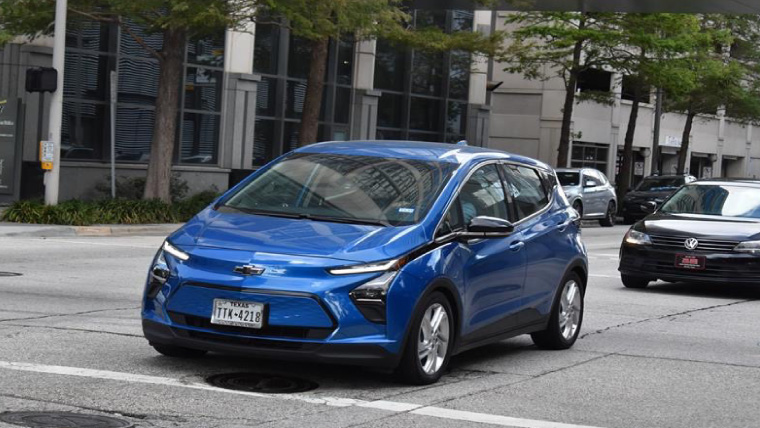
General Motors’ Chevy Bolt
For instance, Stellantis, through its partnership with Leapmotor, is introducing affordable small EVs like the B05 in Europe, while also expanding accessible offerings such as the Fiat 500e in the US. Volkswagen is advancing affordable EV development across its brands, with models from its brands like Škoda targeting price parity with ICE vehicles. New ICE models like the Tayron R-Line represent more accessible price points. Škoda is launching the Epiq in 2026, a subcompact battery-electric SUV positioned at approximately €25,000. Designed for cost-conscious European EV buyers, the Epiq leverages the MEB platform’s economies of scale while targeting a price point that sets the bar for current European-branded EVs. It reflects a broader strategy of democratizing electric mobility rather than concentrating on premium margins.
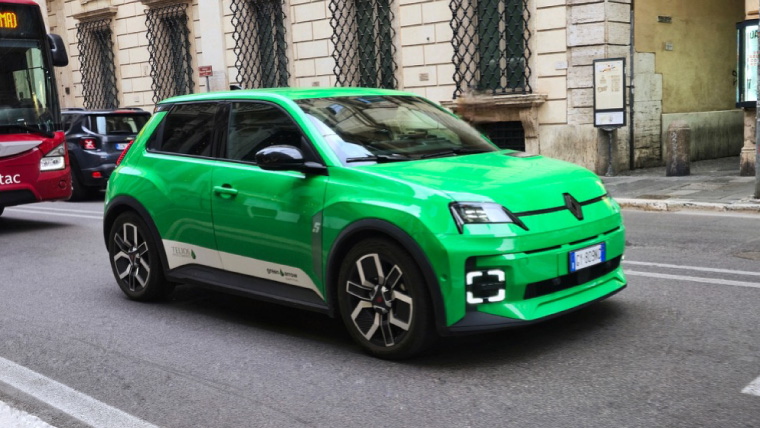
Renault’s 5 E-Tech
Renault is targeting the affordable market with its Ampere electric division and by collaborating with Ford to develop affordable EVs in Europe. It is also continuing to invest in new, budget-friendly models like the Renault 5 E-Tech. Hyundai is expected to launch the Ioniq 3, a subcompact electric hatchback, in Q3 2026 at approximately €30,000. Positioned to compete directly with both affordable ICE alternatives and Chinese EVs, the Ioniq 3 signals that volume growth in Europe’s EV transition will be located primarily in the mass-market, rather than premium, segment. General Motors is poised to reintroduce the Chevrolet Bolt to the US market in early 2026 at under $30,000, repositioning it as one of the most accessible EVs available to American consumers. The Bolt’s return, after GM discontinued it in 2023, emphasizes the growing strategic importance of affordable EVs in the US market.
Rethinking Ownership and Costs
Addressing affordability in 2026 will require more than lower sticker prices. Automakers will need to focus on innovative ownership models, including subscription services, flexible leasing structures, and battery-as-a-service, that can address the challenge of high upfront costs.
At the same time, advocacy for regulatory frameworks that recognize a dedicated small EV category will be important since it will help reduce compliance costs for entry-level priced vehicles. On the product side, accelerating sub-$20,000 EV development will need to become a strategic priority, alongside maintaining a strong portfolio of affordable hybrid and ICE models.
Supply chain optimization and localization of manufacturing will also be essential. At the same time, reducing variant complexity and standardizing components across models will significantly improve accessibility and facilitate cost reduction while maintaining core value propositions.