Market set to see increasing EV penetration, service bundling, and operational leasing adoption across passenger vehicle (PV) and light commercial vehicle (LCV) segments.
The global vehicle leasing market has become a central pillar of the modern mobility ecosystem, enabling companies and consumers to access vehicles without the financial and operational burden of ownership. As mobility requirements grow more complex and capital efficiency becomes a strategic priority, leasing is increasingly being viewed as a long-term solution rather than a financing alternative. Corporates, small and medium enterprises (SMEs), and private customers are turning to leasing to achieve predictable costs and outsource fleet-related risks.

In 2024, the global vehicle leasing market was valued at USD 398.24 billion and supported approximately 48.4 million active lease contracts. By 2029, the market is projected to reach USD 520.28 billion, with active contracts rising to 56.3 million. Importantly, revenue growth is outpacing contract (volume in units) growth, indicating a structural upgrade in leasing offerings. Contracts are increasingly bundled with maintenance, telematics, charging solutions, and risk management services, particularly in electric vehicle (EV) and full-service leasing models.
This evolution reflects a broader shift from traditional financial leasing toward operational and full-service leasing. Customers now prioritize total cost of ownership (TCO) transparency, uptime, and simplicity. Leasing providers, in turn, are repositioning themselves as integrated mobility partners rather than vehicle financiers. Digital platforms, connected vehicle data, and advanced residual value modeling are reinforcing this transition, enabling more accurate pricing and lifecycle management across both passenger vehicles (PVs) and light commercial vehicles (LCVs).
For a demonstration of Frost & Sullivan’s Fleet Leasing and Rental Data Platform “Growth Generator” and to learn more about Growth Opportunity Analysis in the Vehicle Leasing Market, Global, 2024–2029, please contact [email protected] or [email protected] for information on a private briefing.
Asia-Pacific to Emerge as Fastest-Growing Regional Market
Europe and North America together accounted for the largest share of the global vehicle leasing market in 2024, supported by mature corporate fleet cultures and well-established leasing ecosystems. Europe remains the single largest regional market and is expected to retain its leadership through 2029. Growth here will be driven by high penetration of operational leasing, alongside strong EV incentives and regulatory pressure to decarbonize corporate fleets. North America continues to benefit from large private leasing volumes, particularly in the US.
Asia-Pacific represents the fastest-growing region. Market growth will be spurred by rapid urbanization, expanding SME activity, and improving digital leasing platforms, particularly in markets such as China, India, and Southeast Asia. Leasing penetration remains relatively low in these regions, creating substantial space for growth. Meanwhile, Latin America and the Middle East also show strong momentum, supported by improving financing access and expanding logistics activity, reinforced by a gradual shift away from ownership-based mobility.
In terms of vehicle type, PVs account for the majority of leased units, especially in private operational leasing. However, LCV leasing is a key growth engine in value terms. Demand from logistics, last-mile delivery, utilities, and service fleets continues to rise, supported by e-commerce expansion and predictable fleet replacement cycles. Electrification is advancing rapidly in the LCV segment, further increasing average contract values and revenue generating opportunities for leasing providers.
Operational Leasing Set for Dominance
One of the most significant transformations in the global vehicle leasing market is the growing dominance of operational leasing over financial leasing. Operational leasing is expanding rapidly as customers seek bundled services, residual value protection, and simplified fleet management. This trend is particularly prominent among corporates and SMEs, where internal fleet management capabilities are limited and cost predictability is critical.
Current leaders in the global vehicle leasing market include Ayvens SA, Volkswagen Financial Services AG, Arval S.A., Leasys S.p.A. and ORIX Corporation. OEM-backed leasing companies benefit from preferential access to vehicle supply and stable pricing. Independent leasing leaders differentiate through multi-brand offerings, EV advisory services, advanced telematics, and digital customer interfaces.
As scale becomes increasingly important, mergers and acquisitions are accelerating market consolidation. The formation of larger platforms allows leasing providers to spread residual value risk while negotiating better terms with OEMs and charging partners. At the same time, competition is intensifying around customer experience, with digital onboarding and real-time fleet visibility becoming standard expectations.
Leasing Receives Impetus from Shift towards Asset-Light Business Models
The shift toward asset-light business models is encouraging companies to redirect capital away from vehicle ownership and into core operations. Simultaneously, the continued growth of e-commerce and urban delivery is sustaining high demand for leased LCV fleets. OEM captive finance arms are also actively promoting leasing to stabilize sales volumes and build recurring revenue streams.
Electrification is emerging as a particularly strong catalyst. Government incentives, emission regulations, and corporate sustainability commitments are making leasing the preferred route for EV adoption. Leasing companies absorb the risk of battery depreciation, manage charging solutions, and provide predictable monthly costs, thereby lowering barriers for fleet operators and private customers. As EV penetration rises, average lease values are increasing in tandem, driving revenue growth faster than vehicle volumes.
Despite these positive trends, the market faces notable challenges. High interest rates and funding costs can increase monthly lease payments, especially for service-intensive operational leases. Residual value volatility, particularly in EVs, complicates pricing and risk management. In emerging markets, limited consumer awareness, underdeveloped infrastructure for used vehicle remarketing, and regulatory uncertainty can slow adoption. Addressing these constraints will be critical to sustaining long-term growth and profitability.
Strategic Outlook to Pivot around EV-centric Leasing and Digital Transformation
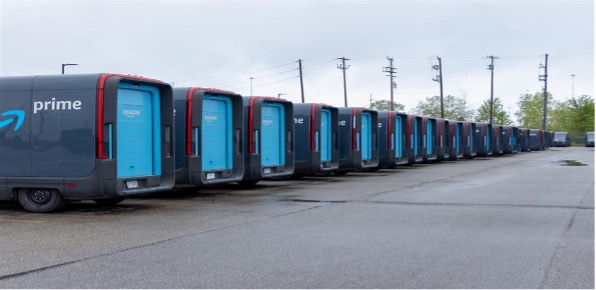
Looking ahead, EV-centric leasing solutions represent a significant growth opportunity in the global vehicle leasing market. Corporate fleet decarbonization targets are spurring demand for full-service EV leases that guarantee battery performance, charging uptime, and predictable TCO. Successful pilots, such as Ayvens’ Battery Health Certificate and Arval’s EV consulting services, demonstrate the importance of EV lifecycle management in boosting customer confidence. High-utilization segments, particularly electric LCVs for last-mile delivery, are expected to scale rapidly, highlighted by the success of Amazon’s Rivian fleet.
Digital transformation is equally important. Leasing is evolving from a static contract into a continuous service relationship supported by telematics, predictive maintenance, and data-driven optimization. Integrated digital ecosystems will enable faster approvals, flexible subscription-style products, and new revenue streams such as insurance and maintenance add-ons. As customer expectations rise, digital maturity will increasingly determine competitive positioning.
Finally, expanding into high-growth regions also offers substantial advantages. Markets in Asia-Pacific, Latin America, and the Middle East are transitioning from ownership-based mobility to leasing, particularly among SMEs and logistics operators. Local partnerships, country-specific EV solutions, and collaboration with regional OEMs will be essential to unlocking these opportunities.