Swapnil Shrivastav, Co-founder & CEO of Uravu Labs in conversation with Fredrick Royan, Associate Partner and Global Practice Area Leader, Frost & Sullivan.
As artificial intelligence (AI) adoption accelerates and digital infrastructure expands globally, data centers face a growing challenge: balancing energy efficiency, water consumption, and sustainability objectives. Traditional cooling approaches often force operators to choose between lower energy consumption and lower water usage, creating difficult trade-offs as both resources become increasingly constrained.
In this Movers & Shakers conversation with Frost & Sullivan, Swapnil Shrivastav, Co-founder & CEO of Uravu Labs, discussed how the company is addressing this challenge differently. By leveraging waste heat and a proprietary liquid desiccant-based system, Uravu aims to reduce cooling energy requirements while simultaneously producing water. The result is a model with the potential to transform data centers from water-consuming assets into water-positive infrastructure.
“We can reduce cooling energy consumption while also producing water in the process, which means a data center can become both a low-carbon and a water-positive infrastructure.”
— Swapnil Shrivastav, Uravu Labs
Reframing the Energy-water Trade-off in Data Center Cooling
Fredrick Royan: Data center cooling is becoming an increasingly important topic. How do you view the current cooling landscape?
Swapnil Shrivastav: If you look at the spectrum of data center cooling solutions available today, there are several options, each with its own trade-offs. Cooling towers typically offer the lowest energy consumption but require significant amounts of water. At the other end are air-cooled chillers, which can minimize water usage but consume substantially more energy.
Between these two extremes are hybrid and adiabatic systems that attempt to balance both energy and water requirements. Depending on climate conditions, operators may use more adiabatic cooling or rely more heavily on chillers. Increasingly, however, cooling decisions are influenced not only by energy and water considerations but also by regulations and permitting requirements.
What we are trying to do at Uravu is change that equation. Rather than forcing a choice between energy and water, we are developing a system that reduces cooling energy consumption while producing water at the same time. Our vision is to enable data centers to become both low-carbon and water-positive assets.
Importantly, we are not changing anything at the server level. We focus entirely on the facility water loop and the waste heat generated by the data center. Regardless of whether operators use liquid cooling, direct-to-chip cooling, immersion cooling, or hybrid approaches, our interest is in the temperature of the heat being rejected and how that heat can be used productively.
The objective is to create a solution that delivers a low power usage effectiveness (PUE) profile because it is primarily driven by waste heat while simultaneously generating water. In effect, the system can create a negative water usage effectiveness (WUE) scenario, as the facility may ultimately generate more water than it consumes.
Turning Waste Heat into Cooling and Water
Fredrick Royan: How does the technology work?
Swapnil Shrivastav: At the core of the system is a proprietary liquid salt that can absorb moisture at relative humidity levels as low as approximately 23%.
The process begins in an absorber chamber. Air is drawn into the system and comes into contact with the liquid desiccant. The liquid has a strong affinity for water vapor and selectively absorbs moisture from the air while allowing other gases to pass through.
The moisture-rich liquid is then transferred to a second chamber called a desorber. This chamber operates under partial-vacuum conditions. Waste heat from a data center or industrial source is applied to the liquid, causing it to release the absorbed water.
Because the system operates under vacuum, water can be released at relatively low temperatures, beginning at around 35 to 40 degrees Celsius. The recovered water is then collected, while the regenerated liquid returns to the absorber for continuous operation.
From a system perspective, the process is straightforward. Facility water and the liquid salt exchange heat indirectly through a standard plate heat exchanger. Nothing mixes, there are no contamination concerns, and the technology relies on components that are already widely available.
What makes the system unique is that cooling and water production occur simultaneously. The recovered water can either be used within the cooling process itself or stored and utilized elsewhere.
Creating Water-positive Infrastructure
Fredrick Royan: One of the most interesting aspects is the water recovery capability. How significant is that opportunity?
Swapnil Shrivastav: The recovered water creates several possibilities.
The first option is to use the water directly within cooling systems such as indirect evaporative coolers or adiabatic cooling infrastructure. In that scenario, the water generated by the system supports the cooling process itself.
The second possibility arises when more water is generated than the cooling system requires. In those situations, the water can be stored or supplied externally. Nearby industries, agricultural operations, or local communities could potentially utilize the excess water.
We are already seeing projects where water production itself has become a strategic objective. One example is a project in Australia where the operator wants to create water-positive infrastructure and return millions of liters of water to the local community each year.
That illustrates an important point. Depending on the project, operators may choose to optimize primarily for cooling performance, water independence, or maximum water production. The technology can be configured to support different objectives.
In addition to the water itself, there are broader benefits. The water produced is distilled, which means there is no need for extensive treatment before it is used in cooling systems. This reduces operational complexity and eliminates many of the challenges associated with conventional cooling water management.
Validating the Concept Across Global Data Center Environments
Fredrick Royan: How far along are you in validating the concept?
Swapnil Shrivastav: We are currently working with Microsoft and have already completed an initial phase of analysis.
That work involved evaluating approximately 15 to 16 global data center locations and examining factors such as cooling performance, cost reduction opportunities, water production potential, PUE improvements, and WUE improvements.
One of the locations analyzed was Phoenix. The results showed significant potential for cooling efficiency improvements, along with opportunities for peak load shaving. Because evaporative cooling contributes to the overall cooling process, the electrical load can be reduced, creating downstream savings in power infrastructure requirements.
The first phase of this engagement was completed over several months, and discussions are now focused on pilot installations. Potential locations include Phoenix, Bangalore, Dubai, and other sites selected to represent different climate conditions.
Beyond Microsoft, we currently have multiple proposals under discussion with data center operators across various geographies. These opportunities are helping us evaluate how the technology performs under a wide range of environmental conditions.
Building a Scalable Model for Data Center Cooling
Fredrick Royan: Data centers are growing rapidly. How do you approach scalability?
Swapnil Shrivastav: We have spent considerable time modeling the scalability question.
From a technology standpoint, we are confident that the system can operate effectively at scale. Modeling exercises across different cities and climates have shown that moisture availability is not the limiting factor many people assume it to be.
The bigger challenge is manufacturing, deployment, and scale-up. Like any emerging technology, there are engineering optimization, cost reduction, and production-scaling questions that must be addressed.
Our answer has been modularity.
Rather than building a single large system, we are designing modular units that can be standardized and deployed according to project requirements. Components can be packaged in containerized formats and assembled in different configurations depending on the size and needs of the installation.
This approach allows us to standardize manufacturing while providing flexibility for customers. As projects become larger, modules can simply be added rather than requiring a redesign of the entire system.
Complementing Existing Cooling Infrastructure, Not Replacing It
Fredrick Royan: How do operators adopt a new technology without introducing additional risk?
Swapnil Shrivastav: That is a very important question.
We are not trying to replace the entire cooling infrastructure overnight. Instead, we are taking a complementary approach.
In many cases, we only need access to a portion of the available waste heat. By utilizing 10% to 40% of the heat stream, we can generate sufficient water to support existing cooling infrastructure.
The objective is not necessarily to make every installation water-positive immediately. In many situations, achieving water independence is already a significant accomplishment.
This approach allows operators to continue using proven cooling equipment while benefiting from water generation and efficiency improvements. It also reduces concerns about introducing a single point of failure into mission-critical environments.
We see ourselves as complementing existing ecosystems rather than disrupting them.
The Financial Case for Water-positive Cooling
Fredrick Royan: What does the economic case look like?
Swapnil Shrivastav: The economics are compelling when viewed holistically.
While capital expenditure may increase depending on the configuration, operating expenditure can decline significantly. In some modeled scenarios, we have seen OPEX reductions of approximately 40% to 45% compared with conventional approaches.
There are also additional benefits from peak load reduction, a lower carbon footprint, reduced water consumption, and the possibility of monetizing excess water production.
Importantly, cooling infrastructure represents only a relatively small portion of the overall cost of a data center project. When viewed in the context of total project economics, the additional investment can be justified by the long-term operational benefits.
As a result, we are seeing scenarios in which the return on investment can be achieved within a relatively attractive timeframe.
A Physics Moment, Not Just a Market Opportunity
Fredrick Royan: How did this opportunity emerge for Uravu?
Swapnil Shrivastav: Interestingly, data centers were not originally our primary focus.
We initially worked on atmospheric water generation and water-from-air technologies. While those applications were valuable, it became clear that competing directly with conventional water sources would always present economic challenges.
The breakthrough came when we began exploring waste heat utilization.
Through engagements with organizations such as the Open Compute Project and later discussions with Microsoft, we started examining how waste heat from data centers could be repurposed.
In many regions, waste heat reuse is already encouraged or mandated. However, traditional approaches often require additional heat pumps or temperature upgrades. Our solution works within the temperature ranges already available, creating a different set of economics.
That realization fundamentally changed our perspective.
When viewed through the lens of data center cooling, water becomes a valuable byproduct rather than the primary product. The economics are driven by cooling efficiency and operational savings, while water production provides additional value.
That is why I often describe this as a physics moment rather than simply a market opportunity.
Closing Reflection: The Future of Water-positive Data Centers
As digital infrastructure expands globally, operators face increasing pressure to reduce both energy consumption and water usage while maintaining reliability and performance. The conversation with Swapnil Shrivastav highlights an emerging approach that seeks to address these challenges simultaneously.
By converting waste heat into a resource capable of supporting both cooling and water generation, Uravu is exploring a model that challenges conventional assumptions about data center infrastructure. If successful at scale, this approach could help redefine how the industry thinks about cooling, sustainability, and resource efficiency in the decades ahead.

About Swapnil Shrivastav
Co-founder & CEO of Uravu Labs
Swapnil Shrivastav is a designer and innovator and has worked on many competitions and projects where water and sustainability were a constant focus area. In one such project which invited entries for ‘Imagining the Future of Water & City’, Swapnil devised a water from air technology device for drinking water applications. He was a Top 5 Global Finalist in Water Abundance XPrize and has also won grants from Dept of Science and Technology, UNIDO, and more. He completed his undergrad in architecture and built environment from NIT Calicut. He also did a MBA (Finance) from Indian School of Business.
Swapnil has 7 years of experience in the water segment executing lead roles in strategy, fund raising, team building, product development, and operations. He has raised $4.7 M for Uravu over multiple rounds and grants. At Uravu, he leads strategy, product development, and finance activities.
Associate Partner and Global Practice Area Leader, Sustainability and Circular Economy at Frost & Sullivan
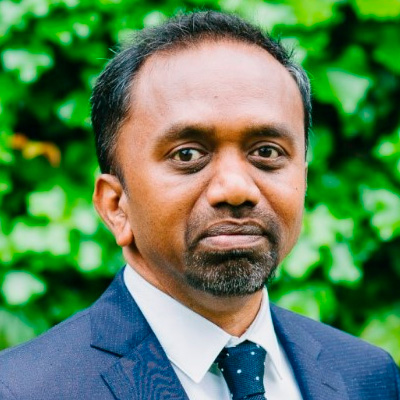
Fredrick Royan is Associate Partner of the Sustainability and Circular Economy practice at Frost & Sullivan and the Smart Water Network (SWAN) Council Chair. With over 20 years analyzing the global water sector, he led the launch of the Smart Water Program in 2010 and now shapes the Global Water Research Program, publishing authoritative reports on Smart Water Grids and related segments. He holds a master’s in Environmental Protection and Management from the University of Edinburgh as a Centenary Chevening Scholar and has also been conferred the Frost & Sullivan Fellowship.
About Fredrick Royan
Ready to Lead the Transformation?
- Book a Growth Strategy Session: Align your growth roadmap with Frost & Sullivan’s Visionary Growth Pipeline™ Dialog.
- Engage with Growth Experts: Co-design AI-enabled, data-driven operating models that scale industry-specific and commercial impact.
- Share Your Transformation Story: Position your organization as a transformation leader through Frost & Sullivan’s Transformational Growth Leadership platform.
- Join the Growth Council: Collaborate with industry leaders shaping the future of your ecosystem.
- Nominate for the Best Practices Recognition: Be recognized for excellence in growth strategy, execution, and customer impact.
- Demonstrate Industry Positioning on the Frost Radar™: Benchmark your growth performance and innovation strength against industry competitors.
- Activate Brand & Demand Growth: Accelerate awareness, engagement, and revenue growth through integrated brand and demand generation strategies.
Annexure: Advancing Sustainable and Water-positive Data Center Infrastructure
As artificial intelligence adoption accelerates and digital infrastructure expands globally, data center operators face increasing pressure to improve energy efficiency, reduce water consumption, and meet sustainability objectives without compromising reliability or performance.
At the same time, rising computing demand, evolving cooling architectures, resource constraints, and decarbonization commitments are reshaping approaches to thermal management and infrastructure design.
To support organizations navigating this transformation, Frost & Sullivan provides forward-looking intelligence across data center cooling, energy optimization, sustainability, and digital infrastructure, including:
📌 Growth Opportunities in the Data Center Cooling Industry
📌 Data Center Infrastructure Investment
Together, these analyses reinforce the key themes explored in this Movers & Shakers conversation: waste heat utilization, water-positive infrastructure, cooling innovation, operational efficiency, and the next generation of sustainable data center design.