Connected mobility landscape is set to pivot around personalization, data intelligence, and monetization.
Connected services in the North American automotive industry are going well beyond basic infotainment and navigation to embrace a comprehensive ecosystem that covers vehicle diagnostics, safety systems, remote services, convenience features, electric vehicle (EV)-specific solutions, and data-driven monetization models. This evolution is transforming vehicles into continuously connected digital platforms.
Leading North American automakers such as Tesla, General Motors, Ford, Rivian, and Stellantis are investing heavily in software-defined vehicle (SDV) architectures that enable faster feature deployment, continuous over-the-air (OTA) updates, and the integration of advanced digital services. At the same time, they are expanding EV-focused offerings such as battery health monitoring, intelligent charging, and route optimization to support the broader shift toward electrification.
Against this backdrop, the connected car ecosystem is evolving both technologically and strategically. OEMs are no longer competing solely on vehicle performance but are increasingly differentiating themselves through their ability to deliver digitally led, personalized, high-quality engagement. In doing so, they are positioning the vehicle as an extension of the user’s digital lifestyle.
The Convergence of Personalization, Monetization, and Safety
Innovation in user experience and data-driven personalization is transforming connected services while opening up new monetization opportunities. Automakers are designing intuitive, user-friendly interfaces that seamlessly connect vehicles with mobile apps, smart devices, and digital ecosystems. Beyond facilitating functionalities such as real-time navigation and remote monitoring, these interfaces are promoting personalized mobility experiences, thereby enhancing both convenience and brand loyalty.
At the same time, connected services are emerging as a significant source of recurring revenue. Telematics, remote diagnostics, and features-on-demand (FoD) upgrades are allowing OEMs to generate continuous revenue beyond the initial vehicle sale. This shift is fundamentally changing the business model of the automotive industry, turning vehicles into long-term revenue-generating assets.
Data is playing a central role in catalyzing this transformation. Advanced analytics and AI are enabling automakers to convert vehicle data into actionable insights. These insights are, in turn, powering services such as usage-based insurance, predictive maintenance, adaptive infotainment, and personalized routing. As vehicles become more intelligent, they are increasingly able to learn from user behavior and continuously refine the driving experience.
Safety and security remain critical priorities. Accordingly, connected services are enhancing safety through real-time diagnostics, proactive alerts, and OTA software updates. At the same time, OEMs are investing in robust cybersecurity frameworks to protect user data and maintain trust. As connectivity advances, balancing innovation with data protection is becoming essential.
Looking ahead, several trends are expected to drive revenue growth in in-vehicle services. These include the expansion of vehicle-to-everything (V2X) connectivity, predictive maintenance technologies, the adoption of SDV architectures, and comprehensive data monetization models.
To learn more, please see: Strategic Profiling of Leading North American Automotive OEMs’ Connected Services, or contact [email protected] for information on a private briefing.
Balancing Opportunities with Risks
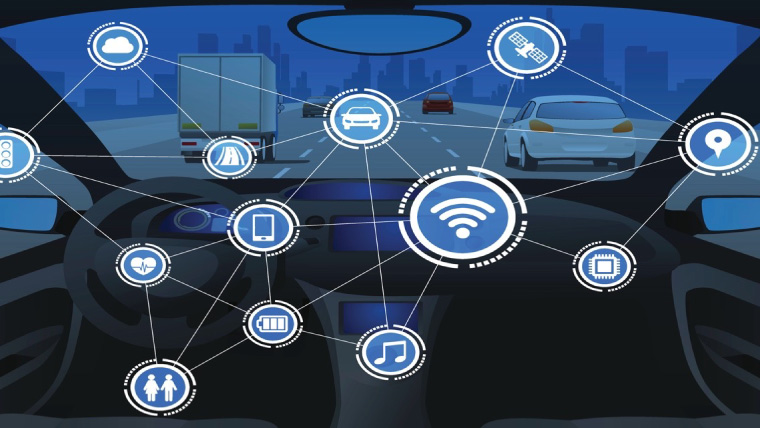
The connected services market offers significant advantages for both consumers and automakers. Enhanced user experiences, driven by personalized content and real-time information, are making vehicles more engaging and intuitive. Features such as voice control, remote access, and advanced navigation are improving convenience while strengthening customer relationships.
Connected services are also contributing to superior safety. Remote diagnostics, emergency response systems, and real-time alerts are enabling quicker responses to potential issues, reducing risks for drivers and passengers. Additionally, the ability to deploy new features through OTA updates is ensuring that vehicles remain up to date, supporting long-term usability and scalability.
However, these benefits come with challenges. The competitive landscape is becoming increasingly crowded, putting pressure on pricing and margins. It requires automakers to make continuous investments in technology and innovation to remain competitive, which could impact profitability.
In parallel, issues related to data privacy and cybersecurity remain another major challenge. The extensive data collection required to be able to provide personalized services raises questions about data ownership, security, and regulatory compliance. At the same time, regulatory frameworks are evolving, with stricter rules governing data usage and driver safety. For instance, features such as advanced infotainment and remote control must comply with regulations designed to prevent driver distraction and ensure safe operation.
Market Strengths and Emerging Threats
Advances in AI, the Internet of Things (IoT), and 5G connectivity are enabling real-time data exchange and supporting next-generation mobility solutions. These technologies are facilitating the delivery of highly integrated infotainment systems and premium digital experiences that differentiate OEM offerings.
Notwithstanding these strengths, challenges remain due to the increasing complexity of connected systems. This is driving up vehicle costs, which may limit adoption among price-sensitive consumers. At the same time, safety concerns and regulatory requirements have the potential to slow the deployment of new features. Connectivity reliability remains another issue, particularly in regions with underdeveloped network infrastructure.
In addition, geopolitical tensions and supply chain disruptions could impact access to critical technologies and components. OEMs also confront the rapid pace of technological change with the attendant threat of obsolescence. Alongside that, looms the prospect of market fragmentation due to the absence of standardized approaches.
Nevertheless, opportunities for growth remain significant. The demand for connected vehicles is continuing to rise, supported by increasing interest in electric and autonomous mobility. SDVs are enabling continuous feature upgrades, allowing OEMs to introduce new services over time. Emerging technologies such as augmented reality and advanced AI are opening new possibilities for navigation, entertainment, and personalization.
Partnerships and Platform Strategies
The competitive landscape in North America is defined by a mix of established OEMs and emerging players. These companies are building connected ecosystems that integrate vehicles, mobile applications, and digital services into unified platforms.
Leading OEMs have developed proprietary systems such as Tesla’s app ecosystem, FordPass, General Motors’ OnStar and Ultifi platforms, Rivian Connect+, and Stellantis’ Uconnect. These platforms enable seamless interaction across vehicles and services, enhancing customer engagement and retention.
Partnerships have become a critical component of this ecosystem. Collaborations with technology providers such as Amazon Web Services, Google Cloud, and Qualcomm support scalable data processing and connectivity. Telecom partnerships with providers like AT&T enable reliable network access, while integrations with digital assistants such as Amazon Alexa and Google Assistant boost user convenience.
OEMs are also increasingly focusing on localized experiences. By adapting services to regional languages, regulations, and usage patterns, they are improving adoption and customer satisfaction. Subscription-based models, supported by free trials and tiered pricing, are becoming standard across markets.
Monetization strategies are evolving as well. Automakers are moving away from offering connected services for free and are instead adopting structured, revenue-driven models. Data analytics is playing a central role in this shift, enabling services such as personalized recommendations and usage-based insurance.
Continuous innovation remains a key differentiator. SDV architectures and OTA updates are allowing OEMs to deploy new features quickly, reducing time to market. AI-powered capabilities, including driver monitoring and contextual voice interfaces, are further enhancing the in-vehicle experience and reinforcing brand positioning.
Our Perspective

Vehicles are increasingly expected to function as digital hubs, offering experiences similar to smartphones and other connected devices. High-speed connectivity and edge computing are enabling real-time applications such as streaming, gaming, and virtual communication within the vehicle.
To capitalize on this trend, OEMs will need to prioritize the development of intuitive, application-driven infotainment systems. Subscription-based service packages covering media, navigation, and digital services have the potential to create stable, recurring revenue streams. At the same time, partnerships with content providers and network operators will be essential to delivering region-specific, high-quality experiences.
Automakers are leveraging AI and cloud technologies to deliver personalized experiences. Advanced voice interfaces and adaptive cabin settings are becoming standard features. These systems learn from user interactions, enabling more intuitive experiences over time. Here again, to maximize their impact, OEMs will need to develop region-specific AI models. Collaboration with leading cloud providers such as Microsoft, AWS, and Google will support scalable data processing and real-time analytics, enabling faster deployment of personalized services.
The generation of massive volumes of connected vehicle data will create an opening for new revenue models. By leveraging this data, OEMs can offer personalized mobility solutions and services. The shift toward subscription-based models is accelerating this trend, allowing automakers to generate recurring revenue from digital services. However, success will depend on building trust. Transparent data protection frameworks and clear consent mechanisms will be essential to address privacy concerns.
Partnerships with insurers, energy providers, and mobility platforms will further expand the scope of connected services. These collaborations will enable the creation of integrated, scalable ecosystems that deliver value across the entire mobility lifecycle.