Next stage of market development to pivot around convergence of electric vehicle (EV) adoption, Tier II and Tier III market penetration, and advanced digital integration.
India’s two-wheeler rental market is entering a decisive phase of growth, driven by the rapid rise of quick commerce, the expansion of the gig economy, and accelerating electrification. From a largely informal, ownership-driven market, it is evolving into a structured, technology-led ecosystem offering flexible and affordable mobility solutions.
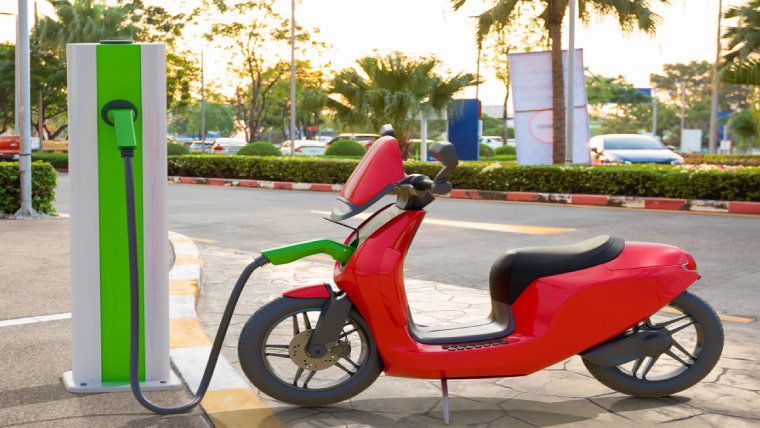
Urban congestion and increasing acquisition costs, together with changing lifestyle preferences, are reinforcing this shift. For many consumers, especially in large cities, the financial and administrative burden of owning a two-wheeler is becoming less attractive. At the same time, the explosion of hyperlocal delivery services is creating sustained demand for cost-efficient mobility options. Electric two-wheelers are emerging as a scalable solution for both passenger movement and goods delivery, supported by policy initiatives and growing environmental awareness.
Although regulatory complexities and GST-related issues continue to pose challenges, the broader policy environment remains supportive. As a result, the two-wheeler rental market is poised to transition from a fragmented, niche service into a critical pillar of India’s urban mobility and logistics ecosystem.
To learn more, please see: Growth Opportunities in India’s Two-Wheeler Rental Market, 2025–2029, or contact [email protected] for information on a private briefing.
Demographics and Delivery Economics Drive Change
Demographics is emerging as key to the expansion of two-wheeler rentals. Young urban consumers increasingly prefer access and usership over ownership. Here, short-term rentals and pay-as-you-use models present a natural extension of subscription-based services and on-demand platforms with which consumers are familiar. Frequent job mobility, rising migration between cities, and the growth of single-person households are further reducing the appeal of long-term ownership. For this segment, renting a two-wheeler offers multiple advantages, including eliminating upfront costs and maintenance responsibilities.
The economics of delivery platforms have further strengthened rental demand. Quick commerce and hyperlocal delivery have spurred the need for affordable mobility among gig workers. Purchasing a petrol vehicle is often financially unviable for many delivery partners, due to associated fuel and maintenance costs. Rental models reduce entry barriers and shift ownership risk away from riders. Platforms such as Zypp Electric and MoEVing are leveraging electric two-wheelers to improve delivery economics. Competitively priced long-term rental plans are enabling riders to lower daily operating costs compared to petrol scooters, supporting both profitability for platforms and income stability for workers.
The market, however, remains highly fragmented. Organized players such as Bounce, Yulu, and Royal Brothers have introduced app-based bookings with standardized fleets and operations. Despite progress, however, the unorganized sector still accounts for a substantial share of rental operations, particularly in rural and semi-urban areas where digital penetration and structured fleet models are still limited. Short-term self-drive rentals dominate the market, accounting for the majority of transactions, with scooters remaining the preferred vehicle type for urban commuting due to their ease of use.
Fleet Electrification Gains Momentum
Fleet electrification is gaining momentum across India’s two-wheeler rental ecosystem. Supportive government policies and stricter emission norms, backed by expanding charging and battery-swapping networks, are encouraging operators to transition toward electric fleets. Financial incentives linked to government initiatives such as FAME-II and PM E-Drive are making electric two-wheelers more attractive for rental companies. Projected declines in battery costs over the next decade are poised to make electrified offerings even more cost-competitive relative to their ICE counterparts.
Technology integration has now become a must-have rather than a nice-to-have competitive differentiator. Modern rental platforms are leveraging IoT-enabled tracking, GPS-based locking systems, AI-driven fleet management, and seamless digital payments to optimize operations. Continuous tracking and predictive maintenance are reducing downtime and improving asset utilization. Such capabilities are also helping minimize theft and vandalism risks. Meanwhile, real-time data is enabling intelligent fleet rebalancing and route optimization, which are critical for high-demand delivery areas. The resultant operational efficiencies of such technologies is directly translating into improved profitability.
Meanwhile, electric vehicle policies are further reinforcing the rental model. States like Maharashtra and Delhi have introduced regulatory frameworks that incentivize the use of two-wheelers as bike taxis and delivery vehicles. Clarity on the policy front is poised to enhance business viability and reduce regulatory uncertainty for organized operators. As policy alignment improves and infrastructure gaps narrow, electric two-wheeler rentals are expected to strengthen their position across passenger and goods transport segments.
Looking Ahead to Geographic Expansion, Fleet Electrification, Technology Integration
Beyond major cities, the next phase of growth will lie in Tier II and Tier III cities. Consumers in these cities are typically highly price-conscious. Rental models that offer low upfront and maintenance costs, along with predictable monthly payments, align well with these trends. As smartphone penetration and UPI-based digital payments deepen, operational barriers that previously hindered organized rental models in smaller cities are steadily reducing.
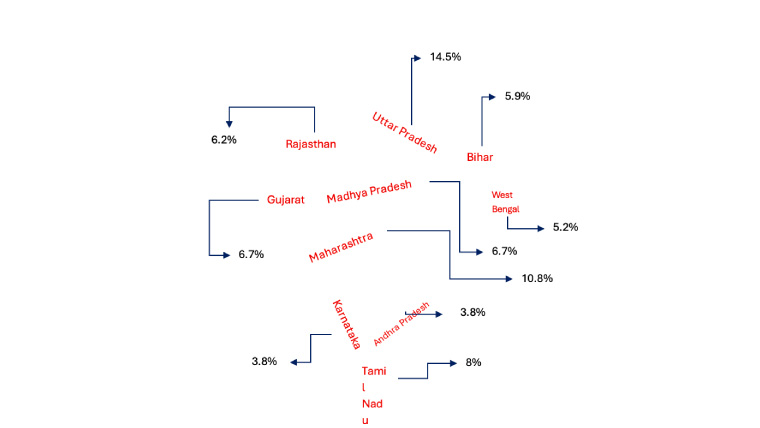
Ownership Hubs to Rental Hotspots: Top 10 Statewide Share of Two – Wheeler Sales, India, 2025
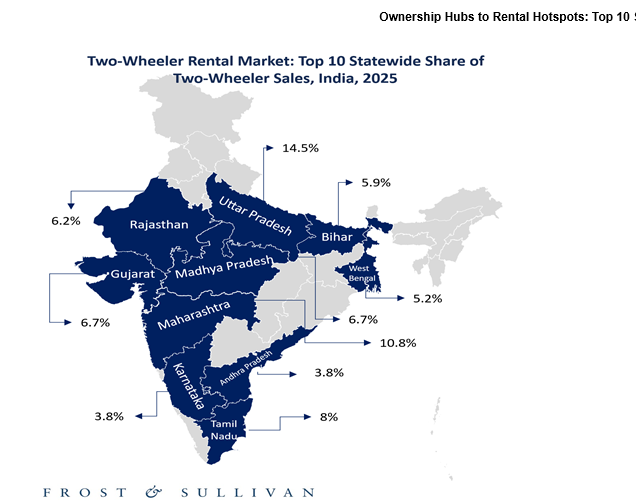
Digital adoption of app-based services, online transactions, and last-mile delivery platforms have become increasingly common in these markets. This has created an opportunity for rental providers to address the gaps between public transport availability and private ownership costs. Electric scooters and bikes, in particular, offer flexible and affordable mobility without the long-term financial burden associated with owning a vehicle.
Accordingly, strategic roadmaps will need to focus on electrification. Compared to petrol-powered fleets, electric two-wheelers offer lower operating costs. For fleet operators managing large asset bases, this translates into improved cost predictability. At the same time, government incentives reinforced by declining battery prices are expected to further close the cost gap between electric and conventional vehicles. Lower rental fees and operating expenses are poised to spark demand for electric rental options from gig workers. As charging and battery-swapping infrastructure expands, electric fleets are likely to form the backbone of organized rental networks.
Technology will increasingly define competitive positioning. The integration of IoT, telematics, mobile platforms, and AI-driven analytics will allow operators to optimize fleet utilization and enhance service reliability. Predictive maintenance and demand forecasting will help minimize idle assets and improve operational efficiency.
As e-commerce and quick commerce scale, platforms that leverage real-time data and automated decision-making tools will be better equipped to optimize rider onboarding and delivery volumes, while promoting geographic expansion. Over time, the market is expected to consolidate around technology-enabled operators that can balance scale, costs, and service consistency.