Nishant Arya, Vice Chairman & MD, JBM Auto Ltd, in conversation with Ajit Swaminathan, Associate Partner and Mobility Practice Leader, Frost & Sullivan
Download this Transformational Growth Leadership Discussion
India’s electric mobility sector is entering a new phase of maturity. What began as pilot deployments of electric buses is now evolving into large-scale, city-wide adoption. As this transition accelerates, the industry’s focus is shifting from building vehicles to building complete, integrated ecosystems that can support long-term operational and commercial viability.
In this Transformational Growth Leadership discussion, Nishant Arya, Vice Chairman & MD of JBM Auto Ltd, explains how JBM has repositioned itself from a vehicle manufacturer to a full-stack electric mobility ecosystem provider. Drawing on the company’s experience across powertrain evolution, infrastructure integration, and fleet operations, he outlines how technology ownership, total cost of ownership (TCO), and system-level thinking are shaping the future of electric mobility in India and globally.
“Selling the vehicle alone is not enough—the business has to work at the ecosystem level.”
— Nishant Arya, Vice Chairman & MD, JBM Auto Ltd
Electric Today, Hydrogen Tomorrow
Ajit Swaminathan: What is the most important transformation JBM Auto must get right over the next three to five years to stay profitable?
Nishant Arya: JBM’s evolution reflects the broader transition in mobility. We started with compressed natural gas, moved to electric, and today electric is our primary focus. Hydrogen represents the next phase, but it remains a longer-term opportunity, likely to become relevant in the 2030s when infrastructure and supporting systems mature.
In the near term, electrification is already demonstrating strong commercial viability. While government subsidies have played an important role in accelerating adoption, the business is increasingly standing on total cost of ownership. In many cases, electric buses are already competitive without subsidies, particularly in high-utilization environments. Hydrogen may eventually play a role as a range extender for long-distance applications, where extended driving range can significantly improve operational economics.
Moving Beyond Vehicles to Ecosystems
Ajit Swaminathan: EV fleet economics are compelling, yet adoption remains slower than expected. What is holding operators back?
Nishant Arya: The primary challenge is not the product but financing. Funding institutions are looking for fully integrated, de-risked solutions that combine the vehicle, charging infrastructure, and service support into a single, reliable offering.
This realization led JBM to expand beyond vehicle manufacturing. Within a short period of entering the electric mobility space, it became clear that success required building a complete ecosystem. Today, JBM operates across electric buses, lithium-ion batteries, power electronics, charging infrastructure and operations & maintenance.
We were also early in shifting the industry conversation toward total cost of ownership rather than upfront pricing. This is particularly relevant in city bus operations, where fixed routes and depot-based charging create a natural hub-and-spoke model that supports scalable electrification.
Technology Ownership as a Strategic Advantage
Ajit Swaminathan: Does this ecosystem approach extend beyond infrastructure into services and financing?
Nishant Arya: Our focus remains on technology and infrastructure, with a strong emphasis on ownership of the entire technology stack. In many regions, operators rely on imported solutions that are not supported by local engineering capabilities, making it difficult to maintain or improve performance over time.
At JBM, we have built deep capabilities across software, hardware, firmware, and product architecture, supported by a forward-looking R&D roadmap. We currently invest around 3–4% of our revenues into research and development, with plans to increase this further.
This level of investment is critical because it allows us to continuously refine our products and adapt to evolving operational requirements. In a region like India, where operational complexity is high, owning the technology stack provides a significant long-term advantage.
Simplifying Operations to Improve Uptime
Ajit Swaminathan: Servicing EV fleets remains a concern for operators. How is JBM addressing this?
Nishant Arya: While servicing concerns are valid, they are often overstated. Electric powertrains are inherently simpler, with significantly fewer moving parts compared to internal combustion engines (ICEs). This reduces the likelihood of mechanical failure.
In addition, remote diagnostics and over-the-air (OTA) capabilities allow many issues to be resolved without physical intervention. Our focus is on maximizing uptime rather than managing downtime.
We also invest in skill development through dedicated training centers for technicians, drivers, and customer teams. Operating an electric vehicle requires a different approach, particularly in terms of acceleration, regenerative braking, and energy management. Driver behavior has a direct impact on performance and efficiency, so training is an essential component of the ecosystem.
Energy Security as the Underlying Driver
Ajit Swaminathan: What broader trends are shaping JBM’s strategy in India?
Nishant Arya: At a national level, energy security is a fundamental driver of electrification. India imports a large proportion of its fossil fuel requirements, making electrification a strategic priority.
At the same time, adoption is expanding beyond major metropolitan areas into Tier 2 and Tier 3 cities. Corporate sustainability commitments are also accelerating demand, particularly in regions where environmental concerns such as air quality are critical.
In many cases, electric buses are already competitive with diesel on a total cost of ownership basis, even without subsidies. Business models such as gross cost contracts are also gaining traction, as governments increasingly prefer operators who can take end-to-end responsibility for service delivery.
AI as a Catalyst for Lifecycle Optimization
Ajit Swaminathan: Where is JBM applying AI today, and how do you see it evolving?
Nishant Arya: We are applying AI across multiple areas, including fleet management, energy monitoring, and predictive maintenance. Our systems track vehicles throughout their lifecycle—from commissioning through operation and eventually into component reuse.
Driver behavior analysis is another important application. Understanding how different driving patterns affect range, wear, and performance helps us design more effective training programs and improve overall fleet efficiency.
We are also focused on making these technologies accessible to a broad range of users, ensuring that they can be adopted easily without requiring advanced technical expertise.
Defining Competitive Advantage Through Integration
JBM Auto’s growth strategy is built on a clear set of priorities: full commitment to electrification, ownership of the technology stack, integrated ecosystem capabilities spanning vehicles, batteries, and charging infrastructure, and a strong focus on total cost of ownership.
Rather than viewing India’s operational complexity as a constraint, the company treats it as a design input, shaping solutions that are robust, adaptable, and scalable. This approach positions JBM not only to serve the domestic market but also to develop solutions that can be exported to other regions, including the Global South.
Closing Reflection: From Products to Platforms
The transition to electric mobility is redefining the role of vehicle manufacturers. Success is no longer determined solely by the quality of the product, but by the ability to deliver integrated, end-to-end solutions that address the full lifecycle of mobility.
JBM Auto’s strategy reflects this broader shift. By combining technology ownership, ecosystem integration, and a disciplined focus on total cost of ownership, the company is helping to build a more sustainable and scalable model for electric mobility.
As adoption expands across geographies and use cases, organizations that can connect vehicles, infrastructure, data, and services into a unified system will be best positioned to lead the next phase of mobility transformation.
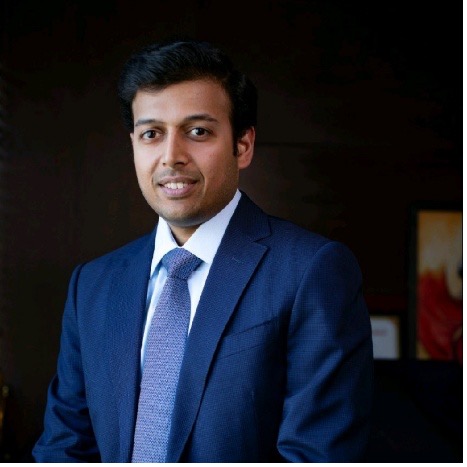
About Nishant Arya
Nishant Arya is Vice Chairman & MD, JBM Auto Ltd, based in Delhi, India. He is leading the company’s strategic vision across electric mobility, clean energy, and global expansion, with a particular focus on positioning JBM as a full-stack EV ecosystem provider in India and international markets. He also serves as Chairman of Linde Wiemann GmbH and Chairman of the CII India Europe Council, reflecting his active role in shaping industry policy and cross-border business development. Recognized as part of Economic Times 40 Under 40 (2023) and Hurun U40 (2025), Nishant brings a rare combination of entrepreneurial drive and industrial depth to one of India’s most consequential transitions in mobility.
Ajit Chander Swaminathan is Associate Partner and Mobility Practice Leader for Americas & South Asia at Frost & Sullivan. With 20+ years of experience, he specializes in strategic planning, business development, P&L ownership, and digital transformation. His industry leadership spans electrification, connected vehicles, manufacturing, aftermarket, and regulatory frameworks, helping mobility clients grow, scale, and transform across global markets.

About Ajit Swaminathan
Ready to Lead the Transformation?
- Book a Growth Strategy Session: Align your growth roadmap with Frost & Sullivan’s Visionary Growth Pipeline™ Dialog.
- Engage with Growth Experts: Co-design AI-enabled, data-driven operating models that scale industry-specific and commercial impact.
- Share Your Transformation Story: Position your organization as a transformation leader through Frost & Sullivan’s Transformational Growth Leadership platform.
- Join the Growth Council: Collaborate with industry leaders shaping the future of your ecosystem.
- Nominate for the Best Practices Recognition: Be recognized for excellence in growth strategy, execution, and customer impact.
- Demonstrate Industry Positioning on the Frost Radar™: Benchmark your growth performance and innovation strength against industry competitors.
- Activate Brand & Demand Growth: Accelerate awareness, engagement, and revenue growth through integrated brand and demand generation strategies.
Annexure: Technology and Policy Driving India’s Electric Bus Industry
Frost & Sullivan has curated analyses that highlight growth opportunities, strategic imperatives, and technological transformations across the electric mobility segment, offering critical insights for OEMs, fleet operators, and investors navigating India’s evolving industry.
Here are a few that you would find relevant: