This blog is based on Frost & Sullivan’s recent analysis, “Alternative Protein Ingredients for Human Nutrition, Global, 2025–2032,” authored by Akheela Dhiman from the Chemicals, Materials, & Nutrition Practice Area.
The global food ecosystem is transitioning toward sustainable, scalable, and future-ready nutrition solutions, positioning alternative proteins as a strategic growth area across the food, nutrition, and biotechnology industries. Driven by evolving dietary preferences, food security concerns, and biotechnology advancements, the alternative protein ingredients industry for human nutrition is projected to grow from $13.8 billion in 2023 to $29.1 billion by 2032, at a CAGR of 8.5%.
From plant-based and microbial proteins to precision fermentation and hybrid formulations, the landscape is transitioning from early-stage innovation toward disruption to commercial-scale execution. As competitive dynamics intensify, organizations are navigating this transformation by balancing innovation, profitability, supply chain resilience, and long-term sustainability priorities.
Alternative proteins are scaling from niche innovation to mainstream nutrition solutions.
What’s In It for You?
- Megatrends in precision fermentation and sustainable proteins
- Growth opportunities across scalable protein platforms
- Strategic considerations for commercialization and scalability
What strategies is your organization adopting to compete in the evolving alternative protein ecosystem?
Listen to our podcast episode on growth opportunities in alternative proteins.
Strategic Imperatives Shaping the Alternative Proteins Ecosystem
Geopolitical Chaos
Trade fragmentation, feedstock volatility, and food security concerns are driving organizations to diversify sourcing, localize production, and strengthen supply chain resilience. At the same time, improving sustainability standards in conventional livestock are increasing pressure on alternative protein companies to compete on scalability, cost efficiency, and nutritional value.
Disruptive Technologies
Precision fermentation, biomass fermentation, cellular agriculture, and insect protein innovation are enabling scalable and functionally advanced animal-free proteins. However, organizations is expected to balance technological innovation with commercialization readiness, operational efficiency, and long-term profitability.
Transformative Megatrends
Demand for clean-label, high-protein, and minimally processed products is reshaping innovation priorities across the industry. Growing focus on healthy aging, metabolic wellness, and functional nutrition is also accelerating opportunities for clinically positioned and sustainability-focused protein solutions.
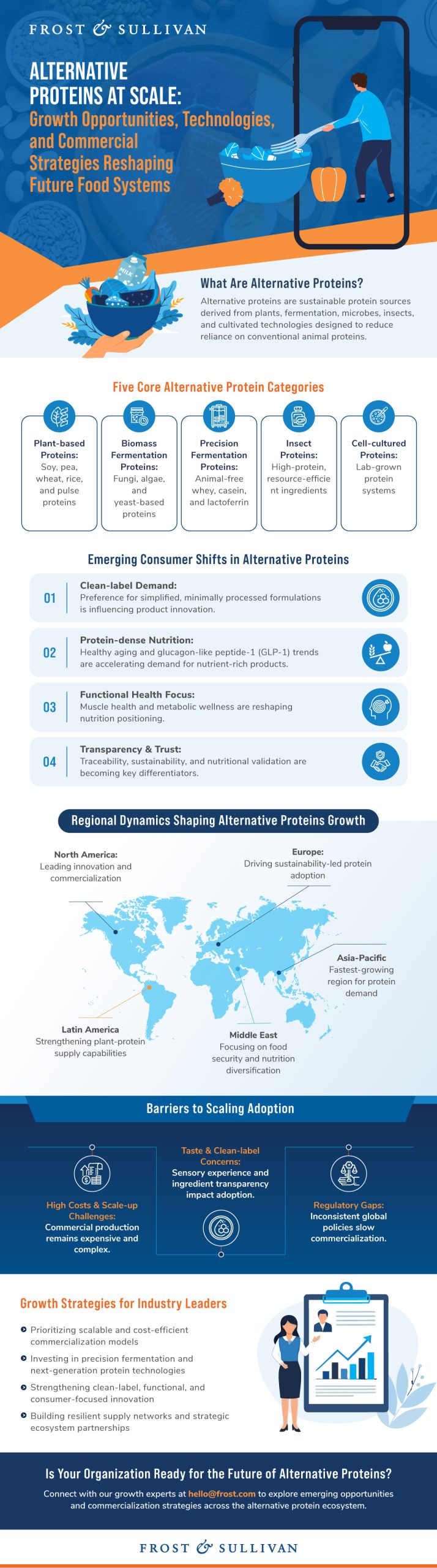
Key Growth Drivers Accelerating Alternative Protein Adoption
- Plant-Based and Flexitarian Consumption: Growing interest in vegan, vegetarian, and flexitarian diets is accelerating adoption of plant-based meat, dairy, and functional nutrition products. Rising consumer demand for meat alternatives for proteins is also expanding opportunities across mainstream food and beverage applications.
- Advancements in Fermentation and Protein Technologies: Precision fermentation, microbial proteins, and advanced processing technologies are improving scalability, functionality, and commercialization potential.
- Investments and Strategic Partnerships: Sustained funding and cross-industry collaborations are strengthening innovation, manufacturing capabilities, and industry expansion.
- Demand for Functional Nutrition: Rising demand for high-protein, clean-label, and wellness-focused products is creating opportunities across sports nutrition, healthy aging, and metabolic health applications.
Key Technologies Reshaping the Alternative Protein Ecosystem
- Precision Fermentation: Enabling scalable production of animal-free proteins including whey and casein with improved functionality, consistency and commercial viability.
- Biomass Fermentation & Microbial Proteins: Supporting cost-efficient and climate-resilient protein production through fungi, algae, and yeast-based platforms.
- Bioprocess Optimization & Automation: Improving production efficiency, scalability, traceability, and cost competitiveness across protein manufacturing systems.
- Protein Engineering & Hybrid Formulations: Enhancing taste, texture, and functionality to support mainstream consumer adoption and product differentiation.
- AI-driven Formulation & Digitalization: Accelerating product development, ingredient optimization, and personalized nutrition innovation through data-driven technologies.
Growth Opportunities Reshaping the Alternative Proteins Landscape
Precision Fermentation-derived Proteins: Animal-free whey, casein, and functional proteins are driving scalable and sustainable nutrition innovation across food and beverage applications.
Microbial & Single-cell Proteins (SCPs): Fungi, algae, yeast, and bacteria-based proteins are emerging as scalable, resource-efficient, and climate-resilient alternatives.
Hybrid Protein Formulations: Combining conventional and alternative proteins is improving taste, affordability, and mainstream consumer adoption across nutrition categories.
Proteins for Muscle Health: High-protein and function-focused formulations are gaining traction across healthy aging, sports nutrition, and metabolic wellness applications.
Explore these alternative proteins growth opportunities in detail by downloading our sample analysis.
Competitive Environment: Leading Companies Shaping Alternative Protein Innovation
Perfect Day
A leader in precision fermentation, Perfect Day is specializing in animal-free dairy proteins, particularly whey protein, supporting innovation across dairy alternatives and functional nutrition applications.
Roquette
Roquette is expanding its global plant-protein portfolio through pea protein innovation, focusing on functionality, scalability, and clean-label nutrition solutions across food and beverage industries.
ADM (Archer Daniels Midland)
ADM is strengthening its position through investments in plant-based nutrition, alternative protein ingredients, and integrated supply chain capabilities to support scalable commercialization.
Meati Foods
Meati Foods is leveraging mycelium-based protein technology to develop whole-food alternative protein products with strong focus on sustainability, texture, and nutritional performance.
The alternative protein industry is moving toward a future where sustainable nutrition, biotechnology, and advanced food systems converge. Competitive leadership will depend on organizations’ ability to scale innovation, strengthen resilient supply ecosystems, and align with evolving health and sustainability priorities.
Frequently Asked Questions: Alternative Proteins
1. What are alternative proteins?
Alternative proteins are protein sources developed as substitutes or complements to conventional animal proteins. They include plant-based proteins, microbial proteins, fermentation-derived proteins, cultivated proteins, and insect-based proteins designed to support sustainable and scalable nutrition solutions.
2. What are some examples of alternative protein ingredients?
Examples of alternative protein ingredients include pea protein, soy protein, mycoprotein, algae-based proteins, whey and casein produced through precision fermentation, microbial proteins, chickpea proteins, and insect-derived protein ingredients.
3. Why is the demand for alternative proteins increasing?
Demand for alternative proteins is increasing due to rising concerns around sustainability, food security, climate impact, and evolving consumer preferences for clean-label, high-protein, and functional nutrition products. Advancements in biotechnology and fermentation technologies are also improving product quality, scalability, and commercialization potential.
4. Which industries are driving demand for alternative proteins?
Demand is growing across food and beverage, sports nutrition, nutraceuticals, healthy aging, and functional food industries as organizations seek sustainable and high-protein ingredient solutions.
Ready to Lead the Transformation?
- Book a Growth Strategy Session: Align your growth roadmap with Frost & Sullivan’s visionary Growth Pipeline™ Dialog.
- Engage with Growth Experts: Co-design AI-enabled, data-driven operating models that scale industry-specific and commercial impact.
- Share Your Transformation Story: Position your organization as a transformation leader through Frost & Sullivan’s Transformational Growth Leadership platform.
- Join the Growth Council: Collaborate with industry leaders shaping the future of your ecosystem.
- Nominate for the Best Practices Recognition: Be recognized for excellence in growth strategy, execution, and customer impact.
- Demonstrate Industry Positioning on the Frost Radar™: Benchmark your growth performance and innovation strength against industry competitors.
- Activate Brand & Demand Growth: Accelerate awareness, engagement, and revenue growth through integrated brand and demand generation strategies.