Oliver Lawal, CEO, AquiSense in conversation with Fredrick Royan, Associate Partner and Global Practice Area Leader, Frost & Sullivan, and Paul Hudson, Senior Industry Analyst, Sustainability and Circular Economy, Frost & Sullivan.
The global water industry is navigating emerging contaminants, expanding water reuse initiatives, and the shift away from hazardous materials. These priorities are influencing how utilities, industrial operators, and technology providers approach water treatment and disinfection.
At the center of this shift is ultraviolet (UV) technology. While UV disinfection has long been recognized as an effective alternative to chemical treatment, the next phase of innovation is increasingly focused on mercury-free UV light-emitting diode (LED) systems that offer greater flexibility, efficiency, and sustainability.
In this Movers & Shakers conversation with Frost & Sullivan, Oliver Lawal, CEO of AquiSense, shared his perspective on developments shaping the water disinfection industry, the growing role of UV LED technology, and how the company is preparing for the transition toward mercury-free solutions. He also discussed opportunities in industrial water treatment, municipal infrastructure, water reuse, and data center ecosystems, while outlining his vision for AquiSense’s next stage of growth.
“If I am a municipality, an EPC, or a consulting engineer and I don’t consider a mercury-free solution, I am not doing my job properly.”
— Oliver Lawal, CEO, AquiSense
Riding the Three Waves Transforming Water Disinfection
Fredrick Royan: Oliver, let’s start with the big picture. When you look at the water disinfection industry today, what are the major megatrends reshaping the industry?
Oliver Lawal: I see three transformative trends driving the industry.
The first is a long-term shift that has been underway for decades: the transition from chemical disinfection to chemical-free disinfection. UV technology has been a major part of that journey and will continue to play an increasingly important role. While the industry has made significant progress, we are still far from the endpoint of that transition.
The second trend centers on emerging contaminants. Whether we are talking about PFAS (per- and polyfluoroalkyl substances), 1,4-dioxane, microplastics, taste and odor issues, desalination, water reuse, or advanced oxidation processes, there is growing demand for treatment solutions capable of addressing increasingly complex water quality challenges. These solutions are rarely dependent on a single technology. Instead, they involve multiple treatment approaches working together, with UV often becoming an integral part of the treatment train.
The third trend is the move toward mercury-free disinfection. Today, much of the UV industry still relies on mercury-based lamps. However, just as industries moved away from materials such as lead and asbestos, the water industry is beginning its transition away from mercury. This shift is creating one of the most significant opportunities we have seen in the UV sector.
Together, these three trends are reshaping the future of water treatment and creating a favorable environment for innovation and growth.
Turning Industry Shifts into Growth Opportunities
Paul Hudson: You mentioned these three powerful trends shaping the industry. How do those trends translate into opportunities for AquiSense, and where do you see the company creating the most value?
Oliver Lawal: I often think about these trends as three separate waves that we are riding simultaneously.
The first wave is the continued expansion of UV technology itself. The second wave is the increasing focus on emerging contaminants and advanced treatment solutions. The third wave is the transition toward mercury-free technologies.
What’s encouraging is that all three are moving in positive directions. For us, the challenge is not market demand or market size. The opportunities are clearly there. The real challenge is execution.
That means maintaining visibility in the market, ensuring access to customers, building strong distribution channels, and continuing to deliver reliable, validated products globally. We receive opportunities from many different directions, so maintaining focus and discipline is essential.
The good news is that execution is something we can control. We cannot control macroeconomic conditions or market timing, but we can control how effectively we serve customers and how quickly we scale the business.
Scaling UV LED Innovation for Global Growth
Fredrick Royan: You have talked about the evolution of the technology and the progress you have made over the past decade. Where would you say AquiSense is today on that journey, and what does the next stage of growth look like?
Oliver Lawal: We have really gone through three distinct phases as a company.
The first five years were focused on proving that UV LED technology could work reliably. At that stage, we had to perfect the technology, develop manufacturing capabilities, establish supply chains, and continuously improve our products.
The second phase involved proving that UV LED technology could move beyond small point-of-use applications and operate successfully at industrial and municipal scale. During that period, we demonstrated that the technology could support projects treating more than 10 million gallons per day and deliver reliable performance in demanding environments.
Now we are entering the third phase, which is all about scaling. We have a robust technology platform, a secure supply chain, proven projects, and a sustainable business model. We are EBITDA-positive, which gives us the ability to invest in growth while remaining disciplined.
The next challenge is expanding market access. We cannot do that alone. Whether we are serving residential, commercial, industrial, municipal, or emerging sectors such as data centers, partnerships become increasingly important. We need strong relationships with distributors, engineering firms, EPC contractors, and solution providers that can help bring our technology to customers around the world.
Building a Top-five Global UV Company
Paul Hudson: Looking ahead over the next five years, what are your aspirations for AquiSense?
Oliver Lawal: We have been fortunate to maintain a leadership position within the UV LED sector for the past decade. We entered the market with a strong foundation and have continued to evolve our products and capabilities as the industry has matured.
The next goal is much larger.
I firmly believe that within five years, we can become one of the top five UV companies globally, regardless of technology type. That means competing directly with some of the largest and most established players in the industry.
Today, we are already approaching the scale of many privately held UV companies. Historically, companies in this space have often become acquisition targets as they grow. Our aspiration, however, is to remain independent for as long as possible so that we can continue scaling the business on our own terms.
We do not need to be acquired to grow. The market opportunity is substantial, regulatory trends are moving in our favor, and demand for mercury-free solutions continues to increase. Reaching more than $100 million in revenue is an ambitious goal, but I believe it is entirely achievable.
The Four Pillars Behind AquiSense’s Growth Strategy
Paul Hudson: AquiSense has maintained a leadership position in the UV LED market for quite some time. What would you say are the key factors that have allowed the company to stay ahead?
Oliver Lawal: Our strategy is built on four fundamental pillars.
The first is superior underlying technology. Everything starts with reactor design, the efficiency of photon delivery, thermal management, and the intellectual property that supports the system. We have invested heavily in ensuring that the core technology remains a competitive advantage.
The second pillar is building products that meet specific customer needs. Different industries have different requirements. Beverage manufacturers may prioritize compact designs and the elimination of glass breakage risks, while municipal customers may have entirely different priorities. Understanding those needs and designing products accordingly is essential.
The third pillar is developing a strong global distribution network. Market access remains one of the most important factors in our continued growth. While we have strong positions in certain regions, we continue to invest in expanding our global reach.
The fourth pillar is operational excellence. We must be able to manufacture high-quality products efficiently, maintain strong yields, minimize warranty issues, and ensure reliability. These capabilities become increasingly important as we scale.
One of the reasons we have been successful is our commitment to maintaining significant vertical integration. While many companies outsource key functions, we have chosen to keep much of our expertise and manufacturing capability in-house because it allows us to move faster and maintain tighter control over innovation.
Building Competitive Advantage Through Rapid Innovation
Paul Hudson: Looking back over the last ten years, what have you learned from the competitive landscape, and what do you believe has differentiated AquiSense from others in the market?
Oliver Lawal: One of the most important lessons is that innovation by itself is not enough.
For me, innovation is really about velocity. It is about direction, but it is also about speed.
A company can have a highly innovative technology, but if development moves too slowly, that innovation eventually loses its advantage. We have focused heavily on maintaining rapid product development cycles and continuously improving our offerings.
Keeping design expertise and manufacturing capabilities close to the business has been a significant advantage. It allows us to iterate more quickly, respond to customer needs faster, and maintain greater control over quality and intellectual property.
That approach may require greater investment, but it has enabled us to evolve our products faster than many competitors and maintain our leadership position in the market.
Expanding into Data Centers and Water Reuse
Fredrick Royan: Earlier, you touched on data centers as an emerging growth area. Can you elaborate on why that market is becoming important and where you see opportunities for AquiSense within that ecosystem?
Oliver Lawal: Data centers represent a particularly exciting opportunity because they intersect with several areas where we already have strong capabilities.
We have already supported projects related to power generation facilities that are expanding to meet growing data center demand. Those facilities face increasing environmental requirements and are looking for ways to minimize chemical usage in their cooling systems.
On the water side, we have worked with organizations such as the Las Vegas Valley Water Authority and the Southern Nevada Water Authority to help bring dormant groundwater supplies back into service. Rising water demand from hyperscale data centers has helped drive interest in those projects.
Within data centers themselves, ultra-pure water applications represent another important opportunity. UV technology already plays a critical role in many advanced treatment processes, making it a natural fit for these environments.
More broadly, water reuse continues to gain momentum globally. We have participated in agricultural reuse projects, groundwater recharge initiatives, and a variety of advanced treatment applications. In many of these projects, UV serves as an important final barrier that helps ensure water quality and safety.
The beauty of mercury-free UV LED technology is that it can support all of these applications while providing a more flexible and sustainable alternative to traditional systems.
Why Mercury-free UV Will Define the Next Decade
Paul Hudson: As we look toward the future of the water treatment industry, what is the one development or shift that you believe will have the biggest impact over the next five to ten years?
Oliver Lawal: The answer is simple: mercury.
The Minamata Convention has fundamentally changed the long-term outlook for mercury. Countries around the world have committed to reducing and eventually eliminating mercury use in products, and by 2032, there will be no new mercury mining.
For anyone making long-term infrastructure investments, that creates an important question. If you are installing equipment that is expected to operate for ten, fifteen, or twenty years, can you confidently guarantee the long-term availability of mercury-based lamps?
The answer is becoming increasingly uncertain.
That does not mean the UV industry disappears. In fact, UV remains one of the most important disinfection technologies available. What changes is the technology platform that supports it.
Every municipality, EPC contractor, consulting engineer, and industrial operator should be evaluating mercury-free alternatives and understanding the risks associated with continuing to depend on mercury-based systems. The transition is already underway, and organizations that begin preparing now will be in a much stronger position moving forward.
Closing Reflection: Preparing for a Mercury-free Future
The water industry is entering a period of profound transformation. As organizations address emerging contaminants, expand water reuse initiatives, pursue sustainability goals, and prepare for a future in which mercury-based technologies become increasingly constrained, demand for innovative treatment solutions will continue to grow.
For AquiSense, this transformation represents more than a market opportunity. It represents an opportunity to help shape the future of water treatment itself. By advancing mercury-free UV LED technology, expanding into new applications, and building trusted partnerships across the industry, the company is positioning itself at the center of one of the most important transitions in modern water disinfection.
As Oliver Lawal’s vision makes clear, the future of water treatment will not simply be about replacing existing technologies. It will be about creating safer, more sustainable, and more resilient solutions capable of meeting the needs of the next generation.
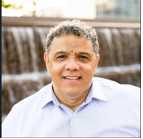
About Oliver Lawal
CEO of AquiSense
Oliver is Founder and CEO of AquiSense, the leading global supplier of UV-C LED water disinfection systems. He has been involved with UV technology since the late 1990s, where he previously served in senior executive positions at Wedeco (Xylem) and Aquionics (Halma), living in the UK, Germany, France, and New Zealand before moving to the US in 2005. He is a former President of IUVA and currently serves as Co-VP Americas. He holds two engineering degrees from Manchester University in the United Kingdom.
Associate Partner and Global Practice Area Leader, Sustainability and Circular Economy at Frost & Sullivan
Fredrick Royan is Associate Partner of the Sustainability and Circular Economy practice at Frost & Sullivan and the Smart Water Network (SWAN) Council Chair. With over 20 years analyzing the global water sector, he led the launch of the Smart Water Program in 2010 and now shapes the Global Water Research Program, publishing authoritative reports on Smart Water Grids and related segments. He holds a master’s in Environmental Protection and Management from the University of Edinburgh as a Centenary Chevening Scholar and has also been conferred the Frost & Sullivan Fellowship.
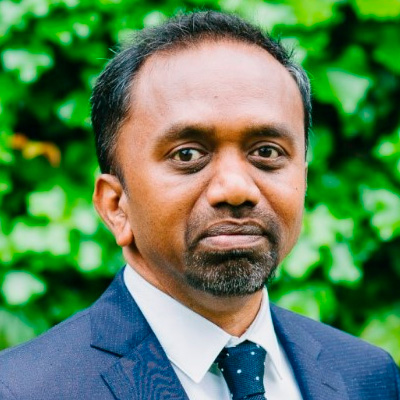
About Fredrick Royan
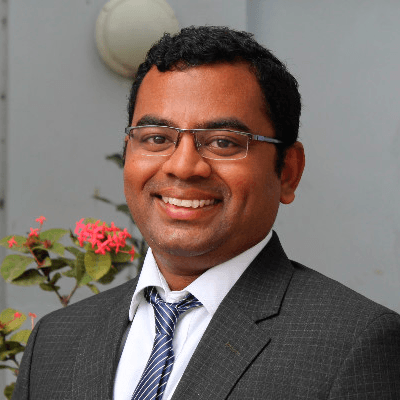
About Paul Hudson
Senior Industry Analyst, Sustainability and Circular Economy at Frost & Sullivan
Paul Hudson is a Senior Industry Analyst at Frost & Sullivan (Sustainability and Circular Economy Practice). With over nine years of experience in market research and strategic analysis across the environmental and sustainability sectors, he possesses deep expertise in the global water and wastewater treatment industry.
Paul has collaborated extensively with policymakers, utilities, technology providers, and senior industry executives, supporting initiatives in policy formulation, strategic planning, roadmap development, white paper authorship, and in-depth market intelligence. His work focuses on identifying emerging trends, evaluating technology adoption, assessing market opportunities, and supporting decision-making across the water value chain. Prior to joining Frost & Sullivan, Paul worked as a Project Engineer at VA Tech Wabag, where he gained practical experience in the design and implementation of water and wastewater treatment projects. He holds a Master’s degree in Environmental Engineering from the National Institute of Technology Warangal (NIT Warangal).
Ready to Lead the Transformation?
- Book a Growth Strategy Session: Align your growth roadmap with Frost & Sullivan’s Visionary Growth Pipeline™ Dialog.
- Engage with Growth Experts: Co-design AI-enabled, data-driven operating models that scale industry-specific and commercial impact.
- Share Your Transformation Story: Position your organization as a transformation leader through Frost & Sullivan’s Transformational Growth Leadership platform.
- Join the Growth Council: Collaborate with industry leaders shaping the future of your ecosystem.
- Nominate for the Best Practices Recognition: Be recognized for excellence in growth strategy, execution, and customer impact.
- Demonstrate Industry Positioning on the Frost Radar™: Benchmark your growth performance and innovation strength against industry competitors.
- Activate Brand & Demand Growth: Accelerate awareness, engagement, and revenue growth through integrated brand and demand generation strategies.
Annexure: Supporting the Transition to Advanced Water Treatment and Disinfection
Water utilities and industrial operators are facing a new set of challenges, from addressing emerging contaminants and expanding water reuse programs to preparing for tighter restrictions on mercury-based technologies.
As these priorities reshape investment decisions, organizations need greater visibility into the technologies, business models, and growth opportunities influencing the future of water treatment and disinfection.
To support strategic planning in this space, Frost & Sullivan provides intelligence on key developments across water treatment, water reuse, and advanced disinfection, including:
📌 Top 10 Growth Opportunities in the Circular Economy Market
📌 Frost Radar™: Water and Wastewater Treatment Membrane Solutions
📌 Top 10 Growth Opportunities in the Global ESG, Sustainability, and Climate Tech Markets
Together, these analyses complement the themes discussed in this Movers & Shakers conversation, including mercury-free UV technology, emerging contaminant treatment, water reuse, and the evolving role of advanced disinfection solutions in modern water infrastructure.