A Structural Inflection Point
India’s power sector has entered a decisive structural phase. By January 2026, non-fossil capacity, including 263.2 GW of renewables and 8.78 GW of nuclear, reached nearly 272 GW. This represents more than 52 percent of India’s total installed capacity of 520.5 GW.[1]
The increase from 235.7 GW in June 2025 reflects rapid expansion, but the strategic significance lies beyond capacity growth. Crossing the 50 percent threshold fundamentally alters how the grid must operate. The challenge is no longer just building megawatts. It is managing variability at scale.
From Linear System to Dynamic Network
Historically, India’s grid planning and operations were built around a predictable, centralized model. Large thermal plants supplied power in a one-directional flow toward consumers. Planning frameworks were built around steady baseload assumptions.
What is changing is not merely the generation mix, but the foundational assumptions that underpin grid planning, dispatch, and reliability management. Today, that structure is evolving. Solar output peaks midday while residential demand rises in the evening. Wind generation fluctuates regionally. Rooftop installations inject power back into local networks. Electric mobility is gradually introducing clustered loads.
Operational complexity is now driven by intermittency and decentralization. Even though renewable generation share is lower than installed share, variability is reshaping dispatch planning, balancing requirements, and system stability.
Grid Modernization as an Operational Imperative
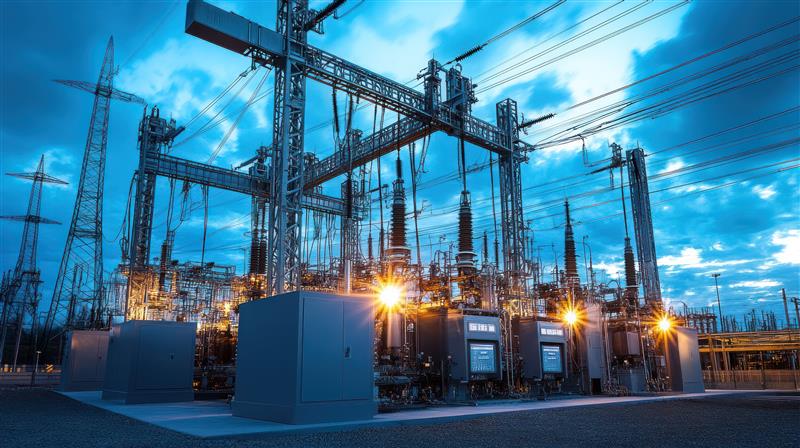
A 520 GW system with significant renewable penetration requires real-time visibility, automation, and predictive capability. Digital substations, advanced SCADA and Distribution Management Systems, and large-scale smart meter deployment are central to this transition. These systems enable granular monitoring, faster fault detection, and improved asset utilization.
Energy storage integration and Distributed Energy Resource (DER) management platforms are equally important. Without intelligent balancing, the mismatch between solar generation and evening demand can increase procurement costs and grid stress. Artificial intelligence-based forecasting and predictive maintenance are therefore becoming core reliability tools.
India’s grid is steadily shifting from passive infrastructure to an actively managed digital system.
Reimagining DISCOMs
Managing bidirectional flows, reducing aggregate technical and commercial losses, and implementing time-of-day tariffs are now operational necessities rather than long-term goals.
The Revamped Distribution Sector Scheme links financial assistance to measurable milestones such as smart meter deployment and loss reduction. The Smart Meter National Programme strengthens billing accuracy and revenue assurance while enabling better demand visibility.
As digital adoption deepens, DISCOMs are evolving into data-driven network managers responsible for balancing financial viability with system stability.
Transmission as a Strategic Enabler
Transmission expansion remains. The Government’s decision to raise the equity investment cap for subsidiaries of Power Grid Corporation of India from ₹5,000 crore to ₹7,500 crore strengthens its ability to finance renewable evacuation corridors aligned with the 500 GW non-fossil target by 2030.[2]
Upgrades across 765 kV and 400 kV networks, along with SCADA and Energy Management System enhancements, improve reliability and reduce curtailment risk in renewable-rich states. Transmission is increasingly functioning as a stability enabler that underpins renewable scale-up.
Cost Rationalization and Digital Convergence
Modernization is also reshaping utility economics. Digital infrastructure reduces technical losses, curbs theft, optimizes procurement, and improves billing cycles. Predictive maintenance lowers repair costs and extends asset life.
Operational Technology and Information Technology convergence is eliminating data silos and enabling centralized control.
These developments strengthen balance sheets and improve creditworthiness, opening pathways for greater private participation.
The Decade Ahead
Between 2025 and 2035, India’s grid transformation is expected to accelerate through large-scale smart meter deployment, deeper automation, expanded storage integration, and advanced forecasting systems. Simultaneously, renewable growth, industrial electrification, and electric mobility will introduce more dynamic demand patterns.
India has demonstrated its ability to scale renewable capacity. The next phase requires intelligent coordination across generation, transmission, and distribution. If modernization progresses in step with renewable expansion, the country can build one of the most digitally integrated grids among emerging economies.
The coming decade will determine whether India builds not just a larger power system, but a smarter and more resilient one – capable of managing complexity at scale.
For more information and to connect with the author, contact Nimisha Iyer at [email protected]
[1] https://www.pib.gov.in/PressReleasePage.aspx?PRID=2241822®=3&lang=2
[2] https://www.angelone.in/news/stocks/cabinet-approves-enhanced-investment-for-powergrid-investment-limit-to-rs-7500-crore