Download Frost & Sullivan’s Transformational Growth Leadership Discussion with Dr. Vasu Rangadass, Founder and Strategy Officer, L7 Informatics
As the life sciences industry faces the convergence of AI, automation, and scientific data, one challenge has come into sharp focus: operational excellence. While drug discovery has been transformed by advanced machine learning and large language models, the path from discovery to manufacturing remains slow, manual, fragmented, and complex.
L7 Informatics is addressing that challenge head-on. By unifying data, processes, and people across the scientific enterprise, the company is redefining how research moves from the lab to the clinic — faster, smarter, and more efficiently.
In this Transformational Growth Leadership (TGL) conversation, Dr. Vasu Rangadass, Founder and Strategy Officer of L7 Informatics, joins Nitin Naik, Associate Partner at Frost & Sullivan, to explore how the company’s unified platform approach is reshaping scientific operations, how AI is transforming both workflows and implementation, and why culture and leadership play such a crucial role in scaling innovation.
“It’s not about buying LIMS, ELN or MES systems anymore. It’s about optimizing the entire internal value chain, getting molecules from discovery to patient (clinic) in the shortest possible time, using fewer resources.”
— Dr. Vasu Rangadass, Founder, L7 Informatics
The Next Wave of Life Sciences Innovation
Why operational excellence defines the new frontier for research and manufacturing.
Nitin Naik: Vasu, congratulations again on L7’s recognition in Frost & Sullivan’s latest Frost RadarTM study. Let’s start from the big picture: what’s the next major wave of innovation you see shaping the life sciences industry?
Vasu Rangadass: Thanks, Nitin. I think the next big wave is operational excellence. We have been preparing for this for nearly eleven years. What I mean by that is the optimization of how molecules move through the business, from discovery, through process development, into manufacturing, in the shortest possible time and with fewer resources.
AI-driven drug discovery is generating huge volumes of new molecules, but those molecules still need to move through process and analytical development, and clinical manufacturing. Previously, molecules trickled through. Now, we are generating a large volume of them and that’s creating a bottleneck in CMC [Chemistry, Manufacturing, and Controls].
I call this the internal supply chain problem. The optimization challenge now is how to accelerate that entire internal value chain. Traditional systems like Laboratory Information Management System (LIMS) and Electronic Laboratory Notebook (ELN) were never designed for high throughput; they were built for “life-as-usual.” We need systems designed for fast failure, automation, and predictive insight, where you can quickly determine whether a molecule will work and move on if it doesn’t.
From Silos to Speed
Digital continuity across the scientific value chain.
Nitin Naik: That’s a great point, and it ties into something you have emphasized before — the need for seamless digital continuity. How does L7 approach that?
Vasu Rangadass: One of our biggest differentiators is that L7|ESP® is built around a standardized data format — everything, from recipes to experimental models, is captured digitally in a structured Markup Language (XML). That allows us to transfer processes (experiments, recipes, and methods) electronically across research, discovery, development, clinical, and commercial stages.
Today, most technology transfers are still paper-based. We are changing that by enabling digital transfers of technology and knowledge. That’s how you increase velocity, by eliminating manual handoffs, (re-)implementations and creating a digital thread that connects every step in the process.
This approach doesn’t just improve efficiency; it redefines how organizations think about their development and manufacturing operations. Instead of managing disconnected systems, they can now manage one integrated, living process.
The Architecture of an Adaptive Enterprise
Combining AI, machine learning, and human insight to accelerate science.
Nitin Naik: When we analyzed the L7|ESP® platform, what stood out were its unified architecture and cloud-native design. How do you see this evolving over the next few years?
Vasu Rangadass: We are working toward what we call “Level 7”, the adaptive enterprise. The goal is for humans and machines to interact synergistically to optimize experiments and manufacturing processes.
We are developing in silico models that represent physical experiments. Using machine learning, we can simulate what an instrument or process is doing, predict the outcome, and make adaptive adjustments.
It’s about using two types of AI:
- Machine learning AI — which builds the in silico replicas of physical experiments.
- Agentic AI — digital agents that support each role, like scientists, operators, or regulators, helping them make decisions and stay compliant.
This combination will reduce cycle times, improve resource utilization, and make organizations truly adaptive, but it also requires careful consideration of regulatory frameworks and compliance.
Overcoming the Barriers
Why transformation is as much about people as technology.
Nitin Naik: Innovation at this scale doesn’t come without challenges. What do you see as the biggest roadblocks?
Vasu Rangadass: There are three.
First, education. The market still believes it can assemble multiple systems — a LIMS and an ELN here, a MES there — and integrate them. I often tell customers it’s like buying 5,000 car parts from an auto parts store and trying to assemble your own car in your garage. It’s expensive, and inefficient.
Second, change management. Some scientists are resistant to change. They are used to how they have always worked — paper notebooks, familiar processes — and they don’t necessarily think in terms of their internal supply chain or business velocity. Helping them understand that digital transformation and how small changes can directly impact how fast their company can get therapies to patients is essential.
Third, partner alignment. Many of our integration partners are used to implementing siloed solutions. They need to shift their thinking toward unified platforms. This happened before in ERP [Enterprise Resource Planning]; eventually, the market moved to platforms because point solutions couldn’t scale.
It’s a big change, and we are working closely with forward-thinking customers and partners who share this vision and are educating their scientists and their leaders on the value of digital platforms.
Redefining Implementation
Using AI and large language models to reduce cost and time-to-value.
Nitin Naik: You mentioned AI not just in science but in implementation. That’s fascinating. Can you expand on that?
Vasu Rangadass: Absolutely. Today, implementation can cost as much as or more than the license itself. We are changing that using large language models.
When a CDMO receives an 80-page document describing a recipe, we can now use AI to parse that file, identify sections like protocols, materials, equipment and workflows, and automatically generate a digital process within days instead of months.
Our goal is to reduce implementation time and cost by 50–60%. We’re training customers and partners to do this themselves, making implementation self-service.
This changes the economics completely. Instead of paying two or three times the software cost in implementation fees, companies can move faster, reduce costs, and maintain control of their systems.
Standardizing Science
Building a common foundation for data and workflows.
Nitin Naik: That connects to your idea of standardization. What’s unique about L7’s approach to data and workflows?
Vasu Rangadass: We have developed a life sciences reference data model that spans small molecules, biologics, and cell and gene therapy. Every company uses similar processes; the differences are mostly semantic.
We are working with organizations like the Pistoia Alliance to standardize not just data structures but also process models for things like crystallization, solubility, fermentation, and cell growth.
Our customers are realizing that there’s no reason to compete on running experiments; they should compete on the molecules themselves. Standardizing processes helps everyone move faster. It’s about FAIR data — findable, accessible, interoperable, and reusable — right from the start.
A Culture of Engineering Excellence
Blending AI, science, and operational expertise.
Nitin Naik: How would you describe L7’s culture, and how does it drive your innovation?
Vasu Rangadass: Our culture combines engineering, science, and operational excellence. My background is in AI and supply chain optimization. Our product team comes from computer science, bioinformatics and computational biology.
That blend allows us to understand complex systems not just from a scientific point of view but as end-to-end processes. We have always been platform-focused, and that’s allowed us to innovate continuously without rebuilding from scratch.
We can integrate with external systems like Signals, Benchling or TetraScience when needed, but we also serve customers who prefer an entirely unified architecture. Whether it’s a startup or a global enterprise, the platform scales.
Expanding into New Frontiers
Extending the L7 model beyond pharma.
Nitin Naik: The unified approach seems applicable beyond life sciences. Are you exploring other verticals?
Vasu Rangadass: Yes. We are already seeing interest from other process industries, like food. The science isn’t that different; they still use sequencing, chromatography, and process automation.
What changes is the workflow and data model. The platform itself is ready for verticalization. It’s a pattern we can extend beyond life sciences into any industry that depends on complex scientific processes.
Leadership Evolution
Aligning innovation and execution for scale.
Nitin Naik: Recently, you transitioned from CEO to a strategic leadership role, focusing on innovation and market education while Mark L. Spencer leads operations and delivery. How does this structure help the company?
Vasu Rangadass: It’s about focus. I remain on the board and lead innovation, strategy, and market education, helping customers understand platform thinking, AI integration, and supply chain optimization.
Mark and the leadership team manage execution and delivery, ensuring customers are successful. Trying to handle both innovation and daily operations at this stage would slow us down. This structure gives us clarity and scalability.
It’s a partnership between innovation and execution, and that’s how we will continue to grow.
Looking Ahead
A platform built for adaptability and acceleration.
By 2030, the life sciences industry will need systems that can keep pace with AI-driven discovery and data growth. L7 Informatics is positioning itself at the center of that transformation, helping organizations automate, adapt, and accelerate their workflows from discovery to delivery.
“The future belongs to companies that can move molecules, not just manage data. The ability to combine science, software, and operational excellence will define the next decade of life sciences.”
— Dr. Vasu Rangadass
Closing Reflection
As Frost & Sullivan’s Transformational Growth Leadership series emphasizes, true innovation lies in uniting technology with execution.
L7 Informatics exemplifies that vision. Through unified platforms, adaptive AI, and a deep understanding of scientific processes, the company is helping life sciences organizations achieve what was once out of reach: a seamless, intelligent value chain from molecule to market.
About Dr. Vasu Rangadass
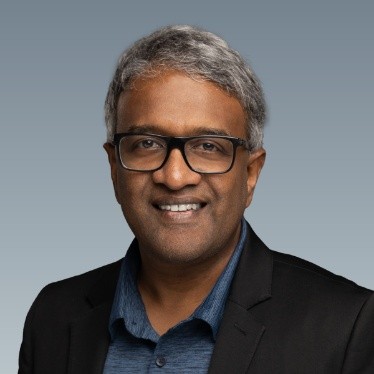
Dr. Vasu Rangadass is the Founder and Strategy Officer of L7 Informatics, a company specializing in unified scientific process and data-management platforms. He holds a Ph.D. in Computer Science and began his career in supply-chain and analytics systems before transitioning into healthcare technology. Prior to L7, he founded Net.Orange (now part of NantHealth) and served as its Chief Strategy Officer. At L7 Informatics, Rangadass has driven the development of the enterprise science platform (L7|ESP®) that integrates ELN/LIMS/MES/SCHEDULING workflows into a unified architecture. He is passionate about reducing complexity in scientific operations and enabling faster, more efficient drug development through smarter data, systems and process design. Based in Austin, Texas, Rangadass leads L7’s vision to scale its platform across the life-sciences sector and beyond process-industry workflows.
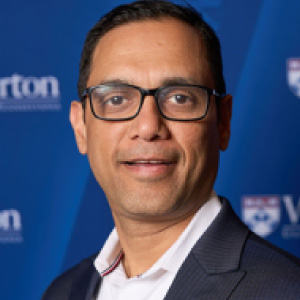
Nitin Naik is an accomplished leader with 25+ years driving transformational growth for Fortune 500 pharmaceutical, biotechnology, and medical device companies. As an Associate Partner at Frost & Sullivan, Nitin leads the Healthcare and Life Sciences practice, directing analyst and consulting teams that unlock growth opportunities through advanced analytics and commercial intelligence. Nitin brings deep expertise at the intersection of disruptive technologies, and new business models and recognized for implementing executable strategies across New Product Planning, Business Development & Licensing, M&A, and Go-To-Market initiatives. Prior to joining Frost & Sullivan, he has served in leadership positions with A*STAR Singapore and other healthcare organisations.
About Nitin Naik
Join the Movement: Accelerating Operational Excellence in Life Sciences
At Frost & Sullivan, we spotlight organizations and leaders transforming the scientific enterprise. If your company is pioneering unified platforms, AI-driven operations, or next-generation digital R&D, we want to elevate your story through our Transformational Growth Leadership series.
📩 Connect with us to:
✔️ Subscribe to our Growth Opportunity Newsletter
✔️ Join the Growth Council — an exclusive community for innovators
✔️ Share your transformation journey with a global audience
✔️ Engage with our growth experts to explore new growth opportunities
Annexure: Industry Developments Driving Digital Transformation in Life Sciences
L7 Informatics’ vision — unifying data, processes, systems, and people into one adaptive platform — reflects broader industry shifts toward scientific digitization, automation, and AI-driven decisioning. To support leaders navigating this transformation, Frost & Sullivan offers forward-looking research across platforms, CMC acceleration, and AI-enabled operations.
📌 Frost Radar™: Pharmaceutical and Biotech Laboratory Information Management Systems, 2025
📌 Frost Radar™: Laboratory Automation Systems, 2025
📌 Global Clinical Diagnostics Outlook, 2025
📌 Top 6 Growth Opportunities in Pharma-Biotech, 2025
Each of these analyses align with the central themes of this TGL — operational excellence, unified architectures, scalable automation, and AI-driven adaptability — offering a strategic blueprint for organizations preparing for the next decade of scientific innovation.