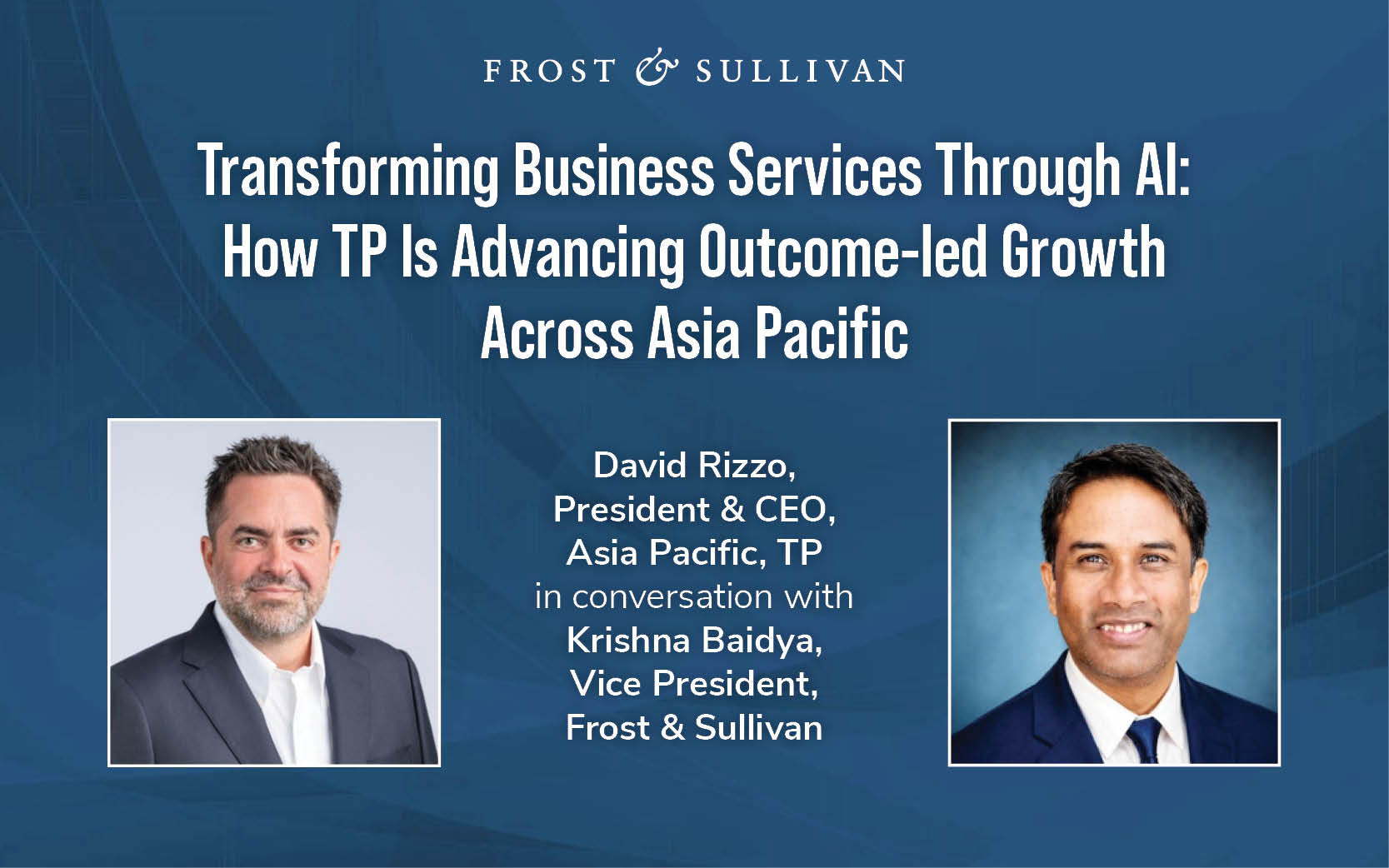
Sharad Bhatia, President, Schaeffler India – Vehicle Lifetime Solutions, in conversation with Ajit Chander Swaminathan, Associate Partner & Mobility Americas Leader, Frost & Sullivan
India’s automotive aftermarket is growing faster than ever but it is also becoming more complex by the day. From software-defined vehicles and mechatronics to sustainability mandates and electric vehicle penetration, the ecosystem is being reshaped in real time.
In this exclusive Movers & Shakers conversation, Sharad Bhatia, President of Vehicle Lifetime Solutions at Schaeffler India, speaks with Ajit Chander Swaminathan of Frost & Sullivan about the transformations that will define profitable growth over the next three to five years.
Three Transformations That Will Define the Next 3–5 Years
Ajit Chander Swaminathan: As President of Vehicle Lifetime Solutions at Schaeffler India, what is the most important transformation your organization must get right over the next three to five years to sustain profitable growth?
Sharad Bhatia: It’s a very pertinent question. On one side, the Indian aftermarket is among the fastest growing globally. On the other, it is becoming increasingly complex.
There are three key areas we must address.
First, technological complexity. We are seeing SUV (sport utility vehicle) penetration, software-defined vehicles, and increasing levels of mechatronics in vehicle engineering. The technical specifications being introduced by our business partners are commendable, but they raise the bar for us. We must ensure that our products meet those parameters not just for the next year, but sustainably for years ahead.
Second, sustainability. Sustainability goes far beyond the form, fit, and function of the product. It includes packaging norms, compliance with government policies, the materials we use, even the ink and graphics on packaging boxes. We must be strictly governed by these evolving regulations to ensure sustainable and profitable growth.
Third, EV (electric vehicle) penetration. Electric vehicles are inevitable. The penetration curve differs across segments: three-wheelers lead, followed by two-wheelers, passenger vehicles, and commercial vehicles. From an aftermarket perspective, we must not only supply the right products but also ensure the entire servicing ecosystem is prepared at the garage level.
Managing Software-defined Vehicle Complexity
Ajit Chander Swaminathan: Software-defined vehicles are introducing sensors, electronics, and data into the aftermarket. How is Schaeffler tackling this challenge?
Sharad Bhatia: Market intelligence is forming the foundation of our approach. Our program and product management teams are maintaining ground-level synchronization on vehicle geometries across India’s automotive aftermarket. We’re leveraging strong OE flagship endorsements extending to 2030. Through a back-end approach, we’re ensuring that whatever technical advancements are happening at vehicle manufacturing levels, we’re staying in sync and proactively redefining our aftermarket product specifications.
“India’s aftermarket is one of the fastest-growing markets in the world. But it’s also getting complex day by day. We have to make sure our products maintain quality standards, not only for the running year but for years to come.”
– Sharad Bhatia, President, Schaeffler India’s Vehicle Lifetime Solutions Division
From Component Replacement to System-level Enablement
Ajit Chander Swaminathan: How is your aftermarket value proposition evolving beyond component replacement toward system-level solutions?
Sharad Bhatia: A key enabler is our online upskilling platform, RepXpert.
RepXpert allows us to impart technical know-how directly to garage-level mechanics. It’s not just about how to install a part, it also covers sustainability aspects, correct form-fit-function understanding, and something often overlooked in the aftermarket: obsolescence.
We educate mechanics on replacement rates and lifecycle management. Across India, garages from the length and breadth of the country are registered on this platform. It has delivered very strong results.
We also extend this education to our distribution partners’ sales forces. When they understand the differentiation between genuine and counterfeit parts, they can cascade that knowledge into the secondary market. This is how we move from product supply to ecosystem enablement.
Leveraging AI for Operational Efficiency
Ajit Chander Swaminathan: Are you using AI? Can you give us a use case where you are seeing impact?
Sharad Bhatia: It’s evolving as we speak, day by day. While we’re still in the early stages, AI is representing an evolving capability that’s gradually enhancing operational efficiency across our automotive aftermarket operations.
The Shift from Price Sensitivity to Quality Consciousness
Ajit Chander Swaminathan: What customer signals are most reshaping your aftermarket strategy?
Sharad Bhatia: The Indian market has matured significantly. If we rewind to 2005 or even 2010, we would have compared ourselves unfavorably to Western markets. Today, India is well-poised alongside markets like Europe or the United States.
There is growing consciousness at the garage level around optimum quality parts. Thanks to awareness created by Tier 1 manufacturers, mechanics understand the risks of counterfeit components. Increasingly, they are willing to pay a premium to ensure the part meets defined vehicle life expectations.
This shift from price-first to quality-driven purchasing is a major transformation.
Building a Standardized Ecosystem Through Collaboration
Ajit Chander Swaminathan: Where do you see opportunities for industry-led collaboration or policy intervention to unlock the next phase of growth?
Sharad Bhatia: We’re 100% committed to collaborating with Tier 1 manufacturers on standardization of policies, specifications, and data sharing.
India’s aftermarket is large and growing, projections suggest over 113 million vehicles on the road by 2035, but it remains fragmented. To unlock full potential, we need an ecosystem that is standardized and regulated in terms of compliance and policy.
Standardization creates a level playing field. It enables fair competition while ensuring quality and safety standards are upheld.
At Schaeffler, we are fully committed to that collaborative approach.
Combating Counterfeits Through Education and Technology
Ajit Chander Swaminathan: Counterfeiting is a significant issue in India’s aftermarket. How does Schaeffler intend to tackle this problem?
Sharad Bhatia: It is definitely a big issue. We approach it from two angles: education and authentication.
First, through our RepXpert platform, we actively educate the entire value chain, from business partners to retailers, wholesalers, and down to the mechanics. While counterfeit parts may offer a short-term price advantage, in the long term they are detrimental to overall vehicle performance. Creating awareness about that impact is critical.
Second, on the technology side, Schaeffler core product category boxes include an authenticated QR code. A simple scan using a smartphone takes the customer to a website that confirms the authenticity of the part number.
However, the challenge today is awareness. The general scanning rate is still only in the low double digits, around 10–12%. We need to drive that above 50%, so that day in and day out, boxes are being scanned, and authenticity is verified. That is how we strengthen discipline in the aftermarket. Education must lead the way.
The Overlooked Transformation: Logistics
Ajit Chander Swaminathan: If you were to pick one technology that will disproportionately transform the Indian aftermarket over the next five years, what would it be?
Sharad Bhatia: It’s difficult to name just one, because advancements are happening every day.
But one area we have not spoken much about is logistics. Logistics is undergoing a major transformation. From our shop floor, parts change hands multiple times through distributors, retailers, and other stakeholders, before reaching the mechanic or end consumer. Today, logistics is no longer just about physical movement. It is about technological interfaces, tracking, and transparency across the value chain.
The ability to track apart from origin to end use is becoming increasingly important. These peripheral aspects of the aftermarket are evolving very rapidly and will significantly influence service levels in the coming years.
The Road Forward
India’s automotive aftermarket stands at a powerful intersection of growth and complexity.
For Schaeffler India’s Vehicle Lifetime Solutions division, sustained profitability over the next three to five years will depend on three strategic priorities:
- Managing technological complexity in software-defined and electrified vehicles
- Embedding sustainability beyond the product level
- Preparing the ecosystem for EV penetration and garage readiness
Complemented by AI-enabled demand planning, ecosystem standardization efforts, counterfeit prevention initiatives, and advanced logistics visibility, the strategy reflects disciplined evolution rather than reactive change.
In a market where growth is rapid, but complexity is accelerating, the differentiator will not simply be product range, it will be preparedness. And for Schaeffler, preparedness means staying synchronized with OEM advancements, educating the ecosystem, and ensuring that quality remains non-negotiable.

About Sharad Bhatia
Sharad Bhatia is President, Schaeffler India – Vehicle Lifetime Solutions, bringing over 24 years of experience in the automotive parts and aftermarket service sector. His career spans multinational organizations across Asia, including Indonesia, China, Singapore, India, and Italy. Before joining Schaeffler, he led business platform development and launched innovative product lines aligned with evolving market needs. Sharad holds a B.E. in Mechanical Engineering from Pune University, an Executive MBA from IIM Calcutta, and an E-Mobility certification from IIT Delhi (2022). In his current role, he drives growth by leveraging cutting-edge motion technology to enhance vehicle longevity and customer value.
Ajit Chander Swaminathan is Associate Partner and Mobility Practice Leader for Americas & South Asia at Frost & Sullivan. With 20+ years of experience, he specializes in strategic planning, business development, P&L ownership, and digital transformation. His industry leadership spans electrification, connected vehicles, manufacturing, aftermarket, and regulatory frameworks, helping mobility clients grow, scale, and transform across global markets.

About Ajit Chander Swaminathan
Ready to Lead the Transformation?
- Book a Growth Strategy Session: Align your growth roadmap with Frost & Sullivan’s Visionary Growth Pipeline™ Dialog.
- Engage with Growth Experts: Co-design AI-enabled, data-driven operating models that scale industry-specific and commercial impact.
- Share Your Transformation Story: Position your organization as a transformation leader through Frost & Sullivan’s Transformational Growth Leadership platform.
- Join the Growth Council: Collaborate with industry leaders shaping the future of your ecosystem.
- Nominate for the Best Practices Recognition: Be recognized for excellence in growth strategy, execution, and customer impact.
- Demonstrate Industry Positioning on the Frost Radar™: Benchmark your growth performance and innovation strength against industry competitors.
- Activate Brand & Demand Growth: Accelerate awareness, engagement, and revenue growth through integrated brand and demand generation strategies.
Annexure: Innovation and Digitalization Accelerating India’s Aftermarket Transformation
Frost & Sullivan has curated analyses that highlight growth opportunities, strategic imperatives, and technological transformations across the mobility aftermarket segment, offering critical insights for innovation and modernization.
Here are a few of them that you would like reading: