This blog is based on a collection of recent analyses authored by Frost & Sullivan’s Growth Experts from the Mobility team, specializing in the Connected & Autonomous Vehicles and Mobility Disruptive Foresights domains. You can access the analyses at Frost & Sullivan’s online store.
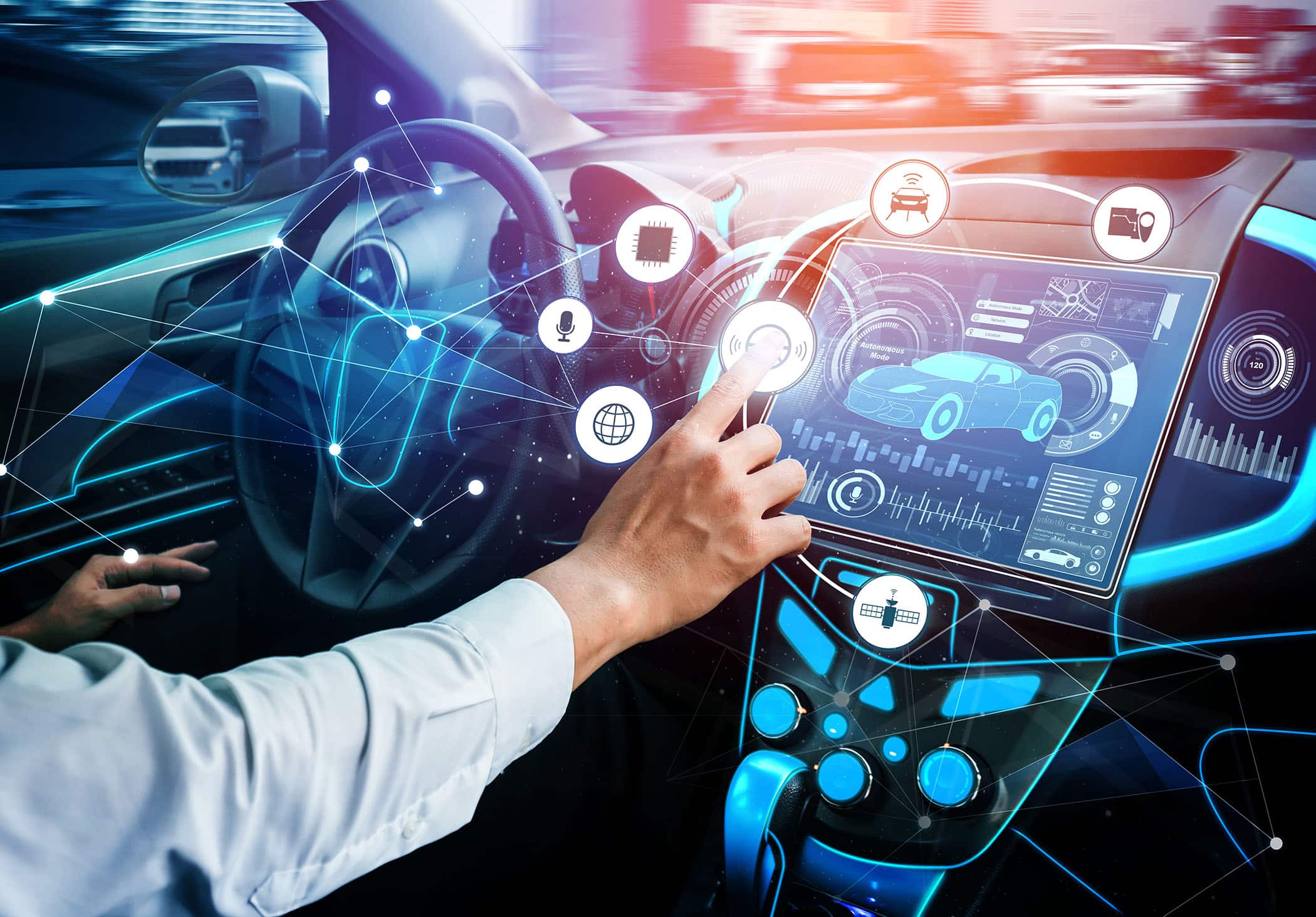
The global automotive industry is witnessing a shift where the vehicle is no longer a static mechanical asset but a live, connected part of a vast digital network.
Connected vehicles are sitting right at the heart of this transformation. As we move toward software-first mobility, the traditional “sell-and-forget” business model is quickly disappearing. Instead, manufacturers are focusing on building continuous, data-driven relationships that are lasting the entire lifetime of the vehicle.
Discover the latest megatrends, strategic imperatives and growth opportunities in the world of connected vehicles.
What Fuels the Transformation of the Modern Transportation Ecosystem?
Legacy carmakers are pivoting to software-defined vehicles (SDVs), treating cars as data centers on wheels, constantly gathering, processing, and transmitting data that forms the bedrock of the future of mobility. At the same time, regulators are tightening standards through measures such as the European Union (EU) AI Act, compelling companies to prioritize compliance by aligning design and innovation with global safety and privacy standards.
The Numbers Behind the Transformation
- The global connected vehicles industry is expanding at a CAGR of over 18%.
- SDVs will bring in over 90% of new vehicle sales in developed nations within the next five years.
- Cybersecurity spending in automotives is rising by 15% annually as the threat landscape grows.
Strategic Imperatives Defining Hyper-connected Mobility Era
- Disruptive Technology: Smartphones, AI assistants, and cloud platforms are turning cabins into digital hubs while gaming, 3D audio, and augmented reality (AR) are redefining vehicles as living spaces.
- Innovative Business Models: OEMs are shifting to software subscriptions, features-on-demand (FODs), and data sales. At the same time, cybersecurity is winning over buyers as services outpace hardware sales.
- Transformative Megatrends: Lightweighting is offsetting the mass of electric vehicle (EV) batteries, enhancing driving range, and enabling manufacturers comply with emission standards. Companies are also developing modular platforms to support sustainable design approaches.
Are you leveraging these strategic imperatives to identify untapped revenue streams in mobility ecosystems?
Growth Drivers: The Engines of Change
- A global push for self-reliance is turning supply chain security into a competitive advantage. This localization is creating a new playground for high-tech partnerships.
- Lower interest rates are helping the industry recover. Investment is picking up in banking, automotive, and tech infrastructure.
- As people get older and tech becomes part of daily life, new business opportunities are appearing. Alongside this, green hydrogen is growing as a key choice for clean energy.

Segments Driving the Next Wave of Growth
- Software-defined Vehicles (SDVs): By decoupling software from hardware, OEMs are enabling over-the-air (OTA) updates that are adding value to the car, long after the initial sale.
- Commercial Fleet Management: The logistics domain is adopting connectivity at a faster rate than the passenger segment, seeking to lower costs through predictive maintenance.
- In-car Commerce: From integrated payment systems for charging to premium entertainment packages, the cabin is becoming a new frontier for digital sales.
From green hydrogen to software-defined vehicles, which specific growth avenue is your organization prioritizing?
The Competitive Landscape: Companies to Action
We are no longer just looking at a battle between traditional car brands. Today, the arena includes chipmakers like NVIDIA, tech titans like Google, and a host of agile startups that are focusing on niche AI applications. Traditional suppliers are also evolving, shifting their entire portfolios from mechanical parts toward integrated digital systems.
Top players to watch out for:
- Mercedes-Benz: The company is partnering with NVIDIA to debut Alpamayo AI driving technology in the 2026 CLA, enabling reasoning-based autonomous navigation in complex urban environments.
- Hyundai: Through a multi-year strategic partnership with Waymo, Hyundai is integrating sixth-generation autonomous Waymo Driver technology into a fleet of all-electric IONIQ 5 sports utility vehicles (SUVs).
- Volkswagen: The group is collaborating with Microsoft, Bosch, and Qualcomm to build a cloud-based automated driving platform and a scalable AI architecture for high-level autonomy across its global brands.
Beyond traditional metrics, what specific indicators and tools are you using to benchmark your progress against industry leaders?
Top Growth Opportunities
- Scaling In-car Entertainment and Connected Commerce: Manufacturers are transforming vehicles into immersive, AI-powered command centers that are blending high-end entertainment with seamless digital commerce.
- Optimizing Efficiency through Structural Battery Lightweighting: OEMs are maximizing EV range and efficiency by integrating battery cells directly into the vehicle chassis through weight-saving, cell-to-pack architectures.
- Capturing the Urban Micro-mobility Surge: A large number of cities are transitioning toward zero-emission microcars to address urban congestion and streamline last-mile delivery in increasingly restricted emission zones.
Frequently Asked Questions
What role are SDVs playing in the future of mobility?
SDVs are allowing manufacturers to decouple software from hardware. This means a car’s features are being improved via code updates, much like a smartphone, which is a core pillar of modern mobility megatrends.
Are connected vehicles currently safe from cyber threats?
While connectivity is increasing the risk, the industry is implementing very robust cybersecurity frameworks. Security by design, constant monitoring, and rapid OTA patching are currently being used to protect vehicle systems from unauthorized access.
Why is V2X communication so important for autonomous mobility?
Vehicle-to-everything (V2X) communication allows cars to communicate with their surroundings. This technology is critical to reduce congestion and provide the real-time data needed for the safe rollout of autonomous mobility in complex urban areas.
Want to dive deeper? Click here to connect with our mobility growth experts to discover how these insights can help you achieve sustained growth. You can also connect with us at [email protected].
Ready to Lead the Transformation?
- Book a Growth Strategy Session: Align your growth roadmap with Frost & Sullivan’s visionary Growth Pipeline™ Dialog.
- Engage with Growth Experts: Co-design AI-enabled, data-driven operating models that scale industry-specific and commercial impact.
- Share Your Transformation Story: Position your organization as a transformation leader through Frost & Sullivan’s Transformational Growth Leadership platform.
- Join the Growth Council: Collaborate with industry leaders shaping the future of your ecosystem.
- Nominate for the Best Practices Recognition: Be recognized for excellence in growth strategy, execution, and customer impact.
- Demonstrate Industry Positioning on the Frost Radar™: Benchmark your growth performance and innovation strength against industry competitors.
- Activate Brand & Demand Growth: Accelerate awareness, engagement, and revenue growth through integrated brand and demand generation strategies.