Electrification, digital connectivity, and automation to underpin stable, technology-led phase of development with otobus and midibus segments recovering after a difficult 2025.
Growth conditions for Turkey’s bus market are becoming tighter as market maturity increases. Stakeholders are having to respond to changing customer expectations, progressively stricter regulatory requirements, and new technologies that are impacting public transport operations.
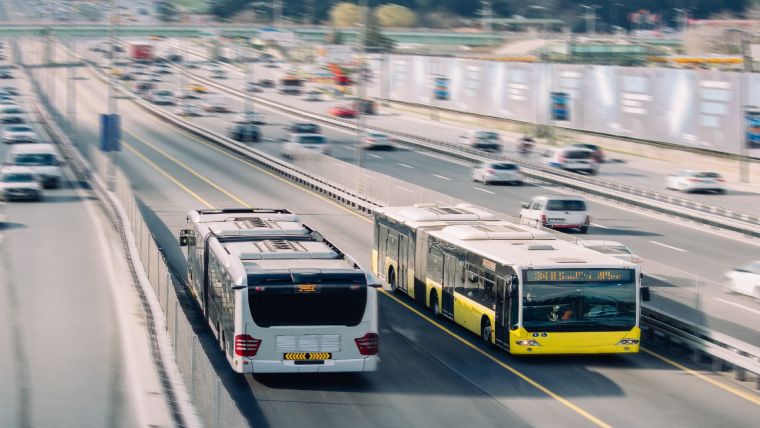
Three major forces are expected to shape the market over the next decade. The first is the shift toward battery-powered and zero-emission buses, driven by urban sustainability targets and government initiatives aimed at reducing emissions from public transportation. The second is the growing role of digital technologies, including real-time data, connected fleet platforms, and advanced diagnostics that help operators improve efficiency and reduce operating costs. The third trend is the steady integration of safety technologies and automation, as manufacturers introduce advanced driver assistance systems and begin preparing for limited autonomous operations.
These developments are unfolding against the backdrop of a market that has historically been cyclical, with Turkey’s bus industry having gone through a period of strong growth (2013-2015), followed by a sharp contraction (2018-2020), before entering its current, more stable and technology-driven phase of development.
To learn more, please see: Bus Market, Turkey, 2026–2035, or contact [email protected] for information on a private briefing.
Stable Midibuses and Cyclical Otobus Sales
The cyclical behavior of Turkey’s bus market reflects the close relationship between vehicle demand, municipal budgets, and broader economic conditions. After several years of contraction, the market began recovering in 2021 as fleet replacement activity resumed. However, demand has shifted from expansion-driven purchasing to replacement-led procurement, meaning that operators are primarily renewing aging fleets rather than adding new capacity.
This change has important implications for manufacturers. Instead of relying solely on vehicle sales, OEMs are now increasingly competing through services, financing solutions, electrification readiness, and lifecycle support. These value-added offerings are helping operators manage total cost of ownership while ensuring reliable fleet performance over longer operating cycles.
A key feature of the market has been the clear differences between segments. Midibuses have tended to be more stable because they serve a broader mix of private operators, tourism businesses, and regional transport services. As a result, demand has been less dependent on municipal tender cycles. Otobus sales, on the other hand, have been far more volatile because they rely heavily on large public-sector procurement programs.
After hitting a trough in 2025, Turkey’s bus market is expected to post a gradual recovery marked by steady, moderate growth rather than rapid expansion. Frost & Sullivan estimates a CAGR of about 4.7% for the Turkish midibus and otobus market between 2026 and 2035. Midibus demand is expected to rebound more quickly and maintain a stable upward trajectory, while otobus demand will recover more slowly due to continued dependence on public-sector budgets and policy timing.
A Consolidated Market and Dual Export Leadership
Globally, Turkey’s bus market is a key manufacturing hub and a significant exporter. The market is highly consolidated, with a small group of manufacturers accounting for the majority of production. Among them, Mercedes-Benz leads overall production with roughly a quarter of national output, supported by robust export demand and large-scale otobus manufacturing facilities. MAN Türkiye and Otokar constitute a strong second tier.
In the midibus segment, Anadolu Isuzu and Otokar have led the domestic market in recent years. Their volumes increased significantly between 2020 and 2025, mirroring growing demand for smaller and more flexible transport solutions. TEMSA also expanded its presence through 2023 before stabilizing, while Karsan has remained a smaller player in terms of overall volumes.
Exports continue to play a central role in sustaining production. Large otobus models dominate Turkey’s bus exports, largely driven by global OEMs such as Mercedes-Benz and MAN Türkiye. At the same time, midibus exports have grown strongly since 2020, nearly tripling by 2024. This is indicative of rising international demand for flexible regional transport vehicles. As a result, Turkey’s bus industry has developed a dual structure: high-volume otobus exports led by global manufacturers and rapidly growing midibus exports led by domestic producers.
Three Transformative Technology Trends
Electrification is emerging as one of the most important technological shifts in Turkey’s bus market. Cities are increasingly adopting zero-emission transport policies, encouraging operators to replace diesel fleets with battery-electric buses. Most major manufacturers now offer electric models, particularly in the 12-meter bus segment, which has become the most common configuration for urban operations. At the same time, expanding national charging infrastructure is making large-scale deployment more practical.
Digital connectivity represents another major transformation wherein bus operators are progressively adopting telematics platforms that provide real-time data on vehicle performance, route efficiency, and maintenance needs. These systems are allowing fleet managers to optimize routes, reduce fuel consumption, and minimize downtime. Over time, connected fleet technologies are expected to become standard across most commercial bus operations.
Automation is also advancing steadily with manufacturers introducing advanced driver assistance systems that improve safety and reduce driver workload. A notable example is the autonomous e-ATAK bus developed by Karsan, which began public operations in Germany in 2025. Although fully autonomous buses are still in early stages, developments such as V2X communication and smart city integration are laying the groundwork for future deployment.
Partnerships, Connectivity, and ADAS Will Define Future Competitiveness
The transition toward zero-emission buses will represent one of the most significant growth opportunities for the Turkish bus market. To accelerate adoption, manufacturers and suppliers will need to collaborate closely on developing electric powertrains that are both technologically reliable and financially viable. Partnerships with charging infrastructure providers and energy utilities will be critical to building a robust ecosystem that supports electric bus operations.
Connectivity and safety technologies will also play a central role in future growth. As connected and automated systems become more common, stakeholders such as manufacturers, regulators, and insurance providers will need to establish clear frameworks governing liability and operational standards. Investment in digital infrastructure and advanced fleet management tools will further strengthen the competitiveness of transport operators.
Finally, OEMs will need to continue advancing ADAS technologies while gradually preparing for autonomous vehicle deployment. Standardizing widely used safety features across product portfolios will help accelerate adoption while improving driver safety and operational efficiency. At the same time, collaboration with technology companies and specialized suppliers will be essential for developing the next generation of automated mobility solutions.