Partnerships between legacy automakers and Chinese OEMs are increasingly driven by a mix of technology gaps, cost pressures, and the need for expanded market access.
The growing collaboration between legacy automakers and Chinese OEMs reflects a pragmatic shift in the global automotive industry. Confronted by electrification, software-defined vehicles (SDVs), and shifting market dynamics, traditional players are reassessing long-established strategies. The focus is pivoting toward leveraging complementary strengths, integrating the engineering expertise and brand legacy of European and North American OEMs with the scale and innovation capabilities of Chinese automakers.
Today, legacy automakers face three concurrent challenges. First, they must close persistent gaps in software, digital architecture, and user experience. Second, they need to reduce costs in an increasingly price-sensitive electric vehicle (EV) market. Third, they must regain or expand their presence in China and other emerging economies, where competition is already intense.
While Chinese OEMs hold an advantage in cost-efficient production, rapid time-to-market, and advanced EV ecosystems, they are also looking beyond their domestic market to build global scale and brand credibility.
As a result, partnerships between legacy automakers and Chinese OEMs are built on clear synergies that allow both sides to address capability gaps while accelerating growth.
Bridging the Technology and Software Divide
One of the most significant drivers of these partnerships is the widening gap in software and digital expertise. Chinese automakers such as BYD, XPeng, and NIO have demonstrated notable progress in areas such as connected services, over-the-air (OTA) updates, and integrated vehicle architectures. Their ability to deliver seamless digital experiences has redefined customer expectations across the automotive industry.
In contrast, many legacy automakers still operate with fragmented supplier ecosystems and hardware platforms that struggle to keep pace with rapid software developments. This often slows feature integration and limits their ability to innovate at the speed required in today’s market.
Partnering with Chinese OEMs allows legacy players to bypass lengthy development cycles. Instead of building software stacks from scratch, they can co-develop or adapt existing architectures, including infotainment systems, advanced driver assistance systems (ADAS), and sophisticated user interfaces. This also accelerates their transition toward SDVs while improving the overall customer experience.
Leveraging Cost Efficiencies Through China’s EV Supply Chain
China dominates critical segments of the EV value chain, including batteries, motors, power electronics, and raw material processing. This leadership is supported by scale, vertical integration, and a mature supplier ecosystem.
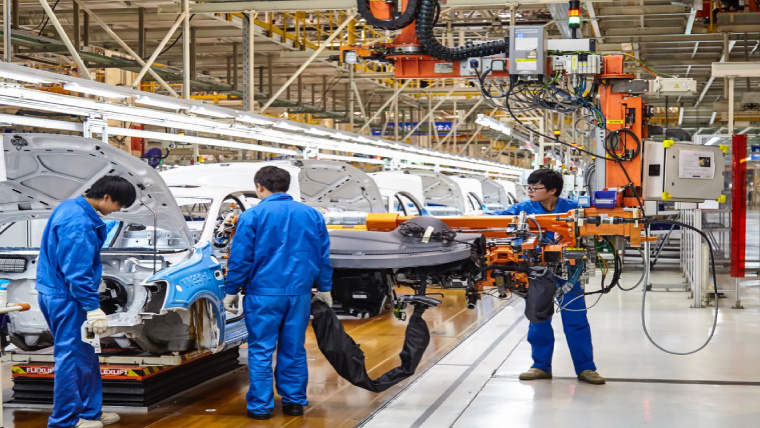
For legacy automakers, accessing this ecosystem offers immediate advantages. It lowers procurement costs and ensures a stable supply of critical components. Additionally, such partnerships reduce the need for significant capital investments in battery manufacturing and related infrastructure. Rather than building parallel supply chains across regions, legacy OEMs can leverage existing Chinese gigafactories and logistics networks. This not only lowers financial risk but also enables faster scalability, particularly during periods of global supply chain volatility.
Accelerating Product Development and Time to Market
Chinese OEMs have excelled in consistently developing new platforms and bringing vehicles to market much faster than traditional automakers. In many cases, they have compressed platform development cycles to around 1.5–2 years, compared with 3.5–4.5 years for legacy OEMs.
This advantage stems from purpose-built EV platforms and modular software architectures, along with rapid iteration cycles. Features such as driver assistance systems and charging capabilities are continuously refined. Simultaneously, in-car digital experiences are enhanced at a pace that legacy players often struggle to match.
By partnering with Chinese firms, legacy automakers can shrink development timelines. Leveraging already validated platforms enables faster testing and deployment, resulting in a more efficient product development process and quicker time to market for both EVs and hybrids.
Expanding Market Access Through Shared Capabilities
North American and European automakers are working to regain lost ground in China while expanding into cost-sensitive emerging markets. At the same time, Chinese OEMs are seeking entry into mature markets across Europe and North America.
Partnerships create mutual advantages in this context. Legacy players can use cost-competitive Chinese platforms to develop affordable EVs for price-sensitive regions. In turn, Chinese OEMs benefit from the established distribution networks, brand recognition, and regulatory expertise of legacy automakers.
As both sides pursue global expansion, joint ventures and cross-brand models reduce the need for large-scale independent investments in new markets. Instead, partners can share distribution networks and service infrastructure. This collaborative approach also supports localized production and facilitates efficient adaptation to regional requirements.
Emerging Collaboration Models
A series of recent partnerships highlights the depth and breadth of collaboration between legacy automakers and Chinese OEMs. For example, Volkswagen’s collaboration with XPeng focuses on developing VW-branded EVs for the Chinese market using XPeng’s platform and software architecture. This enables Volkswagen to strengthen its digital capabilities while maintaining its presence in a highly competitive market. For XPeng, the partnership provides access to Volkswagen’s scale in R&D, manufacturing, and regulatory expertise.
Ford’s discussions with BYD on battery sourcing highlight another dimension of collaboration. By leveraging BYD’s cost-efficient battery manufacturing and LFP cell expertise, Ford aims to improve cost efficiency and accelerate the development of its hybrid portfolio, particularly outside the US.
Stellantis has partnered with Leapmotor to form Leapmotor International. This joint venture is launching affordable models such as the T03 and C10 in Europe, combining Leapmotor’s platforms with Stellantis’ sales, service, and distribution network. The partnership allows Stellantis to scale its EV portfolio at lower price points, while Leapmotor gains immediate access to European markets without the need for heavy capital investment.
Similarly, Toyota’s collaboration with BYD focuses on co-developing EVs under Toyota’s bZ brand for China. This partnership combines Toyota’s engineering strength and brand equity with BYD’s battery and platform capabilities, shortening time to market while enhancing product competitiveness.
Renault’s engagement with BYD centers on battery technology transfer and potential joint EV platform development for Europe and Latin America. By leveraging proven battery designs, Renault can reduce development risk and capital expenditure while maintaining competitive performance.
Meanwhile, early discussions between Ford and Geely on autonomous driving indicate the next phase of collaboration, where software and advanced mobility technologies take center stage.
Strategic Priorities in 2026
In 2026, co-development of scalable platforms, SDV architectures, and next-generation battery technologies will be central to reducing both costs and development timelines. This integrated approach will enable automakers to scale more quickly and accelerate commercialization while maintaining flexibility across markets.
Regional expansion will remain another key focus with OEMs turning to partnerships to localize production, improve market access, and enhance cost efficiency. For instance, the Chery-Volkswagen joint venture aims to bypass tariffs and benefit from local incentives.
Such collaborations are becoming increasingly attractive as a way to navigate complex regulatory environments and respond to intensifying competition. Crucially, they allow partners to share financial and regulatory risks as part of the broader transition to electrification.
At the same time, managing intellectual property and ensuring technological independence will remain critical. Successful partnerships will need to balance openness with safeguards, ensuring mutual benefit without compromising long-term strategic control.