Anirban Mukherji, CEO & Founder, miniOrange, in conversation with Rajarshi Dhar, Associate Director, Global Security Advisory, Frost & Sullivan, at the Cybersec India Expo 2026.
Download This Transformation Growth Leadership Discussion with Anirban Mukherji
AI adoption is accelerating across enterprises, creating new challenges around governance, privacy, ransomware protection, and data security. As digital ecosystems become more complex, organizations are looking beyond standalone security tools and adopting more connected approaches to cybersecurity.
Businesses are increasingly prioritizing identity-centric security, AI visibility, endpoint protection, and stronger control over critical infrastructure and sensitive data. Growing interest in digital sovereignty and localized AI deployment is also influencing long-term cybersecurity strategies across global markets.
In this Transformational Growth Leadership discussion, Anirban Mukherji shares how miniOrange evolved from a small bootstrap startup into a global cybersecurity company serving over 30,000 customers across sixty countries. Drawing on the company’s deep focus on identity security, AI governance, privacy, and on-prem AI innovation, he discusses how cybersecurity platforms must evolve to support the next era of AI-driven enterprise transformation.
“The biggest trend of them all is AI adoption, but organizations also need governance, observability, privacy, and security built around it.”
— Anirban Mukherji, CEO & Founder, miniOrange
From a Four-person Startup to a Global Cybersecurity Platform
Rajarshi Dhar: miniOrange started as a bootstrap company and has grown significantly over the years. Can you walk us through the company’s journey and how the platform evolved?
Anirban Mukherji: miniOrange started in October 2012 with just four people working out of a small office. We were inspired by companies like Apple and Microsoft, which is also how the name “miniOrange” originated.
Initially, we started with small marketplace products and plugins. Within a few months, we realized customers in markets like the United States were already adopting our products. That early traction gave us confidence that there was a larger global opportunity ahead.
Because my own background has always been in identity and access management, we gradually expanded beyond plugins and began building our own identity provider platform. We approached identity as a hub-and-spoke problem. While many large vendors focused heavily on the “hub,” we initially focused on the “spoke” side by building thousands of integrations across different platforms and applications.
From there, the platform evolved organically. After securing user identities, we expanded into administrator security through our PAM capabilities. Then we moved into identity governance and administration. As customers increasingly demanded trusted device management and data protection, we built mobile device management, unified endpoint management, Data Loss Prevention (DLP), and Cloud Access Security Broker (CASB) capabilities.
More recently, the rise of AI adoption and data privacy regulations created another major shift. Organizations began adopting AI rapidly without fully considering governance, security, and observability. That led us to develop AI governance and observability modules that can integrate into different AI environments and agent-based systems. At the same time, the Digital Personal Data Protection (DPDP) law in India accelerated demand for privacy-focused solutions, leading us to expand further into data privacy and compliance management.
Balancing SMB, Mid-market, and Enterprise Customers
Rajarshi Dhar: miniOrange serves SMBs, mid-market companies, and increasingly enterprise customers. How do you balance such diverse customer requirements?
Anirban Mukherji: It is both a major opportunity and a major challenge. One of the biggest advantages of serving SMB customers globally is that they provide visibility into a very wide range of security requirements and market trends. Since we operate across sixty countries, we gain direct insight into how customers across regions such as Latin America, the Middle East, Europe, India, and the United States are thinking about cybersecurity.
At the same time, each segment has very different expectations. SMBs have different pricing requirements, while enterprise customers often demand completely different architectures, scalability models, integrations, governance controls, and deployment approaches.
Over the last few years, we have been investing heavily in both product innovation and traditional go-to-market expansion. Initially, digital marketing played a major role in helping us acquire customers globally. More recently, we have significantly increased our physical presence at conferences, customer events, and partner engagements across India and global markets.
Another major trend helping companies like ours is the growing focus on digital sovereignty. Increasingly, organizations are looking toward trusted, homegrown technology alternatives, especially as geopolitical and regulatory concerns affect global software ecosystems. We are seeing strong demand from organizations looking to replace certain infrastructure components with Indian-developed cybersecurity solutions.
Preparing for the Shift Toward On-prem AI and Agentic Security
Rajarshi Dhar: Where do you see the next major technical or architectural shifts happening within your platform over the next three to five years?
Anirban Mukherji: One major shift we are seeing is around cloud dependency and AI-driven infrastructure. While there has been a very strong movement toward cloud adoption over the last several years, concerns around privacy, security, and AI-related risks are now causing some organizations to reconsider how they deploy sensitive workloads.
At miniOrange, we are investing heavily in on-prem AI innovation. Our vision is to provide customers with AI-enabled appliances that include localized language models, agents, governance capabilities, and observability frameworks directly within their own infrastructure environments.
A key challenge in this model is ensuring that smaller localized AI models maintain high accuracy. That is why reinforcement learning and optimization become extremely important. We are focused on combining smaller AI models, agents, governance controls, and observability into integrated security environments that organizations can trust and control internally.
We are also seeing widespread “shadow AI” adoption across enterprises, where employees are already using AI systems independently without centralized governance. This creates major privacy and cybersecurity concerns because sensitive enterprise data may already be flowing into uncontrolled external AI environments. Our products are being designed specifically to help organizations address those emerging governance challenges.
Enabling Platform-agnostic Identity Security
Rajarshi Dhar: Many organizations still operate complex legacy environments. How does miniOrange approach platform-agnostic identity integration?
Anirban Mukherji: Most enterprises today already have significant investments in platforms like Oracle, SAP, and other large enterprise ecosystems. Identity security solutions need to integrate into these environments rather than forcing customers to completely rebuild their infrastructure.
For example, Oracle EBS historically depended heavily on Oracle Access Manager for SSO (Single Sign-On) and identity integration. We worked closely on integrations that allowed us to provide our own Oracle EBS identity suite with strong interoperability and certification support.
Our overall strategy is to continuously identify high-value enterprise integration use cases globally, prioritize them, and release modular integrations that simplify adoption for customers. That flexibility is essential because no two customer environments are exactly the same.
Competing Through Innovation, Support, and Long-term Commitment
Rajarshi Dhar: The identity and access management market is highly competitive. What differentiates miniOrange from other global players?
Anirban Mukherji: Identity and access management is an extremely crowded market globally, but we believe differentiation comes from execution, persistence, and customer commitment rather than simply being first to market.
From a product standpoint, our focus has been on achieving strong feature parity with leading global vendors while delivering exceptional customer support. We provide 24×7 support, and customers consistently recognize that responsiveness and accessibility.
One of our biggest strengths is organizational continuity. Many global technology companies experience frequent turnover across leadership and engineering teams after scaling or going public. In our case, many core team members have been with the company for over a decade. That continuity helps us maintain product quality, preserve institutional knowledge, and stay deeply aligned with customer expectations.
For us, customer retention is the ultimate validation. Winning a customer is only the beginning. Every quarter, we need to continue delivering value so that customers feel confident renewing and growing with us year after year.
India’s Emerging Role in Global AI and Cybersecurity
Rajarshi Dhar: Looking ahead, what major transformation do you believe will reshape cybersecurity over the next five years?
Anirban Mukherji: I strongly believe India will become one of the global backbones of AI and cybersecurity innovation. The country has both the intent and the technical ecosystem necessary to drive this transformation forward.
India already has an enormous software engineering ecosystem, and global technology companies are increasingly investing in India to access that talent. At the same time, the country is creating strong momentum around AI, cybersecurity, and digital infrastructure development.
Just as certain countries became globally recognized for manufacturing, I believe India has the potential to become globally recognized for AI and cybersecurity innovation. That shift could have significant implications not only for India’s technology ecosystem, but also for its broader economic growth and global positioning.
Giving Back Through Healthcare, Sports, and Community Development
Rajarshi Dhar: Beyond business, how is miniOrange contributing back to society and the broader community?
Anirban Mukherji: Giving back to society is personally very important to me. One major initiative we support is sports development. I come from a competitive swimming and endurance sports background myself, and today we run a sports academy supporting athletes from across India, including athletes connected with the Indian Army. Many of them are now competing and winning medals at national and international levels.
We also established a hospital in my mother’s name around Pune, where approximately two hundred patients are treated every day free of cost. The hospital provides medical consultations, diagnostics, testing, and medicines for underserved communities.
In addition, our legal team works with local organizations to support undertrial prisoners who may have received bail but cannot afford the process required to leave prison. We also run large-scale food distribution initiatives using surplus food generated internally through our employee cafeterias.
For us, building a successful company also means creating long-term impact within the broader community and helping create opportunities for future generations

About Anirban Mukherji
Mr. Anirban Mukherji is the Founder and CEO of miniOrange, bringing over three decades of experience in architecting, designing, and delivering advanced cybersecurity solutions. He earned his Engineering degree from M.B.M. University and later pursued advanced certifications in Security and Cryptography from Boston University.
Before founding miniOrange, Mr. Mukherji held leadership roles at IBM and RSA Security, where he gained extensive experience in identity, access, and data security. Recognized for his deep expertise in cybersecurity, he has played a significant role in driving innovation across the security landscape.
Since establishing miniOrange, he built and scaled high-performing teams across India, transforming the company into a global cybersecurity provider. Today, miniOrange serves more than 30,000 customers worldwide with a team of over 800 professionals, delivering solutions across identity and access management (IAM), authentication, and enterprise security, Privileged Access Management (PAM), Identity Governance & Administration (IGA), Data Privacy (DPDP), Data Loss Prevention (DLP), Moblie Device Management (MDM), Cloud Access Security Broker (CASB), AI Security
Rajarshi Dhar serves as Associate Director for Global Security Advisory at Frost & Sullivan and is the subject matter expert for the Security Advisory practice across the Middle East, Africa, and South Asia. He specializes in cybersecurity, cloud technologies, and digital transformation, with expertise spanning growth consulting, market intelligence, and strategic advisory. Rajarshi holds an MBA in Marketing from the New Delhi Institute of Management and a Bachelor’s degree in Electronics & Communication Engineering from North Maharashtra University.
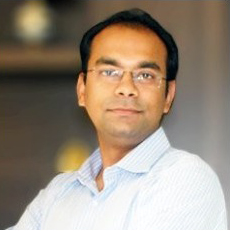
About Rajarshi Dhar
Ready to Lead the Transformation?
- Book a Growth Strategy Session: Align your growth roadmap with Frost & Sullivan’s visionary Growth Pipeline™ Dialog.
- Engage with Growth Experts: Co-design AI-enabled, data-driven operating models that scale industry-specific and commercial impact.
- Share Your Transformation Story: Position your organization as a transformation leader through Frost & Sullivan’s Transformational Growth Leadership platform.
- Join the Growth Council: Collaborate with industry leaders shaping the future of your ecosystem.
- Nominate for the Best Practices Recognition: Be recognized for excellence in growth strategy, execution, and customer impact.
- Demonstrate Industry Positioning on the Frost Radar™: Benchmark your growth performance and innovation strength against industry competitors.
- Activate Brand & Demand Growth: Accelerate awareness, engagement, and revenue growth through integrated brand and demand generation strategies.
Annexure: Advancing Identity, Privacy, and AI Governance for the Next Era of Cybersecurity
As organizations accelerate AI adoption and digital transformation, cybersecurity strategies are becoming more integrated and intelligence-driven. Enterprises are moving beyond standalone identity management toward connected ecosystems spanning identity security, AI governance, privacy, endpoint protection, and observability. Growing concerns around cloud dependency, shadow AI, ransomware, and data privacy are also reshaping how organizations approach cybersecurity and trusted infrastructure strategies.
To support organizations navigating this transformation, Frost & Sullivan provides forward-looking intelligence across identity security, AI governance, privacy transformation, and enterprise cybersecurity innovation, including:
📌 The Role of Identity Threat Detection and Response in Holistic Identity Security
📌 Growth Opportunities in AI Observability, Enterprise AI Data Integration, Edge AI-driven IoT
📌 Managed Detection and Response, Global, 2025–2028
📌 Frost Radar™: OT Cybersecurity Solutions, 2025
📌 Growth Opportunities in Network Security, Ransomware Defense, Agentic Security
Together, these analyses reinforce the central themes explored in this Transformational Growth Leadership discussion: identity-centric security, AI governance, privacy-first cybersecurity, platform flexibility, and the future evolution of trusted digital infrastructure.