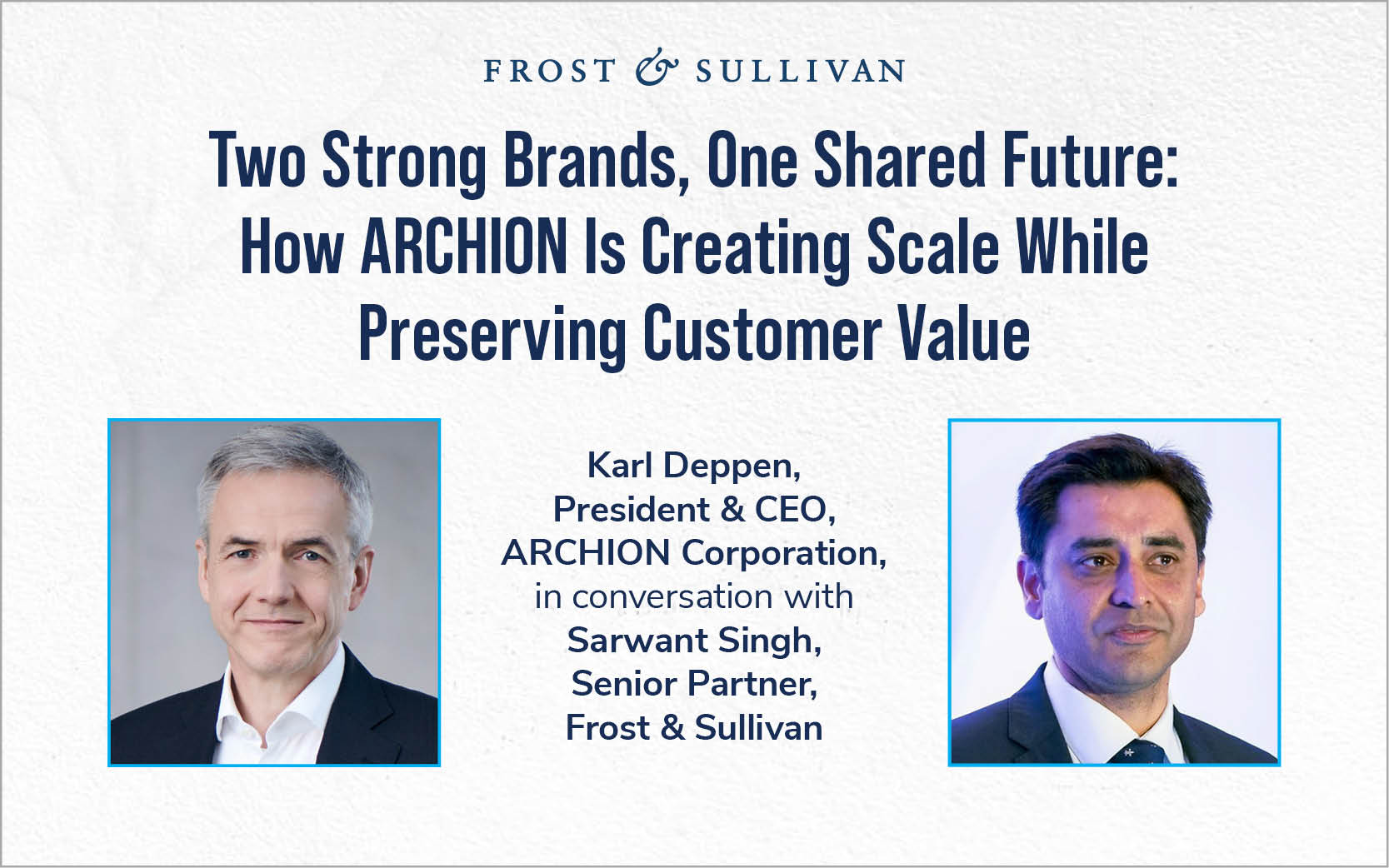
Karl Deppen, President & CEO, ARCHION Corporation, in conversation with Sarwant Singh, Senior Partner, Frost & Sullivan
Download this Transformational Growth Leadership discussion with Karl Deppen
For Karl Deppen, bringing FUSO and Hino together under ARCHION is not about creating one brand. It is about combining the strengths of two established commercial vehicle brands while creating the scale and synergies needed to compete and invest for the future. Both brands have strong reputations, loyal customers, and established distributor relationships, and ARCHION’s structure is designed to preserve those strengths while creating opportunities to integrate where customers do not require differentiation.
That strategy is already translating into changes across the organization, from a lean corporate structure and vehicle-platform integration to plant consolidation and a shared medium-duty platform in Japan. At the same time, ARCHION is investing in software-defined vehicles (SDVs), autonomous driving capabilities, electrification, and partnerships to strengthen its product portfolio and customer proposition.
In this Transformational Growth Leadership discussion, Sarwant Singh, Senior Partner, Frost & Sullivan, speaks with Karl about ARCHION’s operating model, the strategic rationale behind keeping FUSO and Hino distinct, platform integration, software-defined vehicles, autonomous trucks, competitive pressure from Chinese OEMs, customer value, and the partnerships shaping the group’s next phase of growth.
“Ultimately to give the customer a better, stronger product. That’s the ultimate goal. We need to make sure we strengthen our product and give both brands a stronger, more distinct offering for their respective markets and customers.”
— Karl Deppen, President & CEO, ARCHION Corporation
Building Synergy Without Losing Brand Strength
Sarwant Singh: Karl, ARCHION brings together two very established brands, FUSO and Hino. How have you structured the organization to capture the synergies while preserving what makes each brand distinctive?
Karl Deppen: It’s been an incredible journey, integrating the two strong brands. We always had a clear vision: we want to maintain the two strong brands, FUSO and Hino. Both enjoy very good market reputations, very loyal customer bases, and a very strong landscape of partnerships with distributors around the world. So, we always considered that a true value to the company, and wanted to keep the brand profiles crisp, clear, and distinct, that’s why we kept those two separate.
Nevertheless, we needed an umbrella to move fast on integration, and that’s how we created the current setup. That said, we are now looking at how we can generate the synergies we need, to have a more efficient overall organization, a more cost-competitive product, and to justify the investments we need to make for the future. That’s a clear strategy, and the synergy potential is there. We have a very similar product lineup, which holds a lot of opportunity. We also see a lot of opportunity in our footprint, because we have a very far-reaching international footprint, but most of our brands aren’t fully utilizing it.
That’s why we have already announced that in Japan we will reduce from six plants to three. We have also started integrating our medium-duty truck platform for Japan, consolidating to one platform, starting from the end of this year. We are making sure we advance swiftly wherever we can, and we have a whole pipeline of further ideas for creating better value for our stakeholders.
A Lean Corporate Model for Integration
Sarwant Singh: You have created an umbrella structure for the two brands. What role does the corporate organization play, and where does the integration work sit?”
Karl Deppen: First of all, we created a very small, lean holding company. That was always the plan. We wanted a very small holding function focused on things like target setting, financial target setting, capital allocation, and key strategy elements. We also have a Group CTO responsible for coordinating vehicle platform integration.
That’s a key point because vehicle platform integration is an important enabler for reducing complexity, enhancing scale, and making sure we have a stronger, more competitive product for the customer.
Finding the Right Balance Between Commonality and Differentiation
Sarwant Singh: Platform strategy can be difficult when markets have very different requirements. How do you approach common platforms across FUSO and Hino?
Karl Deppen: It isn’t any easier on the truck side than the bus side. I think it’s actually even more difficult. But the key point is that trucks are very different from the passenger car industry. When a passenger car company talks about a common platform, they usually mean throwing everything away and investing a ton to build everything new.
We go a different way because a truck, in general, is far more modular. So, we believe that today, on a light-duty truck, the customer isn’t especially concerned about whether it’s a distinct FUSO rear axle, a Hino rear axle, or a shared one.
There are certain features where I believe the customer just isn’t that focused on the distinction, and there are other areas where the customer cares a lot. We want to distinguish between those two. Wherever the customer doesn’t feel a distinct difference, that’s an opportunity to capture synergy. Wherever the customer expects distinct differentiation, we want to maintain that.
That already gives us a lot of room for improvement on the vehicle side. Cab, exterior, interior, engine, transmission, it’s a huge space of potential opportunity. Some things we will keep different, and in others we see an opportunity to integrate, little by little.
Reducing Complexity Across Different Markets
Sarwant Singh: Reducing complexity is clearly an important part of the integration strategy. How significant is that opportunity when you look at different emissions, safety, and fuel requirements across markets?
Karl Deppen: I don’t think powertrains are really the relevant distinction. I think the advantage in the ICE world is that we have this constant change in emissions standards, Euro 3, 4, 5, 6, 7, and it goes beyond emissions into safety standards too. So, the complexity in the drivetrain is tremendous, and it keeps getting broader because some markets keep advancing toward Euro 7, while others don’t move at all.
In the past, you had a spread from Euro 0 to Euro 4. Now you have Euro 0 to Euro 7. And then you have markets like Southeast Asia, including Indonesia, wanting B50, which is 50% biodiesel. So, the proliferation of drivetrain options keeps growing, and that complexity creates a lot of hassle and variation.
We want to reduce that, to make sure we keep investing in the future rather than just adjusting for individual markets. That’s where we see the opportunity.
Software-defined Trucks: Building the Journey Step by Step
Sarwant Singh: We have discussed software-defined trucks before, and ARCHION has been working on this for some time. Where are you now, and how are you approaching SDVs across the brands?
Karl Deppen: Yes, that’s of course one of the platforms we’re looking at, also from a vehicle DNA perspective. There’s a lot of talk about SDVs, but it starts with the fact that everybody means something different when they say “SDV.”
We see it coming gradually, and we already have the first steps in the vehicle. We are the only ones in Japan who can do flashing over the air, and we can already do it with Super Great on the FUSO side. But this still isn’t a fully-fledged SDV, that’s very clear. Still, you need to start somewhere and gain the experience.
We have learned how to run this, how to flash over the air, and how to safeguard the whole process for the customer. There’s more to come. This is a journey we are on.
What we are also taking on with a combined platform is how we can scale it across the platform, because that’s one of the enablers that lets you detach the “intelligence” of the truck from the segment.
In the past, we had a dedicated architecture for light-duty, medium-duty, and heavy-duty. With a full-blown SDV in the future, you will be able to run it across all the segments. That’s another big opportunity we see.
Sarwant Singh: And when do you think we will start seeing SDV trucks on the road?
Karl Deppen: Again, it always depends on how you define it. I think we will have the first elements on the road, in customer hands, but it will be a few more years until we see a full-blown rollout. Toward the end of the decade is probably a safer bet.
Competing Through Scale and the Full Customer Package
Sarwant Singh: There is a lot of discussion around Chinese OEMs entering new commercial vehicle markets. How do you see the competitive challenge, and where does ARCHION need to differentiate?
Karl Deppen: Well, first of all, that’s part of why we built ARCHION, because we always said competition is coming. We saw it in Asia many years ago already, even before Europe was ready for it. That’s why we created ARCHION to have better scale, because we know the Chinese competitors have greater scale, and scale still matters in our industry.
It’s also very clear that they come in with very aggressive costs. But competition is more than just cost. They are very fast with technology, and they have clear determination.
That said, in many markets, our strengths in service support, serviceability, and customer support for vehicle uptime are things we feel we’re still competing very well on. So, it’s not only about price.
Why Uptime, Service, and Residual Value Matter
Sarwant Singh: When a customer is looking at the total value of a truck, rather than just the purchase price, what are the factors that really make a difference?
Karl Deppen: For the customer, what matters is keeping the truck up and running. In Asia, take Indonesia, for example. With 17,000 islands, it’s not easy to build a service network that can properly support your vehicle. It’s about parts availability and skilled mechanics who know what to do when a truck has a problem, so it can get back on the road quickly.
The third factor is residual value. Customers today know that when they buy a FUSO or a Hino truck, there’s a value attached to that vehicle six years down the road.
For an unknown brand with no legacy and no parts availability, that’s all a big question mark. That’s where I believe we still have a competitive edge, and we want to maintain and strengthen it. We want to improve our competitiveness and work on our cost, but it’s the entire package.
Customers know it’s not just about the lowest price. If you are running long-haul, you need a full support package that justifies the investment, and that’s where we want to keep excelling.
Autonomy: Preparing the Vehicle While the Ecosystem Develops
Sarwant Singh: Karl, where does ARCHION stand today on autonomous trucks, and what needs to be in place before the technology can scale?
Karl Deppen: Daimler Truck is doing a lot in the U.S., as you know, with Torc. For ARCHION, we have been working with key companies in Japan. We have Hino trucks and FUSO trucks on the road in autonomous applications, and we are also part of government-funded projects to put more vehicles on the road. This is still, I would say, in the trial or proof-of-concept phase.
There’s a reason the U.S. is so advanced. Actually, it’s not really the whole U.S.; it’s California, Texas, and New Mexico specifically, for various reasons related to weather and climate conditions. Japan is more complex, weather-wise, with heavy rain, fog, and snow, and that’s still a limitation for autonomous trucks.
That’s why we are continuing development to have a redundant chassis ready. That’s a precondition we need to safeguard on the vehicle side. That’s our capability, and we will continue working with software companies to provide the rest. We don’t see the software stack as part of our own capability.
There are a lot of companies and a lot of money flowing into this space. We want to be ready, have the redundant chassis in place, and then cooperate with those partners as we go.
Why Autonomous Trucks Are Different from Robo-taxis
Sarwant Singh: We often hear about autonomous vehicles being deployed through fleet-based models. Could a similar approach work for commercial trucks?
Karl Deppen: It all sounds nice on paper, but I have a couple of thoughts on that, and of course, nobody really knows what’s right.
For robo-taxis, it’s a relatively simple use case. Whether the taxi shows up with a driver or without one, you open the door, get in, enter where you want to go, and off you go. For trucks, the driver has many different responsibilities. It starts with a basic vehicle inspection before the journey: is everything working, and is everything safe? Then there’s usually a lot of activity around loading and unloading. That’s the piece where you would have to change the entire flow of the business and how it is organized.
It takes more than just getting 200 trucks and starting the business. The break-even point will take longer because it requires more change across the value chain. And the other thing is that we put safety first. For trucks, we still believe it’s a different animal compared with robo-taxis.
Robo-taxis typically operate at relatively low average speeds in cities like Tokyo or Los Angeles. With a truck, you’re talking about 80 kilometres an hour and 30 tonnes. If anything goes wrong, you don’t want to be anywhere near it.
Sarwant Singh: So, while the opportunity is there, you see the rollout varying by region and requiring a more cautious approach?
Karl Deppen: Absolutely. This isn’t against it. We just have to be a bit more cautious about full-blown market-access expectations. I know the U.S. is advancing quite rapidly, but for other regions, the geography and weather conditions are different, so we have to assess those factors carefully.
For us, it’s important that we have the capability and redundancy, that we know what we’re doing, and that we work with partners to gain experience. But it will take a bit longer.
Serving Different Markets with the Right Truck
Sarwant Singh: ARCHION already has different value-oriented products across markets. How do you balance cost competitiveness with the specific needs of customers in each market?
Karl Deppen: I would say our group already has a lot of value trucks in the market. If you look at Indonesia, those trucks look completely different from what we sell in Japan, for good reason, and they serve the customer really well. We see the same in Thailand, Central America, and the Middle East. We already have a lot of those products.
You can always argue that the Chinese are cheaper, and that’s why we need to improve our competitiveness. On the other hand, there’s also a brand value attached to us; our service network, parts availability, and residual values. These are all elements where customers see the benefit of working with a trusted brand and the opportunities that come with it.
A Brand Is a Promise
Sarwant Singh: And when customers think about FUSO and Hino, what do you want those brands to stand for?
Karl Deppen: I think our task, our challenge, is to give the customer what they need in their respective market. This is why both FUSO and Hino have been very good at distinguishing what each market needs. It’s why we’re market leader in Indonesia for light and medium duty, because we know what those customers want.
We know it’s different from Japan, different from Europe, and different from other markets, but we know what they need. The same is true in Thailand, where Hino is very strong, and in other markets where we have very good, long standing relationships with our customers.
Of course, there’s always someone who comes in cheaper, so we have to keep working on our costs, more than ever, probably. But a low entry price isn’t the only criterion for a truck customer. This is where we also need to sharpen our brand value, from the network and availability of parts to the reliability of the product.
All of that combined is what distinguishes our brand.
Looking Beyond Legacy
Sarwant Singh: Both FUSO and Hino have long histories. How do you make sure that legacy continues to evolve rather than simply becoming something you rely on?
Karl Deppen: Again, this long-standing legacy, some people say that’s kind of like resting on the past. That’s not the point.
Having a brand with 60, 70, 80 years of success means that brand has always adapted to changing customer needs. Fifty years ago, customer needs were totally different, and the sophistication level of the industry was totally different, but we have evolved along with that. This is why we are today’s zero-emission leader in Japan. Nobody else has that in the market. We have BEVs (battery electric vehicles), we have fuel-cell vehicles in customers’ hands, and we have the eCanter, which you can see downstairs.
The eCanter has accumulated 80 million kilometres in daily operation. We know the uptime works, the customer is happy, and the product is reliable. That differentiates us.
Partnering to Accelerate Electric Bus Development
Sarwant Singh: That brings me to the Foxconn joint venture. What was the strategic rationale behind that partnership?
Karl Deppen: The Foxconn JV? It’s very simple. Foxconn wanted to expand its capabilities. We were looking for a partner for our bus business, and we found there was a good common base. We know the market well, and we know the customers very well.
Foxconn wanted to bring its platform to the electric bus, and we wanted to accelerate our time to market. The market in Japan is too small to justify full, captive in-house development, so we decided to partner up.
Sarwant Singh: Is the partnership limited to Japan?
Karl Deppen: No, it’s for Japan for now, but we are open to doing it in other markets too. So far, we haven’t made too much noise about it. We want to get Japan right first, then expand from there.
Closing Reflection: Two Brands, One Direction
ARCHION’s strategy, as described by Karl Deppen, is built around a deliberate balance: preserving the strengths of FUSO and Hino while integrating where customers do not require differentiation. Platform integration, shared capabilities, and greater scale are helping the company reduce complexity while strengthening the products both brands bring to their respective customers.
That approach extends beyond vehicle platforms. SDVs, autonomous driving, electrification, and strategic partnerships are creating new opportunities, while competition and cost pressures are raising expectations across the commercial vehicle industry.
For Karl, however, the foundation remains the customer. A truck needs to keep running, have the right service and parts support, retain value, and deliver what customers need in each market. The objective is not simply to create scale, but to use that scale to strengthen the product and build on the trust FUSO and Hino have established over decades.
For ARCHION, the path forward is about knowing where to integrate, where to differentiate, and how to use both to create greater value for customers.

About Karl Deppen
Karl Deppen is President & CEO of ARCHION Corporation, the group bringing together FUSO and Hino under a shared structure. He is leading the integration of the two commercial vehicle businesses, with a focus on capturing scale and synergies while preserving the distinct strengths of both brands.
With more than 30 years of experience across Daimler and Daimler Truck, Karl has held senior leadership roles spanning commercial vehicles, operations, finance, procurement, and international business. Before joining ARCHION, he served as President & CEO of Mitsubishi Fuso Truck and Bus Corporation and Head of Daimler Truck Asia.
Sarwant Singh is a Senior Partner at Frost & Sullivan, where he works with business leaders on transformational growth, emerging technologies, and strategies for navigating changes across industries. He brings extensive experience advising organizations on growth opportunities, business transformation, and the impact of technological and industry shifts on future business models.
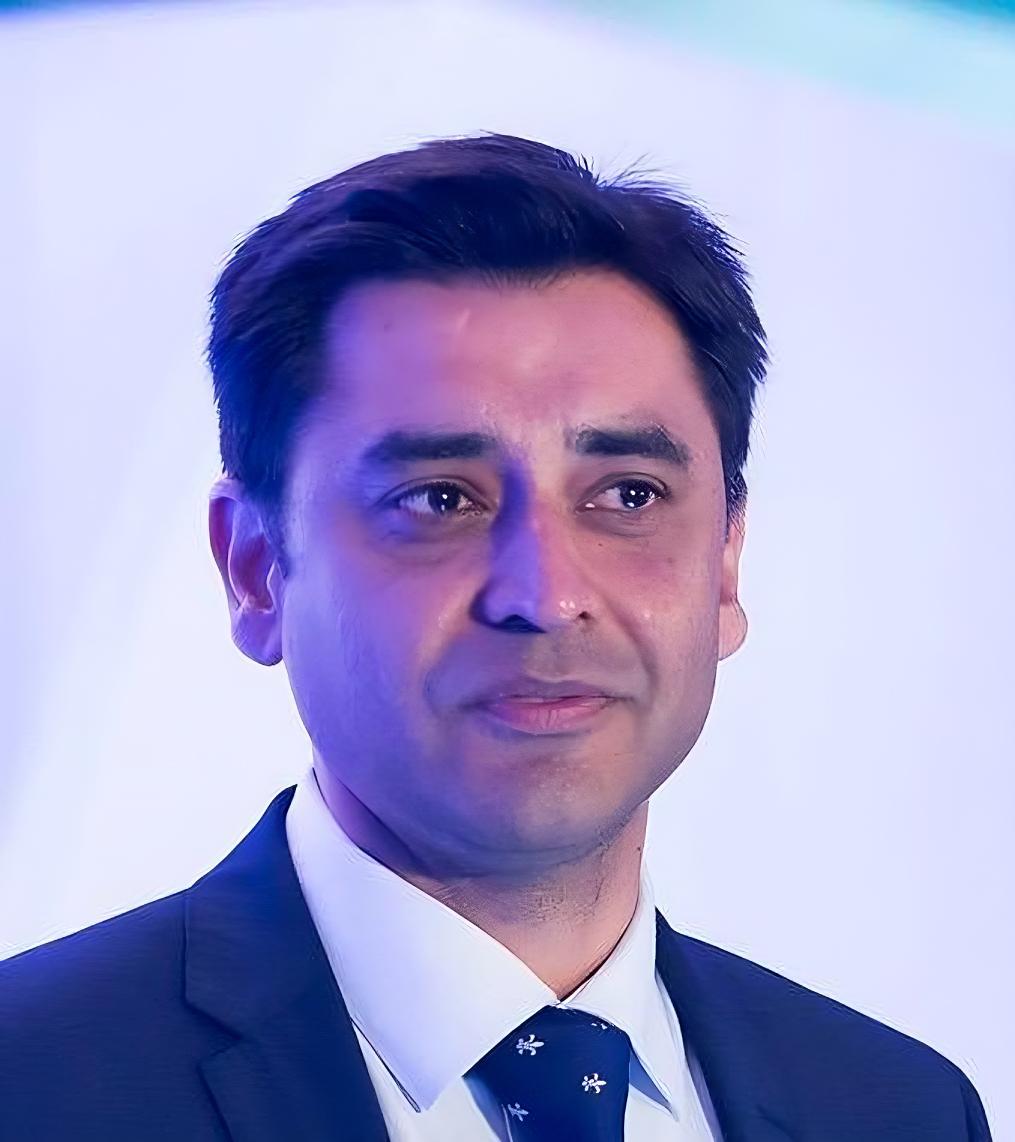
About Sarwant Singh
Ready to Lead the Transformation?
- Schedule a Growth Strategy Dialog: Align your growth roadmap with Frost & Sullivan’s Visionary Growth Pipeline™ Dialog.
- Engage with Growth Experts: Co-design AI-enabled, data-driven operating models that scale industry-specific and commercial impact.
- Showcase Your Transformational Leadership: Position your organization as a transformation leader through Frost & Sullivan’s Transformational Growth Leadership platform.
- Join the Growth Council: Collaborate with industry leaders shaping the future of your ecosystem.
- Explore Best Practices Recognition: Be recognized for excellence in growth strategy, execution, and customer impact.
- Benchmark Your Industry Positioning on the Frost Radar™: Benchmark your growth performance and innovation strength against industry competitors.
- Tell Your Story: Accelerate awareness, engagement, and revenue growth through integrated brand and demand generation strategies.
Appendix: Shaping the Future of Commercial Vehicles
-
Commercial vehicle manufacturers are navigating simultaneous shifts in electrification, software-defined vehicles, connectivity, autonomous driving, and evolving customer requirements. These changes are also reshaping vehicle platforms, manufacturing strategies, service models, and the technologies needed to support vehicle uptime.
To support leaders navigating these shifts, Frost & Sullivan provides analysis across commercial vehicles, connected transportation, electrification, autonomous driving, SDVs, and mobility technologies, including:
📌 Global Connected Vehicle Market Growth Opportunities for 2026
📌 Growth Opportunities in the Global Connected Truck Telematics Market, 2026
📌 High-traffic Truck Charging Infrastructure Revenue Opportunities, India, 2026–2041
These analyses complement the themes explored in this discussion, including connected vehicles, truck telematics, software-defined vehicles, electrification, charging infrastructure, autonomous driving, and the evolving technology requirements of commercial vehicle manufacturers.