Download Frost & Sullivan’s Transformational Growth Leadership Discussion with Changming Liu, Chief Executive Officer, Stellar Cyber
Changming Liu, CEO, Stellar Cyber, in conversation with Jarad Carleton, Global Program Leader, Cybersecurity, Frost & Sullivan
As cyber threats escalate and security teams face growing data complexity, one company is bringing clarity to the chaos. In this exclusive Transformational Growth Leadership (TGL) discussion, Changming Liu, CEO of Stellar Cyber, speaks with Jarad Carleton, Global Program Leader for Cybersecurity at Frost & Sullivan, about how Multi-Layer AI™, open API-driven platforms, and human-in-the-loop automation are redefining how modern Security Operations Centers (SOCs) detect, investigate, triage and respond to threats — faster and smarter than ever before.
“Security shouldn’t be about managing chaos — it should be about creating clarity. Our mission at Stellar Cyber is to unify and elevate cybersecurity through AI, empowering every defender to see, understand, and act with confidence.”
— Changming Liu, CEO, Stellar Cyber
Transformative Trends: From Chaos to Clarity
Jarad Carleton: Changming, you have seen the evolution of the SOC firsthand. How have these recent technology trends changed what a typical SOC day looks like?
Changming Liu: Just a few years ago, analysts manually correlated alerts across disconnected tools. Today, our Multi-Layer AI automates that workflow — machine learning detects anomalies, Graph ML correlates signals into cases, and Agentic AI triages them automatically. What once took four analysts half a day now takes minutes. Analysts can finally focus on high-value responses instead of manual data wrangling.
Jarad Carleton: Which of these trends do you believe will be most disruptive over the next few years?
Changming Liu: Agentic AI will be the most transformative. Unlike static automation, it enables adaptive playbooks that continuously learn from human feedback. SOCs will evolve from semi-automated to fully autonomous systems, which we call Recursive Agentic AI, that self-optimize over time.
Jarad Carleton: How are customers responding to this shift?
Changming Liu: With both excitement and caution. They are eager for efficiency but careful about giving too much control to automation. That’s why we build human-in-the-loop designs: AI handles scale and speed, while humans make judgment calls.
Challenges & Opportunities: Simplification Through Unification
Jarad Carleton: What’s the first reaction customers have when they experience your platform’s simplicity?
Changming Liu: Disbelief. Moving from six or seven tools to a single interface feels like magic. Once they see all telemetry normalized and auto-correlated into prioritized cases–not alerts, they immediately grasp the value of unifying security operations.
Jarad Carleton: Can you explain what “Multi-Layer AI™” actually is?
Changming Liu: It’s our core intelligence architecture, five layers that work together seamlessly:
- Detection: ML [machine learning] and deep learning for anomaly detection (over 1,000 prebuilt models)
- Correlation: Graph ML links related alerts
- AI Investigator: Natural language reasoning for human-like analysis
- Recursive Agentic AI: Feedback loops that learn and self-tune
- Automated Response Playbooks: Codified best practices for rapid mitigation
Together, these layers turn millions of signals into actionable insights in seconds: no add-ons, no extra licensing.
Jarad Carleton: What’s the biggest misconception about AI in cybersecurity today?
Changming Liu: “GenAI cannot solve detection on its own. Effective defense requires a Full-Cycle AI approach—combining statistical, relational, linguistic, and agentic methods—so each stage of the threat lifecycle is addressed by the right kind of AI.”
Jarad Carleton: How do you help customers along that AI journey?
Changming Liu: “It’s about stepwise trust — we start with enrichment and correlation, then move toward autonomous response. AI can’t act on what it can’t see, so full-stack visibility is essential. Every AI decision is grounded in context, and we make that reasoning transparent, so analysts understand, not just observe.”
Growth Goals: Building the AI-native SOC
Jarad Carleton: What does success look like for Stellar Cyber in five years?
Changming Liu: Success means Stellar Cyber becomes synonymous with AI-native SecOps. We want every MSSP [Managed Security Service Provider] and lean enterprise to see our platform as their operational core: the place where all detection, investigation, and response happen. We already serve one-third of the Top 250 MSSPs. Within five years, we aim to serve them all.
Jarad Carleton: Why focus so much on the mid-market and lean security teams?
Changming Liu: Because they are underserved. They need enterprise-grade capabilities without enterprise complexity. They want automation, not additional headcount, and that’s exactly what our unified design and Multi-Layer AI deliver.
Jarad Carleton: How does connecting MSSPs and enterprises create mutual value?
Changming Liu: MSSPs gain multi-tenant visibility, while enterprises get on-demand expertise. Shared intelligence flows both ways, improving detection and speed. One-third of our enterprise customers now co-manage with MSSPs, that’s collaboration at scale.
Ecosystem Growth: Partnership as a Strategy
Jarad Carleton: Can you share an example of a recent partnership that illustrates your approach?
Changming Liu: Our integrations with SentinelOne, Microsoft Defender, and ESET let MSSPs ingest EDR [Endpoint Detection and Response] telemetry via open APIs [Application Programming Interfaces] and instantly correlate it with network and identity data. Competitors keep this data siloed; we unify it. We also collaborate closely with Netskope and ThreatLocker for cloud and endpoint intelligence.
Jarad Carleton: And how does this translate to outcomes?
Changming Liu: One MSSP cut mean-time-to-detect from six hours to under 20 minutes after activating our agentic playbooks. That’s operational excellence that directly drives business performance.
Jarad Carleton: How do you balance partnerships with your own R&D investments?
Changming Liu: They are symbiotic. About 60% of our roadmap is partner-driven. We invest to make our platform more open and agentic, and that openness attracts more partners in return.
Competitive Strategy: The Unified Brain
Jarad Carleton: How do your customers describe the difference between Stellar Cyber and others?
Changming Liu: They often say, “It feels like one brain instead of ten tools.” Our unified data model and Multi-Layer AI eliminate integration fatigue; analysts get coherence, not chaos.
Jarad Carleton: You started from NDR as a foundation. How has that shaped your strength?
Changming Liu: We started with network visibility — unmatched for detecting lateral movement. Our sensors also act as log aggregators and forwarders, giving us a rich foundation that expands into SIEM [Security Information and Event Management] and our idea of Open XDR [Extended Detection and Response] with seamless integrations with any EDR and identity tool. It’s visibility with context — across network, logs, and endpoints.
Jarad Carleton: Your open model is rare in this market. What value does it bring to MSSPs?
Changming Liu: Freedom. They can integrate any SIEM or EDR, without lock-in. That flexibility boosts margins, speeds onboarding, and lets them say “yes” to every customer scenario.
AI Use Cases: From Assistance to Autonomy
Jarad Carleton: Which AI capabilities resonate most with customers today?
Changming Liu: Our AI-driven Case Manager streamlines investigations end to end — automatically grouping related alerts, summarizing context, and assigning next steps. Analysts can see the full story instantly, cutting time to resolution and keeping focus on what truly matters.
Jarad Carleton: How do you ensure transparency?
Changming Liu: Every AI-generated result includes an explainability trace, showing which data points and weights informed the outcome. We believe explainability equals credibility.
Jarad Carleton: Can you share a real-world outcome?
Changming Liu: One enterprise processing 15 TB of logs per day cut triage time by 85% using our agentic playbooks. What was once an “alert storm” is now a coherent, actionable story.
Innovation Approach: Learning Velocity as a Superpower
Jarad Carleton: How has customer feedback shaped your innovation roadmap?
Changming Liu: Our Recursive Agentic AI started when a customer asked, “Can the system learn from what I ignore?” That question led us to build feedback loops that continuously self-tune based on analyst behavior.
Jarad Carleton: How do you encourage innovation inside Stellar Cyber?
Changming Liu: We measure innovation by learning velocity; how fast we experiment, learn, and adapt. It keeps our team agile, curious, and unafraid to test bold ideas.
Jarad Carleton: What innovation are you most proud of this year?
Changming Liu: Launching Multi-Layer AI™. It’s not a model, it’s an evolving intelligence framework that scales with SOC complexity. It’s redefining what AI means for cybersecurity.
Culture: Open, Fast, and Adaptive
Jarad Carleton: How do your cultural values show up daily?
Changming Liu: We mirror our product philosophy: open, fast, and adaptive. Teams collaborate daily across time zones and functions, just like our AI layers work together in harmony.
Jarad Carleton: Can you share an example?
Changming Liu: During an active ransomware incident, our engineers worked overnight with an MSSP to create a new correlation rule in under 24 hours. That’s the kind of agility we celebrate.
Jarad Carleton: How do you sustain that culture globally?
Changming Liu: Through clarity — shared vision, transparent goals, and celebrating every customer success as a collective win.
Big Message: The Era of Human Augmented Autonomous Cybersecurity
Jarad Carleton: What does “human augmented” look like in practice?
Changming Liu: Human-augmented cybersecurity means AI and analysts working together on a shared foundation of visibility — across network, logs, endpoints, cloud, and identity. Our platform unifies all that data through one intelligent system, so humans guide strategy while AI drives speed and precision.
Jarad Carleton: If you could correct one misconception in cybersecurity today, what would it be?
Changming Liu: That complexity equals protection. In truth, simplification through unification is the most powerful defense.
Jarad Carleton: How is that message resonating with customers?
Changming Liu: Strongly. Lean teams and MSSPs alike are tired of tool sprawl. They want clarity, connected intelligence, and confidence; that’s the value we bring.
Closing Reflection
As cybersecurity races into the era of AI, Stellar Cyber is showing that clarity, not complexity, is the key to resilience. Through its unified open XDR platform and Multi-Layer AI framework, the company is empowering SOCs to evolve from reactive to proactive, transforming cybersecurity into a connected, intelligent ecosystem.
Under Changming Liu’s leadership, Stellar Cyber’s commitment to openness, innovation, and customer success defines it as a true transformational growth leader in global cybersecurity.
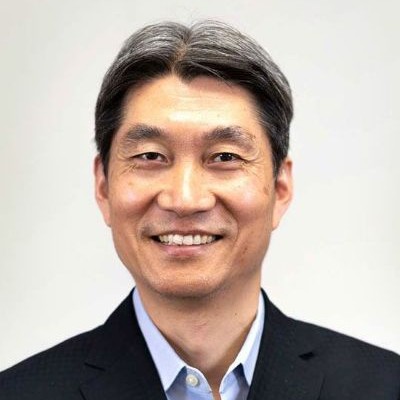
About Changming Liu
Changming Liu has a wealth of leadership, networking, security, big data, and machine learning expertise. Before co-founding Stellar Cyber, he was a co-founder, CTO, and Board Member at Aerohive Networks, a cloud networking provider, which successfully completed an IPO in 2014. Prior to founding Aerohive, Changming was a Distinguished Engineer at Juniper Networks, following the acquisition of NetScreen Technologies. At NetScreen he was a Sr. Manager and key architect in networking and security. He is an author of close to 20 patents and holds a B.Sc. in Computer Science from Tsinghua University in Beijing, and an M.S. in Computer and Electrical Engineering from Queen’s University, Ontario, Canada.
Jarad Carleton is the Global Market Research Director for Cybersecurity at Frost & Sullivan, with over 25 years of experience in market intelligence, thought leadership, business development, go-to-market strategies, team building, and advising CXOs and their strategy teams. His industry expertise spans managed and professional security services, mobile threat defense, digital risk protection, digital trust, IoT security and privacy, encrypted voice and text messaging, breach and attack simulation (BAS), vulnerability management, IT/OT security convergence, and fraud detection and prevention.

About Jarad Carleton
Join the Movement: Driving AI-native Security Transformation
Frost & Sullivan invites cybersecurity leaders to reimagine SOC operations through unification, openness, and AI innovation.
📩 Connect with us to:
✔️ Subscribe to our Growth Opportunity Newsletter
✔️ Join the Growth Council — an exclusive community for innovators
✔️ Share your transformation journey with a global audience
✔️ Engage with our growth experts to explore new growth opportunities
Appendix: Enabling Growth through AI-Powered Cybersecurity
Recommended Frost & Sullivan analyses:
📌 Frost Radar™: Managed Detection and Response, 2025
📌 Extended Detection and Response (XDR), Global, 2024‒2027
📌 Endpoint Security Industry, Global, 2024–2028
📌 Network Detection and Response (NDR) Sector, Global, 2024–2029