The Indian textile industry, a cornerstone of the country’s industrial output and export revenue, has been a key driver of national economic growth. However, its predominantly linear, resource-intensive value chain exerts significant environmental pressures and generates massive amounts of textile waste every year. A sustainable and circular economy transformation of the industry can open growth opportunities that would not only mitigate these impacts but also unlock revenue streams and enhance India’s competitiveness in the global textile market. This position is reflected at the policy level and most recently, reinforced by the Union Budget 2026-27. As a result, targeted growth opportunities are emerging for stakeholders across the textile value chain.
Frost & Sullivan’s 6P Framework for India’s Textile Industry
The 6P Framework for the Future of Sustainability and the Circular Economy outlines a structured and actionable pathway for implementation of sustainable and circular strategies in the Indian textile industry, with the progression from policies to platforms potentially activating scalable growth opportunities.
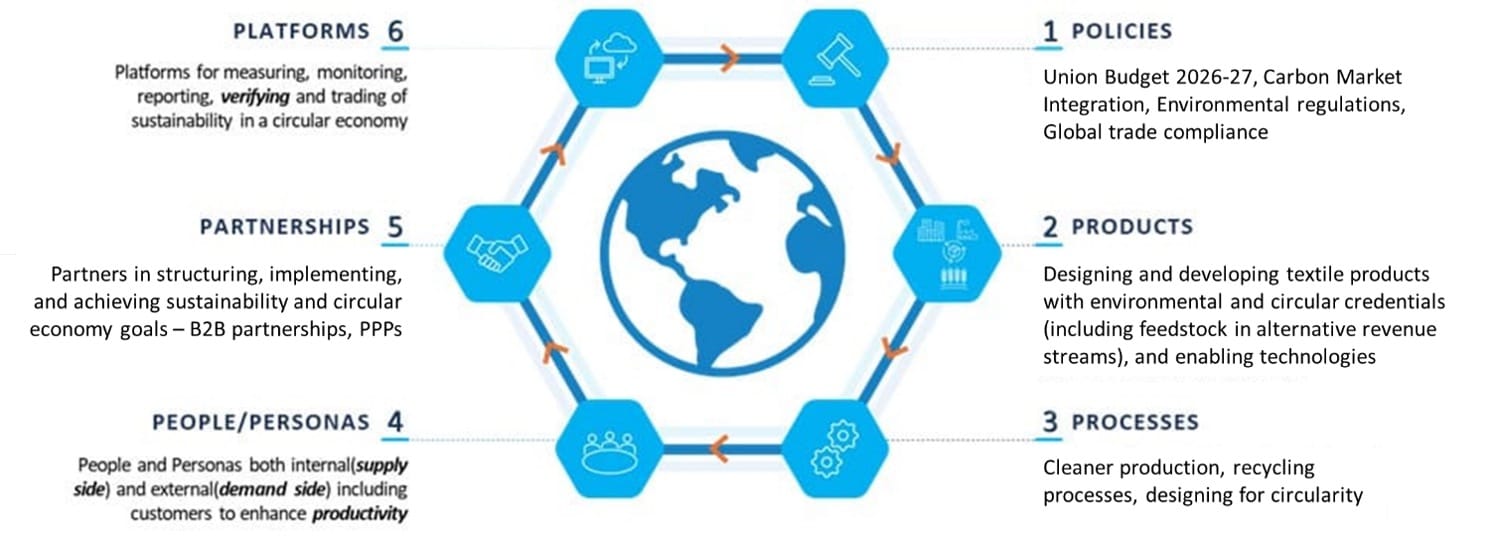
Figure 1: Frost & Sullivan’s 6P Framework
| Union Budget 2026-27 | Carbon Market Integration | Policy Adjacencies in Management of Solid Waste and Wastewater | International Trade and Sustainability Compliance | |
| Policies | Tex-Eco Initiative to integrate sustainability and circular transition across the textile value chain, mega textile parks to be set up in challenge mode, promotion of silk, wool, jute, and manmade fibres through the National Fibre Mission, Tripartite MoU for public procurement of upcycled textile products | Textiles brought under Carbon Credit Trading Scheme |
Solid Waste Management Rules 2026 make provision for textile waste as feedstock for RDF production, with increasing fuel substitution mandates for cement plants and waste-to-energy plants
Textiles classified as a “Highly polluting” industry and subject to various environmental norms
|
EU Ecodesign for Sustainable Products Regulation will require the Indian textile industry to incorporate sustainability and circularity principles and provide data for a new Digital Product Passport
|
| Products |
MMF-based textiles (with possibility of exploring recycled fibres), sustainable fibres, upcycled textile products
|
Tradable carbon credits, emission-reducing technologies |
Recycled textiles, environmental norms-compliant textiles, refuse-derived fuel (RDF) pellets from non-recyclable textile waste, zero liquid discharge technologies, multi effect evaporator systems, and others
|
Traceable textiles, recycled-content and durable, reparable, and designed-for-recycling garments suitable for trade competitiveness |
| Processes | Resource-efficient manufacturing practices; mechanical, chemical, thermo-based recycling of textiles; upcycling of textile waste | Measurement and reporting, and measures for reduction of Scope 1 and Scope 2 emissions | Waste segregation, RDF production process, wastewater recycling and reuse, effluent treatment and continuous effluent quality monitoring, innovative manufacturing techniques for resource optimization |
Collection, (automated) sorting, mechanical recycling, chemical recycling to increase recycled content in textiles; development of designed-for-circularity products
|
|
People/ Personas |
Large manufacturers, MMF producers, export-oriented firms, MSMEs engaged in upcycling | Textile manufacturers, Export firms focused on emissions compliance | Material recovery facilities/textile recovery facilities, ETP Solution/Technology providers, RDF facilities/cement plants /waste-to-energy plants, regulatory authorities |
R&D institutions, recyclers, textile exporters, global brand owners, certification bodies
Millennials and Gen Z buyers are driving the demand for sustainable textiles in EU. |
| Partnerships | The focus on mega parks and the tripartite MoU promotes public-private partnerships and procurement linkages. | Collaboration with technology partners, and between SaaS players and government | Collaboration with recyclers, waste aggregators, ETPs, and monitoring technology providers | Partnerships between brands, retailers, recyclers, with a special focus on MSMEs across the value chain will be needed to integrate circularity practices and manage data requirements for traceability |
| Platforms | Cluster-level data management and traceability platforms. | Monitoring, Reporting, and Verification (MRV) platforms | Digital marketplace for textile waste; platforms for continuous monitoring of pollutants | Reverse logistics systems, traceability tools |
Table 1: Application of the 6P Framework to Growth Opportunities of Sustainability and Circular Economy Transformation in the Indian Textile Industry
Policy-Driven Opportunities Across India’s Textile Value Chain
- Provisions under the Union Budget 2026-27: The Union Budget proposed an integrated programme for the textile sector, with components such as:
- Tex-Eco Initiative – Focused on promoting sustainable and circular textiles and apparels and green manufacturing practices across the textile value chain.
- National Fibre Mission – Aimed at promotion of silk, jute, wool (natural fibres) as well as manmade fibres (MMFs) and new-age fibres. This signals an opportunity to tap into not just sustainable fibres like hemp, bask, etc. but also the emerging opportunity for the use of recycled PET in producing polyester fibre.
- Setting up mega textile parks in challenge mode – These would potentially enhance value-addition across the textile value chain while also enabling efficiencies of scale. Notably, seven integrated textile parks have already been approved under the PM MITRA Scheme, with Rs. 4,445 crore allocated for a period of seven years until 2027-28. The approved projects are expected to incorporate Common Effluent Treatment Plants (CETPs), wastewater recycling systems, scientific waste management facilities, shared utilities, and logistical infrastructure. Along with the potential reduction in environmental impact, the co-location offers a significant opportunity for public-private partnerships, pre-consumer textile waste capture and reuse within the textile parks, integration of shared recycling units, and greater cluster-level traceability (enabling an opportunity for traceability platforms).
The Budget also mentions a tripartite agreement signed between various relevant government bodies, the CircleBack campaign (a collaboration between the Ministry of Textiles and GIZ India), and the Government e-Marketplace Portal, which enables public procurement of upcycled textile products. This can help create a steady revenue stream for micro, small, and medium enterprises (MSMEs) and reduce their dependence on virgin fabrics.
- Policy adjacencies in management of effluents, wastewater, and solid waste
Conventionally, the yarn / textile processing sector includes many effluent or emission-generating processes (e.g., bleaching, dyeing, printing, colouring) and are classified as “Highly polluting” by India’s Central Pollution Control Board (CPCB). The units are mandated to install Online Continuous Effluent/ Emission Monitoring Systems (OCEMS) and to set up and operate Effluent Treatment Plants (ETPs) or Common Effluent Treatment Plants (CETPs). Zero liquid discharge (ZLD) is mandatory in textile units with effluent discharge exceeding 25 m3/day and for all textile units in clusters. The stringent regulatory requirements for the Indian textile industry creates opportunity pathways for investment in wastewater recycling/recovery technologies such as the Multi Effect Evaporator. Partnerships with technology providers for CPCB-compliant monitoring systems, providers of manufacturing technologies like dope dyeing and digital printing and suppliers of raw materials like natural dyes are a significant growth opportunity for the sustainable transformation of India’s textile industry.
More recently, India’s Solid Waste Management Rules 2026 (effective 1st of April 2026) mandate a progressive increase in fuel substitution in cement and waste-to-energy industries with refuse-derived fuel (RDF). Non-recyclable, high calorific value textile in municipal solid waste can be shredded and dehydrated to produce RDF–a waste management strategy and a potential revenue stream for waste producers. Taking a cue from this development, the textile industry may explore partnership opportunities with RDF plants to convert pre-consumer textile waste that meets the quality and pre-processing requirements into RDF.
- Integration in domestic carbon markets
In early 2026, 173 textile units across various sub-sectors of the textile value chain in the country were brought under the ambit of India’s Carbon Credit Trading Scheme (CCTS) and assigned Greenhouse Gas Emission Intensity (GGI) targets. These obligated units would be required to report their Scope 1 and 2 emissions. This development signals a timely opportunity to invest in energy-efficient systems such as rooftop solar energy, battery energy storage systems (BESS), waste heat recovery systems, and electric technologies to reduce emissions and access new revenue streams through carbon credits. New opportunities can also open for technology players in carbon monitoring and reporting systems.
- Sustainability compliance for international trade
The India-EU Free Trade Agreement, announced in January 2026, is expected to greatly enhance access of the Indian textile industry in the large European import market. Parallelly, the enforcement of the EU Circular Economy Plan and EU Ecodesign for Sustainable Product Regulation (ESPR) for textile imports in the EU market will require the Indian textile industry to swiftly adapt its manufacturing practices and products to remain competitive. This includes increasing the usage of recycled fibres, producing hazard-free products with more recyclability, reparability, and durability, and to provide data for a new Digital Product Passport (DPP). Such requirements entail growth opportunities for sustainability and circular economy transformation across India’s textile value chain:
- Research and development/product development opportunities to design for circularity, such as mono-material garments and modular fashion
- Reverse supply logistics, including brand-led take-back models, to facilitate recycling – Opens growth and partnership opportunities with SaaS platforms
- Advanced/automated sorting infrastructure
- Mechanical recycling (predominant in India), and chemical recycling (opportunity to commercialise in order to achieve textile-to-textile recycling)
- Traceability mechanisms and platforms – Notably, India’s upcoming regulation for labelling and marking for textile articles will mandate some traceability information in labels and points to an early domestic alignment towards traceability.
Emerging MSME-focused government financing mechanisms like the MSE–Scheme for Promotion and Investment in Circular Economy (MSE–SPICE) can incentivize micro and small enterprises to adopt circular practices. Capacity-building to support sustainable practices, facilitating partnerships between MSMEs and relevant certification agencies, as well as development and promotion of app-based tracking platforms can enable a more holistic sustainability roadmap for the industry.
These converging policy and regulatory drivers signal a decisive shift from intent to implementation. By operationalising these opportunities into investable models, technologies, processes, collaborations, and platforms, the Indian textile industry can drive closed-loop markets and measurable outcomes for a sustainability and circular economy transformation. This will help make the industry well-positioned to unlock its next wave of growth amidst an evolving ecosystem of sustainability-driven expectations.
Ready to Lead the Transformation?
- Book a Growth Strategy Session: Align your growth roadmap with Frost & Sullivan’s visionary Growth Pipeline™ Dialog.
- Engage with Growth Experts: Co-design AI-enabled, data-driven operating models that scale industry-specific and commercial impact.
- Share Your Transformation Story: Position your organization as a transformation leader through Frost & Sullivan’s Transformational Growth Leadership platform.
- Join the Growth Council: Collaborate with industry leaders shaping the future of your ecosystem.
- Nominate for the Best Practices Recognition: Be recognized for excellence in growth strategy, execution, and customer impact.
- Demonstrate Industry Positioning on the Frost Radar™: Benchmark your growth performance and innovation strength against industry competitors.
- Activate Brand & Demand Growth: Accelerate awareness, engagement, and revenue growth through integrated brand and demand generation strategies.
Annexure: Growth Opportunities Supporting India’s Textile Sustainability Transition
The Union Budget 2026–27 and the evolving regulatory landscape are accelerating sustainability and circularity across India’s textile value chain. From sustainable fibres and carbon markets to wastewater and waste management, these shifts are expanding opportunities for technology adoption and new business models.
These developments align with Frost & Sullivan’s focus on sustainable manufacturing and circular systems. The following analyses highlight key investment areas shaping the industry: