This blog is based on Frost & Sullivan’s recent analysis, “Engineering Plastics, Global, 2025–2032,” authored by Nischint Adesh Davada, from the Chemicals, Materials, and Nutrition Practice Area.
Electrification, digitalization, sustainability, and regional manufacturing strategies are redefining industrial production and material requirements across industries. Engineering plastics are at the center of this shift, enabling lightweight designs, enhanced functionality, and high-performance applications across automotive, electrical and electronics, healthcare, industrial equipment, and consumer goods.
According to Frost & Sullivan’s latest analysis, the global engineering plastics industry is projected to grow from $56.95 billion in 2025 to $78.61 billion by 2032, reflecting rising demand for advanced materials that improve product performance, manufacturing efficiency, and sustainability.
How Will Engineering Plastics Shape the Future of Manufacturing Growth?
Access:
• Strategic imperatives reshaping the industry
• Innovation trends and competitive shifts
• Growth opportunities through 2032
As value chains evolve and product architectures become more complex, material innovation is emerging as a key driver of competitive differentiation. Organizations that align innovation, regional manufacturing, and circular material strategies with these industry shifts will be better positioned to capture new growth opportunities and create long-term business value.
How is your organization preparing to capitalize on the next phase of growth in engineering plastics?
Tune into our podcast episode on Growth Opportunities Across the Engineering Plastics Industry.
Engineering Plastics Ecosystem: Creating Value Across the Value Chain
The engineering plastics ecosystem is evolving into a strategic network where material innovation, manufacturing capabilities, and ecosystem collaboration drive competitive advantage. Each stage of the value chain contributes to accelerating innovation, improving operational efficiency, and enabling differentiated solutions across high-growth industries.
- Polymer Production: Advanced engineering polymers, including polycarbonate (PC), polyamides (PA), polyoxymethylene (POM), polybutylene terephthalate (PBT), polyethylene terephthalate (PET), acrylonitrile butadiene styrene (ABS), styrene acrylonitrile (SAN), acrylonitrile styrene acrylate (ASA), and polymethyl methacrylate (PMMA), provide the material foundation for next-generation products and emerging applications.
- Compounding: Application-specific formulations enhance mechanical, thermal, and electrical performance, enabling product differentiation and supporting evolving customer requirements.
- Processing: Advanced molding and manufacturing technologies improve production efficiency, design flexibility, and the scalability of precision engineering plastic components across diverse industries.
- OEM Collaboration: Early collaboration between material suppliers and manufacturers accelerates product development, optimizes system performance, and strengthens innovation across the value chain.
- Circular Material Strategies: Recycling, feedstock recovery, and bio-based materials are improving resource efficiency, supporting sustainability objectives, and creating new opportunities for long-term value creation.
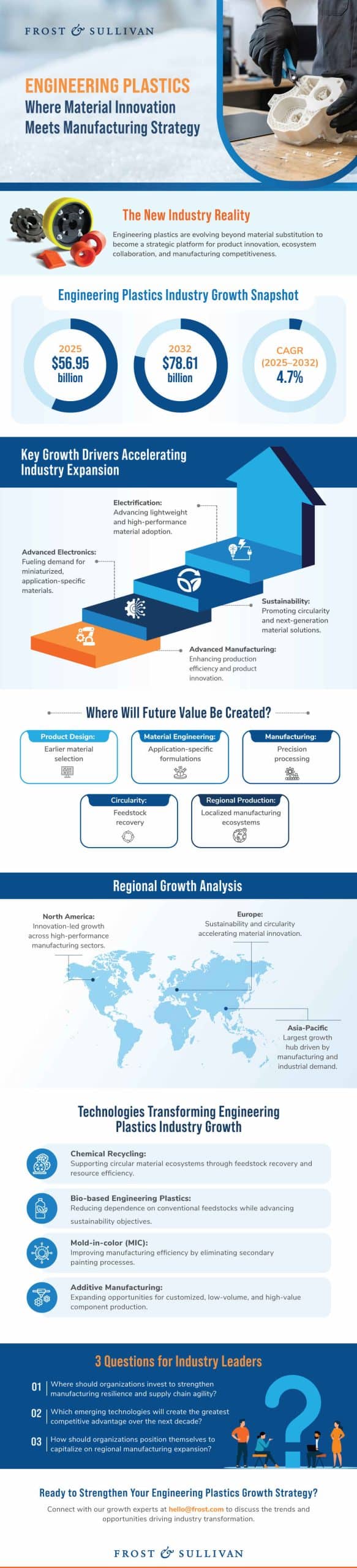
Strategic Imperatives Shaping the Future of Engineering Plastics
- Innovative Business Models: Circular material ecosystems, chemical recycling, and feedstock recovery are reshaping material sourcing and manufacturing, supporting sustainability objectives while improving resource efficiency.
- Industry Convergence: The convergence of automotive, electrical and electronics, healthcare, and industrial manufacturing is driving demand for engineering plastics that deliver mechanical, thermal, electrical, and safety performance across multiple applications.
- Customer Value Chain Compression: OEMs are engaging material suppliers earlier in product development, fostering greater collaboration, faster innovation, and application-specific material solutions.
How is your organization adapting to evolving material ecosystems and value chain collaboration?
Key Challenges Influencing Development of the Plastics Industry
Feedstock and Cost Volatility
Engineering plastics remain closely linked to upstream petrochemical value chains. Variability in feedstock availability and energy costs continues to influence production economics and pricing strategies.
Material Substitution
Engineering plastics compete not only with alternative polymers but also with metals, ceramics, composites, and glass across multiple applications. Product requirements increasingly determine material selection based on performance, cost, sustainability, and manufacturability.
Technology Evolution
Advancements in product architectures can reshape material demand. The transition from internal combustion engines to electric vehicles and the evolution of display technologies illustrate how technology shifts influence long-term material consumption.
Sustainability Expectations
Organizations face growing pressure to improve recyclability, reduce environmental impact, and incorporate circular material strategies throughout the product lifecycle.
High-impact Growth Opportunities Across Engineering Plastics
- India Localization Wave
India’s expanding manufacturing ecosystem, supported by policy initiatives and growing investments in automotive engineering plastics and electronics, is creating opportunities across polymer production, compounding, and advanced processing technologies.
- Mold-in-color (MIC)
The shift toward sustainable manufacturing and production efficiency is accelerating the adoption of painting-free component solutions that simplify operations while enhancing product aesthetics.
- Additive Manufacturing
Industrial 3D printing continues to expand opportunities for engineering plastics in customized, low-volume, and application-specific manufacturing environments.
- Circular Engineering Plastics
Growing investments in recycled feedstocks, chemical recycling, and bio-based materials are strengthening circular value chains while supporting long-term sustainability objectives.
Access the sample analysis to explore in-depth details of the growth opportunities in engineering plastics.
Best Practices for Industry Leaders
- Material Innovation: Aligning advanced material capabilities with the growing demand for electrification, advanced electronics, and next-generation manufacturing applications.
- Value Chain Collaboration: Closer collaboration among polymer producers, compounders, processors, and OEMs is accelerating product development and application-specific innovation.
- Circular Material Ecosystems: Growing investment in recycled and bio-based engineering plastics is supporting sustainability objectives while strengthening long-term resource resilience.
- Regional Manufacturing: Localization and diversified sourcing strategies are enhancing supply chain resilience and improving responsiveness to regional demand.
- Advanced Manufacturing: Additive manufacturing and advanced processing technologies are expanding opportunities for customized, high-value, and application-specific solutions.
- Strategic Positioning: Engineering plastics are evolving from high-performance materials to strategic enablers of product innovation, operational efficiency, and long-term competitive growth.
The Next Growth Phase of the Plastics Industry
Engineering plastics are influencing how manufacturers design products, optimize production, and strengthen competitive positioning. As industries continue to evolve, material innovation will become increasingly connected with manufacturing strategies, ecosystem collaboration, and sustainability objectives.
Organizations that align product portfolios, regional manufacturing strategies, and innovation investments with these structural shifts will be well positioned to capitalize on emerging growth opportunities while building long-term resilience across the engineering plastics value chain.
Frequently Asked Questions (FAQs)
1. What are engineering plastics?
Engineering plastics are high-performance polymers that provide superior mechanical strength, thermal stability, chemical resistance, and durability compared with commodity plastics. They are widely used across automotive, electronics, healthcare, aerospace, industrial equipment, and consumer applications.
2. What is driving growth in the engineering plastics market?
Growth is supported by electrification, lightweighting, electronics miniaturization, sustainability initiatives, advanced manufacturing technologies, and increasing demand for high-performance materials across multiple industries.
3. Which industries present the greatest opportunities for engineering plastics?
Automotive, aerospace, electrical and electronics, healthcare, industrial manufacturing, and consumer goods continue to represent significant demand centers, supported by evolving product requirements and technological advancements.
4. Why is localization becoming important in engineering plastics?
Regional manufacturing initiatives, supply chain diversification, and government policies are encouraging localized production to improve supply security, reduce dependency on imports, and strengthen manufacturing resilience.
5. How is sustainability influencing engineering plastics?
Sustainability is driving investments in recycled materials, bio-based polymers, chemical recycling technologies, and circular manufacturing models that improve resource efficiency while supporting environmental objectives.
Ready to Lead the Transformation?
- Schedule a Growth Strategy Dialog: Align your growth roadmap with Frost & Sullivan’s Visionary Growth Pipeline™ Dialog.
- Engage with Growth Experts: Co-design AI-enabled, data-driven operating models that scale industry-specific and commercial impact.
- Showcase Your Transformational Leadership: Position your organization as a transformation leader through Frost & Sullivan’s Transformational Growth Leadership platform.
- Join the Growth Council: Collaborate with industry leaders shaping the future of your ecosystem.
- Explore Best Practices Recognition: Be recognized for excellence in growth strategy, execution, and customer impact.
- Benchmark Your Industry Positioning on the Frost Radar™: Benchmark your growth performance and innovation strength against industry competitors.
- Tell Your Story: Accelerate awareness, engagement, and revenue growth through integrated brand and demand generation strategies.