This blog is based on our analysis – Smart Electricity Metering Industry, Global, 2024–2032, authored by Frost & Sullivan’s Growth Expert, Neha Tatikota, from the Energy team.
From Measurement to Grid Intelligence: The Evolution of Smart Metering
Traditionally, smart meters have been deployed to improve billing accuracy and provide basic visibility into energy consumption. However, rising grid complexity, increasing renewable integration, and the push for electrification are exposing the limitations of these conventional use cases. This makes it harder for utilities to manage decentralized energy flows and respond to real-time grid conditions.
Capture Value from Grid Intelligence Evolution
Discover how next-generation metering and analytics are enabling smarter, more efficient energy systems.
Download the Whitepaper
To keep pace, providers are shifting toward advanced metering infrastructure (AMI) powered by data analytics, artificial intelligence (AI), and grid-edge intelligence. This transition is unlocking new opportunities for technology providers as utilities rethink their strategies and accelerate the move toward more responsive and intelligent energy systems.
With the move toward data-driven and intelligent grid operations, is your growth strategy built to deliver long-term value?
Listen to our latest podcast to learn more about the Smart Electricity Metering Industry.
What’s Driving the Adoption of Smart Electricity Meters?
Strategic Imperatives Shaping Smart Metering
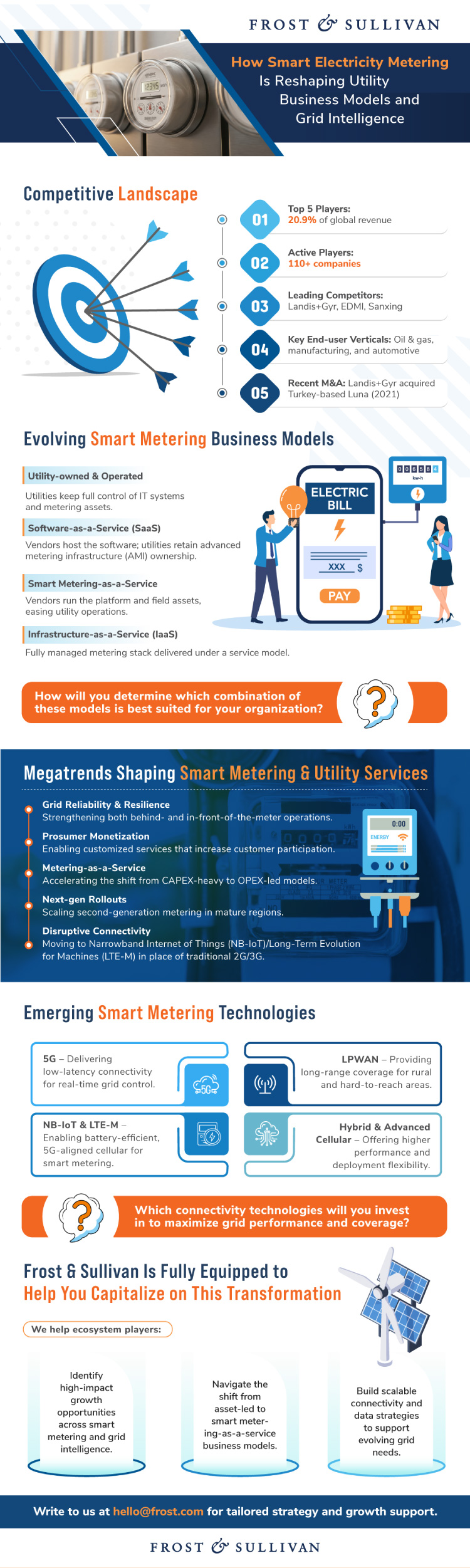
- Transformative Megatrends: Smart grids, smart cities, and electrification puts smart electricity meters at the center of energy systems, supporting real-time energy management and integrated grid operations.
- Disruptive Technologies: AI and analytics turn meter data into real-time insight, helping utilities integrate renewables, and monitor the grid.
- Competitive Intensity: The focus is shifting from hardware to data and services, with companies competing through integrated solutions that combine metering, software, and analytics.
Is your current strategy aligned with the shifts redefining smart electricity meters?
Growth Drivers Accelerating Digital Grid Adoption
- Policy-driven Rollouts: Regulations and mandates are driving large-scale meter deployments. This makes adoption a priority across key regions.
- Reducing Non-technical Losses: Electricity theft and distribution losses are spurring investment. This is where smart meters help utilities detect losses and protect revenue.
- Enabling Grid Intelligence: Real-time meter data improves grid visibility, analytics, and decision-making at the grid edge. This turns raw data into timely operational insight.
- Supporting Renewable Integration: Smart meters enable better tracking of energy flows. This supports the integration of solar, wind, and electric vehicles (EVs) into the grid.
Are you leveraging these growth drivers to accelerate your digital grid strategy?
Regional Hotspots in Smart Electricity Meters
- China: Leading the shift to second-generation meters, driven by mandated replacement cycles and a strong domestic manufacturing base.
- United States: Shifting toward replacements, upgrades, and extensions as initial rollouts reach completion.
- India: Emerging as a high-growth region, powered by large-scale government programs and nationwide rollout targets.
- Japan: Entering a structured replacement cycle, with utilities upgrading to next-generation systems.
- Germany: Accelerating adoption through policy support and clear rollout targets, improving grid visibility and control.
How is your organization prioritizing investments across high-growth smart meter regions?
Companies to Action: Leading the Smart Metering Transformation
- Landis+Gyr: Focusing on platform-led offerings that combine metering, grid-edge capabilities, and managed services to help utilities improve operational visibility and control.
- Itron: Emphasizing connected solutions and flexible network architectures, enabling utilities to integrate metering into broader grid management and energy resource coordination.
- Iskraemeco: Building multi-communication technologies and digital platforms to help utilities transition toward more integrated, analytics-driven operations.
Are you equipped with right tools to benchmark performance across the metering ecosystem?
Growth Opportunities in the Smart Electricity Meters Industry
- Service-based Models
Service-based models are gaining traction as utilities shift from one-time deployments to recurring, platform-led offerings. Solutions like smart meters-as-a-service, managed services, and cloud-based analytics help utilities move from CAPEX-heavy investments to OPEX-driven approaches. This shift enables faster deployments, lower upfront costs, and greater flexibility, while unlocking continuous value from data, connectivity, and grid-edge intelligence.
Why Service-based Models?
- Smart meters-as-a-service models reduce upfront costs and improve financial flexibility for utilities.
- Outsourced metering, connectivity, and analytics simplify integration and operations.
- End-to-end solutions that combine hardware, software, and services strengthen value delivery.
- Go-to-market Strategies
Smart meter adoption varies widely across regions, with mature markets advancing toward second-generation deployments and emerging economies entering early rollout phases. Countries like Italy and Sweden are leading next-generation upgrades, while the United States and Europe continue to see growth through replacements and upgrades. Meanwhile, regions across Asia, Africa, and Latin America present strong expansion opportunities. Rising hardware price pressure is also pushing manufacturers to focus on cost efficiency, supply chain optimization, and localized execution.
Why Regional Strategies Matter
- Market maturity differs across regions, requiring tailored go-to-market approaches.
- Local partnerships and regulatory understanding are critical for market entry.
- Service-led offerings are becoming more important to secure long-term contracts.
Which of these growth opportunities will have the biggest impact on your business and how will you capitalize on it?
Next Steps Toward Intelligent Grid Operations
Smart electricity meters are becoming essential for real-time visibility, better grid performance, and the shift to more digital, decentralized energy systems. By adopting AMI, go-to market strategies, and service-based models, utilities can boost operational efficiency, deepen customer engagement, and build more resilient grids as the energy landscape evolves.
Frequently Asked Questions (FAQs)
What is a smart electricity meter?
A smart electricity meter is a digital device that measures electricity consumption in real time and automatically sends usage data to the utility. It enables remote monitoring, accurate billing, and better energy management for both utilities and consumers.
What is a Type 5 smart meter?
A Type 5 smart meter is a category of advanced meter typically used in specific utility or regulatory contexts, often referring to meters with enhanced communication capabilities and support for advanced metering infrastructure (AMI) features such as remote data collection, two-way communication, and improved accuracy.
What is the difference between a smart meter and a regular meter?
A regular meter records energy consumption manually and requires on-site reading, while a smart meter automatically records and transmits data at regular intervals. Smart meters also enable real-time insights, remote operations, outage detection, and integration with digital grid systems.
How exactly do smart meters work?
Smart meters measure electricity usage continuously using digital sensors and store the data internally. They then transmit this data through communication networks such as cellular, radio frequency, or other technologies to the utility. This two-way communication allows utilities to monitor consumption, manage the grid more efficiently, and sometimes send signals back to the meter for updates or control functions.
Ready to Lead the Transformation?
- Book a Growth Strategy Session: Align your growth roadmap with Frost & Sullivan’s visionary Growth Pipeline™ Dialog.
- Engage with Growth Experts: Co-design AI-enabled, data-driven operating models that scale industry-specific and commercial impact.
- Share Your Transformation Story: Position your organization as a transformation leader through Frost & Sullivan’s Transformational Growth Leadership platform.
- Join the Growth Council: Collaborate with industry leaders shaping the future of your ecosystem.
- Nominate for the Best Practices Recognition: Be recognized for excellence in growth strategy, execution, and customer impact.
- Demonstrate Industry Positioning on the Frost Radar™: Benchmark your growth performance and innovation strength against industry competitors.
- Activate Brand & Demand Growth: Accelerate awareness, engagement, and revenue growth through integrated brand and demand generation strategies.