Unmesh Lal, Vice President, Frost & Sullivan, in conversation with Dr. Baofu Zheng, Founder & CEO, ChemExpress
Download this Transformational Growth Leadership Discussion with Dr. Baofu Zheng
The antibody-drug conjugate (ADC) industry is entering a new stage of development. As pipelines mature and the field becomes increasingly competitive, the challenge is shifting from simply developing ADCs to creating differentiated molecules while managing the technical complexity, regulatory requirements, and supply-chain expectations that come with advanced modalities.
For ChemExpress, this evolution has driven a transformation from its roots in complex organic synthesis and life sciences reagents toward an increasingly integrated Contract Research, Development, and Manufacturing Organization (CRDMO) model. The company has expanded from payload and linker development into antibodies, conjugation, analytical development, drug product, CMC, and GMP manufacturing, building an increasingly integrated platform to support customers across the development journey.
In this Transformational Growth Leadership discussion, Unmesh Lal, Vice President, Frost & Sullivan, speaks with Dr. Baofu Zheng, CEO, ChemExpress, about the evolution of the ADC industry, ChemExpress’s integrated CRDMO model, innovation across payloads and linkers, customer partnerships, project risk management, growth, global expansion, AI-enabled development, talent, and the company’s ambition to become a leading ADC team serving customers worldwide.
“Today, the challenge is no longer simply whether you can develop an ADC. It is whether you can create a different molecule.”
— Dr. Baofu Zheng, CEO, ChemExpress
From Complex Organic Synthesis to an End-to-end ADC CRDMO
Unmesh Lal: Dr. Zheng, perhaps we can start with your journey and the evolution of ChemExpress. How did the company develop from its original focus into the broader CRDMO organization it is today?
Dr. Baofu Zheng: I am a chemist. I received my bachelor’s degree from Nankai University in Tianjin and then went to The University of Hong Kong for my PhD in organic chemistry, particularly natural product organic synthesis. After graduation, together with my lab mate Dr. Qiang Gao, we established ChemExpress in 2006.
At that time, our work was focused on complex organic molecule synthesis, particularly natural products. That experience gave us a strong foundation in complex synthesis, which supported our small-molecule CRO and CRDMO business. Then, in 2013, based on customer requirements, we started preparing the linkers and payloads for ADC small molecules. The first one was vcMMAE.
As we worked with these molecules, we found that many of these complex organic molecules were not only potential drugs but could also be highly potent or toxic payloads for ADCs. We therefore continued to develop more payloads and build our linker portfolio.
In 2023, we expanded our capabilities into antibodies, conjugation, drug product, CMC, analytical development, and GMP manufacturing. Our ADC conjugation and drug product CDMO site started operations last year, and we now have many projects underway. That is how ChemExpress has evolved.
Why ADC Differentiation Is Becoming More Important
Unmesh Lal: The ADC market has evolved considerably over the past decade. From your perspective, what are the biggest challenges customers are facing today, and where is ChemExpress helping address them?
Dr. Baofu Zheng: I see three major challenges. First, there is increasing target and pipeline homogeneity, so differentiation is moving toward areas such as payloads, linkers, conjugation technologies, and molecule design.
Second, ADC development is technically very complex. It combines antibodies, highly potent small molecules, conjugation, analytical and formulation work, and manufacturing. A problem in any one of these areas can affect the entire program. It is really a system-engineering challenge, so you need to be professional at every stage.
The third challenge is the increasing customer requirement for global regulatory compliance and supply-chain reliability. Facilities and quality systems need to be suitable for requirements across markets such as the US and Europe. So, ADC development is not only complex; it also requires a very high quality standard.
At ChemExpress, we started working in the ADC field in 2013 with complex payloads and linkers. In 2023, we expanded our capabilities into antibodies, conjugation, drug product, CMC, analytical development, and GMP manufacturing. Now we can provide an integrated, end-to-end ADC CRDMO platform.
Our goal is not simply to complete one manufacturing step. We want to identify CMC risks as early as possible and solve them before they become expensive problems later. We want to help customers design the whole project using our intelligence and experience. We are partners of our customers, not only suppliers. We want to help reduce development risk, shorten timelines, and bring innovative medicines to patients faster.
Building Innovation Around Customer Needs
Unmesh Lal: That idea of partnership comes through strongly. As ADC science continues to evolve, how does ChemExpress make sure its innovation remains closely connected to changing customer needs?
Dr. Baofu Zheng: At ChemExpress, we have a very simple philosophy: we are client-focused and innovation-driven. For us, innovation is not about developing technology for the sake of technology. Innovation has to solve a real customer problem.
ADC technology is evolving very quickly. We have moved from conventional random conjugation toward site-specific conjugation, and we are now seeing increasing interest in two-payload ADCs and other XDC models such as AOCs, APCs, and some PDCs.
One important part of our strategy is to prepare for customer needs in advance. We prepare the technology and skills before the customer needs them. For example, we have built a broad payload and linker platform with more than 150 payloads and over 500 linkers in our portfolio.
At the same time, every project has dedicated project management and technical leadership. When a customer’s strategy or requirements change, our cross-functional teams can quickly evaluate the request, assess feasibility, and propose a revised technical plan and timeline.
So, I see our innovation model as having two parts: anticipation in advance and response during the project. We try to anticipate where the science is going while staying very close to what our customers need today.
Solving Complex ADC Problems Through a Systems Approach
Unmesh Lal: ADC programs bring together multiple scientific disciplines. How do you encourage teams to approach these complex projects differently rather than solving each problem in isolation?
Dr. Baofu Zheng: ADC projects are much more complex than small molecules. This is why we encourage our teams to look at problems from different scientific perspectives rather than allowing one function to solve a problem on its own.
We take a whole-systems approach. For a complex project, we may bring together scientists from small molecules, biologics, conjugation, analytical development, process development, and manufacturing. Each team looks at a different part of the problem.
For example, in one project, a hydrophobic payload could potentially cause protein aggregation after conjugation. Instead of only optimizing the conjugation process, our teams evaluated two approaches in parallel: modifying the antibody to improve hydrophilicity and introducing hydrophilic elements into the linker design.
The antibody-engineering approach ultimately helped address the issue at the molecular level. The point is that different problems can have different causes, so we need to understand where the problem is coming from and evaluate different solutions.
We also encourage our teams to develop a second solution for high-risk steps. Innovation always involves uncertainty, so having a strong Plan B can sometimes become the breakthrough.
Identifying Risk Earlier to Accelerate Development
Unmesh Lal: Once a new ADC program comes into the organization, how do you evaluate the project and move it efficiently toward manufacturing?
Dr. Baofu Zheng: Our basic philosophy is that the earlier we understand the risks, the faster we can move later. When a new ADC project comes in, we first conduct a structured technical assessment. We look at the molecule, payload potency, linker and conjugation strategy, analytical requirements, manufacturing skills and timeline, EHS considerations, and regulatory requirements. We look at the whole system and ask how we can make the project successful.
Our small-molecule, biologics, conjugation, analytical, quality, and other relevant teams jointly review the project and define the development strategy. Once the project starts, we try to avoid a purely sequential process. We involve the relevant teams earlier rather than waiting until development is complete.
Another important element is knowledge reuse. ChemExpress has supported more than 600 ADC CRDMO projects, and every project gives us additional process knowledge and experience. We can use that knowledge to support future customers.
Experience from one project can therefore help us reduce risk and improve efficiency for the next project.
Connecting Development to Commercial Readiness
Unmesh Lal: How does that integrated model help customers move programs from early development toward clinical and commercial production?
Dr. Baofu Zheng: I believe a good CDMO should not only help a customer reach R&D. We should think about commercialization from the early stage of development. We want to accompany our customers from the start through to commercialization. This is one of the main reasons we built our integrated ADC platform.
Our capabilities cover payload and linker development, antibodies, conjugation, analytical development, drug product, and GMP manufacturing. This allows us to support customers from early development through the clinical stage and finally into commercial production.
ADC molecules and projects are very complex. If you have to conduct technical transfers between multiple companies, it can be costly and time-consuming. Traditionally, a customer may use one company for payload and linker development, another for antibodies, another for conjugation and drug product. Every transfer creates communication requirements and quality risks.
With our integrated platform, we can connect these activities more closely. Our teams can work together as one team, and, more importantly, we can think about commercial readiness earlier. When we start a project from the CMC and R&D stage, we consider the commercial requirements as well.
Expanding Through Investment and Partnerships
Unmesh Lal: As ChemExpress continues to build its end-to-end capabilities, how do you see that expansion evolving? Will it be primarily through internal investment, or could partnerships also play a role?
Dr. Baofu Zheng: We are a public company, and we are making new investments in our facilities. At our Chongqing site, we also have additional space where we can expand our capacities. At the same time, because our technology and platform are located in China, we also cooperate with international partners for different markets. There may be opportunities to combine our linker payload capabilities with other CDMO platforms. So, we are open to partnerships and different approaches as we continue to expand.
Growth as ADC Programs Move Toward Later Stages
Unmesh Lal: ChemExpress has been growing strongly. Looking ahead, what do you see as the main drivers of growth over the next few years?
Dr. Baofu Zheng: ChemExpress has two main parts of the business. The first is our established life sciences reagents business. This provides a broad customer base and strong connections with global drug discovery institutes, universities, biotech, and pharma.
The second is our CRDMO business, particularly ADCs and other emerging modalities such as XDCs, peptides and protacs, where we are seeing increasing customer demand and continuing to build capabilities.
In the first half of this year, ChemExpress generated approximately RMB 1.65 billion in revenue, representing year-over-year growth of about 25.7%. Net profit attributable to shareholders was exceeded RMB 170 million, with growth of about 12.8%.
Looking forward, one of the most important challenges is developing our project portfolio. We believe ADCs offer significant potential. We are seeing many ADC programs across the industry move from very early stages into Phase II, Phase III, and BLA.
We already have six ADC-related projects that have advanced to the BLA filing stage, and one project has reached commercialization. As more programs move into later stages, customer requirements change significantly. We need larger GMP capabilities and services, and we have been investing in these capabilities for several years.
Over the next few years, I believe our growth will come not only from more projects but also from more later-stage projects. The CDMO business, especially the ADC CDMO business, should provide good financial performance.
Building Global Trust Through Successful Delivery
Unmesh Lal: ChemExpress has a significant customer base in China. How do you see the company expanding its reach internationally?
Dr. Baofu Zheng: We already have many ADC and biotech customers in China. Many Chinese biotech companies license or out-license their projects to multinational companies and foreign biotech companies, and they introduce ChemExpress’s capabilities and technical expertise to those customers. Through this approach, we have already gained many global customers who recognize and trust ChemExpress’s capabilities. Since 2024, approximately 47 China-based companies have secured major overseas ADC licensing agreements. ChemExpress has collaborated with more than 90% of these innovators, providing ADC CRO/CDMO services and key intermediates. These partnerships have helped connect China’s rapidly expanding ADC innovation ecosystem with leading global pharmaceutical and biotechnology companies.
We have also built professional BD teams, including scientists with experience at multinational companies. They help us demonstrate our capabilities and advantages to overseas customers. I think a good CDMO needs not only to connect with customers but also to earn their trust through delivery. Through every successful delivery, we can get more and more customers to go along with us.
Using AI to Expand ADC Innovation
Unmesh Lal: AI is becoming increasingly relevant across drug discovery and development. Where are you seeing the greatest opportunity for ChemExpress?
Dr. Baofu Zheng: We collaborate with a range of AI-focused organizations. First, we work with universities on projects using AI to design ADC linker payload quick-synthesis libraries. Second, we cooperate with Insilico Medicine and biotech companies.
We have our own linker payload libraries, and these biotech partners also have antibody libraries. Together, we can leverage our linker-payload libraries and development expertise to support customers in optimizing and advancing new ADC molecules and pipeline programs, with Insilico AI capabilities providing support.
Through these strategic partnerships, we aim to further expand our ADC technology and library capabilities, providing customers with broader linker-payload options and more efficient development support for their new ADC projects and pipeline programs. At the same time, we are exploring the use of AI models across our CRDMO service process to improve development efficiency and better support customers in advancing their programs.
Building Competitive Advantage Through People
Unmesh Lal: Technology and facilities are important, but ADC development also depends heavily on scientific expertise. How is ChemExpress approaching talent recruitment and development?
Dr. Baofu Zheng: You are totally right. For a CRDMO company, facilities can be built and equipment can be purchased, but the long-term competitive advantage comes from people and organizational capabilities.
ADC projects are highly complex, so we need chemists, biologists, analytical scientists, formulation scientists, engineers, manufacturing professionals, regulatory experts, project managers, and many other specialists working together.
At ChemExpress, we recruit experienced talent in areas such as ADCs, payloads, and linkers. At the same time, every year we have new university students joining us, and we train them to become the next generation of scientists and engineers.
We have built training systems for people who want to become technical experts as well as those developing management capabilities. We also have ChemExpress College.
We see ourselves as a learning organization. Even when undergraduates join us, they go through a half-year training program. At the end of the program, I teach them for two hours. We talk about the company culture and how to grow throughout your life.
For me, that is a core part of the company’s culture: keep learning and keep improving throughout your life.
Balancing Speed with Quality
Unmesh Lal: Quality is obviously critical in CDMO partner selection. As ChemExpress increases speed and scale, how do you maintain that balance?
Dr. Baofu Zheng: During CDMO services, I think speed and quality are both important. Even though we want to increase speed, we can never lower our quality standards, particularly when we are developing projects for commercial production. We need to maintain the quality standard while increasing speed.
The end-to-end integrated platform helps us do this because payload, linker, antibody, conjugation, analytical, and drug product activities are closely connected. We can reduce unnecessary handoffs, waiting time, and technical-transfer risk.
The second approach is parallel studies and parallel tasks. Instead of waiting for one activity to finish before starting another, when the relevant factors are ready, we can work on the next activities at the same time. For example, process development and stability studies can progress in parallel.
The third element is project management. Because ADC projects are so complex, experienced project managers need to identify the critical path early and organize activities in advance to make the project more efficient.
Our quality systems, R&D, and manufacturing site have successfully passed the relevant inspections, such as US FDA Inspection, China NMPA Inspection, and our ADC Chongqing site has passed EU QP audit. Our philosophy is to keep a high quality standard while increasing speed.
Becoming a Leading ADC Team
Unmesh Lal: As we close, there is clearly significant expansion underway. What is the vision for ChemExpress from here?
Dr. Baofu Zheng: For the CDMO business, we are still young, so we should learn from many advanced partners and also learn from our customers. But our goal is to focus on the ADC/XDC area. We want to become first-tier and the best in this area and build one of the best teams in the world to support our customers.
We are proud of the effort we are making. When a drug eventually reaches the market, I always tell my colleagues that we should be able to tell our families what part of the drug we worked on and how we contributed.
We should be proud of ourselves. I think that if we continue with this approach, ChemExpress’s CDMO business will be successful.
Closing Reflection
The evolution of ChemExpress reflects the increasing complexity of the ADC/XDC development landscape. As the industry moves beyond rapid pipeline expansion toward greater molecular differentiation and later-stage development, customers need partners capable of connecting scientific disciplines, managing CMC risk, maintaining quality, and supporting programs from early development through commercialization.
ChemExpress’s strategy is built around that integrated approach. Its expansion from complex organic synthesis and life sciences reagents into payloads, linkers, antibodies, conjugation, analytical development, drug product, and GMP manufacturing has created a broader platform for working with customers across the ADC/XDC development journey. Its emphasis on knowledge reuse, cross-functional problem solving, strategic partnerships, AI-enabled development, and scientific talent further supports that model.
Looking ahead, Dr. Baofu Zheng’s ambition is clear: to focus on ADCs/XDCs, build a first-tier team, and become one of the best teams in the world supporting customers. For ChemExpress, the next phase of growth will therefore be defined not simply by expanding capabilities, but by deepening the scientific expertise, integrated delivery model, and customer trust needed to help increasingly complex ADC programs move forward.

About Dr. Baofu Zheng, Founder and CEO, ChemExpress
Dr. Baofu Zheng is the Founder and CEO of ChemExpress. A chemist by training, he holds a bachelor’s degree from Nankai University and a PhD in organic chemistry from The University of Hong Kong. He co-founded ChemExpress in 2006, initially focusing on complex organic molecule synthesis and natural-product chemistry.
Under his leadership, ChemExpress has expanded from its foundations in complex organic synthesis and life sciences reagents into CRO and CRDMO services, with a particular focus on antibody-drug conjugates (ADCs) and other emerging modalities. Dr. Zheng has overseen the company’s expansion into ADC payloads and linkers, antibodies, conjugation, analytical development, drug product, CMC, and good manufacturing practices (GMP) manufacturing.
His leadership philosophy emphasizes a client-focused, innovation-driven approach, with particular attention to scientific collaboration, integrated development, continuous learning, and building multidisciplinary teams capable of addressing complex ADC development challenges.
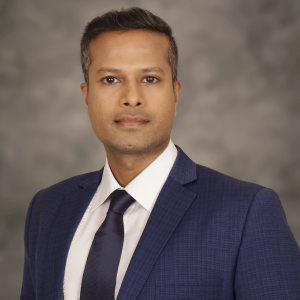
Unmesh Lal brings over 20 years of experience in healthcare strategy and consulting, with a focus on global life sciences and bio-pharma manufacturing. He specializes in identifying transformative technologies, innovative business models, and growth opportunities across pharmaceutical contract services. A recognized thought leader, Unmesh has authored key industry insights and presented at leading global events including J.P. Morgan, CPHI, Bio-Asia, Bioprocessing Summit, Biotech Outsourcing Strategies cmc, and others. He holds a master’s degree in biomedical engineering from the University of Michigan–Ann Arbor.
About Unmesh Lal
Ready to Lead the Transformation?
- Schedule a Growth Strategy Dialog: Align your growth roadmap with Frost & Sullivan’s Visionary Growth Pipeline™ Dialog.
- Engage with Growth Experts: Co-design AI-enabled, data-driven operating models that scale industry-specific and commercial impact.
- Showcase Your Transformational Leadership: Position your organization as a transformation leader through Frost & Sullivan’s Transformational Growth Leadership platform.
- Join the Growth Council: Collaborate with industry leaders shaping the future of your ecosystem.
- Explore Best Practices Recognition: Be recognized for excellence in growth strategy, execution, and customer impact.
- Benchmark Your Industry Positioning on the Frost Radar™: Benchmark your growth performance and innovation strength against industry competitors.
- Tell Your Story: Accelerate awareness, engagement, and revenue growth through integrated brand and demand generation strategies.
Appendix: Industry Developments Shaping Biologics Manufacturing
As antibody-drug conjugates and other advanced modalities move toward greater differentiation, clinical development, and commercialization, CDMOs are increasingly expected to combine specialized scientific expertise with integrated development and manufacturing capabilities. Frost & Sullivan research provides strategic insight into the technologies, business models, and growth opportunities shaping ADCs, biologics CDMOs, advanced modalities, and the evolving pharmaceutical value chain.
📌 Growth Opportunities in Biologics Contract Development & Manufacturing Organizations, Global