As pharmaceutical supply chains across Europe face mounting pressure from geopolitical uncertainty, regulatory complexity, and cost constraints, the role of agile, service-driven CDMO and supply chain partners has never been more critical. In this Movers & Shakers conversation, Tomasz Nawrocki, Group Contract Manufacturing & Services Director at NEUCA, discusses how NEUCA’s CDMO and services platform is evolving to meet these challenges, by focusing on operational flexibility, targeted manufacturing niches, and deep, long-term customer relationships.
Drawing on more than a decade of experience building integrated supply chain and contract manufacturing capabilities, Tomasz Nawrocki outlines how NEUCA is consolidating its service businesses, responding to shifts in European pharmaceutical flows, and positioning itself as a trusted “problem solver” for pharmaceutical companies operating across Europe.
“We are not creating a market. In B2B CDMO and supply chain services, success comes from identifying the problem that exists today and being able to solve it.”
— Tomasz Nawrocki, Contract Manufacturing and Services Director, NEUCA Group
Redefining the Pharmaceutical Supply Chain Amid Structural Change
Unmesh Lal: Tomasz, the CDMO and pharmaceutical supply chain landscape is undergoing significant transformation driven by geopolitical uncertainty, competitive intensity, and evolving business models. From your perspective, which structural shifts are most reshaping the industry over the next five years?
Tomasz Nawrocki: To understand where we are going, it helps to look back at where the change began. When we started building Synoptis Industrial in 2014, we observed a major inflection point triggered by the United Kingdom’s decision to leave the European Union. Historically, a significant portion of pharmaceutical quality control testing and Qualified Person (QP) release activities were handled in the UK. Brexit forced companies to rethink those models.
That period marked the first major reconfiguration of pharmaceutical supply chains in Europe. What we are seeing now is the next phase: optimization. Companies are reassessing cost structures, regulatory burden, and operational flexibility. There is a clear shift from highly regulated and expensive markets, such as Germany, toward Central and Eastern Europe, particularly Poland. Poland remains fully aligned with EU regulations but offers greater flexibility and lower operational costs.
This shift is especially visible among generic pharmaceutical companies, which are extremely cost-sensitive. They are actively looking for partners who can provide flexibility, efficiency, and regulatory compliance without excessive complexity. This environment has created growth opportunities for us, both in the number of services we offer and the number of clients we support.
Building a Targeted Manufacturing Strategy in Europe
Unmesh Lal: You have spoken about strategic priorities across manufacturing and services. Could you elaborate on how NEUCA is thinking about manufacturing modalities, particularly small versus large molecules?
Tomasz Nawrocki: From a services perspective, we support both small and large molecules without limitation. Our licenses allow us to work with a wide range of products, including cold chain & controlled substances, and we provide importation, quality control, QP release, and distribution services for products destined for European patients.
However, when it comes to manufacturing, our strategy is very focused. We are not investing in biologics or large-molecule manufacturing. We have been building manufacturing capabilities for approximately five years, and our emphasis is on small molecules, specifically products that are difficult to manufacture and where capabilities are limited within Europe.
Lozenges are a good example. This is a technically demanding dosage form that requires specialized experience and equipment. There are only a few companies in Europe capable of manufacturing them at scale and with consistent quality. By focusing on such niche technologies, we avoid competing directly with large-scale, low-cost manufacturing from regions such as India or China, where Europe simply cannot match cost efficiency.
In parallel, we see strong opportunities in dietary supplements and medical devices. Regulatory changes in medical devices are creating barriers for many manufacturers, leading some to exit the market. We believe this creates space for capable, compliant manufacturers to invest and grow. Dietary supplements, meanwhile, represent one of the fastest-growing segments in the European Union and offer flexibility and faster revenue growth compared to pharmaceuticals, which remain a long-term investment.
Pragmatic Decisions on Advanced Technologies
Unmesh Lal: Across the industry, we are seeing investments in complex oral solids, injectables, and advanced technologies to address bioavailability and solubility challenges. Are these areas on NEUCA’s investment horizon?
Tomasz Nawrocki: On the service end, we have taken significant investment delivering QC testing capabilities for our clients on high-end methods such as inhalation products or nitrosamines testing. Over the next two years, we do not plan to invest in manufacturing capabilities of injectables, inhalation products, or similarly complex technologies. These areas require not only significant capital investment but also deep, specialized expertise that takes time to build.
While equipment can be purchased, knowledge and experience cannot be acquired overnight. For now, our focus remains on strengthening our existing capabilities. That said, we actively observe these segments and stand ready to support companies through our service platform, particularly for testing, verification, and regulatory compliance on European ground when manufacturing occurs outside the EU.
Digitization and Data-driven Operations
Unmesh Lal: Digitization and AI adoption are major themes across CDMOs. How is NEUCA approaching technology investments across manufacturing, quality, and supply chain operations?
Tomasz Nawrocki: We are currently in the process of consolidating our three CDMO and service companies, and technology plays a central role in that effort. Our objective is to move toward a single operational system that integrates data across the organization. This will likely be a Level 3-type system, supported by business intelligence tools that provide daily management insights.
From a quality perspective, we are already advanced. We are transitioning from paper-based systems to fully digital, online quality management systems with integrated reporting. However, we have not yet systematically applied AI to areas such as deviation management or CAPAs [Corrective and Preventive Actions]. These processes still require a strong human element, and we believe expertise and judgment remain critical.
Looking forward, we aim to develop predictive models for planning and operational processes, which will enhance efficiency and decision-making across the supply chain.
Differentiation in a Commoditized Market
Unmesh Lal: Dietary supplements are a highly commoditized segment. How do you differentiate yourselves from other CDMOs in this space?
Tomasz Nawrocki: Our differentiation starts with flexibility and problem-solving. Many clients come to us when they are already facing challenges with other partners, whether related to quality, customs, or regulatory issues. When we are able to resolve those problems effectively, clients often choose to switch to us permanently.
As a contract manufacturer, we do not operate our own brands. That is critical. We respond directly to customer needs and never compete with our clients in the market. At the same time, we actively develop formulations in-house based on market observation, which allows us to present proactive product concepts to our customers.
This dual approach, responding to customer-driven demand while also offering value-added product ideas, creates a strong partnership model built on trust.
Long-term Customer Relationships as a Growth Engine
Unmesh Lal: What does your customer mix look like, particularly between large organizations and small to mid-sized companies?
Tomasz Nawrocki: Approximately 80% of our revenue comes from our largest clients, primarily international generic pharmaceutical companies, many headquartered in India. For some of these partners, we serve as the Central and Eastern European import hub, and in certain cases, the sole importer for Europe.
Our relationships extend beyond transactional supply chain services. Our qualified persons act as key points of contact with European authorities, supporting audits, inspections, and GMP [Good Manufacturing Practice] compliance. This advisory role is a core part of our value proposition, and we do not charge separately for it.
At the same time, we work closely with smaller companies. Many of our mid-sized clients started with us at a very small scale and grew over time. This long-term partnership approach has resulted in strong, durable relationships and a relatively low churn rate.
A Flexible, End-to-end Service Model
Unmesh Lal: Do you offer differentiated business or pricing models for different customer segments?
Tomasz Nawrocki: Our business model is fundamentally flexible rather than segmented. Some clients use our full suite of services, from importation and QC testing to contract manufacturing, packaging, and distribution. Others require only specific elements.
We also support clinical trials through local distribution and controlled drug depots in Poland. Whether a client is a small startup introducing a product to Europe or a large generic company moving high volumes through major ports, we build a service model tailored to their needs.
Geographic Expansion Guided by Customer Demand
Unmesh Lal: How are you thinking about geographic expansion over the next few years?
Tomasz Nawrocki: Poland remains our core base, supported by a strong domestic warehouse network and proximity to major EU markets such as Germany. Looking ahead, we are evaluating expansion toward the Mediterranean region and countries like Romania and Bulgaria.
Our approach is demand-driven. We listen closely to our clients and expand where their needs justify it. For example, deliveries to Spain and France present logistical challenges from Poland, and these markets are areas of interest for future growth.
Consolidation, Synergies, and a Single Face to the Customer
Unmesh Lal: With multiple subsidiaries at different stages of integration, how do you maintain a clear value proposition?
Tomasz Nawrocki: We operate under a single umbrella, CDMO [Contract Development and Manufacturing Organization] and Services powered by NEUCA Group. We have consolidated business development into one team that presents our full capabilities through a single point of contact.
This model simplifies interactions for clients and ensures that opportunities across importation, manufacturing, and product development are considered holistically. We expect the consolidation process to be largely complete within the next 12 to 18 months, with operational efficiency as the ultimate goal.
Customer Feedback as a Catalyst for Innovation
NEUCA’s customer-centric approach is reflected in its Net Promoter Score of 83 for its CDMO and services business in 2025, an exceptionally high figure. Customer feedback directly informs service development, including the establishment of Poland’s first pharmaceutical customs clearance bonded warehouse outside of airports, enabling improved support for deliveries to Ukraine.
A B2B Mindset Built on Problem Solving
For Nawrocki, success in CDMO services is rooted in a fundamentally B2B mindset. “You are not creating a market,” he explains. “You are responding to real problems that exist today.”
When asked to describe NEUCA’s CDMO business in three words, he does not hesitate: relationship, flexibility, efficiency.
Looking Ahead
CDMO & Services by NEUCA’s ambition is clear: to become the first partner pharmaceutical companies think of when bringing products into Europe or when facing complex supply chain challenges. By combining deep regulatory expertise, operational flexibility, and a relationship-driven culture, the company is positioning itself as a trusted, long-term partner in an increasingly complex pharmaceutical landscape.
As Europe’s supply chains continue to evolve, NEUCA’s model demonstrates how focused capabilities, disciplined consolidation, and customer-led growth can create sustainable competitive advantage in the CDMO and pharmaceutical services sector.
About Tomasz Nawrocki
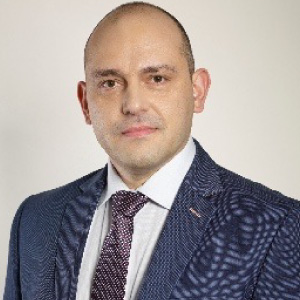
Tomasz Nawrocki is a seasoned leader in pharmaceutical industry experienced at number of roles form manufacturing & technical transfers via supply chain to business unit management at Biofarm, GlaxoSmithKline & Neuca Group. As a hands-on strategist, Tomasz leads NEUCA’s contract manufacturing & service business unit consisting of Synoptis Industrial, EWA, Global Pharma companies delivering consolidation processes and strategy with business model & execution including commercialization processes, risk mitigation & quality, with direct ownership of revenue & cost structure to the bottom line. As the Master of Pharmacy with industrial pharmaceutical specialisation degree He holds an Executive MBA and APICS CPIM certification, reflecting a strong foundation in commercial leadership and operational excellence.
Unmesh Lal brings over 20 years of experience in healthcare strategy and consulting, with a focus on global life sciences and precision health. He specializes in identifying transformative technologies, innovative business models, and growth opportunities across pharmaceutical contract services. A recognized thought leader, Unmesh has authored key industry insights and presented at leading global events including J.P. Morgan, Bio-Asia, and Bio-IT World. He holds a master’s degree in biomedical engineering from the University of Michigan–Ann Arbor.

About Unmesh Lal
Ready to Lead the Transformation?
- Book a Growth Strategy Session: Align your growth roadmap with Frost & Sullivan’s Visionary Growth Pipeline™ Dialog.
- Engage with Growth Experts: Co-design AI-enabled, data-driven operating models that scale industry-specific and commercial impact.
- Share Your Transformation Story: Position your organization as a transformation leader through Frost & Sullivan’s Transformational Growth Leadership platform.
- Join the Growth Council: Collaborate with industry leaders shaping the future of your ecosystem.
- Nominate for the Best Practices Recognition: Be recognized for excellence in growth strategy, execution, and customer impact.
- Demonstrate Industry Positioning on the Frost Radar™: Benchmark your growth performance and innovation strength against industry competitors.
- Activate Brand & Demand Growth: Accelerate awareness, engagement, and revenue growth through integrated brand and demand generation strategies.
Annexure: Industry Developments Accelerating Digital Transformation in Pharmaceutical CDMO & Supply Chain Services
As NEUCA Group continues to consolidate and scale its CDMO and pharmaceutical services platform, industry momentum across Europe is increasingly shaped by operational integration, regulatory digitization, and data-enabled supply chain orchestration.
Rather than pursuing full automation or AI-first manufacturing models, leading service providers like NEUCA are prioritizing unified digital foundations that support quality management, importation, Qualified Person (QP) oversight, customs clearance, and multi-country distribution. Across the European pharmaceutical landscape, digital transformation is being driven less by experimentation and more by the need for regulatory resilience, transparency, and executional efficiency.
This shift reflects a broader imperative within pharmaceutical services: building digitally resilient, compliance-ready ecosystems that can flex with changing trade flows, regulatory scrutiny, and customer requirements—particularly for cost-sensitive generic manufacturers and fast-growing supplement and medical device segments.
To support industry leaders navigating this transition, Frost & Sullivan provides forward-looking intelligence across pharmaceutical services digitization, supply chain modernization, and data-driven operating models, including:
📌 Top 10 Growth Opportunities in the European Life Sciences Industry, 2026
📌 Frost Radar™: Antibody-Drug Conjugate Contract Development and Manufacturing Organizations, 2025
📌 Future of Bio-Pharma Industry, 2040
📌 Global Pharmaceutical Industry Outlook
📌 Top 6 Growth Opportunities in Pharma-Biotech
While these analyses span diverse segments of life sciences, their insights closely align with the central themes reflected in NEUCA’s CDMO and services strategy: operational discipline, integrated data environments, selective automation, and adaptability grounded in real customer needs. Together, they offer a strategic blueprint for organizations seeking to remain competitive and trusted partners as Europe’s pharmaceutical supply chains continue to evolve.