There is a particular kind of energy at a AI technology summit when the room shifts from talking about what is possible to talking about what is real. That shift was palpable at NiCE Cognigy’s Nexus 2026, the global CX AI Summit held in Munich this month. Twelve months ago, the conversation at this event centered on demonstrating the potential of Agentic AI. In 2026, more than 1,000 enterprise leaders arrived not to be convinced. They arrived to compare notes on what they had already built, what had failed, and what comes next.
That transition, from experimentation to operationalization, is the most important story in enterprise CX today. And Nexus 2026 made it visible.
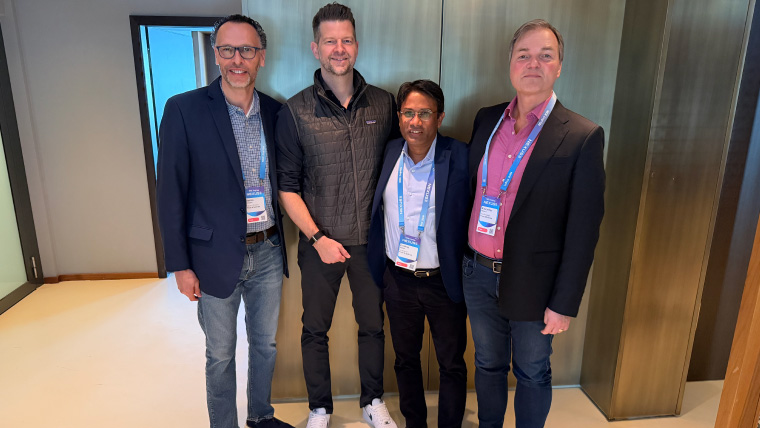
From Feature to Operating Layer
The boldest claim at the summit came early, from Scott Russell, CEO of NiCE: “AI is no longer a feature layered onto software. It is becoming the intelligence that runs it.”
It would be easy to dismiss this as executive theatre. But the evidence on the Nexus stage argued otherwise. Lufthansa Group detailed a conversational AI deployment that, by any measure, is globally unmatched in scale. Schwarz Group. the €100B+ European retail giant and parent of Lidl and Kaufland described its path toward what it calls Europe’s largest agentic AI workforce, navigating the tension between data sovereignty and innovation at a continent-spanning scale. Fabletics, the world’s largest digitally native activewear brand, walked through how Agentic AI is now its primary mechanism for scaling customer retention, not a pilot, not a use case. a core operational capability.
These are not early adopters. These are mission-critical enterprise deployments. The chasm has been crossed.
What is changing is the architectural premise. Legacy automation was additive: you layered bots onto existing workflows, measuring deflection rates and cost savings. The Agentic AI model that NiCE Cognigy is advancing is integrative: the AI agent serves as the orchestration layer, continuously sensing signals across voice, digital, and backend systems, deciding on the next-best action, and improving its own performance through closed-loop feedback. Philipp Heltewig, General Manager of NiCE Cognigy and Chief AI Officer, framed it precisely: “Agentic AI is becoming the operating layer of the enterprise.”
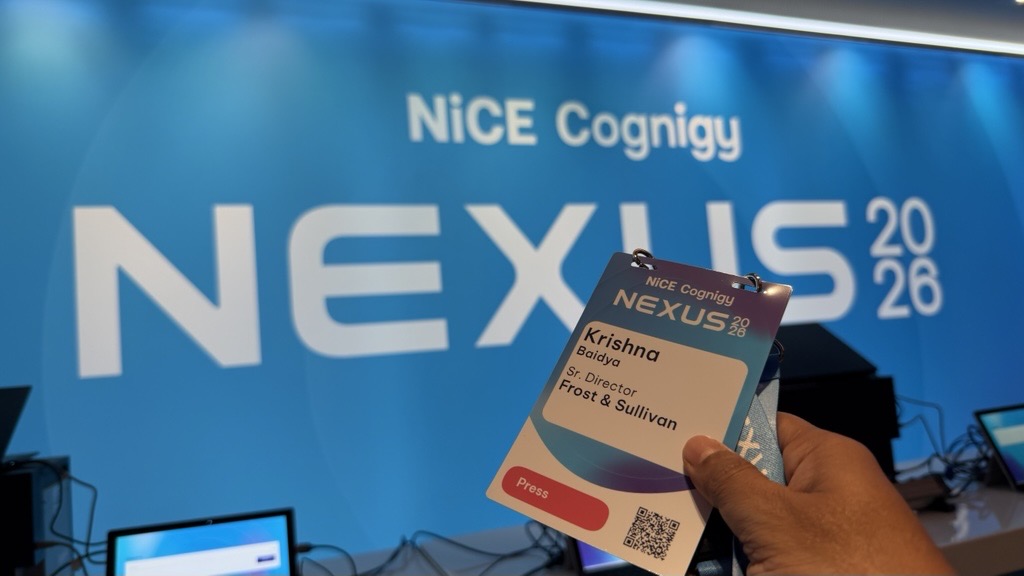
Five Capabilities That Signal a Maturing Market
NiCE Cognigy used Nexus to unveil a cluster of innovations that, taken together, signal something more significant than a product refresh. They signal that a platform has reached the infrastructure layer of enterprise CX.
Automation discovery from engagement data is the most strategically interesting of the five. Rather than requiring enterprises to define automation use cases upfront. a notoriously expensive and slow process, the platform now analyzes live engagement data (chat, voice, routing signals, performance metrics) to surface automation opportunities autonomously and generate deployable AI agents from them. This is the difference between a consultant recommending where to automate and a system that watches your operations and tells you. The closed loop from engagement data to deployed agent collapses the time-to-value cycle and changes how CX investment decisions get made.
Embedded Multivariate Testing addresses what has been the Achilles heel of enterprise AI adoption: the inability to safely validate agent behavior before production. The capability enables controlled side-by-side comparisons across prompts, guardrails, routing logic, and foundation models at simulation scale. Enterprises can now assess containment rates, compliance exposure, and the impact on experience before release rather than discovering problems after release. This shifts AI evaluation from reactive QA to continuous performance engineering, and it is a prerequisite for the kind of governance frameworks that regulated industries such as financial services, insurance, and healthcare require.
Multimodal, proactive, hybrid journeys close the loop on channel fragmentation. The platform now unifies voice, visual interfaces, structured forms, and backend workflows into a single synchronized journey with shared context. More importantly, AI agents can initiate interactions proactively and then transition seamlessly into human-assisted conversations. The “agent unblocking” mechanism. where a human expert can assist an AI agent asynchronously without interrupting the customer experience. is a particularly elegant solution to the hybrid workforce orchestration problem that enterprises have been struggling to solve.
LLM-based Conversation Analytics moves quality management from quantitative KPI dashboards to qualitative intelligence. Instead of measuring handle time and CSAT scores, enterprises can now apply configurable quality parameters to production transcripts, detect anomalies, surface root causes, and track performance trends at a granularity that was previously only achievable through manual sampling. For operations leaders, this is the difference between knowing a problem exists and understanding why.
MCP Integration is the least-understood but potentially most consequential capability announced at Nexus. The Model Context Protocol expansion enables NiCE Cognigy to function as a governed service within the broader enterprise AI ecosystem. As enterprises build multi-vendor AI stacks combining foundation models, domain-specific agents, enterprise data platforms, and orchestration layers, the ability to participate in that ecosystem securely and interoperably becomes a competitive differentiator. NiCE Cognigy is positioning itself as an enterprise-grade node in that network, not merely a standalone CX platform.
What the Enterprise Stories Actually Tell Us
The customer sessions at Nexus 2026 were, for me, the most analytically revealing part of the event. Not because of the headline metrics, though Lufthansa’s deployment scale and Schwarz Group’s ambition were both striking, but because of what the friction points revealed about the current state of enterprise CX AI maturity.
Three patterns emerged consistently across industries.
First, the governance question has become as important as the capability question. The enterprises furthest along in their Agentic AI journeys, represented at Nexus by global insurers, travel groups, and retailers, are not primarily asking “what can the AI do?” They are asking, “how do we know it is doing it correctly, at scale, within our compliance boundaries?” The testing, analytics, and MCP governance capabilities announced at Nexus are direct responses to this maturity-driven demand.
Second, the hybrid workforce is not a transition state. It is the destination architecture. The assumption that agentic AI would progressively replace human agents in a linear substitution model has not played out in enterprise deployments. What is emerging instead is a coordinated operating model where AI agents handle high-volume, structured interactions while human experts are selectively deployed for judgment-intensive moments. and where the handover between the two is seamless enough that the customer cannot detect it. Designing for this model requires a fundamentally different platform architecture than designing for deflection.
Third, the integration surface area has expanded dramatically. The enterprise CX stack is no longer primarily a contact center stack. It now spans ERP systems, CRM platforms, knowledge bases, commerce engines, and increasingly, the output of other AI systems. MCP integration is not a technical nicety. It is an architectural necessity for any platform that wants to remain relevant in a composable enterprise.
The Strategic Implication for Enterprise CX Leaders
Nexus 2026 delivered a clear message to the CX community: the window for exploring whether Agentic AI is viable has closed. The window for deciding how to govern, scale, and measure it is now open, and it will not stay open indefinitely.
The enterprises that arrived at Nexus as case studies. Lufthansa, Schwarz, Fabletics, Openreach, Allianz share a common characteristic. They made governance and architecture decisions before scaling. They did not deploy Agentic AI broadly and then try to impose controls. They built the control framework first. That sequencing is the organizational capability that separates the leaders from those who will spend the next two years cleaning up unsanctioned AI deployments.
For enterprise CX leaders who are still in evaluation mode, the question is no longer “is the technology ready?” The question is: “is your organization ready to operate AI at the speed the technology now enables?”
NiCE Cognigy’s answer to that question at Nexus 2026 was a set of capabilities designed precisely for that organizational readiness challenge. The market has moved. The only remaining question is whether your CX strategy has moved with it.