Download this Transformational Growth Leadership Discussion
As India’s automotive aftermarket becomes increasingly complex and globally interconnected, companies are required to balance portfolio breadth, local responsiveness, supply chain agility, and brand integrity.
For Ferdinand Bilstein, operating globally across 171 countries with approximately €1.5 billion in sales, India represents both opportunity and long-term commitment.
In this Transformational Growth Leadership discussion, Philipp Hess and Ramachandra Puttanna outline how a multi-brand strategy, aftermarket-only focus, digital enablement, and disciplined distribution partnerships are shaping their growth trajectory.
Operating as a Multi-Brand Global Company
Ajit Swaminathan: Bilstein Group operates as a multi-brand company. How do you work across different markets globally, and what is your vision?
Philipp Hess: We are a global company operating in 171 countries, with about €1.5 billion in sales. As you rightly mentioned, we have multiple brands. Our premium brand represents the Ferdinand Bilstein name, Febi, and we also have Blue Print and SWAG.
For us, it is important to support our customers globally in the best way possible. Wherever we have high market penetration or coverage, we balance the brands carefully to ensure there is no over-distribution of one brand.
Blue Print initially focused on Asian vehicle parts, but today it covers a wide range of parts and is no longer limited to specific vehicle segments. Overall, our approach is about ensuring our customers are happy, well positioned in the market, and able to offer strong value to their own customers.
Translating Global Experience into India
Ajit Swaminathan: How are you bringing those global lessons to India, which has its own complexity?
Philipp Hess: For us, the most important thing is people. After all, this is a people business. When entering India, the first logical step was finding the right person to lead the business. We are very happy to have Ram heading Bilstein India.
From the German headquarters perspective, we are there to listen to his advice and support him in building the business locally.
An Aftermarket-only DNA
Ajit Swaminathan: India’s vehicle parc is becoming more heterogeneous and complex. How do you tackle this evolving landscape?
Ramachandra Puttanna: We have been doing business in India with the Febi brand for 15 years, and we recently opened a 100% subsidiary here. That reflects how important India is to the Bilstein Group.
Our focus is 100% aftermarket — no divided priorities between OE and aftermarket, unlike many friendly competitors. We are also a family-driven company with 175 years of history, now in the seventh generation. The brand and our customers are paramount for us.
The key question is communication. We have the product, we have the brand, and we have the market. But how do we communicate effectively? The subsidiary allows us to speak the local language.
Mechanics understand how to repair vehicles, but they need to upgrade their capabilities. We aim to support this through videos, digital systems, and tools that help the value chain understand what products are required now and in the near future.
From Shelf to Workshop: Speed and Scale
Ajit Swaminathan: You mentioned a broad portfolio. How important is speed to market?
Ramachandra Puttanna: Very important. While other companies may take more time developing aftermarket products due to OE requirements, our go-to-market for new aftermarket ranges is among the finest.
We have more than 80,000 SKUs globally. We believe that if you are an aftermarket retailer or workshop, Febi should be able to support you across commercial vehicles, passenger cars, AC systems, braking systems, suspension systems, across applications.
We also operate one of the finest warehouse systems in Europe and were voted among the top warehouse operations, alongside major OEM names like Mercedes-Benz and BMW. This reflects our commitment to availability and logistics excellence.
We even have a project called “Fit for the World,” which underlines the emphasis we place on regions like India.
Keeping the Portfolio Relevant
Ajit Swaminathan: Are all 80,000 SKUs applicable to India?
Philipp Hess: Not all of them, that is our global range, but many are relevant.
What stands out is that we add 15 new part numbers every day. We have dedicated teams analyzing vehicle registration data across regions to understand which models and makes are becoming relevant in each region. We continuously update our range to ensure it meets today’s workshop needs and anticipates tomorrow’s requirements. This also helps manage inventory effectively and avoid unnecessary stock movements.
Adapting to Global Vehicle Shifts
Ajit Swaminathan: Global vehicle dynamics are shifting. How does that affect you?
Philipp Hess: The global car parc is changing significantly, particularly with the rise of Chinese manufacturers. Over one-third of global vehicle production now comes from China, and these vehicles are entering markets worldwide, including India. This includes both electric vehicles (EVs) and internal combustion (IC) vehicles. We already have applications for many of these vehicles in our range and are working toward complete coverage.
Tackling Counterfeiting with Technology
Ajit Swaminathan: Counterfeiting is a major issue in India. How are you addressing it?
Ramachandra Puttanna: There are opportunities to use packaging innovations like heat stickers to indicate genuine parts. We also use QR codes that allow customers to scan and verify manufacturing details.
If the QR code does not exist or does not function, that may indicate an issue. We will advertise and educate customers about these tools. While elimination may not be realistic, we can minimize the problem.
Philipp Hess: Counterfeiting is a global phenomenon. As our brand becomes more recognized, it naturally attracts imitation. We try to do everything possible to limit and reduce it, though it is difficult to eliminate entirely.
Leveraging Digital Twins and AI
Ajit Swaminathan: Can technologies like digital twins, blockchain, or AI help?
Ramachandra Puttanna: Digital twins can help. We have seen their use in industries like pharmaceuticals, and there may be lessons we can adopt.
Philipp Hess: We already use AI extensively within our company, particularly for market intelligence. We gather and analyze large volumes of data to understand market dynamics and competition.
We also use digital twins intensively to optimize our global supply chain. That helps determine where warehouses need to be expanded and how distribution should be structured. Availability and short lead times are critical in the aftermarket.
Entering a Fragmented Indian Market
Ajit Swaminathan: India is a huge territory, but fragmented. What is your strategy for entering and scaling?
Philipp Hess: Our target group initially is workshops working on European and especially German vehicle makes. Being in the market for 180 years, we are known as a high-quality German manufacturer. At the same time, we are among the first to build full coverage for new Chinese vehicle brands entering markets.
Distribution is key. We look for long-term partners who reflect our family-driven DNA. We are here to stay and build for generations.
Ramachandra Puttanna: When we select distributors, we look for partners who mirror our values. In many of our subsidiaries globally, you will find family structures, father and son, husband and wife, second-generation leaders. We believe partnerships should reflect that same DNA.
What Truly Transformed the Business
Ajit Swaminathan: What customer or market signals have transformed your business the most?
Philipp Hess: Three to four decades ago, the key transformation was our decision to focus solely on the aftermarket. We shifted from being an OE supplier to serving the professional technician globally.
This meant leveraging our manufacturing knowledge to build a wide aftermarket range, sometimes producing parts ourselves, sometimes sourcing, but always maintaining high quality. The Febi brand represents the owner family’s name. There are no compromises on quality.
Collaboration and Policy Support
Ajit Swaminathan: Where do you see opportunities for industry collaboration or policy intervention in India?
Philipp Hess: It is a mixture of both. One does not go without the other. We support the right-to-repair campaign in Europe and the US and would support similar initiatives in India. Independent workshops should be at eye level with authorized channels regarding repair information and knowledge transfer.
Ramachandra Puttanna: It is a handshake between policy and industry. They are interdependent. Policy changes influence market requirements, and market requirements drive policy evolution.
The Road Ahead
Bilstein Group’s India strategy rests on several clear pillars drawn directly from the conversation:
- A multi-brand global structure carefully balanced across regions
- A 100% aftermarket focus
- More than 80,000 SKUs globally with continuous expansion
- Data-driven portfolio updates
- AI-enabled market intelligence
- Digital twin optimization of supply chains
- Packaging and QR-code authentication to minimize counterfeiting
- Long-term, family-aligned distribution partnerships
- Commitment to right-to-repair principles
India’s fragmentation presents complexity but also opportunity. For Bilstein Group, the approach is disciplined – leverage global strength, empower local leadership, maintain uncompromising quality, and build partnerships designed to last generations.

About Philipp Hess
Philipp Hess is Global Sales Director at Ferdinand Bilstein GmbH + Co. KG, driving international sales strategy and market expansion in the automotive aftermarket sector. A results-driven leader with 25+ years of experience, including COO-level leadership, he brings expertise across Automotive Aftermarket, Data & Digital Transformation, and International Sales Management across European and global markets. A Master of Engineering (Automotive Engineering) alumnus from RWTH Aachen University and a certificate holder from MIT Sloan School of Management, Philipp has held senior roles at companies like INFOMOTION GmbH and Orban Consulting, and more.
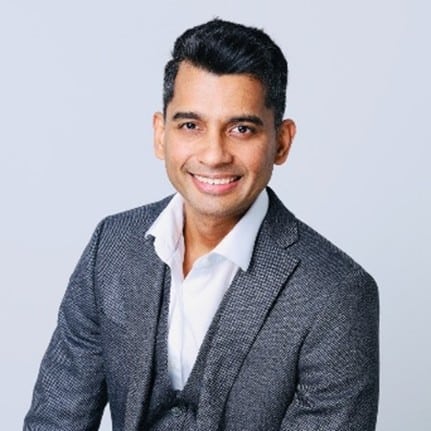
Ramachandra Puttanna is Managing Director, Ferdinand Bilstein India Private Ltd, based in Bengaluru, India. He is spearheading market growth and strategic expansion in the automotive aftermarket segment. As a seasoned and results-oriented leader with 30+ years of experience, he brings deep expertise across automotive aftermarket, EV solutions, fleet management, and business development across India, SAARC, and the Middle East. An IIM Bangalore alumnus in Advanced Management and a B.E. in Mechanical Engineering from Mysore University, Ramachandra has held senior leadership roles at ZF Group, WABCO, Magneti Marelli India, Bosch India, and Greaves Retail.

About Ramachandra Puttanna
About Ajit Swaminathan
Ajit Chander Swaminathan is Associate Partner and Mobility Practice Leader for Americas & South Asia at Frost & Sullivan. With 20+ years of experience, he specializes in strategic planning, business development, P&L ownership, and digital transformation. His industry leadership spans electrification, connected vehicles, manufacturing, aftermarket, and regulatory frameworks, helping mobility clients grow, scale, and transform across global markets.
Ready to Lead the Transformation?
- Book a Growth Strategy Session: Align your growth roadmap with Frost & Sullivan’s Visionary Growth Pipeline™ Dialog.
- Engage with Growth Experts: Co-design AI-enabled, data-driven operating models that scale industry-specific and commercial impact.
- Share Your Transformation Story: Position your organization as a transformation leader through Frost & Sullivan’s Transformational Growth Leadership platform.
- Join the Growth Council: Collaborate with industry leaders shaping the future of your ecosystem.
- Nominate for the Best Practices Recognition: Be recognized for excellence in growth strategy, execution, and customer impact.
- Demonstrate Industry Positioning on the Frost Radar™: Benchmark your growth performance and innovation strength against industry competitors.
- Activate Brand & Demand Growth: Accelerate awareness, engagement, and revenue growth through integrated brand and demand generation strategies.
Annexure: Speed and Innovation Accelerating India’s Aftermarket Transformation
Frost & Sullivan has curated analyses that highlight growth opportunities, strategic imperatives, and technological transformations across the mobility aftermarket segment, offering critical insights for innovation and modernization.
Here are a few of them that you would like reading: