This blog is based on a recent analysis, “Replacement Constant Velocity Axle Aftermarket in Passenger and Light Commercial Vehicles, North America,” authored by Suriya Narayanan, Frost & Sullivan’s Mobility Growth Expert specializing in the automotive aftermarket domain.
High-torque Electric Vehicle Assemblies, eCommerce, and Supply Chain Repositioning
The replacement constant velocity (CV) axle aftermarket is running on two speeds. Suppliers investing in high-torque, EV-compatible assemblies and digital distribution are pulling ahead of the competition. Meanwhile, volume-driven players still relying on legacy product portfolios and traditional distributor relationships are facing pressure from multiple fronts:
- Margin compression
- Rising raw material costs
- Customer base that is increasingly purchasing parts online
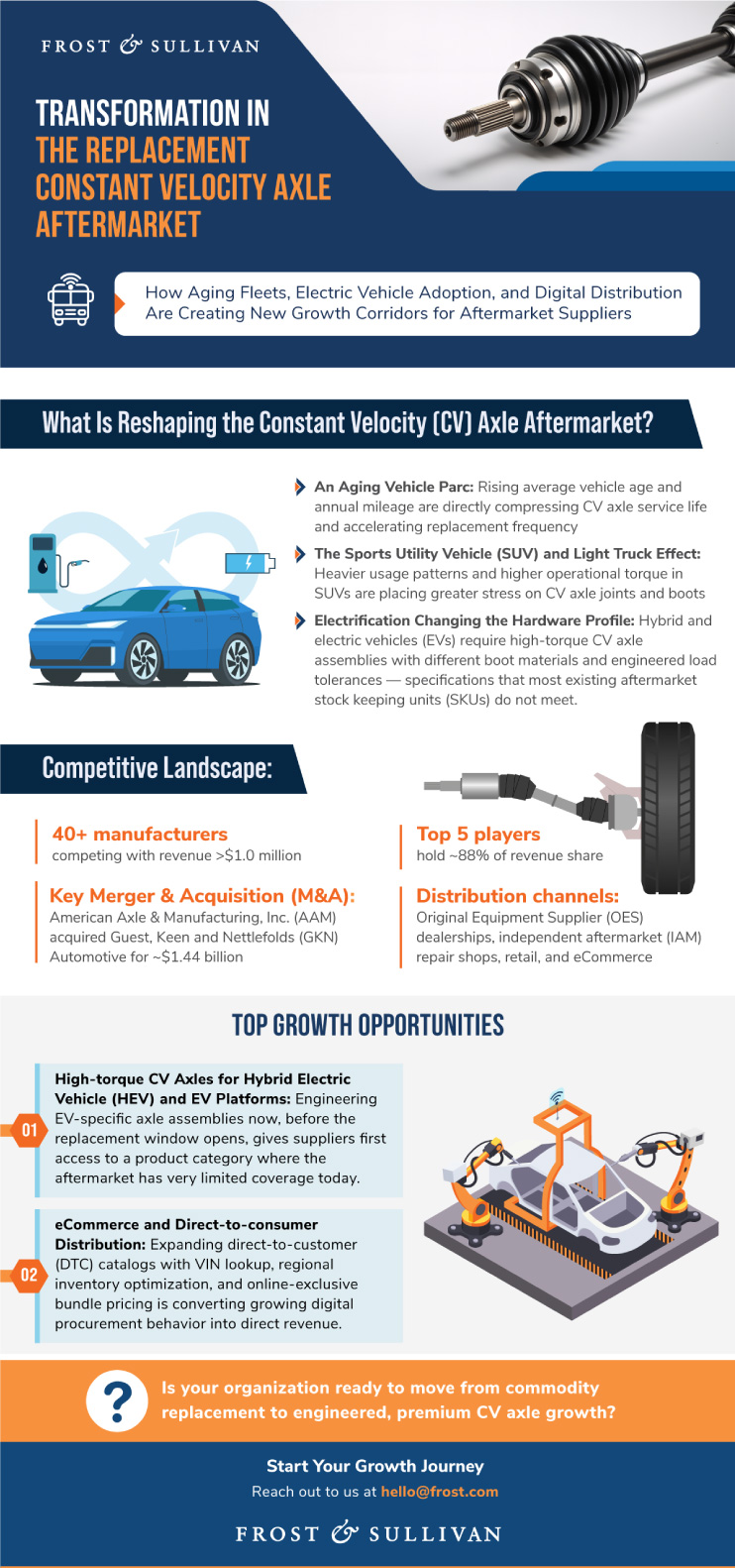
In North America, the top five players already hold approximately 88% of the revenue share in the replacement CV axle aftermarket. How can you strengthen your position in the industry?
Strategic Imperatives Reshaping the CV Axle Aftermarket
Disruptive Technologies: Data-driven models are turning parts availability, predictive demand identification, and channel performance tracking into direct revenue levers, enabling suppliers to reach the right customer with the right stock keeping unit (SKU) at precisely the right moment.
Customer Value Chain Compression: Online platforms are closing the gap between supplier and end consumer faster than traditional distribution can respond. Vehicle identification number (VIN)-based fitment accuracy, transparent comparisons, and optimized regional inventory are giving digitally equipped suppliers reach advantages wholesale-only players cannot match.
Geopolitical Chaos: Tariffs and trade volatility are pushing raw material costs up and compressing the replacement window as consumers defer repairs. Suppliers expanding domestic production now are moderating price escalation and building a manufacturing positioning advantage over import-dependent competitors.
Are your supply chain and pricing strategies equipped to absorb the trade disruptions currently hitting the CV axle aftermarket?
Barriers Constraining Aftermarket Growth
- Margin compression: Distributor consolidation is squeezing manufacturers caught between rising input costs and price-sensitive distribution partners demanding better terms. The middle ground is becoming harder to hold.
- Original equipment durability: Quality improvements and extended warranty coverage by OEMs are extending the service life of first-fit CV axle systems, delaying the moment a replacement becomes necessary for newer vehicle cohorts.
- Sealed and integrated subsystem modules: As more vehicles arrive with sealed driveline modules, standalone unit replacements are becoming less common in workshop workflows, disrupting existing SKU assortments and reducing the relevance of parts built around conventional assembly formats.
- EV driveline architecture gaps: EVs require different CV axle designs: heavier assemblies, different boot materials, higher torque tolerance. Many existing aftermarket suppliers have limited engineering exposure to these specifications. Without EV-specific product development programs underway now, established players risk losing relevance as electrified fleets reach replacement age.
Is your organization implementing the right best practices to hold ground against these structural constraints?
Top Growth Opportunities in the Replacement CV Axle Aftermarket
- High-torque CV Axle Assemblies for Hybrid and Electric Vehicles
The aftermarket is under-supplied with EV-specific CV axle SKUs, and the gap is widening as hybrid and electric fleets age. EV drivetrains demand higher torque tolerance, heavier assemblies, and purpose-engineered boot materials.
- eCommerce and Direct-to-consumer Distribution
CV axle purchases are migrating online faster than traditional distribution is responding, and suppliers with clear fitment data, VIN-based lookup tools, and optimized regional inventory are capturing both the sale and the margin.
Are your distribution and product development strategies aligned with these growth opportunities?
The Next CV Axle Aftermarket Leaders Are Being Built Today
Across the automotive aftermarket, the suppliers gaining durable competitive positions are the ones treating electrification readiness and digital distribution as core business infrastructure rather than future considerations. The CV axle aftermarket is following that same trajectory. Organizations moving decisively on both fronts are positioning themselves to capture disproportionate share when replacement demand peaks.
Frequently Asked Questions
What is driving replacement demand for CV axles in North America?
An aging vehicle parc, rising average annual mileage, increasing SUV and light truck penetration, and higher fleet utilization rates are all accelerating CV axle replacement cycles. eCommerce is making the procurement process faster and more accessible for both DIY consumers and independent workshops.
What EV-specific challenges are aftermarket CV axle suppliers facing?
EVs require high-torque axle assemblies built with different boot materials and engineered for higher operational loads than conventional internal combustion engine (ICE) axles. Most existing aftermarket suppliers have limited product development exposure to EV driveline specifications, creating a supply gap that will widen as early EV cohorts approach replacement age.
How is eCommerce changing the CV axle aftermarket distribution structure?
Online platforms like RockAuto and Amazon are enabling consumers and independent workshops to compare, select, and procure CV axle components without going through traditional wholesale channels. Suppliers with strong digital fitment data, VIN-based lookup tools, and regional inventory depth are gaining a clear reach and margin advantage.
Ready to Lead the Transformation?
- Schedule a Growth Strategy Dialog: Align your growth roadmap with Frost & Sullivan’s Visionary Growth Pipeline™ Dialog.
- Engage with Growth Experts: Co-design AI-enabled, data-driven operating models that scale industry-specific and commercial impact.
- Showcase Your Transformational Leadership: Position your organization as a transformation leader through Frost & Sullivan’s Transformational Growth Leadership platform.
- Join the Growth Council: Collaborate with industry leaders shaping the future of your ecosystem.
- Explore Best Practices Recognition: Be recognized for excellence in growth strategy, execution, and customer impact.
- Benchmark Your Industry Positioning on the Frost Radar™: Benchmark your growth performance and innovation strength against industry competitors.
- Tell Your Story: Accelerate awareness, engagement, and revenue growth through integrated brand and demand generation strategies.