As rising video telematics adoption folds into broader fleet digitalization initiatives, the market is poised to grow at a CAGR of 20.8% for the period 2024 to 2030.
The global truck video telematics market is entering a period of rapid expansion as fleets accelerate the shift to advanced video telematics platforms that offer real-time monitoring, AI analytics, and predictive capabilities and align with fleet priorities centered around safety, compliance, and operational efficiency. Such trends are being reinforced by regulatory mandates and rising claim and insurance costs. Frost & Sullivan estimates that revenues in the global truck video telematics market will rise from USD 3.2 billion in 2024 to USD 11.6 billion by 2030. By 2030, about 11.7% of commercial fleets worldwide are expected to deploy video telematics systems.
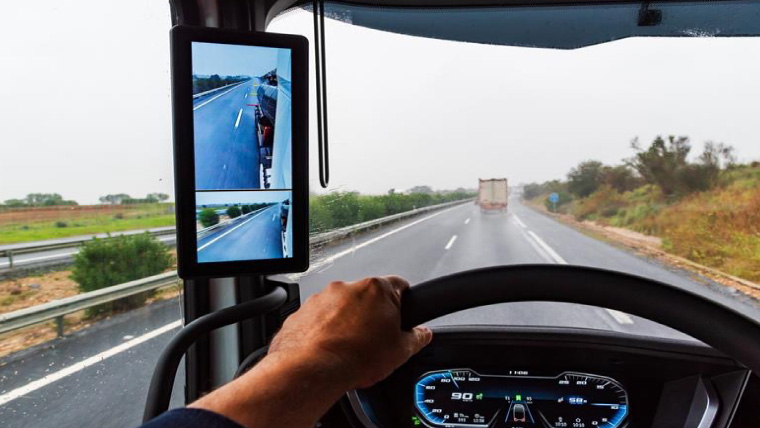
Rising video telematics adoption folds into broader fleet digitalization initiatives. Advances in AI, deep learning, and Big Data are enabling these solutions to more accurately identify and interpret complex driving environments and driver behavior patterns. Accordingly, they are evolving from basic dashcams into connected, end-to-end intelligence layers that support proactive safety, predictive analytics, and operational visibility.
A key deterrent remains the high upfront cost of advanced video safety systems. This restricts adoption among smaller fleets that continue to rely on basic fleet management tools. However, as video safety technologies mature and become more affordable, they will be more accessible and highlight clear returns on investment. With the growing shift of video solution providers towards a leasing model bundling the hardware cost into a monthly subscription fee, it becomes easier for fleets to adopt video safety solutions with the hardware cost becoming OPEX instead of CAPEX.
For more information, please see: Truck Video Telematics Market, Global, 2025–2030, or contact [email protected] for information on a private briefing.
Reshaping Fleet Operations
Globally, fleets are replacing legacy telematics solutions with more comprehensive video-enabled platforms that promote improved safety, cost efficiencies, and overall fleet performance. For many solution providers, video systems now represent a substantial share of recurring revenue, strengthened by enterprise retention rates and consistent growth in annual subscriptions. Simultaneously, tailored packages for small and mid-sized operators are encouraging wider adoption.
Advances in AI are central to this shift. Cameras equipped with AI-driven analytics detect distracted driving, harsh braking, drowsiness, and other risky behaviors in near real time. They are enabling proactive interventions rather than reactive reporting. Such capabilities are underscoring video telematics as a crucial tool for risk mitigation and driver coaching.
In parallel, the supporting ecosystem is evolving. Hardware manufacturers, telematics service providers (TSPs), OEMs, and AI technology specialists are collaborating to develop integrated platforms that harmonize the working of cameras, sensors, and software platforms. This integrated approach is facilitating enhanced visibility into driving behavior, vehicle utilization, and compliance adherence.
A Rapidly Developing Market
North America is the most mature video telematics market due to strong regulatory compliance requirements and early digital transformation among large fleets. In Europe, safety-focused initiatives such as Vision Zero are motivating uptake. Upcoming markets include ANZ and Latin America.
Key ecosystem stakeholders, including drivers, fleet managers, insurers, and regulators, are relying more heavily on video data to validate events, assess risk, and improve accountability. While driver safety is the largest and most active application segment, others like analytics-driven risk and safety management, and compliance management are also expanding. Logistics fleets lead in adoption, followed by delivery services, FMCG/ CPG, utilities, field services, hazmat and construction.
Leading companies such as Lytx, Samsara, Motive, Netradyne, and Solera are extending their offerings into broader SaaS ecosystems focused on safety, analytics, and driver engagement.
Technology Integration Becoming a Key Growth Accelerator
Manufacturers are increasingly equipping vehicles with factory-installed cameras, creating new opportunities for OEMs to collaborate with telematics and hardware providers. At the same time, device-agnostic software platforms are simplifying data integration from cameras, vehicle gateways, and third-party devices, resulting in more seamless operations.
Technology integration is becoming a key growth accelerator. Here, AI algorithms are continuously learning from accumulated driving data. This is enhancing their ability to accurately detect and classify events, while supporting daily fleet operations. Regulatory pressure is also driving the uptake of video-based safety solutions.
However, several challenges persist. Small fleets remain cautious about making investments in such technologies due to lower perceived returns. Data privacy and compliance requirements such as with GDPR and CCPA add layers of complexity. Technologically diverse fleets face compatibility issues between legacy systems and modern platforms. Another concern centers on achieving reliable real-time video streaming since this could be constrained by inconsistent cellular networks in remote areas. Driver acceptance is another hurdle, as some operators consider in-cab cameras as intrusive.
Despite these obstacles, fleets are continuing to invest in video telematics because of demonstrated reductions in insurance claims, collisions, and operating costs.
A Future of More Intelligent and Integrated Solutions

Over the next five years, video telematics systems are set to become more intelligent, integrated, and essential to daily fleet operations. Multi-camera AI dashcams that combine front, cabin, and side views will gain widespread use, allowing for more comprehensive and accurate edge-based analysis.
Regulatory mandates aligned with global safety objectives will accelerate adoption and promote standardized video safety solutions. Partnerships between telematics providers and hardware manufacturers will expand, offering fleets a unified experience. Meanwhile, OEMs will play a larger role as cameras become standard fitments connected directly to proprietary software, making video safety a built-in feature rather than an aftermarket add-on.
Rapid advances in AI, deep learning and Big Data will continue to transform video telematics platforms. Driver safety technologies from distraction and fatigue monitoring to coaching and gamification will gain further traction through integrations with telematics platforms. Open APIs will support convergence by allowing predictive video analytics to seamlessly integrate more easily with device-agnostic fleet platforms.
AI-powered deep learning will anchor the next phase of innovation. For fleets, AI-driven insights will reduce the total cost of ownership while improving safety and performance. For solution providers, the focus will shift to integrated strategies combining vehicle telematics, compliance tools, and advanced video safety. Offering tiered packages will broaden accessibility while simultaneously generating recurring revenue streams. Strategic partnerships across the ecosystem will lay the groundwork for accelerated product rollout and ensure compatibility across hardware and software environments.