Universal platforms, alternative battery chemistries, 800V electrical architectures, and vertically integrated supply chains to form strategic foundation of next-generation EV development.
The global electric vehicle (EV) market is entering a decisive phase with EV sales projected to expand at a CAGR of 24.6% between 2024 and 2031. However, the path forward is more complex than the early expansion years. Geopolitical tensions, tariff revisions, semiconductor shortages, and constrained access to rare earth materials have exposed vulnerabilities across the EV value chain. At the same time, governments are tightening emissions standards even as consumers increasingly demand affordable EV options.
OEMs are recalibrating their electrification roadmaps in response. While long-term net-zero ambitions remain unchanged, short-term strategies are being adjusted to manage financial pressures and fluctuating demand. Production schedules are being revised, model launches are being delayed, and capital allocation is being scrutinized more carefully. Notwithstanding such tactical shifts, OEMs are not slowing down their commitment to electrification. Instead, they are reengineering how EVs are designed, produced, and supported.
The next growth wave is expected to accelerate after 2027. It will be driven largely by affordable mass-market EVs and stronger regulatory enforcement worldwide. To prepare for this shift, OEMs are investing in universal platforms, alternative battery chemistries, 800V electrical architectures, and vertically integrated supply chains. This will lay the strategic foundation for next-generation EV development between 2025 and 2031.
To learn more, please see: OEM Strategies on Next Generation Electric Vehicles, Global, 2025–2031, or contact [email protected] for information on a private briefing.
Production Realignment to focus on Scale and Cost Discipline
Global production strategies are undergoing realignment. Softening consumer demand in certain regions, reduced purchase incentives, and rising competition from lower-priced Chinese EVs have compelled automakers to rethink capacity planning. Several OEMs have temporarily halted or scaled down production at selected plants, relocated manufacturing to cost-efficient geographies, or delayed new EV launches by two to three years.
For example, the Volkswagen Group is shifting production of key models from Germany to Mexico in a bid to realize cost optimization. Meanwhile, companies such as Stellantis, Ford Motor Company, General Motors, and BMW have temporarily paused or adjusted operations at various facilities in response to demand fluctuations and tariff pressures. These adjustments reflect tactical caution rather than retreat.
At the same time, legacy automakers have committed more than $200 billion collectively toward upgrading manufacturing facilities for EV production. Instead of building entirely new plants in every case, many OEMs are transforming existing facilities to accommodate electric drivetrains and battery assembly. Such cost management initiatives will support long-term competitiveness while preserving flexibility in a volatile global environment.
Value Chain to Pivot towards Vertical Integration and Diversification
Supply chain resilience has become central to OEM strategy. Semiconductor shortages and raw material volatility have demonstrated the risks of overreliance on fragmented global networks. As a result, automakers are accelerating vertical integration and supplier diversification.
Major OEMs are investing billions in in-house battery manufacturing and component production. For instance, Tesla strengthened its battery technology capabilities through the acquisition of Maxwell Technologies and secured long-term material agreements with suppliers such as Albemarle Corporation and Glencore. Similarly, Toyota Motor Corporation has invested heavily in semiconductor and battery ecosystems, while General Motors has committed over $5 billion to strengthen supply chain capacity in the US.
Beyond acquisitions, OEMs are signing long-term agreements for lithium, nickel, and other critical inputs. Localizing component production is also gaining momentum, particularly in North America and Europe. This strategic shift reduces geopolitical exposure and stabilizes input costs, thereby enhancing long-term production predictability. Such vertical integration has become crucial for sustained EV growth.
Modular and Universal Platforms to Anchor Engineering Affordability at Scale
Cost remains the biggest barrier to mass EV adoption. To address this, OEMs are prioritizing modular and universal platforms that allow multiple models and brands to share a common architecture. These skateboard-style platforms reduce development time, lower R&D expenditure, and enable high-volume production efficiencies.
Several automakers have established clear platform strategies. For example, Mercedes-Benz has introduced dedicated EV architectures for different segments, including MB.EA for core passenger vehicles and VAN.EA for electric vans. Hyundai Motor Company and Kia Corporation are developing EVs under an integrated modular architecture that supports multiple body styles. Ford Motor Company is also working on a universal EV platform aimed at delivering affordable electric models.
These architectures support various battery chemistries such as lithium iron phosphate (LFP), nickel manganese cobalt (NMC), and emerging sodium-ion solutions. They also allow different battery capacities to serve diverse price points and use cases. By standardizing core vehicle structures while retaining brand differentiation, OEMs are strengthening their ability to introduce cost-effective EV offerings starting around $20,000 over the next three to five years. Platform consolidation is, therefore, emerging as the backbone of affordable electrification.
Industry Convergence to Highlight Charging Infrastructure and Energy Security
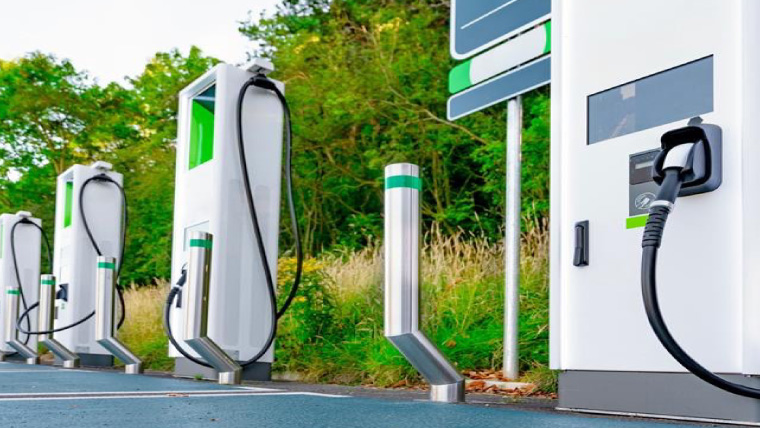
Acknowledging that the expansion of EV adoption depends not only on vehicle technology but also on charging availability and clean energy supply, OEMs are increasingly participating directly in charging infrastructure deployment rather than relying solely on third-party operators.
A notable example is IONNA, a joint venture formed by leading automakers including BMW, General Motors, Honda Motor Co., Hyundai Motor Company, Kia Corporation, Mercedes-Benz, Stellantis, and Toyota Motor Corporation. The initiative plans to deploy over 30,000 high-power chargers across North America. Partnerships such as the collaboration between General Motors and ChargePoint further illustrate the shift toward integrated charging ecosystems.
In parallel, OEMs are strengthening green energy procurement. BYD secured millions of green energy certificates in 2024, while Ford Motor Company and Hyundai Motor Company have entered multiple power purchase agreements to run manufacturing facilities on renewable energy. These efforts are highlighting decarbonization across operations alongside vehicle electrification, thereby reinforcing ESG commitments and reducing long-term energy cost volatility.
Advanced Battery Chemistries and 800V Architectures to Underpin Performance and Cost Gains
Battery innovation is crucial to next-generation EV strategy. While NMC and LFP chemistries dominate today, OEMs are actively exploring sodium-ion, lithium-manganese, and solid-state technologies to reduce cost and improve energy density. Sodium-ion batteries, in particular, present a lower-cost alternative for smaller vehicles and emerging markets.
Collaborations are accelerating development timelines. BMW and Solid Power are advancing solid-state battery research, while Mercedes-Benz is partnering with Factorial Energy. BYD is scaling sodium-ion production capacity, and Toyota Motor Corporation continues to ramp up solid-state commercialization in collaboration with battery partners.
Simultaneously, 800V electrical architectures are gaining traction. These systems enable ultra-fast charging, reduced heat generation, and improved efficiency. Tesla has introduced high-power V4 chargers, and BYD is developing platforms capable of megawatt-level charging. As more EVs adopt 800V systems, charging times will decrease significantly, narrowing the gap between EVs and their ICE counterparts.
Our Perspective
Looking ahead, the EV market landscape will be defined by affordability, charging speed, supply chain resilience, and manufacturing efficiency.
OEMs will balance ambition with practicality while investing in scalable platforms, resilient supply chains, and advanced battery technologies. Legacy manufacturers will continue to upgrade manufacturing plants and form ecosystem partnerships, while new-age EV companies will expand into new geographies to localize production.
Strategic collaboration will intensify across batteries, semiconductors, renewable energy, and charging infrastructure. OEMs that successfully integrate these elements will achieve cost competitiveness, operational stability, and faster innovation cycles. OEMs that fail to secure supply chains or optimize production footprints risk losing ground.