Advanced steel alloys are reshaping industrial and mobility applications as manufacturers seek materials that can deliver higher performance, improved durability, and greater sustainability. Electrification, industrial automation, infrastructure modernization, and decarbonization initiatives are increasing demand for materials that can withstand demanding operating environments while supporting lightweighting, corrosion resistance, and lifecycle efficiency.
Several factors are accelerating adoption:
- Electrification of transportation systems
- Expansion of industrial automation and advanced manufacturing
- Infrastructure modernization initiatives
- Increasing focus on sustainability and emissions reduction
- Demand for lightweight, durable, and high-strength materials
What's In It for You?
- Discover growth opportunities emerging from circular feedstocks, bio-based materials, and advanced functional materials
- Track innovation trends transforming sustainable manufacturing, resource efficiency, and industrial decarbonization
- Identify strategic pathways to commercialize next-generation materials and accelerate sustainability goals
[Access the Sample Whitepaper on Sustainable and Advanced Materials]
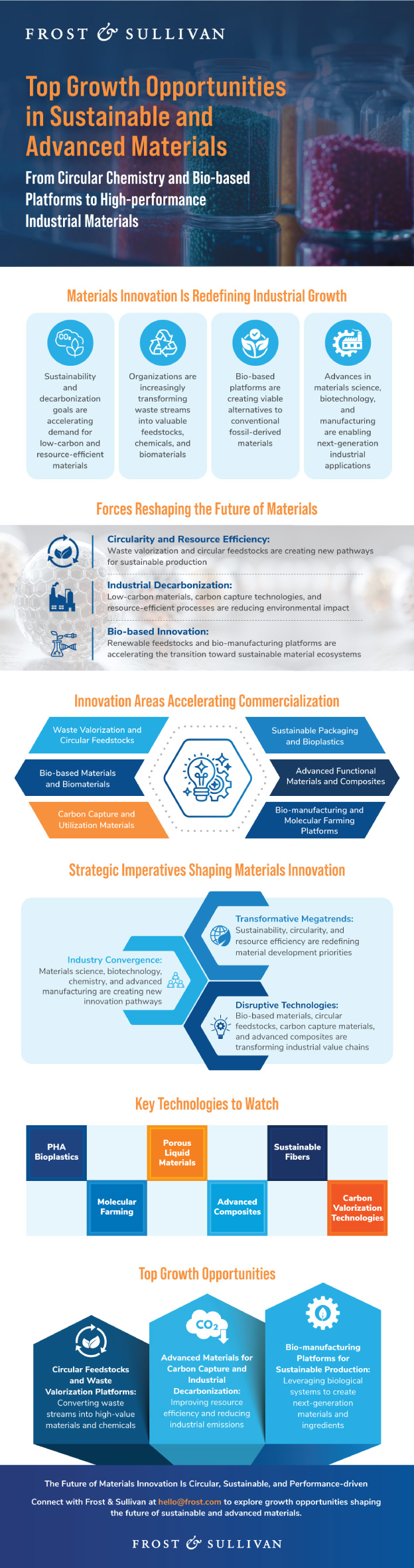
Technology Shifts Driving Sustainable and Advanced Materials Innovation
Several innovation themes are accelerating the transition toward more sustainable, circular, and high-performance materials ecosystems. Circular feedstocks, bio-based platforms, advanced functional materials, carbon utilization technologies, and resource-efficient manufacturing processes are expanding how organizations approach product development, industrial sustainability, and supply chain resilience.
These technologies are enabling the conversion of waste into valuable materials, reducing dependence on fossil-based resources, improving energy efficiency, and supporting the development of next-generation products across packaging, construction, energy, consumer goods, and industrial manufacturing.
The following opportunity areas highlight selected innovations shaping the future of sustainable and advanced materials.
- Circular Feedstocks and Waste Valorization Platforms: Organizations are increasingly investing in technologies that transform industrial, agricultural, and consumer waste streams into high-value materials. These innovations are supporting circular manufacturing strategies while creating new pathways to improve resource efficiency and reduce environmental impact.
PHAXTEC, Inc. (United States): Biogas-derived PHA Bioplastics
Technology Highlights
- Converts renewable biogas into biodegradable and compostable polyhydroxyalkanoate (PHA) bioplastics
- Utilizes waste-derived feedstocks instead of fossil-based resources
- Supports circular packaging and sustainable material applications
- Compatible with existing manufacturing and processing infrastructure
| Growth Impact: PHAXTEC’s biogas-derived PHA platform demonstrates how waste-based feedstocks can support the transition toward circular materials and sustainable packaging. By utilizing renewable biogas instead of virgin fossil-based resources, the technology enables manufacturers to reduce environmental impact while advancing circular economy objectives across packaging, agriculture, and consumer applications.How are waste-to-value technologies reshaping the future of sustainable materials? |
Access the Sample Whitepaper on Sustainable and Advanced Materials
- Advanced Materials for Carbon Capture and Industrial Decarbonization: Industrial sectors are accelerating investments in carbon reduction and resource-efficient processing technologies. Advanced materials that improve gas separation efficiency and support carbon management are emerging as important enablers of industrial decarbonization.
Poradigm Technologies Ltd. (United Kingdom): Porous Liquid Materials for Carbon Capture
Technology Highlights
- Porous liquid platform for gas separation and carbon capture
- Enables selective adsorption of carbon dioxide and industrial gases
- Supports integration into existing industrial processes
- Designed to improve separation efficiency and reduce energy consumption
| Growth Impact: Poradigm’s porous liquid technology highlights the growing role of advanced materials in industrial decarbonization. By improving gas separation efficiency and enabling more flexible carbon capture processes, the platform can help industries reduce emissions, optimize resource utilization, and accelerate sustainability initiatives across energy, chemicals, and manufacturing value chains.How are advanced materials accelerating industrial decarbonization strategies? |
- Bio-manufacturing Platforms for Sustainable Production: Bio-manufacturing technologies are creating new opportunities to produce high-value materials and ingredients using biological systems. These platforms are helping organizations improve sustainability, strengthen supply chain resilience, and reduce dependence on conventional production methods.
PoLoPo Ltd. (Israel): Molecular Farming Platform for Protein Production
Technology Highlights
- Utilizes potato crops as biological production systems
- Produces target proteins through molecular farming
- Leverages existing agricultural infrastructure
- Supports sustainable and scalable ingredient manufacturing
| Growth Impact: PoLoPo’s molecular farming platform illustrates how bio-manufacturing can create more sustainable and resilient production systems. By leveraging crops as biological production platforms, the technology has the potential to reduce resource intensity, diversify supply chains, and support the commercialization of next-generation proteins and bio-based materialsHow are molecular farming platforms transforming the future of sustainable production? |
Best Practices for Capturing Growth in Sustainable and Advanced Materials
- Prioritize Platform Technologies: Focusing on scalable material platforms that can support multiple applications and end markets.
- Build Circular Ecosystems: Developing partnerships that enable waste valorization, resource recovery, and closed-loop manufacturing.
- Accelerate Commercialization: Collaborating with industry, research, and technology partners to shorten the path from innovation to market adoption.
- Balance Sustainability and Performance: Investing in materials that deliver environmental benefits without compromising functionality or cost competitiveness.
- Track Emerging Innovation: Continuously monitoring developments in bio-based materials, circular chemistry, advanced composites, and industrial decarbonization technologies.
Ready to Lead the Technology Transformation?
- Book a Growth Strategy Session: Align your growth roadmap with Frost & Sullivan’s visionary Growth Pipeline™ Dialog.
- Engage with Growth Experts: Co-design AI-enabled, data-driven operating models that scale industry-specific and commercial impact.
- Share Your Transformation Story: Position your organization as a transformation leader through Frost & Sullivan’s Transformational Growth Leadership platform.
- Join the Growth Council: Collaborate with industry leaders shaping the future of your ecosystem.
- Nominate for the Best Practices Recognition: Be recognized for excellence in growth strategy, execution, and customer impact.
- Demonstrate Industry Positioning on the Frost Radar™: Benchmark your growth performance and innovation strength against industry competitors.
- Activate Brand & Demand Growth: Accelerate awareness, engagement, and revenue growth through integrated brand and demand generation strategies.
FAQs
What are sustainable and advanced materials?
Sustainable and advanced materials are innovative materials designed to improve performance while reducing environmental impact. They include bio-based materials, advanced composites, circular materials, sustainable packaging solutions, carbon capture materials, and next-generation functional materials used across industrial, energy, mobility, and consumer applications.
Why are sustainable materials important for industrial innovation?
Sustainable materials help organizations reduce carbon emissions, improve resource efficiency, strengthen supply chain resilience, and meet evolving sustainability requirements. They are becoming a key enabler of product innovation and long-term competitive advantage across multiple industries.
How does circular chemistry support the circular economy?
Circular chemistry focuses on recovering, reusing, and transforming waste streams into valuable materials, chemicals, and products. These approaches reduce dependence on virgin resources, minimize waste generation, and support more sustainable manufacturing and consumption models.
What is the role of bio-based materials in sustainable manufacturing?
Bio-based materials provide alternatives to conventional fossil-derived materials by utilizing renewable biological resources. They can help reduce environmental impact while supporting applications in packaging, consumer goods, construction, textiles, and industrial manufacturing.
How are advanced materials contributing to industrial decarbonization?
Advanced materials support industrial decarbonization through improved energy efficiency, carbon capture, sustainable production processes, lightweighting, and enhanced resource utilization. These innovations help industries reduce emissions while maintaining performance and operational efficiency.
What are the key growth opportunities in sustainable and advanced materials?
Key growth opportunities include circular feedstocks and waste valorization, advanced materials for carbon capture and industrial decarbonization, and bio-manufacturing platforms that enable sustainable production of high-value materials and ingredients.
Which industries are driving demand for sustainable and advanced materials?
Demand is growing across packaging, construction, energy, chemicals, mobility, consumer products, agriculture, and industrial manufacturing as organizations seek more sustainable, high-performance, and resource-efficient material solutions.