Download Frost & Sullivan’s Transformational Growth Leadership Discussion with Vijay Ramanathan, Chief Executive Officer, Ramsoft
Vijay Ramanathan, CEO of RamSoft, in conversation with Greg Caressi, Associate Partner, Frost & Sullivan, and Nitin Naik, Associate Partner, Frost & Sullivan.
As medical imaging undergoes rapid transformation, few leaders are as deeply embedded in its evolution as Vijay Ramanathan, CEO of RamSoft. In this exclusive Transformational Growth Leadership (TGL) interview, Vijay reflects on RamSoft’s journey from early imaging innovator to AI-driven cloud platform, and on his vision for democratizing access to life-saving technologies.
“In healthcare, speed saves lives. Our mission has always been about accelerating imaging, getting the right data, to the right radiologist, at the right time.”
— Vijay Ramanathan, CEO, RamSoft
The Origins of Accelerating Imaging
Nitin Naik: Vijay, what gaps in healthcare inspired you to build RamSoft’s vision?
Vijay Ramanathan: Imaging has always been central to patient care, but 30 years ago access was painfully slow. My father believed medical images should be instantly available—just a few clicks away for any physician, anywhere. At the time, that was impossible. But we built with the future in mind.
Fast forward to today, we’ve built a cloud-native platform that makes images, prior reports, and related patient data seamlessly accessible across locations. This means physicians can make informed clinical decisions faster, and radiologists can deliver their expertise regardless of geography.
This addresses two major issues in healthcare:
- Delays in patient care — patients often wait hours or days for radiology results. Our solutions speed up that cycle dramatically.
- Repeat imaging — globally, billions of dollars are wasted on unnecessary repeat scans because prior imaging isn’t accessible. Our goal is to stop that waste and improve outcomes.
For me, “accelerating imaging” isn’t just about speed; it’s about removing friction across the entire care pathway.
AI in Radiology: Transformation and Democratization
Greg Caressi: How is AI changing medical imaging today?
Vijay Ramanathan: AI is the biggest force shaping radiology right now. There are two areas where it is already making a difference.
First is AI-driven diagnostics. In breast cancer screening, for example, AI can flag suspicious cases before a radiologist even sees them. Those flagged cases automatically rise to the top of the worklist, so the highest-risk patients get priority. This doesn’t replace radiologists—it empowers them to work faster and more accurately.
Second is AI in reporting. Radiologists used to dictate notes to human transcriptionists. Later, voice recognition automated that process, but it was literal—just words on a page. Generative AI is different. It can reference prior exams, track tumor progression, or highlight anomalies over time. It makes reporting far more intelligent and useful for clinicians making treatment decisions.
That said, we face a critical challenge: equity. Some patients or hospitals can afford AI tools, but many cannot. If only a fraction of the world benefits, we’ve failed. The true transformation will happen when AI is democratized, when every patient, regardless of wealth or geography, can access AI-powered imaging.
Personal Story: Why This Matters
Nitin Naik: You mentioned equity. Why does that resonate so strongly with you?
Vijay Ramanathan: It’s personal. My sister was diagnosed with breast cancer before she turned 40. Standard mammography was inconclusive because of dense breast tissue. She only got diagnosed because she pushed for a biopsy.
That experience taught me two things. First, even advanced imaging has blind spots. Second, patients who advocate for themselves and who are educated enough to push get better care. But that shouldn’t be the case. The system shouldn’t depend on advocacy. It should deliver equity automatically.
This is why AI matters. It can catch what human eyes sometimes miss. It can flag what busy clinicians might overlook. But we need to ensure access is universal, not just for those who can pay out-of-pocket.
Cloud-native Platforms: Staying Ahead of the Curve
Nitin Naik: You were ahead of the market with OmegaAI, your cloud-native platform. What drove that decision?
Vijay Ramanathan: We saw early that AI would only thrive in the cloud. On-premise systems simply can’t keep up: they require complex upgrades and lack seamless integration with third-party AI. Cloud platforms update continuously, so hospitals always have the best tools.
I often compare it to consumer AI: who would stick with GPT-4 if GPT-5 is available? The same applies to healthcare: physicians want the most accurate tools, even if it means waiting a little longer for results. That’s what cloud enables.
Our decision to go all-in on cloud wasn’t about technology for its own sake: it was about future-proofing healthcare infrastructure.
A Culture of Innovation and Learning
Greg Caressi: How do you balance innovation with speed to market, especially given global competition?
Vijay Ramanathan: Our guiding principle is built for the world five years from now, not today. That’s why we invested in cloud-native platforms before the market demanded them.
But innovation isn’t only about foresight. It’s also about culture. We actively hire young AI engineers, new graduates who bring fresh thinking. They don’t just code; they teach us. They introduce the latest tools, frameworks, and approaches. When that youthful energy combines with the experience of seasoned professionals, innovation accelerates.
This is the same philosophy we apply in radiology: AI won’t replace radiologists. But radiologists armed with AI will deliver care that’s faster, smarter, and better than ever before.
Patient Outcomes and Global Access
Nitin Naik: Ultimately, what does all this mean for patients?
Vijay Ramanathan: It means patients get faster answers and better outcomes. Instead of waiting hours in an ER [emergency room] while doctors wait on radiology reports, AI-powered workflows can cut turnaround dramatically.
It also means we can extend radiology expertise beyond big cities. Teleradiology, combined with cloud and AI, allows radiologists to support patients in rural or underserved regions. That’s transformative for healthcare access.
But global access is still uneven. Some regions have MRI scanners but no radiologists. Others have radiologists but outdated infrastructure. Democratizing cloud and AI solutions is the only way to close those gaps.
Interoperability and Security: The Next Frontier
Greg Caressi: What do you see as the next big challenge in imaging?
Vijay Ramanathan: AI is only as strong as the data it learns from, but healthcare data is still locked in silos. Achieving seamless interoperability, while preserving privacy and security, is the holy grail.
This is where SaaS [Software as a Service] platforms give us an edge. They centralize access without compromising security, making it possible to connect thousands of facilities. But it’s not just a technical challenge. With AI, cyberthreats are more powerful than ever. Bad actors can generate malware with a few prompts. So, we have to innovate not just in sharing data, but in protecting it.
For me, interoperability plus security equals trust and trust is the foundation of healthcare.
Growth Strategy: Organic and Inorganic
Nitin Naik: Beyond technology, what is your growth strategy for the next five years?
Vijay Ramanathan: Twofold: organic and inorganic.
Organically, we will continue investing in our platform, scaling AI partnerships, and expanding in regions where imaging access is still limited. Inorganically, we are exploring collaborations and acquisitions that complement our ecosystem, whether in AI diagnostics, workflow automation, or interoperability solutions.
The vision isn’t just to build software. It’s to create a connected ecosystem that accelerates imaging globally.
Leadership and Inspiration
Greg Caressi: On a personal level, what excites you most about the road ahead?
Vijay Ramanathan: Continuing my father’s legacy. He taught me that to build something meaningful, you have to anticipate the world of tomorrow. That philosophy drives everything we do.
What excites me is seeing how innovation can directly improve lives. Every time our platform helps a patient get a faster diagnosis, or a hospital deliver better care, it validates the journey. My personal mission is to ensure RamSoft doesn’t just innovate for innovation’s sake; we innovate to improve equity, access, and outcomes. That’s what keeps me going.
Final Thoughts
RamSoft is not just keeping pace with the transformation of medical imaging—it is shaping it. Through bold bets on cloud, deep integration of AI, a culture of innovation, and an unwavering focus on equity, Vijay Ramanathan offers a compelling blueprint for the future of imaging: faster, smarter, and more accessible healthcare for all.
Vijay Ramanathan is the CEO of RamSoft, a healthcare technology company transforming medical imaging through AI, cloud-native platforms, and interoperability. A computer engineer by training, Vijay has led RamSoft for over 30 years, building on his father’s vision of making medical images instantly accessible to physicians. Under his leadership, RamSoft has launched OmegaAI, expanded global teleradiology networks, and integrated AI-driven diagnostics and reporting into clinical workflows. He is committed to advancing interoperability, data security, and equity in healthcare access, ensuring faster and smarter imaging for patients worldwide.
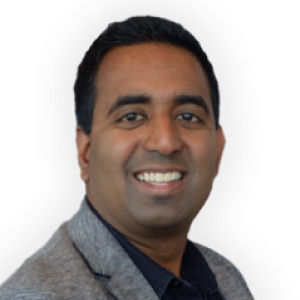
Vijay Ramanathan
CEO of RamSoft
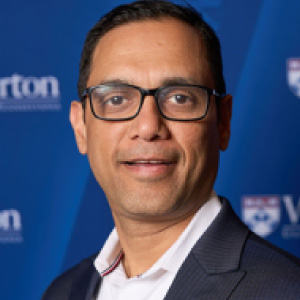
Nitin Naik is an accomplished leader with 25+ years driving transformational growth for Fortune 500 pharmaceutical, biotechnology, and medical device companies. As an Associate Partner at Frost & Sullivan, Nitin leads the Healthcare and Life Sciences practice, directing analyst and consulting teams that unlock growth opportunities through advanced analytics and commercial intelligence. Nitin brings deep expertise at the intersection of disruptive technologies, and new business models, and recognized for implementing executable strategies across New Product Planning, Business Development & Licensing, M&A, and Go-to-Market initiatives. Prior to joining Frost & Sullivan, he has served in leadership positions with A*STAR Singapore and other healthcare organisations.
Greg Caressi is Associate Partner and Chief Commercial Officer at Frost & Sullivan, with decades of experience in healthcare consulting and strategy. Having previously led Frost & Sullivan’s global healthcare practice, Greg now supports growth initiatives across the Americas, helping clients align visionary leadership with measurable impact.

Greg Caressi
Associate Partner and Chief Commercial Officer at Frost & Sullivan
At Frost & Sullivan, we spotlight visionary leaders driving transformation. If your organization is redefining the future of healthcare, we want to spotlight your story through our Transformational Growth Leadership series.
📩 Connect with us to:
- Subscribe to our Growth Opportunity Newsletter
- Join the Growth Council — an exclusive community for innovators
- Share your transformation journey with a global audience
- Engage with our growth experts to explore new growth opportunities
Annexure: Unlocking AI and Cloud Imaging at Global Scale
RamSoft’s vision for accelerating imaging and democratizing AI reflects broader shifts reshaping radiology worldwide. To support leaders navigating this transformation, Frost & Sullivan offers key insights into the future of cloud-native imaging, intelligent workflows, and interoperability.
📌 Global Medical Imaging Market Outlook, 2025
📌 Advanced Visualization Solutions for Medical Imaging, Global, 2024–2029
📌 Top 6 Growth Opportunities in the Medical Imaging Industry, 2025
📌 AI-enabled Medical Imaging Market, Global, 2024–2028
Each of these analyses complement the themes of this TGL—accelerated diagnostics, cloud-native innovation, and equitable access—and offer a strategic path for organizations shaping the next era of medical imaging.