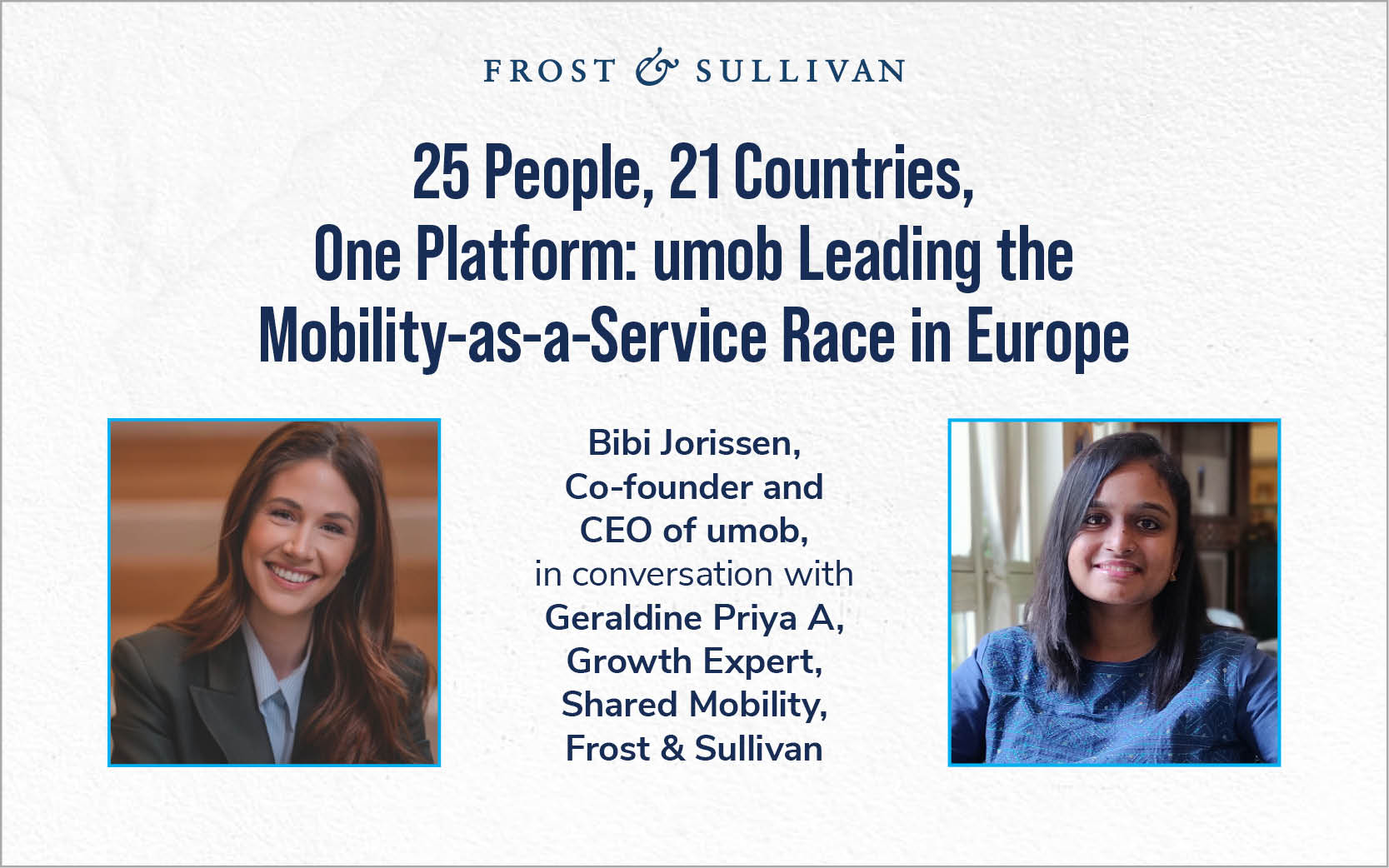
Dr. Yaser Dezhkam, Managing Director, Kirsch BioPharm GmbH, and Weena Leck, Managing Director, Kirsch Pharma Asia Pacific, in conversation with Unmesh Lal, Industry Principal, Frost & Sullivan
Download Frost & Sullivan’s Transformational Growth Leadership Discussion with Dr. Yaser Dezhkam, Managing Director, Kirsch BioPharm GmbH, and Weena Leck, Managing Director, Kirsch Pharma Asia Pacific
As global biopharma supply chains fragment and innovation cycles accelerate, manufacturers are being challenged to rethink how and where critical therapies are developed and produced. From regulatory complexity and talent shortages to sustainability expectations and geopolitical risk, the path to scalable growth now demands resilience, precision, and partnership.
In this exclusive Transformational Growth Leadership (TGL) conversation, Dr. Yaser Dezhkam, Managing Director of Kirsch BioPharm, and Weena Leck, Managing Director of Kirsch Pharma Asia Pacific, share insights with Unmesh Lal of Frost & Sullivan on how the organization is evolving into a globally integrated biopharma partner. The discussion explores Kirsch BioPharm’s expansion beyond Europe, its growing presence across Asia-Pacific, and its focus on oncology, next-generation biologics, and upstream-to-downstream collaboration, supported by a disciplined approach to digital transformation, sustainability, and ecosystem-driven growth.
“Lasting growth in biopharma is built on resilience: resilient supply chains, resilient people, and resilient partnerships. Innovation only scales when it is supported by strong fundamentals.”
— Yaser Dezhkam, Managing Director, Kirsch BioPharm
Repositioning for a New Phase of Global Growth
Unmesh Lal: To begin at a high level, how do you see Kirsch BioPharm positioned today within the global CDMO landscape and which regions do you believe will represent the highest growth opportunities over the next three to five years?
Dr. Yaser Dezhkam: Kirsch BioPharm is part of a pharmaceutical group with close to 47 years of global experience. Our parent company has historically focused on raw material manufacturing, supplying customers across continents. Kirsch BioPharm represents the newest and most advanced step in that evolution.
The project began in 2015, and after securing GMP, ISO, and other required certifications, we officially started manufacturing toward the end of 2019. During the first few years, our focus was clearly Europe, particularly Germany and the Netherlands. That regional focus made sense given regulatory alignment, proximity to customers, and risk management.
Since early 2024, however, we have significantly expanded our global outlook. Today, we are active across nearly all continents. Europe remains our primary market, largely because of stability and established demand. The Middle East follows closely, as it is a rapidly growing region with increasing interest in premium, European-manufactured products. Asia is another key growth engine, offering both scale and flexibility. North America and Latin America are also on our roadmap, and we have already begun building partnerships and registrations there.
Based on our current momentum, registrations, and partner discussions, we believe that within the next five years it is entirely feasible for Kirsch BioPharm to be operating in more than 80 countries globally.
Expanding Beyond Traditional CDMO Boundaries
Unmesh Lal: You have touched on expansion not just geographically, but also in terms of services. Kirsch BioPharm is well known for its work in nutraceuticals and food supplements, but you have also mentioned biosimilars and oncology. How are you thinking about service diversification?
Dr. Yaser Dezhkam: From the beginning, our vision was never limited to being a conventional CDMO. Alongside CMO and CDMO activities, we made a conscious decision to develop our own product portfolio. We started with food supplements because they allowed us to enter the market quickly while building regulatory, formulation, and manufacturing expertise.
Over the past year, we have intensified that effort. Today, our activities span third-party manufacturing as well as our own branded products. Importantly, this is not limited to nutraceuticals. We are actively planning our entry into biopharmaceuticals, including biosimilars, with a strong focus on oncology.
Our ambition is for Kirsch BioPharm to be recognized globally as a partner for finished products and for development, particularly in oncology-related applications. Whether it’s food supplements, pharmaceuticals, or biopharmaceuticals, oncology is a unifying theme for us because of its long-term relevance, complexity, and societal impact.
Partnering with Research Institutions for Next-generation Modalities
Unmesh Lal: You also mentioned collaborations with leading research institutions. How does that fit into your long-term innovation strategy?
Dr. Yaser Dezhkam: We are currently working with some of the most established research institutes in Germany, including Fraunhofer. These collaborations are critical as we look toward next-generation biologicals.
If you look at the market today, everyone understands mRNA because of COVID vaccines. But the next wave goes beyond vaccines into RNA therapeutics more broadly. These therapies can take many forms; injectables, inhaled products, oral formulations, or vaccines, and they will shape the next ten years of biopharmaceutical innovation.
At the same time, we are realistic. No company can enter biopharma alone. Partnerships are essential. That applies both to academic institutions and to industrial partners. Biopharma is vast, almost like an ocean. The challenge is choosing which direction to pursue and building the right partnerships to support that path.
Choosing Focus Within the Complexity of Oncology
Unmesh Lal: Oncology is an incredibly broad field. How do you decide where to focus your efforts?
Dr. Yaser Dezhkam: The first decision is always technology and dosage form. Once you know how you want to produce something, then you can decide what disease area makes sense.
Oncology includes many different cancers: lung, blood, brain, lymphatic, gastrointestinal, and more. We are currently conducting studies with our research partners to determine where our technologies and capabilities align best. Lung cancer, for example, is a particularly interesting area given environmental risks, air pollution, and lessons learned during COVID, where respiratory organs were especially vulnerable.
We also look at regional risk factors. In the Middle East, for instance, environmental conditions such as sandstorms, declining water levels, and pollution contribute to respiratory challenges. These insights help guide our long-term investment decisions.
Innovation That Extends Beyond the Molecule
Unmesh Lal: When people talk about innovation, they often focus on formulation or delivery technologies. How do you define innovation?
Dr. Yaser Dezhkam: Innovation starts with understanding market needs. It’s not enough to develop a product; you need to understand why it matters and how it differentiates itself.
If I want a pharmacy to place my product on the shelf next to ten others, I need to clearly show why mine is different. That starts with formulation, but it doesn’t end there. Packaging is critical. It’s the first thing a customer sees. Then comes documentation, quality, and performance.
Even in food supplements, regulatory expectations have increased significantly. Many regions now require documentation, stability data, and sometimes even clinical studies comparable to pharmaceutical standards. That’s why working with experienced research institutions is so important, they have already navigated these complexities and can support us in developing truly differentiated products.
Navigating Partnerships with Big Pharma and Biotech
Unmesh Lal: Are you actively pursuing partnerships with biotech or large pharmaceutical companies?
Dr. Yaser Dezhkam: Yes, we are currently in discussions with several global biopharmaceutical players. While I can’t share names yet, these discussions cover different collaboration models.
Developing an end product with a top-tier pharmaceutical company can be challenging for a mid-sized organization because of the financial scale involved. However, there are strong opportunities in intermediate manufacturing and specialized support services. Large pharmaceutical companies often look for agile partners who can support specific stages of development or production.
These models allow both sides to leverage their strengths while managing risk effectively.
Digital Transformation as a Cultural Journey
Unmesh Lal: Digital transformation and AI are major industry themes. How is Kirsch BioPharm approaching this?
Dr. Yaser Dezhkam: We are taking a phased approach. Over the past year, we have completed digitalization in HR and finance. We are currently working through supply chain, production, quality assurance, quality control, and warehouse systems.
Our goal is to complete most of the infrastructure digitalization by the end of 2027. Only once that foundation is in place does it make sense to fully integrate AI.
Germany presents unique challenges; documentation requirements can turn a ten-minute task into a month-long process. There’s also a cultural aspect. Many colleagues are used to long-established workflows. That’s why we have designed this as a multi-year transition, bringing people along step by step rather than forcing abrupt change.
Longer term, automation and robotics will be critical. Labor availability and retention in production roles are ongoing challenges, and automation is essential for long-term sustainability.
Sustainability Built on Resilience and Redundancy
Unmesh Lal: Sustainability and ESG are particularly important for European companies. How are you addressing this?
Dr. Yaser Dezhkam: For us, sustainability starts with resilience. Previously, we relied on single sources for many raw materials and packaging components. Today, we maintain at least three qualified sources for every critical input. This reduces risk and ensures continuity.
We’ve also expanded certifications, including halal and kosher, which are essential for global market access. On the manufacturing side, we’ve built partnerships with external CMOs to ensure capacity as we expand into new markets.
Human capital is another pillar. We have strengthened our quality control teams by bringing in professionals with research backgrounds. When customers ask difficult questions, we want people who can analyze issues deeply and respond with confidence.
Sustainability is not a single initiative; it’s an ongoing process across supply chain, production, people, and partnerships.
Asia-Pacific as a Parallel Growth Engine
Weena Leck: From the raw materials perspective, Asia-Pacific; particularly Korea, Japan, and Singapore, is experiencing strong growth. Korea is especially active, with both global and local biopharma companies expanding rapidly.
We are introducing new excipients and cell-related materials in the region and working closely with customers to support advanced biologics manufacturing. This complements Kirsch BioPharm’s downstream expansion.
Three Words That Define the Organization
Unmesh Lal: If you had to describe Kirsch BioPharm in just three words, what would they be?
Dr. Yaser Dezhkam: Innovative. Sustainable. Multicultural.
Closing Reflection
Kirsch BioPharm’s journey reflects a leadership philosophy grounded in execution, adaptability, and long-term thinking. By balancing innovation with operational discipline, embracing partnerships, and taking a structured approach to digital transformation, the company is building a resilient platform for global growth. In an increasingly complex biopharmaceutical landscape, this pragmatic yet ambitious approach positions Kirsch BioPharm to scale responsibly and sustainably.
Dr. Yaser Dezhkam is the Managing Director of Kirsch BioPharm GmbH, where he leads the company’s global expansion, innovation strategy, and transformation into a diversified CDMO and product-focused biopharma organization. With a strong background in research and biopharmaceutical development, he brings deep expertise in formulation, quality systems, and regulatory-driven manufacturing. Dr. Dezhkam has extensive experience working across Europe, the Middle East, and Asia, enabling him to navigate complex global markets. His leadership is centered on resilience, sustainable growth, and building long-term partnerships across the biopharma value chain.
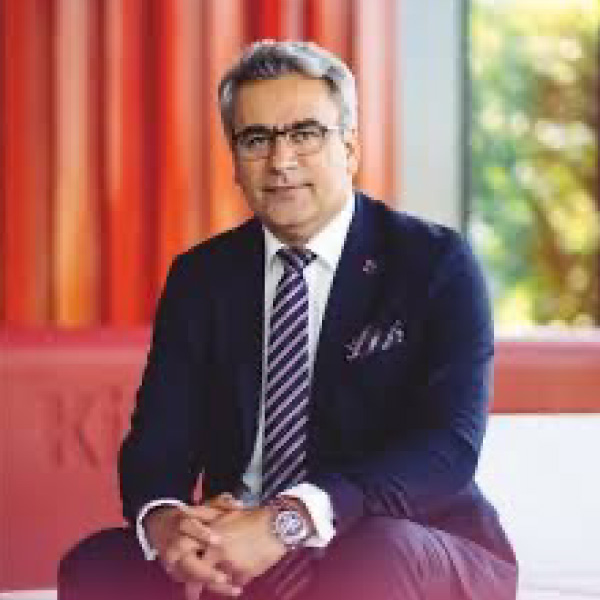
About Dr. Yaser Dezhkam

About Weena Leck
Weena Leck is the Managing Director of Kirsch Pharma Asia Pacific Pte Ltd, where she leads the company’s regional strategy and growth across high-potential biopharma markets in Asia-Pacific. Based in Singapore, she oversees operations and partnerships in key markets including Korea and Japan, supporting both global and regional biopharmaceutical customers. Weena brings deep expertise in raw materials, excipients, and upstream supply solutions for advanced biologics. Her leadership plays a critical role in strengthening Kirsch Pharma Group’s end-to-end biopharma value chain across the APAC region.
Unmesh Lal brings over 20 years of experience in healthcare strategy and consulting, with a focus on global life sciences and precision health. He specializes in identifying transformative technologies, innovative business models, and growth opportunities across pharmaceutical contract services. A recognized thought leader, Unmesh has authored key industry insights and presented at leading global events including J.P. Morgan, Bio-Asia, and Bio-IT World. He holds a master’s degree in biomedical engineering from the University of Michigan–Ann Arbor.
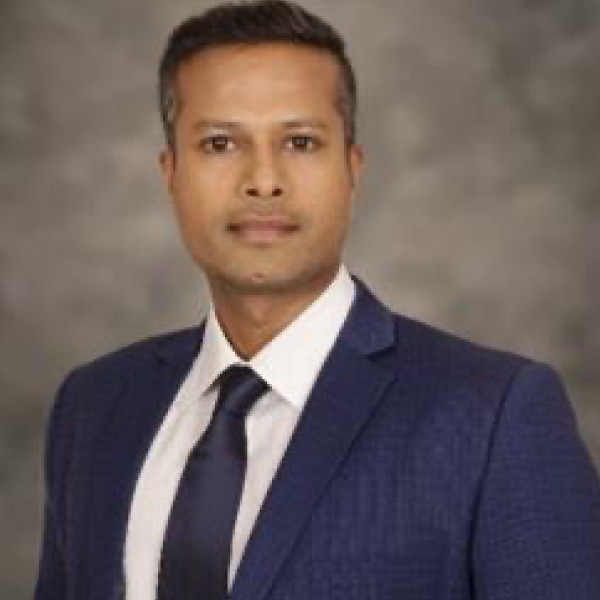
About Unmesh Lal
Ready to Lead the Transformation?
- Book a Growth Strategy Session: Align your growth roadmap with Frost & Sullivan’s Visionary Growth Pipeline™ Dialog.
- Engage with Growth Experts: Co-design AI-enabled, data-driven operating models that scale industry-specific and commercial impact.
- Share Your Transformation Story: Position your organization as a transformation leader through Frost & Sullivan’s Transformational Growth Leadership platform.
- Join the Growth Council: Collaborate with industry leaders shaping the future of your ecosystem.
- Nominate for the Best Practices Recognition: Be recognized for excellence in growth strategy, execution, and customer impact.
- Demonstrate Industry Positioning on the Frost Radar™: Benchmark your growth performance and innovation strength against industry competitors.
- Activate Brand & Demand Growth: Accelerate awareness, engagement, and revenue growth through integrated brand and demand generation strategies.
Annexure: Industry Developments Accelerating Digital Transformation in Biopharma Manufacturing
As Kirsch Biopharm advances its phased digital transformation journey, from HR and finance to supply chain, quality, and production, industry momentum is rapidly shifting toward integrated data architectures, automation-ready operations, and AI-enabled decision frameworks.
This transition mirrors a broader life sciences imperative: building digitally resilient manufacturing ecosystems that can support regulatory rigor, global scale, and next-generation biologics. To help biopharma leaders navigate this complexity, Frost & Sullivan delivers forward-looking intelligence across scientific digitization, CMC acceleration, and AI-driven operational models.
📌 Future of Bio-Pharma Industry, 2040
📌 Top 10 Growth Opportunities in the European Life Sciences Industry, 2026
📌 Global Pharmaceutical Industry Outlook
📌 Top 6 Growth Opportunities in Pharma-Biotech
Each of these analyses align with the central themes of this TGL — operational discipline, unified digital foundations, scalable automation, and future-ready adaptability — offering a strategic blueprint for organizations preparing for the next decade of scientific innovation.