Dr. Sud Agarwal, CEO, iNGENu CRO, in conversation with Unmesh Lal, Vice President, Frost & Sullivan
Download this Transformational Growth Leadership Discussion with Dr. Sud Agarwal
The clinical research industry is evolving rapidly as biotechnology innovation accelerates, and sponsors demand faster, more agile trial execution. Traditional contract research organization (CRO) models, often built around siloed departments and manual handoffs, are increasingly challenged by the need for greater efficiency, speed, and technological integration.
In this Transformational Growth Leadership discussion, Dr. Sud Agarwal, CEO of iNGENu CRO, explains how the organization is reimagining the CRO model through physician-led engagement, AI-driven automation, and an integrated technology architecture. Drawing on the company’s experience working with global biotech sponsors, he discusses how these innovations are enabling faster trial execution and more scalable clinical research operations.
“Once sponsors experience the speed and agility enabled by automation and AI, it becomes difficult to return to traditional CRO models.”
— Dr. Sud Agarwal, CEO, iNGENu CRO
Rethinking the Traditional CRO Model
Unmesh Lal: Could you begin by introducing iNGENu CRO and providing an overview of the organization?
Dr. Sud Agarwal: iNGENu CRO is an Asia-Pacific-based clinical research organization that conducts Phase I through Phase IV clinical trials. Our primary geographic focus includes Australia and the broader Asia-Pacific region, particularly Malaysia and Singapore.
One of the keyways we differentiate ourselves is that we are physician-led and highly technology-oriented. Historically, many CROs originated as spin-offs from universities or government institutions and therefore inherited organizational structures similar to academic departments. Because we were established as a private company built from the ground up, we were able to design our operating model with technology at the forefront.
From the outset, our goal was to create a system where technology, automation, and artificial intelligence support the entire clinical trial lifecycle rather than simply augmenting isolated functions.
A Layer-based, Technology-driven Operating Model
Unmesh Lal: How does your organization differentiate itself from other CROs operating in Australia and the Asia-Pacific region?
Dr. Sud Agarwal: Most CROs follow a traditional silo-based structure where different departments handle different parts of the clinical trial process. For example, there might be separate teams responsible for business development, clinical research associates, data management, statistics, and quality management. Work typically moves vertically from one department to the next, creating multiple handoffs along the way.
Our approach is very different. We operate a layer-based model that is more similar to how technology companies are structured. Instead of sponsors interacting with multiple departments, they work closely with a single clinical trial expert, often a physician, who guides them through the entire clinical trial journey.
This journey spans the full spectrum of activities, including engagement, protocol development, ethics submissions, regulatory processes, site selection, clinical data acquisition, statistical analysis, and final reporting. Behind the scenes, the operational work is supported by automation and AI systems that manage the underlying processes.
The advantage of this approach is that it minimizes delays between stages of the trial process. Activities that historically required weeks or months such as writing protocols or preparing ethics submissions, can now be completed in hours or days.
Physician-led Engagement and Deep Subject Matter Expertise
Unmesh Lal: As your organization scales, how do you maintain close engagement with sponsors?
Dr. Sud Agarwal: The key lies in how we structure the front-end engagement. The sponsor interacts with a specialist-level expert who maintains the relationship throughout the entire clinical trial process.
In many traditional CRO engagements, sponsors meet a wide range of people across different departments, which can create fragmentation in communication and decision-making. Our model is designed to avoid that situation.
For example, if a sponsor is developing an oncology therapy, the individual guiding them through the process should ideally be an oncologist. Similarly, cardiology trials should be supported by cardiology specialists. When sponsors are making multimillion-dollar decisions about drug development, they expect to work with individuals who possess deep expertise in the relevant therapeutic area.
This specialist-led engagement helps ensure that sponsors receive informed guidance while maintaining a consistent relationship throughout the trial lifecycle.
Integrating Artificial Intelligence Across the Clinical Trial Lifecycle
Unmesh Lal: AI has become a major focus across the healthcare industry. How are you applying AI within your organization?
Dr. Sud Agarwal: Many organizations approach AI by implementing isolated tools that address a single task within the value chain. For example, some solutions function as AI-driven assistants that help with medical writing or site communication.
In our view, that represents only a small fraction of AI’s potential.
Clinical trials consist of many interconnected processes that occur either sequentially or in parallel. The ultimate objective is to generate clinical trial data that can be submitted to regulatory authorities. Historically, each step in that process has required manual data entry and multiple handoffs between departments.
One challenge with that model is that the same information may be entered repeatedly across different systems during the trial lifecycle. Every time data is re-entered or transferred between teams, there is a risk of errors or inconsistencies.
To address this issue, we built an integrated internal platform that consolidates the entire trial lifecycle. Rather than relying on separate external systems for functions such as electronic data capture or clinical trial management, we developed our own integrated environment.
By maintaining a single source of truth for trial data, we reduce the risk of errors while enabling automation across multiple processes.
The Evolution of Decentralized Clinical Trials
Unmesh Lal: What role do decentralized clinical trials play in your strategy?
Dr. Sud Agarwal: Decentralized clinical trials are often presented as something entirely new, but in practice many trials today already incorporate decentralized elements.
For example, electronic consent, electronic patient-reported outcomes, and digital data collection tools have become common components of modern clinical trials. These technologies enable certain aspects of trial participation to occur outside traditional clinical settings.
Looking ahead, I believe the future of clinical trials will involve an increasing proportion of data collection occurring in patients’ homes rather than at centralized clinical sites. Digital tools and remote monitoring technologies are making this model increasingly feasible.
Expanding Global Engagement with Biotech Sponsors
Unmesh Lal: How is your geographic client base evolving?
Dr. Sud Agarwal: Historically, most of our clients were based in the United States because that is where much of the biotech funding ecosystem was concentrated.
However, we have seen significant changes in recent years. There has been a notable increase in biotech activity across Asia-Pacific, particularly among Chinese biotech companies. At the same time, Australia itself is developing a growing base of biotech talent and innovation.
As a result, our client mix has evolved. While the United States remains an important market, we are seeing increasing engagement from sponsors across the broader Asia-Pacific region.
Transforming Cost Structures Through Automation
Unmesh Lal: How does automation affect the cost structure of clinical trial operations?
Dr. Sud Agarwal: Automation significantly changes the economics of clinical trial execution. When many operational activities are handled through automated systems, the incremental cost of running additional trials becomes relatively small.
For example, tasks such as protocol development, ethics submissions, and certain data management processes can now be executed with minimal marginal cost once the underlying systems are in place.
This creates a fundamentally different cost model compared with traditional CRO structures that rely heavily on billable hours and large teams of staff.
Product-Led Growth and a New Approach to Market Engagement
Unmesh Lal: How does iNGENu CRO approach marketing and customer acquisition?
Dr. Sud Agarwal: We rely heavily on a product-led growth model rather than traditional conference-based marketing or long sales cycles.
Instead of nurturing relationships for years before engaging with sponsors, we often demonstrate our capabilities directly by helping sponsors design protocols or perform feasibility analyses. In some cases, we may provide substantial portions of this work without upfront cost.
This approach allows sponsors to experience the speed and effectiveness of our systems firsthand. Once they see how quickly the work can be completed, the decision to move forward with a full engagement becomes much easier.
Therapeutic Focus and Emerging Research Areas
Unmesh Lal: Which therapeutic areas are currently driving growth for your organization?
Dr. Sud Agarwal: Initially, like many Australian CROs, we focused heavily on early-stage trials such as Phase I and Phase II studies involving healthy volunteers.
Over time, our portfolio has expanded. We have seen strong activity in areas such as ophthalmology, oncology, and neuroscience. We have also developed a niche in conducting complex pediatric trials involving developmental disorders.
More recently, we have become increasingly involved in areas such as obesity and metabolic disease, including therapies related to the GLP-1 drug class. Another emerging area of interest is anti-aging therapeutics, where new drug candidates are targeting different aspects of the aging process.
Organizational Philosophy: Customer Obsession and Hyper-Scalability
Unmesh Lal: If you had to describe your organization in three words, what would they be?
Dr. Sud Agarwal: The first would be customer obsession. Our entire operating model is designed around ensuring that sponsors achieve their development goals as efficiently as possible.
The second would be best-practice organizational design. We operate as a fully remote company with a digital-first approach to communication and collaboration.
The third would be hyper-scalability. Because many of our processes are automated, scaling the organization does not necessarily require proportional increases in headcount.
Closing Reflection: The Future of Clinical Research Operations
Clinical research is entering a period of transformation driven by technological innovation and evolving sponsor expectations. Automation, artificial intelligence, and digital collaboration platforms are redefining how clinical trials are designed, executed, and managed.
For organizations like iNGENu CRO, these capabilities create an opportunity to rethink the traditional CRO model by integrating technology across the entire clinical development lifecycle. By combining specialist-led engagement with automation-driven operational efficiency, emerging CRO models may significantly accelerate the pace of clinical research.
As biotechnology innovation continues to expand globally, organizations that successfully integrate technology, expertise, and operational agility will play an increasingly important role in shaping the future of clinical trial execution.
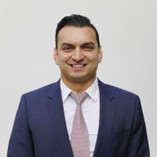
About Dr. Sud Agarwal
Dr. Sud Agarwal is the CEO of iNGENu CRO, an Asia-Pacific–based clinical research organization specializing in Phase I–IV clinical trials across Australia and the broader Asia-Pacific region. A specialist physician with extensive experience in biotechnology and clinical research, Dr. Agarwal has been involved in numerous biotech development programs and advisory roles. Under his leadership, iNGENu CRO has developed a technology-driven operating model that integrates automation, artificial intelligence, and physician-led engagement to accelerate clinical trial execution and improve sponsor collaboration.
Unmesh Lal brings over 20 years of experience in healthcare strategy and consulting, with a strong focus on global life sciences, pharmaceutical services, and precision health. He specializes in identifying transformative technologies, innovative business models, and growth opportunities across the pharmaceutical contract services and contract manufacturing ecosystem. He works closely with biopharma sponsors and Contract Development and Manufacturing Organizations (CDMOs) to evaluate emerging modalities, optimize outsourcing strategies, and drive competitive positioning. A recognized thought leader in contract development and manufacturing, Unmesh has authored influential industry insights and market analyses. He has presented at leading global forums including J.P. Morgan Healthcare Conference, CPhI, World Bioprocessing Summit, Biotech Outsourcing Strategies CMC, and BIO-Asia. Unmesh holds a master’s degree in biomedical engineering from the University of Michigan–Ann Arbor.
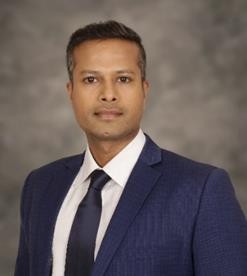
About Unmesh Lal
Ready to Lead the Transformation?
- Book a Growth Strategy Session: Align your growth roadmap with Frost & Sullivan’s Visionary Growth Pipeline™ Dialog.
- Engage with Growth Experts: Co-design AI-enabled, data-driven operating models that scale industry-specific and commercial impact.
- Share Your Transformation Story: Position your organization as a transformation leader through Frost & Sullivan’s Transformational Growth Leadership platform.
- Join the Growth Council: Collaborate with industry leaders shaping the future of your ecosystem.
- Nominate for the Best Practices Recognition: Be recognized for excellence in growth strategy, execution, and customer impact.
- Demonstrate Industry Positioning on the Frost Radar™: Benchmark your growth performance and innovation strength against industry competitors.
- Activate Brand & Demand Growth: Accelerate awareness, engagement, and revenue growth through integrated brand and demand generation strategies.
Appendix: Transforming Clinical Trial Execution Through AI and Automation
As clinical development grows increasingly complex, pharmaceutical and biotech companies are rethinking traditional outsourcing models in favor of more agile, technology-enabled approaches. The integration of artificial intelligence, automation, and connected digital workflows is enabling faster trial execution, improved data integrity, and more efficient collaboration. At the same time, the shift toward decentralized trials, integrated data platforms, and physician-led engagement is enhancing patient recruitment and streamlining operations, redefining how contract research organizations deliver value in a more competitive, cost-sensitive environment.
To support organizations navigating this transformation, Frost & Sullivan provides forward-looking intelligence across AI-enabled clinical development, CRO evolution, and digital operating models, including:
📌 Growth Opportunities in Global Pharmaceutical Industry
📌 Frost Radar™: Artificial Intelligence-enabled Clinical Trials, 2026
📌 Pharmaceutical Clinical Contract Peripheral Services, Global
Together, these analyses reinforce the central themes of this Transformational Growth Leadership discussion: AI-driven automation, integrated clinical trial platforms, and scalable, patient-centric operating models that are reshaping the future of clinical research.